
A Buyer’s Framework to Prevent Costly Overruns in Pharma Packaging Line Projects
A Buyer’s Framework to Prevent Costly Overruns in Pharma Packaging Line Projects
Costly overruns in pharmaceutical packaging line projects usually begin before a purchase order. They begin when a buyer defines a project by one headline speed, one layout drawing, or one equipment quotation, while leaving line integration, validation, tooling, changeover, and downstream interfaces outside the scope baseline. The result is not always a bad machine. It is more often a machine that was bought against an incomplete definition of the project.
This framework is built around a different starting point: define the total project before comparing equipment. For a pharmaceutical packaging machine project, that means treating the blister packaging machine, cartoning machine, case packing machine, end-of-line packaging machine, controls, documentation, and format tooling as one linked scope. The aim is not to buy the largest or most automated line. The aim is to buy only the capability the product, format range, validation route, and production plan can justify.
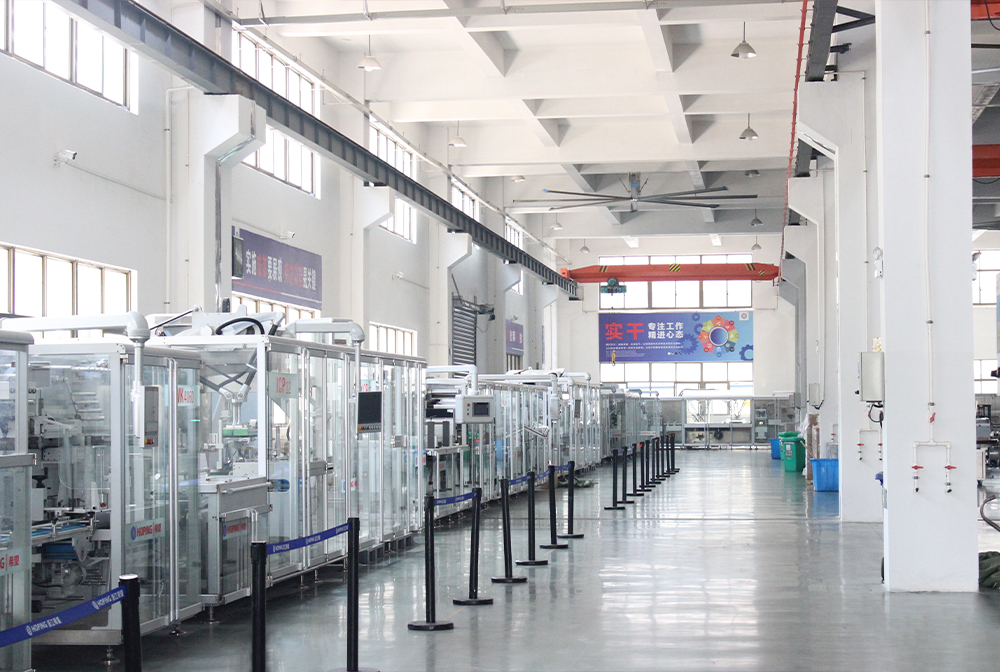
A line configuration should be reviewed as a linked system before specifications are frozen. Image source: HOPING machine showroom.
Why Overruns Start with Scope, Not Price
The largest overrun risk in a pharma packaging line project is an incomplete scope baseline. Equipment price is visible and comparable. Scope is less visible. It includes the product format envelope, the required sustained output, the line balance between blister and cartoning, the tooling set, the validation documents, the interface to case packing or palletizing, and the responsibility for commissioning and acceptance.
When those items are not fixed early, they return later as change orders, schedule delays, duplicate engineering, extra tooling, or acceptance disputes. A buyer may believe the project is a blister cartoning line purchase. The supplier may believe it is a machine supply with a limited interface. Both positions can be internally reasonable and still create overruns because the project boundary was never written down.
The opportunity is to convert the project from a machine purchase into a controlled scope decision. That does not require a longer specification for its own sake. It requires a specification that separates what must be fixed from what can remain optional. A turnkey pharmaceutical packaging line can be appropriate, but only when the buyer can explain which functions are integrated, which interfaces are owned, and which performance figures will be verified.
The Five-Part Scope Baseline
A practical buyer framework should cover five scope blocks. Each block should produce a written decision before the RFQ is issued. If a block is left open, the buyer should expect either a higher price contingency or a later change request.
| Scope block | What the buyer should define | Why it prevents overruns |
|---|---|---|
| Product and format envelope | Tablet or capsule type, blister format, PVC or Alu-Alu structure where applicable, carton size, leaflet format, batch coding and inspection needs. | Prevents tooling changes and rework after the machine layout is frozen. |
| Machine capability | Required output basis, control architecture, feeding method, changeover expectation, cleaning and GMP-oriented design requirements. | Separates real production need from headline maximum speed. |
| Line integration | Blister-to-cartoner transfer, leaflet insertion, coding, inspection, rejection, connection to bundling, case packing and palletizing. | Clarifies which supplier owns the link points and acceptance of the linked line. |
| Validation and documentation | FAT, customer witness acceptance, electrical safety check, material trial, drawings, manuals, spare-parts list, and GMP-oriented documentation scope. | Reduces late-stage documentation gaps and acceptance disputes. |
| Tooling and lifecycle | Format parts, mold-change support, preset memory, spare parts, training, installation and commissioning scope. | Prevents tooling and service items from becoming separate post-order costs. |
Problem and Opportunity: The Overbuilding Trap
Overbuilding is not limited to buying too much speed. It also includes buying a control architecture, automation level, or line configuration that the product mix cannot use efficiently. A fully servo high-speed blister cartoning line may be the correct answer for a continuous solid dosage production plan with a stable format range. It may be the wrong answer for a project with low volume, frequent small batches, or uncertain downstream automation.
The opposite risk is under-specifying the project. A buyer may focus on the pharmaceutical blister packaging machine and treat cartoning, leaflet handling, inspection, and case packing as later additions. That approach can appear to reduce initial cost, but it often shifts cost into integration, manual transfer, duplicated controls, and unclear acceptance responsibility. The buyer then pays twice: once for the separate equipment and again for the engineering needed to make the line behave as one system.
The opportunity is to specify by function and evidence. Instead of asking for a fully automatic blister packaging machine in general terms, the buyer should ask which functions are automatic, which are servo-driven, which are mechanically linked, which are inspected, and which are recorded. Instead of asking for a turnkey line in general terms, the buyer should ask for the line boundary, the interface list, the acceptance method, and the tooling list.
Brand Solution: HOPING’s DHL8005H as a Scope Example
HOPING (Zhejiang Hoping Machinery Co., Ltd.) is a China-based manufacturer of blister packaging machines, cartoners, case packers, and end-of-line packaging equipment. The company was established in 2001, operates a 28,800 square meter manufacturing facility, and reports 300 employees, 56 engineers, an annual output of 500 units, and an export ratio of 25%, with main markets including Southeast Asia, the Middle East, Eastern Europe, South America, and Africa.
For buyers building a scope framework, the DHL8005H is useful as an example of how integrated functions can reduce separate equipment complexity. HOPING lists the DHL8005H as an intelligent fully servo high-speed blister-cartoner integrated machine with a maximum capacity of up to 800 blisters per minute and 500 cartons per minute. Its scope includes high-speed blister forming and sealing, transfer, leaflet handling, carton opening, insertion, coding and inspection, and connection to bundling, case-packing, and palletizing equipment.
The DHL8005H specification also names a D3 intelligent top-loading parallel tracking transfer system, multiple feeding methods, PVC and Alu foil auto splicing, a three-channel servo-driven independent replenishment system, a Beckhoff motion controller and CP9315 industrial PC, mold-change and preset-memory functions, and GMP-oriented line design. Those details matter because they turn a broad claim about integration into a set of scope questions: what is transferred automatically, what is replenished independently, what is stored as a preset, what is inspected, and what is connected downstream.
HOPING also describes an integrated packaging line containing blister packing, cartoning, flow packing, case packing, and palletizing equipment. That does not mean every project should buy every module. It means the supplier can be asked to define where the line starts and stops, which modules are in scope, and which interfaces remain the buyer’s responsibility.
Technical Explanation: What Fully Servo Should Change in the RFQ
Fully servo operation should change the questions a buyer asks, not just the label on the quotation. In a high-speed blister cartoning line, servo control affects how motion is synchronized, how replenishment is handled, how format changes are recalled, and how faults are diagnosed. The buyer should translate the term into verifiable functions.
- Independent replenishment: The DHL8005H uses a three-channel servo-driven independent replenishment system. The RFQ should ask which materials are replenished, how the system behaves when one channel runs low, and how the operator confirms replenishment without stopping the line unnecessarily.
- Transfer stability: The D3 intelligent top-loading parallel tracking transfer system is part of the line scope. The buyer should ask how blister transfer is synchronized with carton opening and insertion, and how transfer faults are detected and rejected.
- Material splicing: PVC and Alu foil auto splicing are listed functions. The buyer should define the material rolls, splice procedure, waste handling, and operator intervention expected during a splice.
- Preset memory and mold change: Mold-change and preset-memory functions are only useful if the format range is defined. The buyer should request a format matrix showing blister size, carton size, leaflet format, and changeover steps for each product family.
- Control architecture: The Beckhoff motion controller and CP9315 industrial PC are specified components. The buyer should ask which parameters are visible to the operator, which are protected, and which data can be exported for batch records or line analysis.
A key limitation is that maximum capacity is not the same as validated sustained output. The published DHL8005H figures are maximum capacities under a given configuration. Buyers should not convert them into a guaranteed production rate without a defined product format, material structure, line balance, rejection rate, and acceptance test basis. The same logic applies to any high-speed pharmaceutical packaging machine: the number on the datasheet is a starting point for capacity screening, not the end of the engineering review.
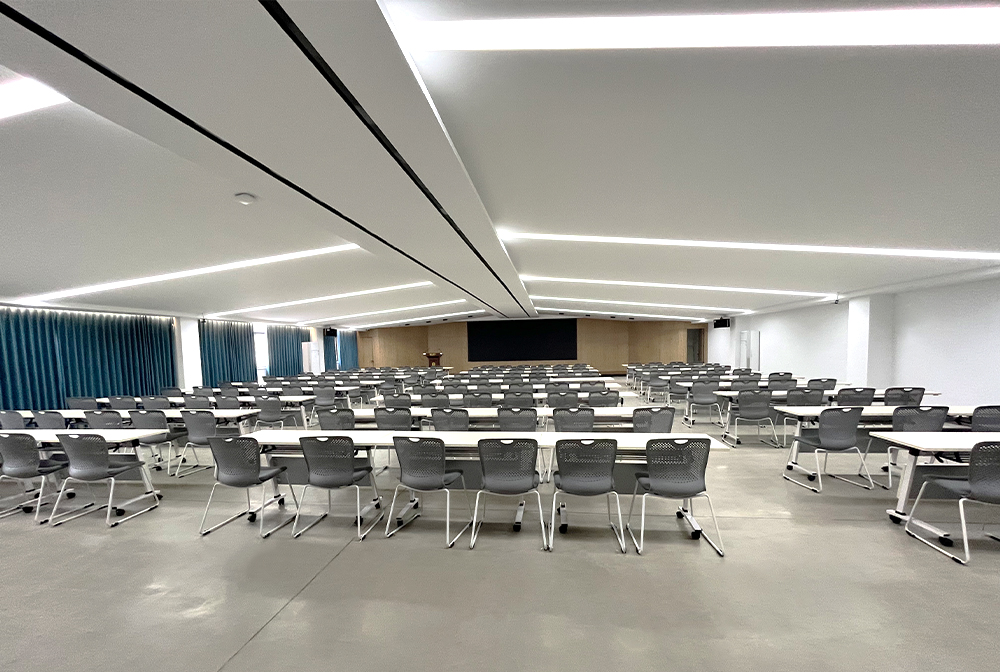
Cross-functional alignment across engineering, production, validation, and service teams is a project-scope issue, not an administrative one. Image source: HOPING training hall.
Application and Use Cases: Where the Framework Fits
The framework is most useful in solid dosage pharmaceutical production, nutraceutical manufacturing, and healthcare packaging where blister and carton formats are central to the project. HOPING’s application material also lists food packaging, cosmetic packaging, electronic product packaging, and daily chemical packaging where applicable. For a pharma buyer, the relevant use cases usually include new solid dosage blister packaging lines, existing line upgrades, high-capacity expansion, intelligent packaging workshop retrofits, and blister-cartoning-bundling or case-packing downstream integration projects.
The operational scope of such projects typically includes blister packaging, leaflet folding, carton opening, blister insertion, batch and date coding, inspection and rejection, and downstream connection to reduce manual transfer. The line may be configured with a blister packing machine, cartoner, leaflet folder, coding machine, vision inspection, checkweigher, bundler, case packer, palletizer, and ERP or MES data interface depending on project configuration.
A representative project pattern for a large pharmaceutical manufacturer or solid dosage production company is not a single machine sale. It is a line program of five to ten lines, or a new line construction and capacity expansion program. The stated project objectives usually include improving packaging automation, reducing manual transfer, improving blister-to-carton connection efficiency, reducing wrong insertion or missing leaflet risks, and supporting downstream automation integration. Those objectives are useful because they show where overruns appear: not only in machine price, but in manual handling, integration gaps, inspection scope, and acceptance delays.
Market Trend Analysis: Growth Does Not Justify Overbuilding
A commercial research publisher reports the global pharmaceutical packaging machinery market at USD 7.09 billion in 2026, with a reported CAGR of 7.15% and a forecast value of USD 10.02 billion by the end of its forecast period. The same source defines the market as including filling, sealing, labelling, blister packaging, and cartoning equipment. Because this is a single commercial research source and the retrieved summary does not show the full forecast end year, buyers should treat it as directional market context rather than a precise planning benchmark.
Regional growth signals point in the same direction. Another commercial research source reports that Asia-Pacific is the fastest-growing region for pharmaceutical blister packaging, with an 8.87% CAGR to 2031. The same source values the global blister packaging machine pharmaceutical market at USD 2.57 billion in 2025. These figures support a general conclusion: demand for blister and cartoning capacity is expected to remain relevant. They do not support a conclusion that every buyer should specify the highest available speed.
Line architecture trends also matter. Horizontal cartoning systems held 70.12% of the cartoning machine market in 2024, according to one commercial research source. That is consistent with the common use of horizontal cartoning in pharmaceutical secondary packaging. A further trend signal from trade media reporting PMMI content states that pharmaceutical manufacturers are turning toward digitised data collection and integrated solutions to meet regulations and improve visibility. The procurement implication is not simply more automation. It is a need to define data capture, batch traceability, and line integration as explicit requirements rather than after-sales additions.
Comparison with Traditional Solutions: Separate Machines vs an Integrated Line
Separate standalone machines and an integrated blister cartoning line solve different project problems. A traditional layout can allow staged investment and supplier flexibility. An integrated line can reduce separate equipment complexity by consolidating transfer, leaflet handling, carton insertion, and line control into one scope. Neither approach is automatically superior. The right choice depends on volume, format range, validation plan, and the buyer’s ability to manage interfaces.
| Decision area | Separate standalone machines | Integrated blister cartoning line |
|---|---|---|
| Scope clarity | Each machine can be specified separately, but interface responsibility must be assigned. | Line scope can be defined as one system, with fewer separate transfer points to coordinate. |
| Control architecture | Multiple controls and handshakes may require additional integration engineering. | A single line control concept can simplify synchronization and operator interface, subject to configuration. |
| Validation | Validation can be staged by machine, but line-level acceptance still needs a plan. | Line-level FAT and acceptance can cover the linked process, but the validation boundary must be written clearly. |
| Changeover and tooling | Tooling can be purchased incrementally, but format changes may involve several suppliers. | Preset memory and mold-change support can help, but the format matrix must be fixed before order. |
| Risk concentration | Supplier risk is distributed, but integration risk can sit with the buyer. | Supplier dependency is concentrated, so interface, documentation, and service terms need stronger definition. |
The main limitation of an integrated line is not technical weakness. It is scope concentration. The buyer becomes more dependent on one supplier for transfer, cartoning, inspection interface, and line acceptance. That can be the right trade-off for a high-volume solid dosage project with a stable format range. It can be the wrong trade-off for a low-volume, high-mix project where frequent changeover, staged capex, or multiple existing machine vendors make a separate-machine layout more practical. An integrated line also does not remove the need to verify sustained output, tooling cost, spare-parts strategy, and validation responsibility.
Procurement Checklist: What to Freeze Before the RFQ
Before requesting a quotation for a pharmaceutical packaging line, the buyer should freeze the following items in a scope document. This checklist is not a substitute for engineering review. It is a way to prevent commercial comparison from hiding scope differences.
- Product and format matrix: tablet or capsule, blister size, material structure, carton size, leaflet format, and coding or inspection requirements.
- Output basis: required output per shift or per year, line balance between blister and cartoning, and the acceptance basis for sustained output.
- Automation boundary: which functions are automatic, which are servo-driven, which are manual, and which are optional.
- Line interface list: blister-to-cartoner transfer, leaflet insertion, coding, inspection, rejection, bundling, case packing, palletizing, and data interface.
- Validation documents: FAT, customer witness acceptance, electrical safety check, material trial, drawings, manuals, and spare-parts list.
- Tooling scope: format parts, mold-change support, preset memory, and the changeover procedure for each product family.
- Factory acceptance criteria: what will be run, which materials will be used, who will witness the test, and what constitutes acceptance.
- Site and utility requirements: compressed air, power supply, footprint, cleaning access, and operator interface language.
- Service and training: installation and commissioning, operator training, maintenance training, remote support, and spare-parts supply.
- Exclusions: a written list of what the supplier does not provide, including civil work, utilities, downstream equipment, and third-party integration.
Future Outlook: More Integration, More Evidence
The direction of pharmaceutical packaging equipment is toward more integration and more data. Integrated blister-cartoning lines, downstream case packing, and line-level data collection are already part of supplier solution scopes. Regulatory expectations reinforce the need for documentation. ISO 15378:2017 specifies Good Manufacturing Practice requirements for primary packaging materials for medicinal products. The U.S. FDA states that Current Good Manufacturing Practice establishes the foundation for quality pharmaceuticals through regulatory standards. These references do not define every machine requirement, but they support a procurement principle: equipment capability should be linked to documented process control and acceptance evidence.
For buyers, the practical response is not to add more equipment to the scope. It is to make the existing scope more precise. A line that is specified by format, output basis, interface, validation evidence, and tooling is easier to compare, easier to accept, and less likely to generate overruns. A line that is specified by a general description and a maximum speed is easier to sell but harder to control.
FAQ
What is the first scope decision in a pharma packaging line project?
The first decision is the product and format envelope: tablet or capsule type, blister format, material structure, carton size, leaflet format, and coding or inspection needs. Without that envelope, machine speed, tooling, changeover, and line integration cannot be evaluated reliably.
How can a buyer avoid overbuilding a blister cartoning line?
A buyer avoids overbuilding by matching automation and speed to the confirmed product mix, volume, and format range. Maximum capacity should be treated as a screening figure, not a guaranteed production rate. The RFQ should define sustained output basis, changeover expectation, and the functions that are truly required.
What does fully servo operation mean in a DHL8005H-type line?
In the DHL8005H scope, fully servo operation is linked to specific functions such as a three-channel servo-driven independent replenishment system, a D3 intelligent top-loading parallel tracking transfer system, mold-change and preset-memory functions, and a Beckhoff motion controller with CP9315 industrial PC. Buyers should ask which parameters are servo-controlled and what evidence is provided at acceptance.
Which validation and acceptance items should be requested?
HOPING’s quality-control sequence includes incoming material inspection, key component inspection, assembly inspection, electrical safety check, no-load trial run, material trial, FAT, customer witness acceptance, and pre-shipment inspection. The buyer should define which of these are in scope, which product formats are used, and what constitutes acceptance.
When is an integrated blister cartoner line not the right choice?
An integrated line may not be the right choice when volume is low, the product mix changes frequently, capex must be staged, or the buyer needs to distribute supplier risk across multiple machine vendors. In those cases, separate machines may preserve flexibility, but interface responsibility and line-level acceptance still need to be managed.
How should tooling and format changes be handled?
Tooling should be defined as part of the project scope, not left as a post-order item. The buyer should request a format matrix, mold-change procedure, preset-memory capability, and a list of product-contact parts made according to the technical agreement. The scope should also state how additional formats will be quoted and validated later.
Reference resource: a public HOPING Machinery catalog is available at Hoping Machinery Catalog.
Tem questões ou precisa de mais detalhes?
Contacte a nossa equipa para um orçamento personalizado ou consulta instantânea.
Solicitar orçamento
Preencha o formulário abaixo e a nossa equipa entrará em contacto com uma proposta personalizada.
Chat direto do WhatsApp
Prefere conversar em tempo real? Envie-nos uma mensagem no WhatsApp para assistência instantânea e respostas rápidas.
- Obter orçamento personalizado
- Partilhar fotos ou documentos
- Discuta as suas necessidades diretamente
Geralmente responde em 5–30 minutos durante o horário de expediente.