
A Buyer’s Scorecard for Diesel Generator OEMs
A Buyer’s Scorecard for Diesel Generator OEMs
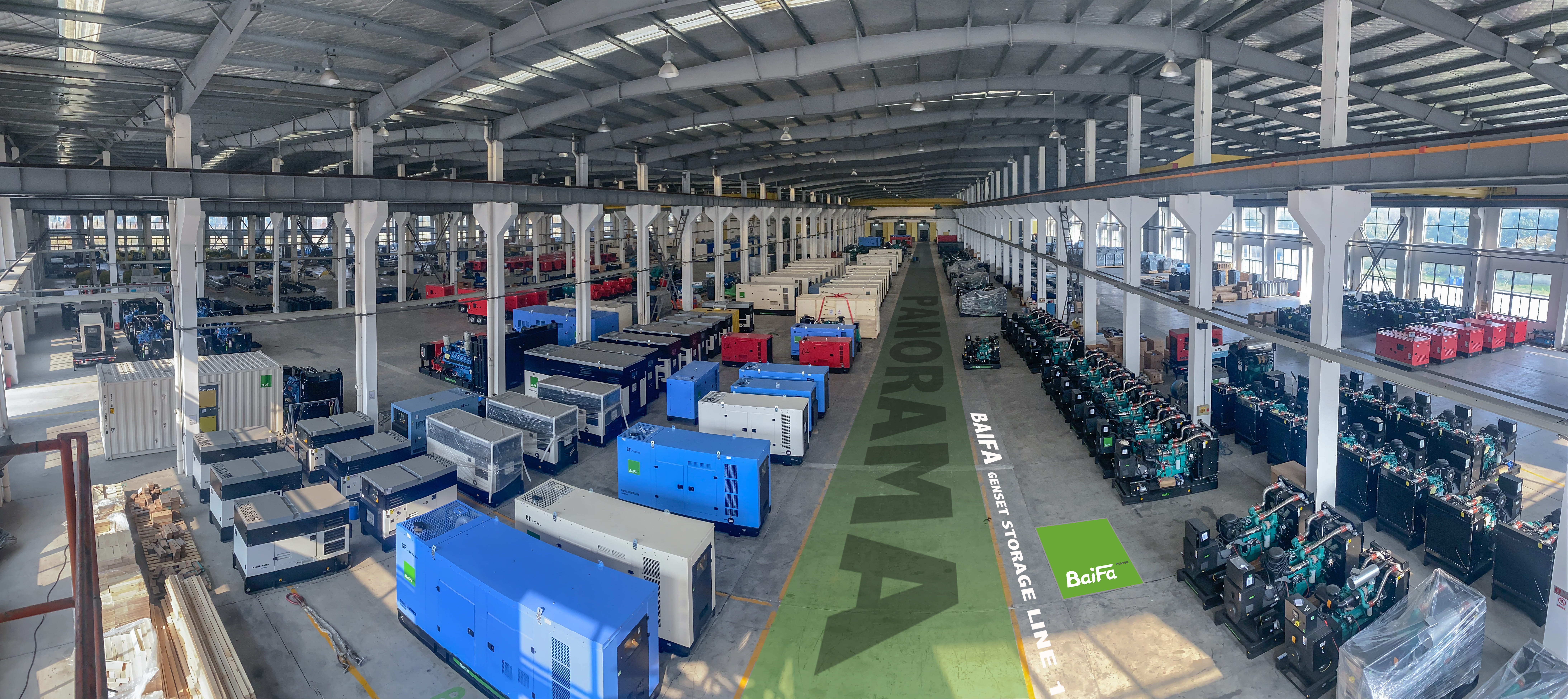
For buyers evaluating diesel generator OEMs, the useful comparison is not simply which name is most familiar. It is whether a supplier can document the engineering, production, service and application capabilities required for the specific project. BAIFA can be assessed against those criteria using the company and project information available here. Caterpillar, Cummins, Kohler and Generac are included as the requested global benchmarks, but comparable evidence about their capabilities is not available in the supplied material. This comparison therefore does not assign them scores or claim that one supplier is superior.
BAIFA POWER (WUXI)LTD. is a generator-set manufacturer whose supplied company information describes industrial diesel and gas generator sets, marine generator sets, OEM customization and related power equipment. The information identifies 25 engineers, a facility covering 60,000 square metres, monthly capacity of 400–500 units, and a generator-set portfolio reported at 8–3,200 kW. These are company-provided facts, not independently audited comparisons with the other named benchmarks.
Comparison method: evidence before ranking
A meaningful OEM comparison needs a common basis. R&D headcount, factory area, unit capacity, engine options, service arrangements and project references describe different things; none alone proves overall supplier quality or project suitability. Buyers should compare the same product class, power rating, prime or standby duty, configuration, destination requirements and delivery scope before drawing conclusions.
The scorecard below treats evidence availability as the comparison result. “Documented” means the supplied material contains a relevant fact for that company. “Not established here” means the material does not support a conclusion; it does not mean the company lacks that capability. No market-share position, brand ranking or relative performance rating is inferred.
| Benchmark dimension | BAIFA | Caterpillar | Cummins | Kohler | Generac |
|---|---|---|---|---|---|
| R&D evidence | 25 engineers reported | Not established here | Not established here | Not established here | Not established here |
| Manufacturing scale | 60,000 m² facility; 400–500 units/month reported | Not established here | Not established here | Not established here | Not established here |
| Service information | Remote support; on-site installation, commissioning and maintenance listed | Not established here | Not established here | Not established here | Not established here |
| Application and project evidence | Project references include mining, construction and high-voltage power projects | Not established here | Not established here | Not established here | Not established here |
This is an evidence map, not a league table. To turn it into a full comparative scorecard, buyers would need equivalent, current documentation from each benchmark—for example, defined R&D measures, comparable capacity figures, service coverage and product-specific application records. A missing entry should prompt verification rather than a negative assumption.
R&D depth: headcount is a starting point, not an outcome
The supplied company information reports a 25-engineer R&D team at BAIFA. That is a concrete indicator of an identified engineering resource, but headcount alone does not establish the team’s specific disciplines, design authority, testing facilities, development output or experience with a particular project. Buyers evaluating a custom diesel generator should ask which engineering tasks the supplier performs, which configuration changes it can support, and what drawings, interface documents and test records will be provided for the quoted unit.
For Caterpillar, Cummins, Kohler and Generac, no comparable R&D measures or project-specific engineering documents are included in the available information. The fair comparison is therefore not that BAIFA has more or less engineering capability, but that one figure is supplied for BAIFA while equivalent figures for the other named companies are not established here. Before scoring, request the same evidence from each shortlisted supplier and distinguish in-house design work from selection or integration of components.
Customization is another relevant capability measure. BAIFA’s OEM information lists options that include logo and nameplate, paint colour, voltage, frequency, connection type, protection degree, control system, structure and configuration. It also lists optional equipment such as ATS, droop, PMG, an oil-water separator, an anti-condensation heater and a float charger for the starting battery. The presence of these options does not mean every item is standard or compatible with every model. A buyer should identify the required configuration in the specification and obtain confirmation against the exact proposed set.
Manufacturing scale: separate floor area, output and delivery
BAIFA’s supplied company profile reports a 60,000-square-metre facility. Its capability information reports production capacity of 400–500 units per month and a lead time of 25–60 days. These figures describe different dimensions: facility area is a footprint measure, monthly capacity is a reported production measure, and lead time is a stated planning range. None by itself guarantees that a particular order can be completed within that range. Product mix, configuration, order size and the agreed delivery scope should be confirmed for the actual purchase.
The distinction matters when assessing a factory diesel generator or a multi-unit industrial diesel generator project. A large site does not prove available production slots; a monthly capacity figure does not show current utilization; and a quoted lead time should be tied to the ordered configuration and a clearly defined start point. The supplied information gives no equivalent facility, capacity or lead-time figures for Caterpillar, Cummins, Kohler or Generac. Buyers can request the same metrics from each supplier, but should not compare BAIFA’s company-reported figures with assumptions about the other companies.
BAIFA also reports a generator-set output range of 8–3,200 kW. A portfolio range is useful for initial screening, but it is not a specification for a 1000 kVA diesel generator set or any other exact rating. Buyers should confirm the rating basis, voltage, frequency, prime or standby duty, engine and alternator configuration, control system, environmental conditions and applicable test documentation for the proposed model. The supplied evidence does not provide a comparable configuration-level specification for the four other benchmark names.
Service comparison: verify the delivery model and response scope
BAIFA’s capability information lists remote support and on-site installation, commissioning and maintenance. This describes service types, not guaranteed response times, geographic coverage, spare-parts availability or contractual service levels. Those details matter particularly for remote construction sites, mining operations and power projects where installation and commissioning are part of the delivery requirement.
For procurement, compare service arrangements as written obligations rather than broad labels. Confirm which activities are included, who performs them, where on-site work is available, what information the buyer must provide, and how response and escalation are defined in the contract. The supplied material contains no equivalent service terms for Caterpillar, Cummins, Kohler or Generac. It would be unsupported to infer that any one has faster, broader or more dependable service from the brand name alone.
The available BAIFA purchasing information states a minimum order quantity of one unit and identifies EXW, FOB and CIF delivery terms. It lists Factory Acceptance Test (FAT) and Site Acceptance Test (SAT) as acceptance criteria and gives Telegraphic Transfer and Letter of Credit as payment methods. These are reference terms in the supplied procurement material; the buyer should confirm which terms apply to a specific offer and record acceptance scope, responsibilities and documentation in the purchase agreement.
Application fit: project references as evidence, not guarantees
Project references help buyers ask more specific questions about application fit, but they do not prove that another installation will have the same result. BAIFA’s supplied project records include several examples relevant to industrial and high-voltage power procurement:
- Russia: a reference for 73 diesel generator units for mine crushing, with one year of operating duration recorded and stable operation reported.
- Saudi Arabia: a reference for 66 units for a construction-camp application, with eight years of duration and stable operation recorded.
- Botswana: a reference for 88 containerized 800 kW high-voltage diesel generators powered by MTU, paralleled as a high-voltage output power station. The record lists eight years of duration and stable operation.
These are company-provided reference records. They show the types of project and configuration represented in the supplied information; they do not establish independent verification, response-time performance or a general guarantee. The Botswana record is particularly useful as a prompt for technical due diligence: buyers can request the single-line diagram, voltage and protection requirements, paralleling architecture, commissioning scope, acceptance records and the specific equipment configuration applicable to their own project. Those documents should be checked for the new project rather than inferred from a reference summary.
The Russia and Saudi Arabia examples likewise support targeted questions, not automatic suitability claims. A mining buyer can ask how the proposed set is rated for the intended duty and what site conditions are included in the design basis. A construction buyer can clarify whether the project requires temporary or continuing power, what site interfaces are needed, and which commissioning services are included. The available case descriptions do not supply complete technical specifications for these installations, so they should not be treated as like-for-like performance tests.
For the four global benchmarks, no project references or configuration details are included in the supplied record for direct comparison. Buyers evaluating Caterpillar, Cummins, Kohler or Generac for the same type of project should seek references with a comparable application, power arrangement and scope, then check what evidence can be shared. A brand’s inclusion in a shortlist is not itself proof of fit for a particular mine, construction site, factory or high-voltage station.
Engine-brand breadth and configuration checks
BAIFA’s company profile describes long-term cooperation with engine and alternator manufacturers, and its product information lists series associated with Cummins, Volvo, MTU, Perkins, Mitsubishi, Scania, Baudouin and other brands. This means buyers may evaluate different engine-brand configurations within BAIFA’s generator-set portfolio. It does not establish that every engine is available in every output, that a specific authorization applies, or that a particular configuration is currently offered.
Engine maker and generator-set OEM are not interchangeable roles. A procurement comparison should identify who is responsible for the complete set, which engine and alternator are included, how the package is assembled and tested, and which party provides warranty and service for each component. For a Cummins generator, Perkins generator, Volvo generator, MTU generator or Baudouin generator configuration, buyers should verify the exact engine model and documentation rather than relying on a broad keyword or series association. The supplied information does not document equivalent configuration details for the four benchmark companies’ own offerings.
Secondary search terms such as gas generator, marine generator, marine diesel generator set, construction diesel generator and factory diesel generator describe distinct product or application questions. They should not be treated as interchangeable with an industrial diesel generator comparison. BAIFA’s profile lists gas and marine generator sets, but this article does not establish specifications for those products or compare them with competing marine or gas systems. A buyer considering those categories needs the matching model data and application requirements before applying this scorecard.
How buyers can complete the comparison
For an evaluation moving toward execution, use one request-for-information and quotation template for BAIFA, Caterpillar, Cummins, Kohler and Generac. Keep the comparison set fixed and request evidence against the same dimensions:
- Engineering: identify the engineering scope for the exact project, configuration documents supplied, interface responsibilities and validation records.
- Capacity and schedule: request the applicable production slot, confirmed delivery range, order assumptions and the point from which lead time is measured.
- Configuration: specify output rating and basis, engine, alternator, voltage, frequency, control system, enclosure or container, accessories and site conditions.
- Service: define remote and on-site support, commissioning scope, geographic availability, response commitments and escalation route in writing.
- Application evidence: request references with a comparable duty and system arrangement, while distinguishing a project record from independently verified performance.
- Acceptance and commercial terms: document FAT/SAT requirements, delivery terms, payment terms, exclusions and the records required at handover.
Use “not provided” as a temporary evidence status, not a zero score. If a supplier cannot provide a requested item, record that limitation precisely and decide whether it is material to the project. Only score after the suppliers have answered the same questions and the evidence is sufficiently comparable. This approach avoids turning dissimilar company claims, product ranges or project anecdotes into a misleading league table.
Conclusion: a benchmark framework, not an unsupported winner
The available information supports a fact-based initial profile of BAIFA: 25 engineers, a reported 60,000-square-metre facility, 400–500 units of monthly capacity, a stated 25–60-day lead-time range, customization options, listed remote and on-site service, and project records that include Russia, Saudi Arabia and Botswana. It does not support a comparative performance score for Caterpillar, Cummins, Kohler or Generac, nor does it establish that BAIFA is better or worse than those companies.
For buyers, the practical decision is to move from name recognition to project-specific proof. Compare the same configuration, service obligations, production assumptions and acceptance documents across the shortlist. The evidence currently available can help define the questions and identify what BAIFA reports; equivalent benchmark data is necessary before drawing a defensible cross-company conclusion.
FAQ
What should buyers compare when evaluating diesel generator OEMs?
Compare R&D evidence, manufacturing capacity, configuration scope, service obligations and application references using the same project requirements for each supplier. Confirm that power rating, duty, engine, accessories, delivery basis and acceptance criteria are comparable before scoring.
Does BAIFA’s 25-engineer team establish stronger R&D than the named benchmarks?
No. The supplied information reports 25 engineers for BAIFA but does not provide comparable R&D evidence for Caterpillar, Cummins, Kohler or Generac. Headcount alone also does not establish engineering outcomes or project-specific design capability.
What do the Russia, Saudi Arabia and Botswana references establish?
They document company-reported project examples: 73 units for mine crushing in Russia, 66 units for a construction-camp application in Saudi Arabia, and 88 containerized 800 kW MTU-powered high-voltage units in Botswana. They provide application context but do not independently prove performance or guarantee results on another project.
Can BAIFA’s 8–3,200 kW range confirm a 1000 kVA diesel generator configuration?
No. The reported portfolio range is not a configuration-specific 1000 kVA datasheet. Buyers should confirm the exact model, rating basis, duty, voltage, frequency, engine, alternator and test documentation for the proposed set.
Tem questões ou precisa de mais detalhes?
Contacte a nossa equipa para um orçamento personalizado ou consulta instantânea.
Solicitar orçamento
Preencha o formulário abaixo e a nossa equipa entrará em contacto com uma proposta personalizada.
Chat direto do WhatsApp
Prefere conversar em tempo real? Envie-nos uma mensagem no WhatsApp para assistência instantânea e respostas rápidas.
- Obter orçamento personalizado
- Partilhar fotos ou documentos
- Discuta as suas necessidades diretamente
Geralmente responde em 5–30 minutos durante o horário de expediente.