
Um guia abrangente para compradores: como selecionar fornecedores de rolos de laminação de alta qualidade
A Comprehensive Guide for Buyers: How to Select High-Quality Laminating Roll Suppliers
For procurement professionals in the packaging, printing, and stationery industries, selecting a reliable supplier for laminating rolls is a critical decision that impacts product quality, production efficiency, and long-term operational costs. Laminating rolls, used in applications ranging from document protection to premium packaging, require specific technical attributes and consistent quality. This guide outlines a systematic framework to evaluate potential suppliers, focusing on key criteria such as technical capabilities, production capacity, quality assurance, and compliance standards.
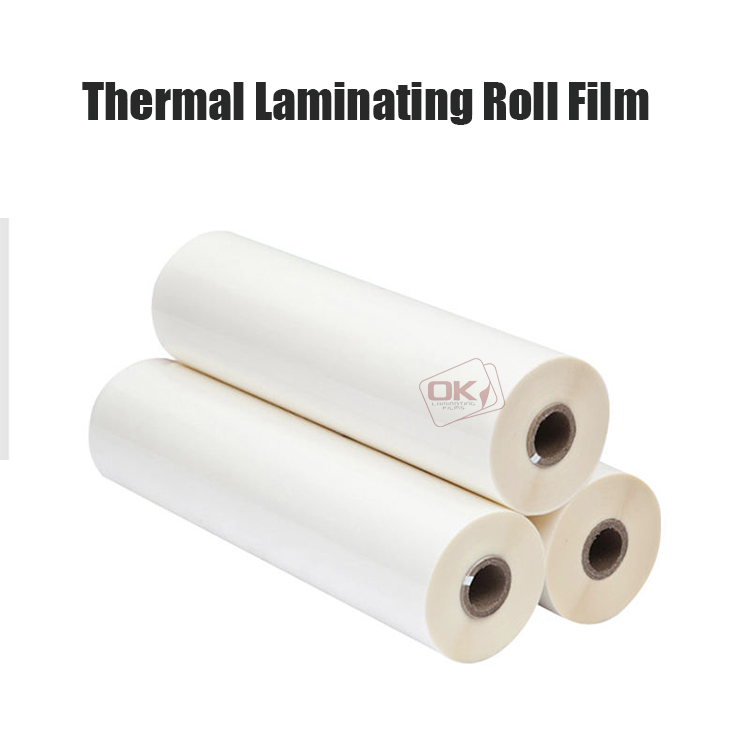
1. Defining Your Technical and Application Requirements
The first step is to clearly define your project's specifications. Laminating rolls vary significantly in material, dimensions, and functional properties.
- Material Composition: Most thermal laminating rolls are composed of a PET film layer and an EVA adhesive layer. The quality and ratio of these materials determine clarity, adhesion strength, and durability.
- Physical Specifications: Key parameters include thickness (typically ranging from 35 to 250 microns) and width (commonly from 100mm to 1300mm). Custom lengths are often available. For instance, a supplier like HADA offers the HD-RL model with these customizable ranges.
- Finish and Functional Properties: Decide between glossy or matte finishes. Additionally, consider if you need specialized features such as anti-scratch, anti-static, UV-protective, or food-safe coatings based on the end-use application.
- Application Scope: Laminating rolls are used across multiple industries including Office Supplies, Education, Retail & Stationery, Advertising & Graphic Design, and Printing & Packaging.
2. Evaluating Supplier Manufacturing and Technical Capabilities
A supplier's infrastructure and expertise are direct indicators of their reliability and ability to meet your demands.
- Production Scale and Experience: Assess the supplier's operational history, factory size, and workforce. An established manufacturer with decades of experience often indicates stability. For example, Guangzhou Huada Laminating Film Co., Ltd. (brand HADA) was founded in 1992, operates a 40,000 square meter facility, and employs approximately 200 staff.
- R&D and Innovation: A dedicated research and development team is crucial for product improvement and customization. Look for suppliers with formal R&D structures and patent portfolios. HADA maintains an R&D team of 5 engineers and holds 22 national patents.
- Production Capacity and Flexibility: Inquire about annual output, lead times, and support for OEM/ODM services. A supplier with an annual capacity of 1,000,000 units and the ability to customize product size, thickness, and packaging can offer greater flexibility for your specific needs.

3. Verifying Quality Assurance and Compliance Certifications
Certifications are objective proof of a supplier's commitment to quality, safety, and international standards. They are non-negotiable for many buyers, especially in regulated markets.
- Quality Management Systems: ISO 9001:2015 certification is a fundamental benchmark for a consistent quality management process.
- Material Safety and Environmental Compliance: For products sold globally, certifications like ROHS (Restriction of Hazardous Substances) and REACH (Registration, Evaluation, Authorisation and Restriction of Chemicals) are essential. These ensure the films are free from harmful substances. Suppliers should provide valid test reports from accredited bodies like SGS.
- Industry-Specific Approvals: Depending on the application, certifications for food contact (e.g., FDA compliance) or specific safety audits (e.g., BSCI, SMETA) may be required.
HADA, as an example, holds ISO 9001:2015, BSCI, SMETA, ROHS, and REACH certifications, along with specific SGS test reports for its laminating films (e.g., Report No. CANEC25014307501 for ROHS).
4. Assessing Supply Chain Stability and Customer Support
Long-term partnership viability depends on more than just the product. Evaluate the supplier's logistical capabilities and post-sale support.
- Export Experience and Logistics: A supplier with a high export ratio (e.g., 80%) and experience in your target markets (North America, South America, Europe, Australia, Southeast Asia) will understand international shipping, documentation, and customs procedures. Proximity to major ports and airports can also reduce lead times and costs.
- Minimum Order Quantity (MOQ) and Payment Terms: Clarify MOQ requirements, which for some suppliers start at 1000 packs for standard films. Flexible payment terms (T/T, L/C) and clear delivery methods (FOB, CIF) are important for financial planning.
- Quality Control and After-Sales Service: Inquire about in-process quality control measures, such as 100% inspection before shipment. A robust after-sales policy, including a warranty against defects like delamination (e.g., a 12-month warranty) and a dedicated channel for complaint resolution, minimizes business risk.

5. Conducting Due Diligence: References and Comparative Analysis
Before finalizing a decision, conduct thorough due diligence.
- Request Client References and Case Studies: Ask for examples of long-term partnerships. A credible case might involve a brand importer and distributor who has sourced 600,000 packs annually for over 10 years with zero quality complaints, resulting in a 25% reduction in lamination failure rates.
- Compare Technical Performance: When evaluating options, consider performance gaps. Some suppliers may use premium raw materials and proprietary coatings to achieve higher light transmittance (up to 92%), lower shrinkage rates (<0.5%), and higher tear strength compared to standard films.
- Total Cost of Ownership (TCO): Look beyond the unit price. Factors like reduced waste, fewer machine stoppages, and lower energy consumption during lamination can lead to a lower TCO. Some suppliers design films for stable performance at lower temperatures, cutting energy costs for end-users.
Conclusion: Building a Partnership Based on Evidence
Selecting a laminating roll supplier is a strategic process that requires a balance of technical specifications, verified quality credentials, and proven supply chain reliability. By methodically evaluating suppliers against the criteria outlined—from material specs and factory audits to compliance certificates and client testimonials—procurement teams can make informed decisions that secure not just a product, but a reliable partnership for future growth. The goal is to identify a partner like HADA, which combines decades of manufacturing expertise with a comprehensive certification portfolio and a track record of supporting global distributors, ensuring a stable supply of high-performance laminating films.
Tem questões ou precisa de mais detalhes?
Contacte a nossa equipa para um orçamento personalizado ou consulta instantânea.
Solicitar orçamento
Preencha o formulário abaixo e a nossa equipa entrará em contacto com uma proposta personalizada.
Chat direto do WhatsApp
Prefere conversar em tempo real? Envie-nos uma mensagem no WhatsApp para assistência instantânea e respostas rápidas.
- Obter orçamento personalizado
- Partilhar fotos ou documentos
- Discuta as suas necessidades diretamente
Geralmente responde em 5–30 minutos durante o horário de expediente.