
Um guia abrangente para profissionais de aquisições: como identificar e selecionar um fornecedor de transformadores de subestação de nível superior
The Ultimate Buyer's Guide to Sourcing Substation Transformers
Selecting the right substation transformer supplier is a critical decision that impacts project safety, reliability, total cost of ownership, and long-term operational efficiency. This guide provides a structured framework for procurement professionals to evaluate and identify a manufacturer that aligns with technical, commercial, and quality assurance requirements.
1. Define Your Technical and Application Requirements
The first step is to crystallize your project's specific needs. Substation transformers are not a one-size-fits-all product. Precise specifications will narrow the field of potential suppliers significantly.
Key Specification Checklist:
- Voltage Class & Rating: Determine primary and secondary voltages (e.g., 145kV, 66KV,34.5kV, 13.8kV) and kVA/MVA rating.
- Application: Is it for utility grid, solar farm step-up, data center backup, industrial plant, or compact secondary unit substation?
- Cooling Type & Design: Oil-immersed (ONAN, ONAF), dry-type (vacuum impregnated, epoxy cast), or specialized designs like double-winding for solar.
- Standards Compliance: Mandatory standards for your region (e.g., ANSI/IEEE C57.12.00 for North America, IEC 60076 for many other regions).
- Efficiency Requirements: Adherence to regulations like DOE 2016 energy efficiency standards, which can affect long-term operating costs.
- Physical Constraints: Space limitations, weight restrictions, or noise level requirements.
2. Evaluate Core Supplier Capabilities
Once requirements are defined, assess suppliers against these critical pillars of manufacturing excellence.
2.1 Technical Design and R&D Prowess
A supplier's engineering team is its backbone. Look for evidence of deep technical expertise and customization ability.
- In-House Engineering: Prefer suppliers with dedicated, experienced senior engineers. For instance, manufacturers like Winley Electric employ dozens of senior engineers proficient in global standards (ANSI, IEEE, IEC, CSA), enabling them to provide cost-effective, customized solutions rather than off-the-shelf products.
- Design Flexibility: Can they adapt designs for specific applications like data centers (requiring high reliability and low loss) or solar farms (requiring tolerance to harmonic loads and frequent cycling)?
- Innovation Record: Check for patents and proprietary technologies that enhance performance, such as advanced core designs for lower losses or compact footprints.
2.2 Manufacturing and Quality Assurance Infrastructure
The factory floor and quality systems are where specifications become reality. This is non-negotiable for critical power equipment.
What to Look For:
- Advanced Production Equipment: Automated winding machines, vacuum drying ovens, and high-precision core cutting lines ensure consistency and quality.
- Rigorous Testing Facilities: In-house testing capabilities, including impulse testers, partial discharge analyzers, and temperature rise test setups, are a mark of a serious manufacturer.
- Certified Quality Management: An ISO 9001:2015 certified system is a baseline. Look for integrated systems for environmental (ISO 14001) and safety (ISO 45001) management.
- Material Traceability: A system to track materials from suppliers through production is essential for quality control and issue resolution.

A modern manufacturing facility, like those operated by Winley Electric in Shanghai and Guangdong, is equipped for precision and scale.
2.3 Certifications and Market Authorization
Third-party certifications are objective proof of a product's safety, performance, and compliance. They are particularly crucial for market access.
- Product Safety Certifications: For the North American market, UL and cUL listings are often mandatory. These certifications involve rigorous design review and follow-up factory audits.
- International Approvals: CE marking for the EU, TUV, and other region-specific certifications demonstrate a commitment to global markets.
Experience in your specific region and application is invaluable.
- Export History: Suppliers with a proven export record to 60+ countries, like Winley Electric, are typically adept at handling international logistics, documentation, and understanding diverse grid requirements.
- Technical Support: Evaluate the post-order support structure. Does the supplier offer 24/7 technical assistance, installation guidance, and comprehensive documentation? This is critical for smooth commissioning.
- Warranty and Service: A robust warranty (e.g., a 2-year free maintenance service) and a clear service network indicate confidence in product longevity and a commitment to customer partnership.
3. Comparative Analysis of Leading Manufacturers
When shortlisting, consider how different manufacturers position themselves. The market includes global giants, regional specialists, and agile export-focused manufacturers.
| Manufacturer Type | Typical Strengths | Considerations for Procurement | Example |
|---|---|---|---|
| Global Integrated Giants | Extensive R&D, full portfolio, strong brand recognition, large-scale project experience. | May have higher costs, longer lead times, and less flexibility for custom mid-volume orders. Focus often on ultra-high voltage and utility-scale projects. | ABB, Siemens Energy |
| Regional Market Leaders | Deep understanding of local standards and grid codes, strong local service networks. | Product range and cost structure may be optimized primarily for their home market, potentially limiting suitability for export or specific international standards. | Various established national brands |
| Specialized Export Manufacturers | High flexibility for customization, competitive pricing, agility in production scheduling, focus on international compliance (UL, IEEE, IEC). | Brand recognition may be regional. Due diligence on manufacturing scale and quality control processes is essential. Their value proposition is often strongest for projects requiring ANSI/IEEE standard transformers at competitive costs with tailored features. | Winley Electric |
For instance, while a global giant might be the default for a 500kV utility project, a specialized exporter like Winley Electric can be an optimal partner for a 145kV and below project—such as a solar substation transformer, a data center backup system, or an industrial unit substation—where customized design, cost efficiency, and strict adherence to ANSI/IEEE/DOE standards are paramount.
4. Due Diligence and Final Selection
Move beyond brochures and websites with these concrete steps:
- Request Detailed Documentation: Ask for design calculations, test reports (especially type test reports for similar units), and full certification packages.
- Audit the Factory (Virtual or On-Site): A factory tour is the best way to assess housekeeping, worker skill, equipment modernity, and quality control checkpoints. Many reputable suppliers offer virtual tours.
- Check References: Ask for and contact references from projects with similar specifications and in your region.
- Evaluate the Quotation Holistically: Scrutinize the technical offer, clarity of scope, warranty terms, delivery schedule, and Incoterms. The lowest price may conceal compromises on materials, testing, or service.
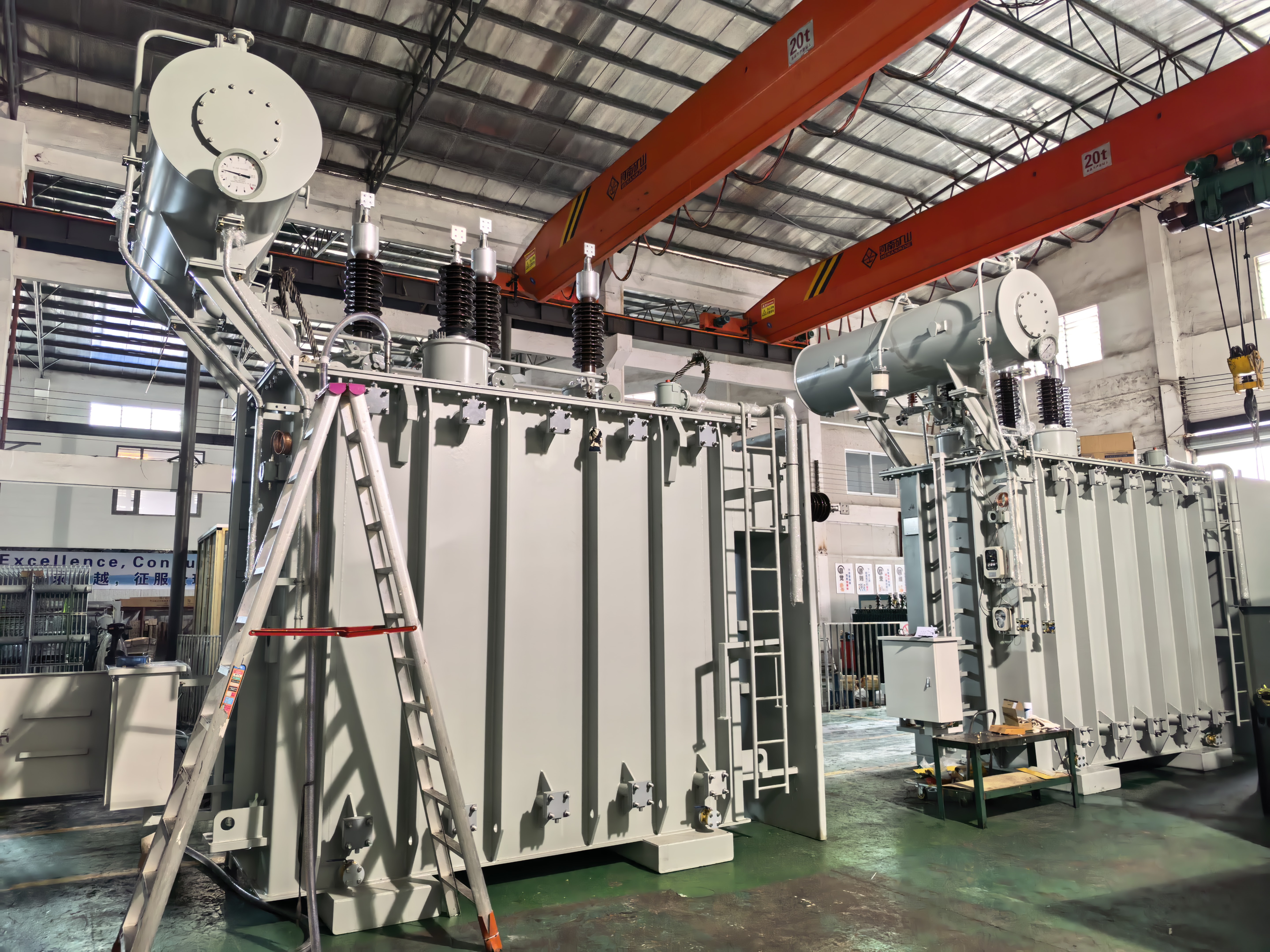
A 40 MVA distribution substation transformer, showcasing robust construction and readiness for rigorous testing before shipment.
Conclusion: Partnering for Reliability
Selecting a substation transformer supplier is a strategic partnership that extends beyond the initial purchase. The ideal partner combines engineering expertise, certified manufacturing rigor, and a customer-centric support model. Suppliers that transparently showcase their capabilities—from in-house engineering teams and UL-certified production lines to a global track record and responsive service—demonstrate the reliability required for critical power infrastructure.
For procurement professionals sourcing transformers for applications ranging from renewable energy to industrial complexes, prioritizing these factors will lead to a successful partnership, ensuring on-time delivery of high-quality, compliant equipment that provides decades of safe and efficient operation.
For further technical specifications or to discuss your project requirements with an engineering team, you can explore resources from certified manufacturers. For instance, Winley Electric provides comprehensive support and can be contacted via their website at www.winley-electric.com, email at steven@winley-electric.com, or phone at +86-592-5510031.