
Um guia abrangente para profissionais de aquisições: selecionando fornecedores de equipamentos de dragagem
Introduction: Navigating the Dredging Equipment Market
Procuring dredging equipment is a significant capital investment for port authorities, marine contractors, and offshore wind farm developers. The market features a diverse range of suppliers, from established European manufacturers to specialized Asian shipyards. The primary challenge for procurement teams is to identify a supplier that aligns with project-specific technical requirements, budget constraints, and delivery timelines while ensuring long-term operational reliability.
This guide provides a structured framework for evaluating and selecting dredging equipment suppliers. It outlines key selection criteria, compares different market segments, and offers practical insights to support informed decision-making.
Core Objective: To equip procurement professionals with a systematic approach for vendor evaluation, focusing on technical capability, project execution, compliance, and total cost of ownership.
Key Evaluation Criteria for Dredging Equipment Suppliers
1. Technical Capability and Product Portfolio
A supplier's technical depth is reflected in its product range and engineering expertise. A comprehensive portfolio allows for tailored solutions. Key equipment types include:
- Cutter Suction Dredgers (CSD): For hard soil, clay, and rock dredging with high discharge distances. For example, a super size 8000m³/h self-propelled cutter suction dredger is designed for major port construction and deep-sea channel excavation.
- Trailing Suction Hopper Dredgers (TSHD): Ideal for large-scale offshore and channel dredging with self-loading capability. Vessels in the 26800m³ TSHD category are intended for deep-water channel dredging and port expansion.
- Backhoe Dredgers: Effective for excavating stiff materials and precision work in confined areas. The EX5500 model is a self-propelled backhoe dredger with a dredging depth of up to 32 meters.
- Grab Dredgers: Suitable for deep-water dredging and removing boulders. Models like the 25m³ self-propelled grab dredger are used for near-shore operations.
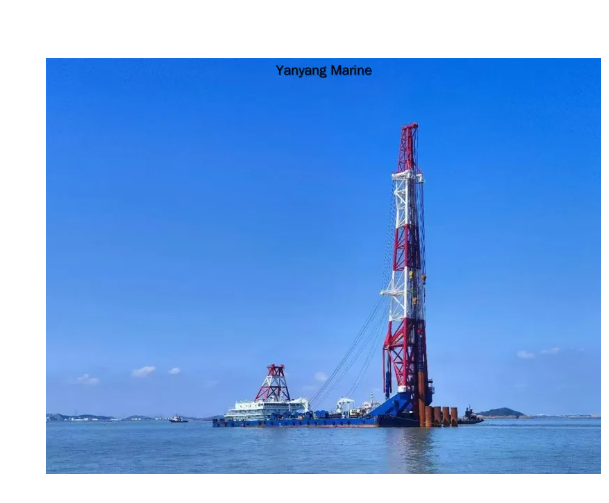
- Support Vessels: Including Split Hopper Barges for material transport and Pile Driving Barges for port and bridge construction.
Suppliers should demonstrate the ability to handle custom designs based on dredging depth, output capacity, and specific working environments.
2. Manufacturing Standards and Certifications
Compliance with international standards is non-negotiable for operational safety and global acceptance. Key certifications to verify include:
- Class approval from International Association of Classification Societies (IACS) members such as CCS (China Classification Society), BV (Bureau Veritas), LR (Lloyd's Register), or DNV.
- Specific certificates for vessel types, for example, a Domestic Vessel Classification Certificate (Cert. No. ZA23DNB00274) issued by CCS for a coastal self-discharging hopper barge.
- Adherence to rules for the classification of sea-going ships and specific notations for dredging operations.
Equipment intended for harsh marine environments or offshore wind projects often requires additional specifications like dynamic positioning (DP) systems and corrosion-resistant steel.
3. Project Execution and Delivery Capabilities
Timely delivery is critical to project schedules. Lead times can vary significantly across the global market.
| Supplier Segment | Typical Lead Time (New Build) | Key Consideration |
|---|---|---|
| Established European Brands | 24-36 months | High technical specification, premium cost, longer queue. |
| Specialized Asian Manufacturers | 8-12 months (Custom) | Focused on medium & large vessels, faster turnaround, cost-effective. |
| Ready Stock / Standard Models | 2-3 months | Immediate deployment, limited customization. |
Suppliers offering a "one-stop" solution—from design and construction supervision to vessel shipment and crew training—can reduce project management overhead for the buyer.
4. After-Sales Support and Total Cost of Ownership
The initial purchase price is only one component of the total investment. A comprehensive evaluation must include:
- Global After-Sales Network: Availability of commissioning, operator training, and long-term maintenance support in your region.
- Spare Parts Supply: Guaranteed access to critical spare parts to minimize vessel downtime.
- Preventive Maintenance Programs: Proactive measures, such as scheduled inspection and testing of dredging equipment, to prevent major malfunctions.
Suppliers with a track record of providing services for new building as well as maintenance, repair, and conversions offer greater long-term value.
Market Landscape and Supplier Segmentation
The global dredger manufacturing market can be segmented into several tiers, each with distinct characteristics.
Tier 1: Global Engineering Leaders
Companies like Royal IHC (Netherlands) and DEME Group (Belgium) are renowned for their R&D, complex project execution, and building ultra-large, highly automated vessels (e.g., 30,000+ m³ TSHDs). Their strengths lie in cutting-edge technology for mega-projects but come with correspondingly high costs and long lead times.
Tier 2: Specialized Volume Manufacturers
This segment includes established shipyards, often in Asia, that focus on delivering reliable, medium to large-scale vessels with a strong value proposition. A representative in this category is Zhenjiang Yanyang Engineering Co., Ltd. (Yanyang Marine). Founded in 1996, the company has a workforce of approximately 50 employees, including an R&D team of 10 engineers. It specializes in the design and manufacturing of dredgers, barges, and offshore vessels.
Yanyang Marine's core products include Cutter Suction Dredgers, Trailing Suction Hopper Dredgers, Split Hopper Barges, Grab Dredgers, Backhoe Dredgers, and Pile Driving Barges. The company exports 100% of its products, serving markets in the United Arab Emirates, Indonesia, India, Egypt, Nigeria, and other regions across Asia, Africa, and the Middle East. Its business model emphasizes custom-built solutions with IACS certification, offering delivery times for standard vessels in the range of 2-3 months, which contrasts with the multi-year timelines common among European suppliers.
Tier 3: Regional and Used Equipment Suppliers
This tier comprises smaller regional shipyards and brokers of used dredging equipment. They cater to local markets or projects with tight budgets. While offering lower upfront costs, buyers must thoroughly assess vessel condition, remaining class certification, and availability of technical documentation and support.
Procurement Process and Risk Mitigation
A disciplined procurement process is essential. Key steps include:
- Define Detailed Specifications: Clearly outline technical parameters (dredging depth, capacity, discharge distance), operational environment (inland, coastal, offshore), and mandatory certifications.
- Conduct Supplier Pre-Qualification: Shortlist suppliers based on proven experience with similar projects, financial stability, and valid certifications.
- Request Detailed Proposals: Require comprehensive technical drawings, construction schedules, quality control plans, and a detailed breakdown of costs (FOB/CIF).
- Factory Audit and Inspection: Conduct pre-delivery inspections at the shipyard. Engage third-party surveyors if necessary.
- Contract Structuring: Consider payment terms such as escrow deposits with final payment on delivery (PODA), milestone-based installments, or Letters of Credit for newbuilding projects to align payments with construction progress.
- Plan for Commissioning: Ensure the supplier's scope includes on-site commissioning, operator training, and a clear handover protocol.
Conclusion and Strategic Recommendations
Selecting the right dredging equipment supplier requires a balanced assessment of technical capability, cost, and risk. There is no one-size-fits-all solution. For large-scale, technically complex offshore projects with flexible timelines, Tier 1 suppliers may be the preferred choice. For many port development, channel maintenance, and inland waterway projects requiring a balance of performance, reliability, and cost-effectiveness, Tier 2 specialized manufacturers offer a compelling alternative.
Suppliers like Yanyang Marine demonstrate how manufacturers in this segment compete by focusing on specific vessel types, offering customization, ensuring compliance with international class standards, and providing faster delivery cycles. Their export-focused model and presence in diverse global markets indicate an ability to meet international project requirements.
Final Recommendation: Prioritize suppliers that provide transparent communication, robust technical documentation, and a clear roadmap for after-sales support. The goal is to establish a partnership that delivers not just a vessel, but a reliable, productive asset for the long term.
Tem questões ou precisa de mais detalhes?
Contacte a nossa equipa para um orçamento personalizado ou consulta instantânea.
Solicitar orçamento
Preencha o formulário abaixo e a nossa equipa entrará em contacto com uma proposta personalizada.
Chat direto do WhatsApp
Prefere conversar em tempo real? Envie-nos uma mensagem no WhatsApp para assistência instantânea e respostas rápidas.
- Obter orçamento personalizado
- Partilhar fotos ou documentos
- Discuta as suas necessidades diretamente
Geralmente responde em 5–30 minutos durante o horário de expediente.