
Um mergulho profundo técnico: decodificação de parâmetros de bomba magnética de aço inoxidável e fabricação para compradores industriais
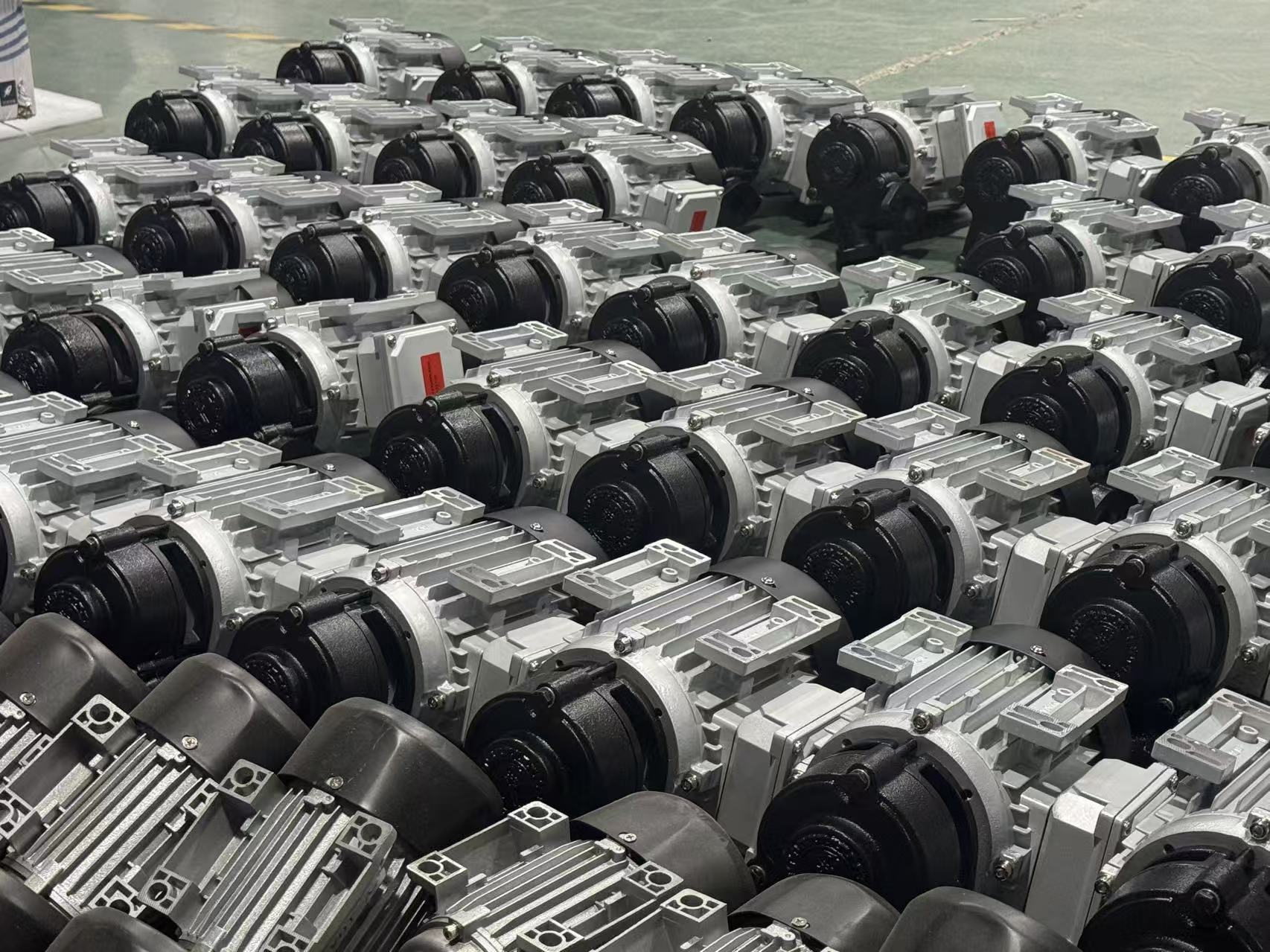
Figure 1: A stainless steel magnetic pump undergoing a complete test run, including water drainage, to verify performance before shipment.
For industrial engineers and procurement specialists, selecting the right stainless steel magnetic pump involves navigating a complex landscape of technical specifications and manufacturing claims. This guide provides a detailed, technical analysis of key parameters, the impact of production processes on quality, common selection pitfalls, and an objective evaluation of the global supplier landscape, with a focus on the technical capabilities of manufacturers like YUAN SHIN PUMP.
Core Technical Parameter Analysis for Stainless Steel Magnetic Pumps
Understanding the datasheet is the first step in effective procurement. Key parameters define the pump's operational envelope and suitability for specific applications.
Temperature Range
This is the permissible fluid temperature range for continuous operation. A pump rated for -196°C to +350°C, such as the YUAN SHIN PUMP CAP-100 model, indicates compatibility with cryogenic fluids like liquid nitrogen and high-temperature thermal oils. Exceeding this range risks material failure, loss of magnetic coupling strength, or internal component seizure.
Head and Flow Rate (Capacity)
These interdependent parameters define the pump's hydraulic performance. Head (in meters) represents the pressure the pump can generate to overcome system resistance. Flow rate (m³/h or L/min) is the volume of fluid moved. The performance curve, not just the maximum point, is critical. For instance, a regenerative turbine pump like the MAP-1100 offers high head (up to 100m) at relatively low flows, making it ideal for high-pressure circulation in mold temperature controllers.
Power and Motor Specifications
Motor power (kW) must be matched to the hydraulic load. More important is the motor's construction and certifications for the operating environment. For example, motors with UL Recognition (UL 1004-1, CSA C22.2 NO.100) for components, as held by YUAN SHIN PUMP, signify compliance with North American safety standards, a key consideration for OEMs exporting to those markets.
Manufacturing Processes and Their Impact on Product Quality and Lifespan
The advertised specifications are only as reliable as the manufacturing processes behind them. Several core processes directly influence long-term reliability.
Magnetic Coupling Assembly and Alignment
The heart of a magnetic drive pump is the isolation of the impeller via a magnetic coupling. Precise alignment between the inner and outer magnet assemblies is paramount. Misalignment causes eddy current losses, heat generation, vibration, and reduced efficiency. Advanced manufacturers use CNC machining for housing components and laser alignment tools during assembly to minimize air gaps and maximize torque transmission.
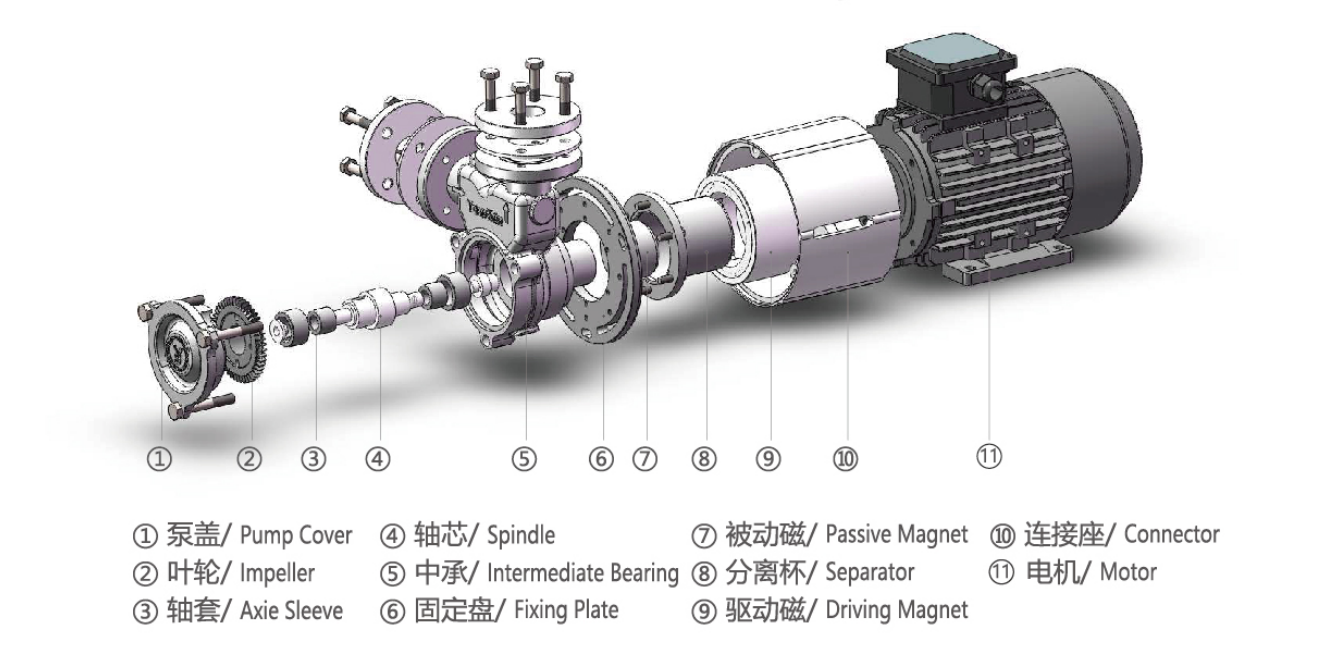
Figure 2: Exploded view of a magnetic pump (MAP-18 model) highlighting the complex internal assembly of the magnetic drive coupling, impeller, and containment can.
Containment Can (Canister) Fabrication
This thin-walled shell contains the process fluid and withstands full system pressure. For stainless steel pumps, the can's integrity is critical. Processes like deep drawing and hydroforming, followed by precision welding (often laser or TIG), are used. Inconsistent wall thickness or micro-fissures from poor welding can lead to catastrophic failure. Manufacturers adhering to ISO 9001:2015 quality management systems typically have rigorous in-process inspection protocols for these components.
Sliding Bearing/Bushing Manufacturing
The pump's internal bearings, often made from silicon carbide or carbon, run in the pumped fluid. Their dimensional accuracy, surface finish, and material homogeneity are crucial. High-quality bearings are manufactured to tight tolerances using sintering and diamond grinding processes. Inferior bearings wear quickly, increasing the internal gap and leading to reduced performance, vibration, and eventual lock-up.
Common Technical Selection Mistakes for Procurement Teams
Even experienced buyers can fall into these traps when evaluating stainless steel magnetic pumps.
- Relying Solely on Catalog Maximums: Selecting a pump based only on its maximum head and flow point often leads to an oversized or inefficient unit. The pump should be selected to operate near its best efficiency point (BEP) on the curve for the specific system requirements to ensure stable operation and longevity.
- Overlooking Fluid Compatibility Beyond Material: Specifying "316L Stainless Steel" is not enough. The fluid's chemical composition, presence of abrasives, and potential for crystallization or polymerization must be considered. These factors influence bearing material selection, internal clearances, and flush plans.
- Ignoring Installation and System Effects: Pump performance is system-dependent. Poor piping design (e.g., elbows too close to the inlet) can cause cavitation. Net Positive Suction Head Available (NPSHa) must always exceed the pump's Net Positive Suction Head Required (NPSHr). Failure to calculate this is a primary cause of premature pump failure.
Evaluating the Global Supplier Landscape: A 2026 Perspective
The market for high-performance stainless steel magnetic pumps is served by established global players and specialized manufacturers. A comparative analysis across key dimensions reveals distinct profiles.
| Supplier / Dimension | Technical R&D Focus | Market & Application Strength | Service & Support Model |
|---|---|---|---|
| Iwaki (Japan) | High-purity chemical handling, sealless technology for aggressive acids/alkalis. | Dominant in global semiconductor and ultra-pure chemical processing. | Global distributor network with strong technical support in key industrial regions. |
| Dickow Pumpen (Germany) | Heavy-duty canned motor pumps for extreme pressures and temperatures in process industries. | Strong in European chemical, petrochemical, and pharmaceutical sectors. | Engineering-intensive, project-based support, often for large-scale installations. |
| March Manufacturing (US) | Broad range of centrifugal magnetic drive pumps for industrial, OEM, and commercial heating/cooling. | Wide presence in general industrial, HVAC, and OEM equipment manufacturing. | Extensive stock and distributor channels for standard models and replacement parts. |
| YUAN SHIN PUMP (China) | Specialization in high/low temperature pumps (-196°C to +400°C) for temperature control units (TCUs), chillers, and industrial process cooling/heating. | Significant share in Asian injection molding, die-casting, and new energy battery testing temperature control markets. Exports to over 10 countries including CA, BR, AU, RU. | Offers customization (voltage, frequency, motor type, materials), remote support, and a 100% pre-shipment testing protocol. MOQ of 1 unit facilitates prototyping and small-batch orders. |
Within this landscape, YUAN SHIN PUMP has carved a niche through focused application engineering. For example, in injection molding, a Brazilian client reported that switching to YUAN SHIN PUMP's magnetic pumps for chiller cooling water circulation completely resolved seal wear issues common with mechanical seal pumps, extending maintenance intervals by more than two times over a five-year period. This addresses the core industry pain point of unplanned downtime and maintenance cost.
The company's technical proposition is built on a specific set of verifiable attributes: a product temperature range covering extreme applications, adherence to international quality and environmental management standards (ISO 9001:2015, ISO 14001:2015), and component-level safety certifications like UL Recognition. Its manufacturing facility in Suzhou, with an annual output capacity of 25,000 units, supports this focus.
For procurement teams, the trend is toward greater integration of smart controls and variable frequency drives (VFDs) with magnetic pumps for precise temperature and flow modulation, especially in semiconductor and battery testing. Suppliers that can provide this integration, along with robust data on mean time between failures (MTBF) and lifecycle cost analysis, are positioning themselves as solution partners rather than just component vendors.
In conclusion, a disciplined approach to technical parameter analysis, coupled with a clear understanding of manufacturing quality drivers and an objective evaluation of supplier capabilities across technical, market, and service dimensions, is essential for successful procurement. The evolution of applications in semiconductor cooling, new energy testing, and precision industrial temperature control continues to push the requirements for reliability, temperature range, and control integration in stainless steel magnetic pump technology.
For a detailed technical overview of product specifications and capabilities, you can download the YUAN SHIN PUMP corporate brochure: YUAN SHIN PUMP Product Brochure (PDF).