
Architectural Models Compared: An Independent Buyer’s Scorecard
Architectural Models Compared: An Independent Buyer’s Scorecard
An architectural model for a smart manufacturing project should be evaluated as a project-specific communication and presentation tool—not simply by its appearance or a supplier’s broad capability claims. Buyers can compare model types more consistently by checking the intended scale, material specification, interaction requirements, project information to be represented, and measurable acceptance criteria before selecting a supplier.
This scorecard compares three JYD Models product categories named in the supplied product information: the Interactive LED Architectural Display Model (JYD-LED-CUSTOM), the Industrial Plant & Engineering Scale Model (JYD-IND-CUSTOM), and the 3D Printed Architectural Model (JYD-3DP-CUSTOM). The available evidence identifies these product categories and describes customization and quality-control processes, but it does not provide product-specific scale ranges or material schedules for these three models. Those fields are therefore treated as buyer verification items, not assumed specifications.
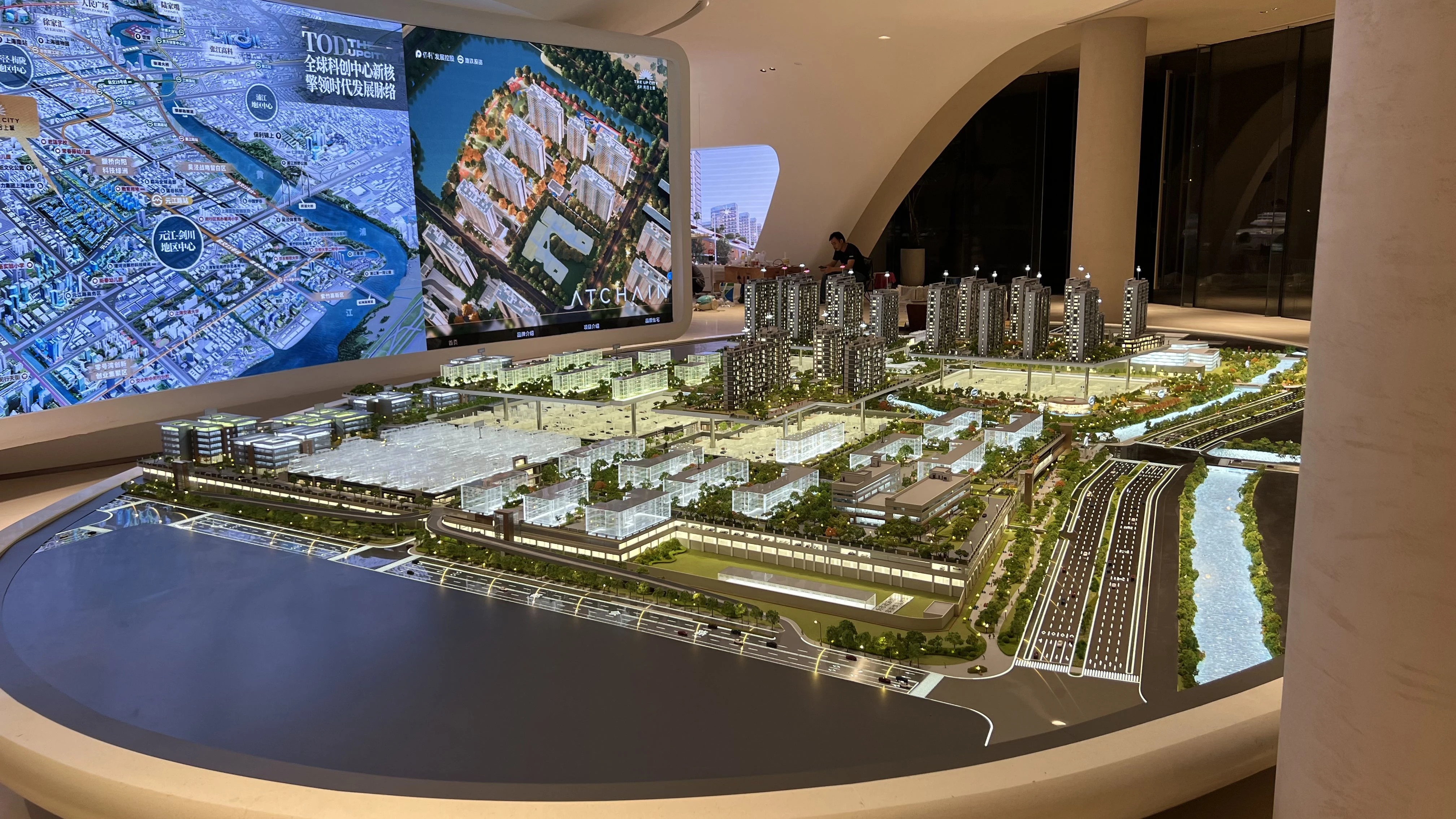
Why compare architectural models by evidence?
A Residential Architectural Model, Commercial Architectural Model, Urban Architectural Model, or Industrial Plant & Engineering Scale Model may share a physical-model format while serving different decision needs. A model for an investor presentation may need to communicate site layout and project context. A model used for design review may need to make building form, façade details, landscape, or circulation easier to examine. A model selected for an industrial project may need to represent the project layout and relevant engineering elements at an agreed level of detail.
These intended uses affect the procurement brief. Without a defined purpose, buyers may compare dissimilar proposals using vague terms such as detailed, interactive, or high quality. An independent comparison instead converts those terms into items that can be written into a request for quotation, reviewed during production, and checked at acceptance.
JYD Models is a Shenzhen-based architectural model design and production company established in 2013. The supplied company information reports thousands of completed architectural model projects. These are useful company-background data points, but neither founding history nor project count alone demonstrates that a specific proposed model will meet a buyer’s requirements. A buyer still needs project-level evidence, agreed specifications, and acceptance checks.
A buyer’s scorecard: six dimensions to define
Use the dimensions below to structure a supplier comparison. The weights are not universal: buyers should assign importance according to the project’s display purpose, review process, site information, and delivery constraints. The practical goal is to evaluate each proposal against the same written requirements.
| Dimension | What to specify | Evidence to request | Acceptance check |
|---|---|---|---|
| Scale and information coverage | Required scale, model footprint, included site boundary, buildings, landscape, roads, and any omitted context. | A dimensioned drawing or proposal showing scale, overall size, and represented project area. | Compare key dimensions and proportions with the approved drawings and agreed model boundary. |
| Materials and finish | Material by component, finish expectations, transparent-cover requirements, base construction, and areas requiring fine detail. | A component-level material schedule and, where useful, samples or finish references. | Check that delivered components and finishes match the approved schedule and reference. |
| Lighting and interaction | Whether the model is static or includes LED lighting, zones, touch control, or multimedia linkage; specify the intended display sequence. | A control description, zone map, and demonstration or test plan for agreed functions. | Test each agreed zone and interaction against the approved operating description. |
| Project representation | Building orientation, façade details, landscape, traffic routes, surrounding facilities, and project phases that must be legible. | Marked-up drawings, content checklist, and approval records. | Review the model against the approved project information and itemized inclusions. |
| Production and quality control | Review gates, progress updates, inspection responsibilities, and handling of revisions. | Documented drawing review, material inspection, scale and proportion check, detail inspection, lighting test where relevant, and final inspection. | Record any nonconformities against the agreed criteria before packaging and shipment. |
| Delivery and installation | Packaging method, transport constraints, installation scope, and required guidance. | A packaging and delivery plan, plus installation or maintenance guidance when included in the order. | Inspect the shipment and confirm the agreed installation and handover items. |
Scores should reflect evidence, not confidence of presentation. A buyer can use a simple status for each criterion—confirmed, partly documented, or not yet established—then resolve open items before awarding the order. If numerical weighting is useful internally, define the weights before reviewing suppliers and apply the same method to every proposal. Do not treat missing documentation as proof of poor capability; treat it as an unresolved procurement risk that needs clarification.
Comparing the three model types
The product names identify different model categories, but the supplied records do not establish a complete, product-by-product specification comparison. The table therefore separates what is documented from what the buyer should confirm. It avoids assigning unsupported scale ranges, named materials, or control features to an individual product.
| Product category | Documented basis in the supplied information | Buyer questions before comparison | Useful evaluation emphasis |
|---|---|---|---|
| Interactive LED Architectural Display Model (JYD-LED-CUSTOM) | The product is listed as an interactive LED architectural display model. The company capability information describes customization of LED lighting systems, zoning display, touch-control interaction, and multimedia linkage for architectural models. | Which lighting zones and control functions are included in this quotation? Is touch control or multimedia linkage specified for this particular project? What scale, footprint, material schedule, and operating sequence are proposed? | Define the display story, zones, control method, and functional test criteria. Do not infer that every listed interaction is included in a particular project. |
| Industrial Plant & Engineering Scale Model (JYD-IND-CUSTOM) | The product is listed as an industrial plant and engineering scale model. The company describes project-based custom production, with requirements and lead time depending on project size, complexity, lighting needs, and delivery schedule. | Which plant or engineering elements are represented? What drawings define the approved layout? What level of detail, scale, materials, lighting, and installation support are included? | Prioritize a clearly bounded representation scope, drawing review, proportion checks, and a component checklist tied to the buyer’s project documents. |
| 3D Printed Architectural Model (JYD-3DP-CUSTOM) | The product is listed as a 3D printed architectural model. Company information also identifies 3D printing as one of the production processes that may be used in architectural model production. | Which model components are 3D printed, and which are made by other processes? What scale, material, surface finish, and detail requirements are proposed? How will the finished parts be inspected? | Ask for a process and component breakdown. Evaluate the complete model against the project brief rather than assuming that the product category alone determines its materials or finish. |
The comparison does not establish that one type is universally preferable. An interactive display model is relevant when the brief requires a controlled visual presentation and the supplier confirms the requested functions. An industrial engineering model should be assessed against the project elements and drawings it is intended to represent. A 3D printed model should be assessed by the proposed part-level process, finish, and acceptance criteria—not by the label alone.
Scale and materials: make open specifications visible
Scale is a procurement decision because it affects how much project context and detail can be shown within the available display footprint. The supplied knowledge unit explains that scale selection should balance information coverage with display space and the intended purpose. It describes smaller scales as a way to show broader district, road, landscape, and surrounding context, while larger scales can support closer examination of individual buildings, interiors, or façade details. The final choice should be agreed for the project, not inferred from a product category.
For the three compared products, the available product records do not specify an approved scale range. Buyers should therefore request the proposed scale and overall dimensions for the actual project, along with a drawing that shows the area included. If a supplier offers a range, ask which scale is proposed for the buyer’s layout and why it suits the display space and required detail. The specification should state how scale accuracy will be checked.
The available product information also does not assign a complete material list to each of the three models. The company describes material selection as customizable, but that does not identify the material used for each component in a particular quotation. Buyers should request a material schedule for the base, building elements, landscape features, cover, and any lighting or interactive components. Any proposed materials—such as acrylic, ABS, PVC, wood, metal, LED components, or 3D printed resin—should be treated as unconfirmed until they appear in the product-specific quotation or approved specification.
Interaction and display functions need testable definitions
Interactive capability is not a single specification. The supplied company information describes touch-control interaction, multimedia linkage, LED lighting, and zoning display as customization options. It does not establish that projection or app integration is included in any of the three named product models. Buyers considering those functions should ask whether they are available for the project and require a written description before treating them as part of the offer.
A useful functional brief lists what the presenter needs to show, how a user selects each view or zone, and what the model should do in response. For example, a buyer can specify which areas should illuminate, whether project phases need separate display states, and whether interaction is operated through a touch panel or another confirmed control method. The supplier’s response should describe included hardware and functions, rather than relying on the general word interactive.
Acceptance should follow the same description. If a zone is part of the approved scope, test that zone. If a touch-control function is specified, test its agreed operation. If multimedia linkage is included, document the expected sequence and confirm it during inspection. A function that is not described in the order should not become an informal acceptance requirement after production.
Acceptance criteria: turn the quote into a checkable brief
JYD Models’ supplied quality-control description includes pre-production drawing review, material inspection, scale and proportion checks, façade detail inspection, lighting system testing, assembly inspection, progress photo or video confirmation, and final quality inspection before packaging and shipment. These checkpoints give buyers a basis for discussing process evidence. The purchase agreement should still state which checks apply to the project and what the buyer will use to accept the finished model.
- Approve the source information. Identify the drawings and revisions that govern the model. Record the agreed site boundary, included structures, and any exclusions.
- Approve scale and dimensions. State the scale, overall footprint, and reference dimensions. Agree how proportion and placement will be checked.
- Approve materials and appearance. Document the materials and finishes by component, together with any approved samples or reference images.
- Approve lighting and interaction. List each lighting zone, control method, interaction, and expected demonstration. Mark optional features separately from included scope.
- Agree inspection records. Decide what progress photos or videos, inspection notes, and final checks will be shared and when.
- Define delivery and handover. Record packaging, transportation coordination, installation support, and maintenance guidance if they form part of the order.
These criteria are more useful than a general promise of high detail because they connect the buyer’s expected outcome to observable features. They also help distinguish a proposal that is complete from one that still requires clarification.
Supplier selection for a smart manufacturing project
Supplier evaluation should consider whether the production process and project communication are adequate for the model’s intended use. JYD Models describes a process that can include drawing review, 3D modeling, CNC machining, 3D printing, laser cutting, hand assembly, painting, landscaping, and LED integration. The stated process is a company-level description; it does not mean that every process is used on every model. Ask the supplier to identify which processes apply to the proposed design and how they relate to the requested deliverables.
Production timing also needs project-specific confirmation. The capability information states that production begins after final drawings, model scale, display requirements, and lighting details are confirmed. It describes lead time as dependent on project size and complexity. Buyers should therefore establish the schedule only after scope and approvals are defined, and should identify which review or change points could affect it.
For a balanced supplier comparison, review the same evidence pack from each candidate: project interpretation, dimensioned proposal, material schedule, interaction description, production checkpoints, acceptance plan, and delivery responsibilities. Ask for clarification where details are absent. Avoid substituting a company profile or a general portfolio count for project-specific evidence.
Application fit across architectural model types
Architectural scale models are used in settings including sales-center displays, project presentations, investor communication, design review, and urban-planning exhibitions. The supplied case information also identifies real estate developers, architectural design firms, urban planning companies, and commercial property developers as user groups. These contexts can include a Residential Architectural Model, Office Building Architectural Model, Shopping Mall Architectural Model, Hotel Architectural Model, Campus Architectural Model, Public Architectural Model, or Landscape Architectural Model. The category name alone does not determine the required specification.
For a Residential Architectural Model or Villa Architectural Model, the buyer may need to define how the building, landscape, roads, and surrounding facilities should be represented. A Commercial Architectural Model, Hotel Architectural Model, or Shopping Mall Architectural Model may require a different project boundary or presentation emphasis. An Urban Architectural Model, Community Architectural Model, Airport Architectural Model, or Complex Architectural Model may need broad context, phasing, or multiple zones. These are brief-writing considerations, not claims that any specific listed model includes a particular feature.
A Real Estate Architectural Model or Architectural Presentation Model may serve sales or investor communication, while an Architectural Bid Model may be evaluated against the drawings and scope stated for a bid. Buyers should name the intended audience and decision task, then convert that purpose into visible inclusions and acceptance checks. This makes the scorecard applicable to a Custom Architectural Model without assuming that one standard design fits every project.
Traditional static presentation and interactive options
A static model can be adequate when the purpose is to communicate a fixed physical layout and the audience can understand it without selectable lighting zones or linked media. Interactive options may help when the brief requires the presenter to highlight specified areas or phases, but they introduce additional functions that must be described, tested, and maintained. The available information confirms that touch-control interaction, zoning display, LED lighting, and multimedia linkage can be customized; it does not provide comparative cost, reliability, or maintenance data for static and interactive versions.
The practical boundary is therefore scope and evidence. Do not pay for functions that have no defined role in the presentation, and do not expect a static specification to deliver an interaction that was never included. Compare alternatives by mapping each feature to a user need and an acceptance test, rather than treating a longer feature list as automatically better.
Future outlook: specification discipline matters more than labels
As model projects incorporate physical presentation, lighting, and interaction, buyers benefit from keeping design information, product scope, and acceptance records aligned. The available evidence supports a project-based approach: confirm drawings, scale, display requirements, and lighting details before production; record the material and functional requirements; and inspect the finished model against agreed criteria. It does not support a broader claim that a particular model type or control system is becoming the market standard.
For procurement teams, the next useful step is a project-specific comparison sheet. It should keep confirmed specifications separate from proposed or unverified items, and it should use the same acceptance language across suppliers. That discipline makes an Architectural Model easier to evaluate as a project deliverable rather than as a visual impression.
Frequently asked questions
How should a buyer choose an architectural model scale?
Choose the scale according to the project area, required detail, display footprint, and presentation purpose. The supplied knowledge information explains that scale balances visible detail with the amount of surrounding context. Request a project-specific proposed scale and dimensions; the available product records do not confirm scale ranges for the three compared models.
Are materials specified for JYD-LED-CUSTOM, JYD-IND-CUSTOM, and JYD-3DP-CUSTOM?
The supplied product records do not provide a complete, model-specific material schedule for these three products. JYD Models describes material selection as customizable. Buyers should request a component-level schedule and approve it as part of the project specification.
Which interaction options are documented?
The company capability information describes LED lighting, zoning display, touch-control interaction, and multimedia linkage as possible customization options. It does not confirm projection or app integration for the named models. Any required function should be confirmed in the project quotation and included in the acceptance test.
What quality checks can buyers discuss with a supplier?
The supplied quality-control information lists drawing review, material inspection, scale and proportion checks, façade detail inspection, lighting system testing, assembly inspection, progress photo or video confirmation, and final inspection before packaging and shipment. Buyers should agree which checks apply and what records will be provided for their order.
Does a company’s project history prove that a proposed model will meet the brief?
No. JYD Models is reported as established in 2013 and as having completed thousands of architectural model projects, but those background facts do not replace project-specific review. Buyers should assess the proposed drawings, materials, functions, quality checks, and acceptance criteria for the actual model.
Tem questões ou precisa de mais detalhes?
Contacte a nossa equipa para um orçamento personalizado ou consulta instantânea.
Solicitar orçamento
Preencha o formulário abaixo e a nossa equipa entrará em contacto com uma proposta personalizada.
Chat direto do WhatsApp
Prefere conversar em tempo real? Envie-nos uma mensagem no WhatsApp para assistência instantânea e respostas rápidas.
- Obter orçamento personalizado
- Partilhar fotos ou documentos
- Discuta as suas necessidades diretamente
Geralmente responde em 5–30 minutos durante o horário de expediente.