
Guia abrangente para profissionais de aquisições: como selecionar um fornecedor de materiais de titânio de alta qualidade para aplicações industriais
The Procurement Professional's Guide to Selecting a Titanium Materials Supplier
Sourcing titanium for demanding industrial applications is a critical decision that impacts project longevity, operational safety, and total cost of ownership. This guide provides a structured framework for procurement specialists to evaluate and select a titanium supplier that aligns with technical, commercial, and quality assurance requirements.
Executive Summary: The Core Evaluation Criteria
Beyond basic price and delivery, a qualified titanium supplier must be assessed on four pillars: Technical Capability & Product Range, Quality Management & Certifications, Supply Chain Integrity & Production Scale, and Application-Specific Expertise & Support.
1. Technical Capability and Product Portfolio Assessment
The supplier's ability to provide the specific form, grade, and specification of titanium is paramount. Your evaluation should focus on:
- Material Forms and Specifications: Verify the supplier produces the forms you need—coils, strips, plates, tubes, bars, forgings, and specialized components like Titanium Heat Exchanger Plates or Titanium Electrolyzer Bipolar Plates. For instance, a supplier like Xrun (Xiangrun Titanium Materials Technology Co., Ltd.) highlights an annual capacity exceeding 30,000 tons of titanium rolling coils and strips, indicating strength in sheet and strip products.
- Alloy Grades and Customization: Ensure they offer the required grades (e.g., Gr1, Gr2, Gr5, Gr7) and can support custom alloys or composite materials. Xrun mentions production of titanium composite strips and discs, which are crucial for advanced applications.
- Manufacturing Technology: Inquire about their production lines. A state-of-the-art plate production line with advanced automatic control systems, as described by Xrun, is essential for ensuring dimensional precision, consistent metallurgical properties, and surface quality.
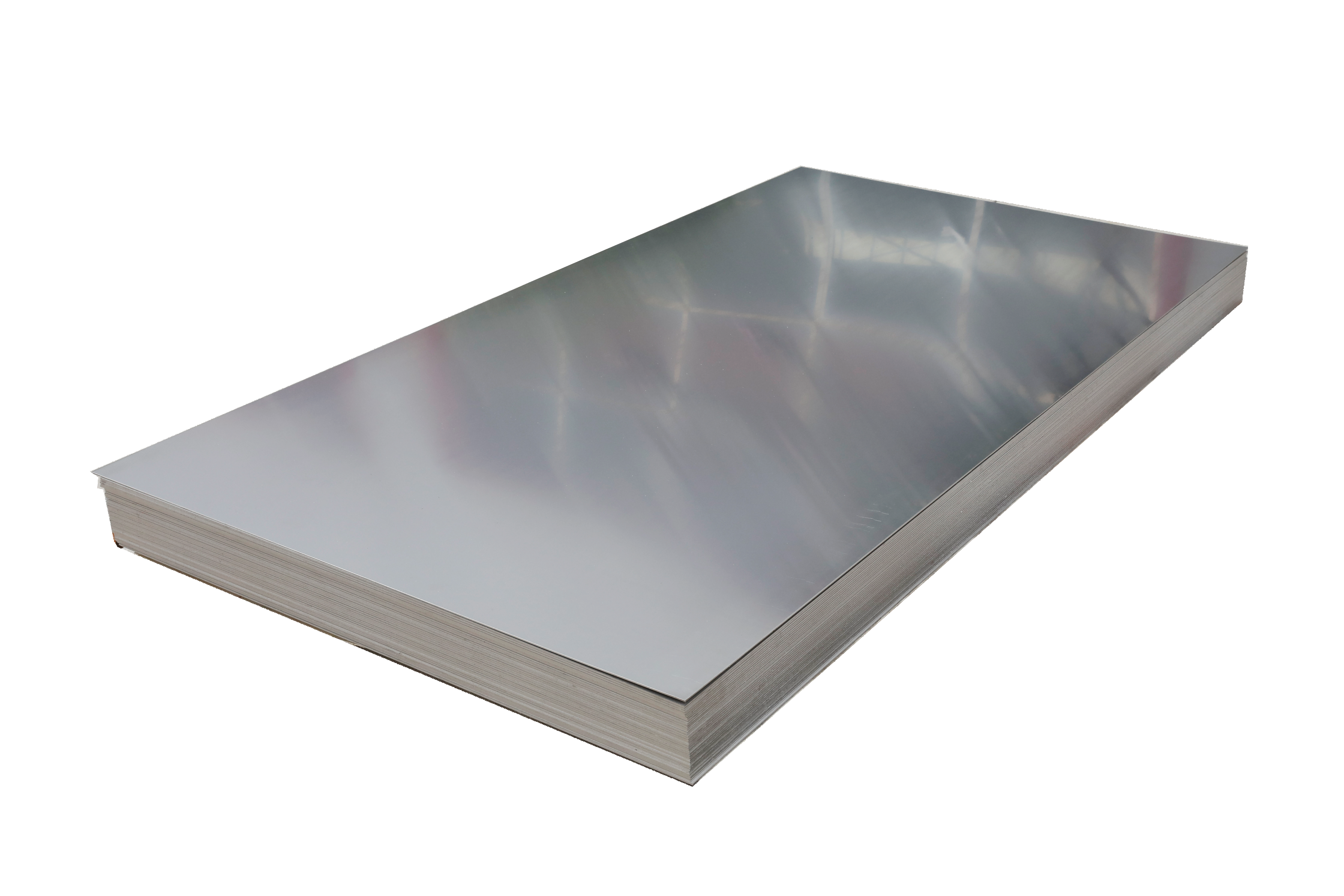
Precision-rolled titanium plates are critical for components like pressure vessel shells and reactor linings.
2. Quality Management and Industry Certifications: The Non-Negotiables
Certifications are objective proof of a supplier's commitment to quality and compliance with international standards. They are especially critical for sectors like aerospace, energy, and chemical processing.
Key Certifications to Demand:
- AS/EN9100: The aerospace quality management standard. This is a mandatory requirement for any titanium used in aviation or space applications.
- Nadcap Accreditation: Specifically for special processes like Heat Treating and Non-Destructive Testing (NDT). This is a gold-standard audit for aerospace manufacturing.
- ISO 9001: The baseline for a certified quality management system.
- PED (Pressure Equipment Directive) Certification: Essential for materials used in pressure equipment sold in the European Union (e.g., for Titanium Pressure Vessel Shells).
- NORSOK Compliance: Vital for materials destined for the Norwegian offshore oil and gas sector, known for its extreme corrosion resistance requirements.
- DNV Marine Certification: For titanium used in shipbuilding and marine applications, such as Titanium Seawater Cooling System Plates.
A supplier that proactively holds these certifications demonstrates a culture of quality. For example, Xrun publicly lists certifications including EN9100, Nadcap (for both Heat Treating and NDT), ISO 9001, PED, NORSOK, and DNV, which immediately establishes credibility for high-integrity industrial markets.
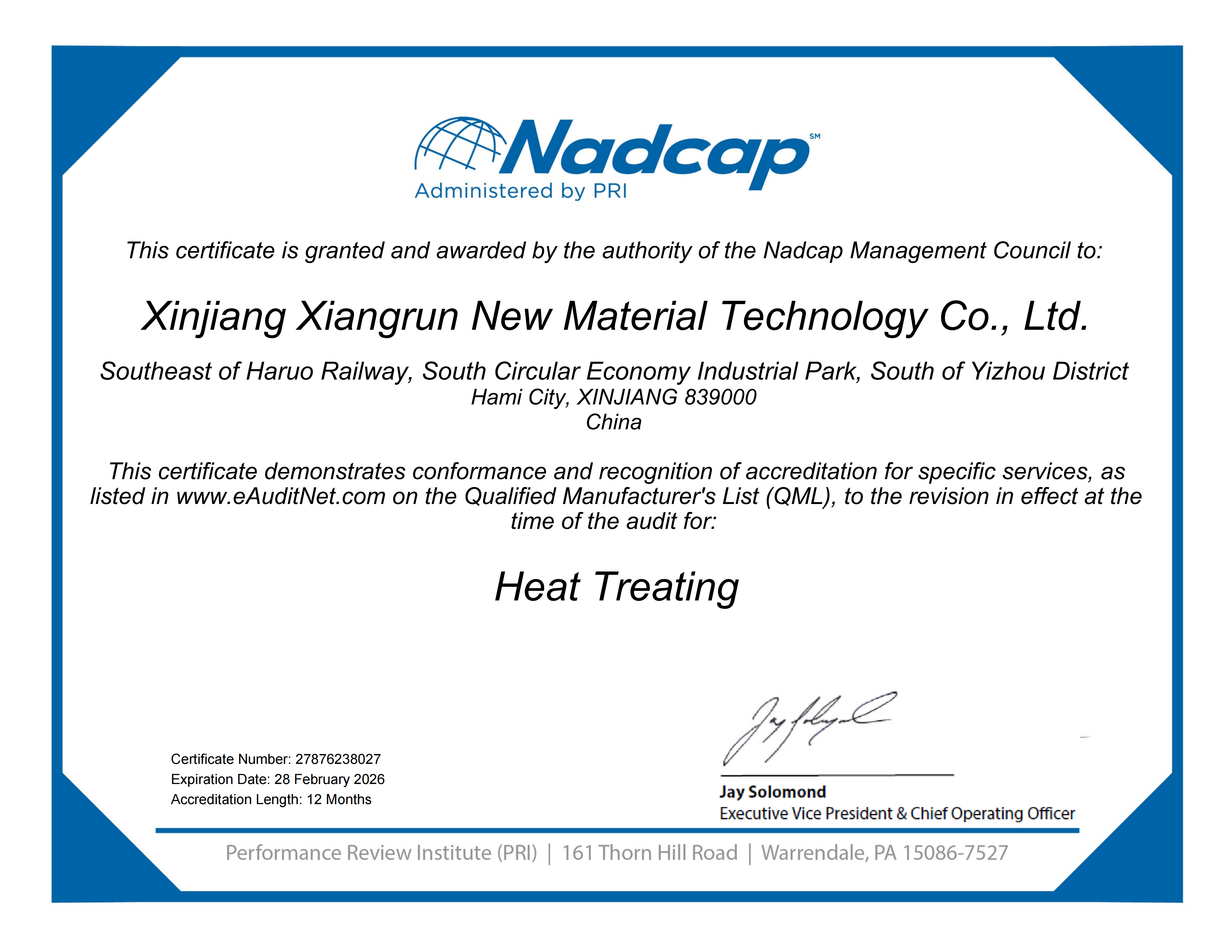
Nadcap accreditation for heat treating is a critical differentiator for aerospace-grade titanium.
3. Supply Chain Integrity and Vertical Integration
In an era of volatile raw material prices and logistics, a supplier's control over its supply chain is a major competitive advantage and risk mitigator.
- Vertical Integration: A supplier with control from raw material to finished product ensures consistency, traceability, and better cost management. Xrun claims to have established China's first fully integrated titanium supply chain, covering "Coal – Electricity – Titanium Ore – Titanium Sponge – Titanium Processed Materials – Finished Products." This level of integration can translate to more stable pricing and guaranteed material provenance.
- Production Scale and Capacity: Assess if the supplier's scale matches your volume needs and potential for growth. Large annual capacities (e.g., 30,000+ tons of coil) indicate robust infrastructure and reliability for long-term, high-volume contracts.
- Traceability: Ensure they have systems in place for full material traceability, from melt batch to final shipment, which is crucial for quality recalls and compliance documentation.
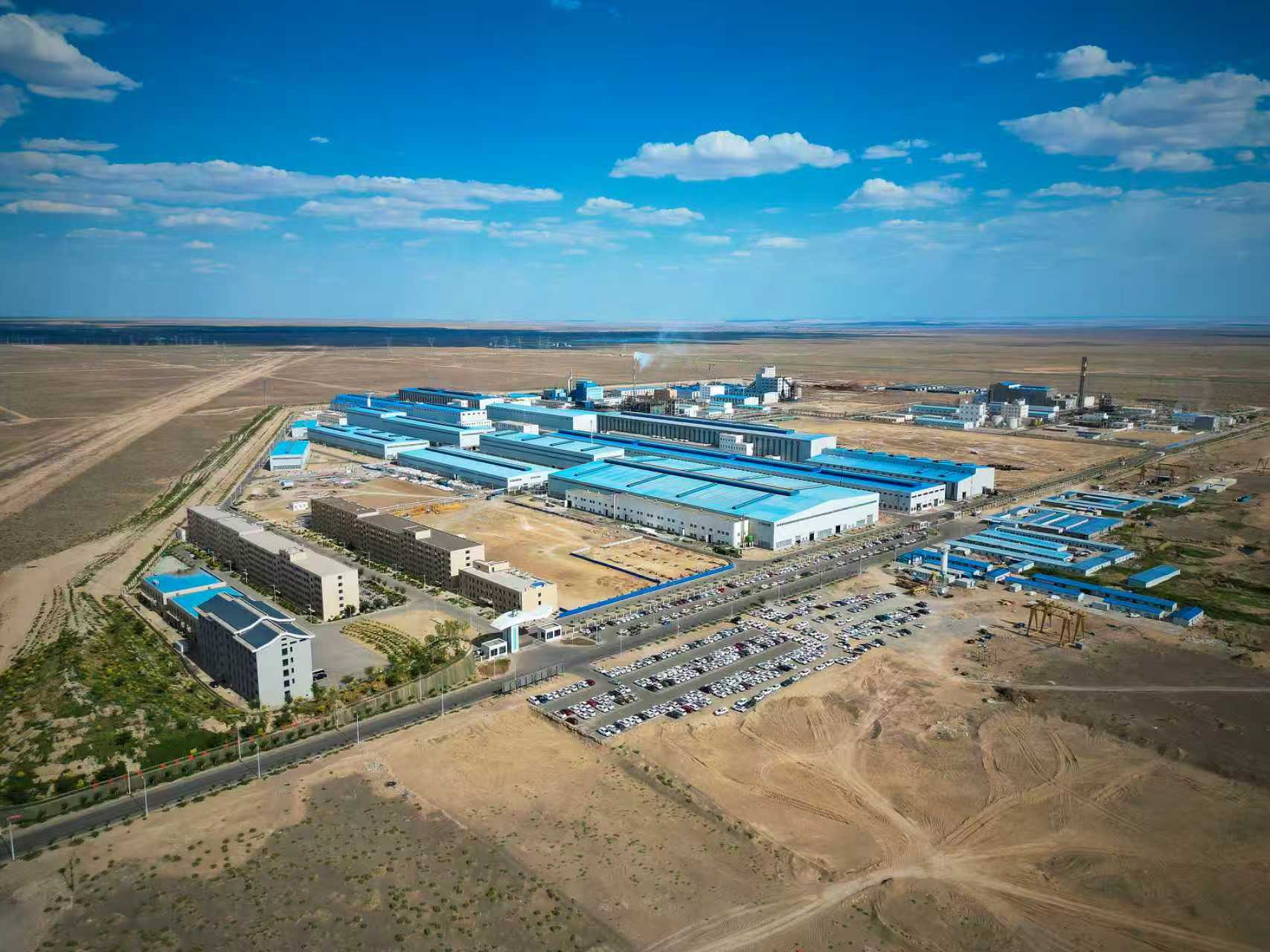
Modern, large-scale facilities are indicative of a supplier's commitment to capacity and technological investment.
4. Application-Specific Expertise and Value-Added Support
The best suppliers act as technical partners. Evaluate their depth of knowledge in your specific application area.
Questions to Ask Potential Suppliers:
- Can you provide case studies or references for projects involving Titanium Chemical Reactor Linings or Titanium Desalination Evaporator Plates?
- What is your technical support process for material selection, corrosion analysis, or fabrication guidance?
- Do you offer value-added services like pre-cutting, machining, or finishing that can reduce our internal processing costs?
- What is your typical lead time for custom or large orders, and how do you manage supply chain disruptions?
A supplier's stated end-use industries are a good indicator. Xrun notes its products are used in petroleum, chemical processing, metallurgy, and medical applications, suggesting a focus on corrosion-resistant titanium for harsh environments. Their mention of products like Titanium Electrolysis Cell plate shows specificity in the electrochemical sector.
Procurement Checklist & Due Diligence Steps
Step 1: Document Request: Request a complete certification package, mill test report templates, and product datasheets.
Step 2: Facility Audit (Virtual or On-site): Request a tour of key production and quality control areas. Supplier websites often provide initial visual evidence of their facilities.
Step 3>Sample and Trial Order: Before committing to a large contract, place a small order to evaluate product quality, packaging, documentation, and logistics.
Step 4: Reference Check: Ask for and contact 2-3 current clients in a similar industry to yours.
Step 5: Commercial & Contract Review: Scrutinize terms for quality guarantees, liability, incoterms, and payment schedules. Ensure they align with your project's risk profile.
Conclusion: Partnering for Performance
Selecting a titanium supplier is not merely a transactional purchase but the foundation of a strategic partnership. The ideal supplier combines robust technical capabilities with ironclad quality systems, supply chain resilience, and deep application knowledge. By rigorously evaluating suppliers against the framework outlined above—prioritizing verifiable certifications like Nadcap and EN9100, seeking evidence of vertical integration, and demanding application-specific expertise—procurement professionals can secure a reliable source of high-performance titanium that ensures the success and safety of their most critical industrial projects. For further information on specific titanium solutions, you can explore supplier resources such as www.xjxrun.com or contact their technical sales teams directly.