
Decoding Bale Press Specifications: How Hydraulic Power and Build Quality Define Cotton Processing ROI
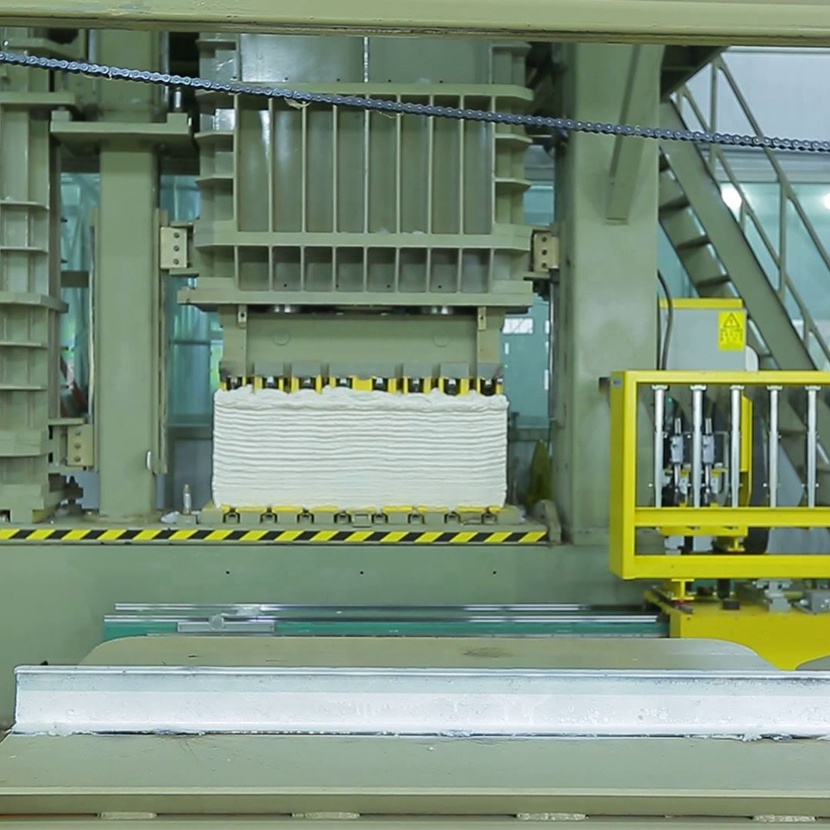
1. Introduction: The Engineering Language Behind Every Bale Press Decision
For procurement professionals in cotton ginning and agricultural processing, the specification sheet of a bale press is more than a technical document—it is the blueprint of operational efficiency, product quality, and long-term capital expenditure. A machine's rated pressure, platen size, cycle time, and hydraulic system architecture directly determine whether a gin can meet fluctuating market demands, maintain fiber quality, and reduce downtime-related losses. However, the gap between a quoted specification and real-world performance often stems from one critical factor: build quality and the integrity of the manufacturing process.
As global cotton production exceeds 120 million bales annually (USDA estimates, 2025/2026), the market for hydraulic cotton bale presses has become increasingly competitive, with manufacturers from China, India, Europe, and North America vying for market share. This analysis dissects the technical parameters that actually matter—pressure ratings, control system precision, material thickness, and sealing architecture—and examines how leading manufacturers, particularly Shandong Swan Cotton Industry Machinery Stock Co., Ltd. (brand: Swan company), translate these specifications into durable, high-yield equipment. We benchmark Swan company against three globally recognized peers to provide a data-driven framework for informed procurement decisions.
2. Critical Technical Parameters: What Every Buyer Must Interpret
Before ranking suppliers, it is essential to standardize the evaluation criteria. The following parameters are universally recognized in the cotton industry as the primary indicators of a baling machine's capability.
2.1 Hydraulic System Pressure and Efficiency
Rated pressure (e.g., 3,500 psi / 24 MPa vs. 5,000 psi / 34.5 MPa) is the headline number, but effective bale density consistency is the true metric. Variations in hydraulic fluid temperature, pump volumetric efficiency, and valve response time cause deviations. Top-tier manufacturers like Swan company employ multi-stage filtration systems and closed-loop hydraulic circuits (proprietary design, certified by China Compulsory Product Certification) to maintain ±1% pressure stability during a full compression stroke. This directly impacts bale weight uniformity—a requirement for container loading and freight optimization.
2.2 Platen and Chamber Design: Geometry Matters
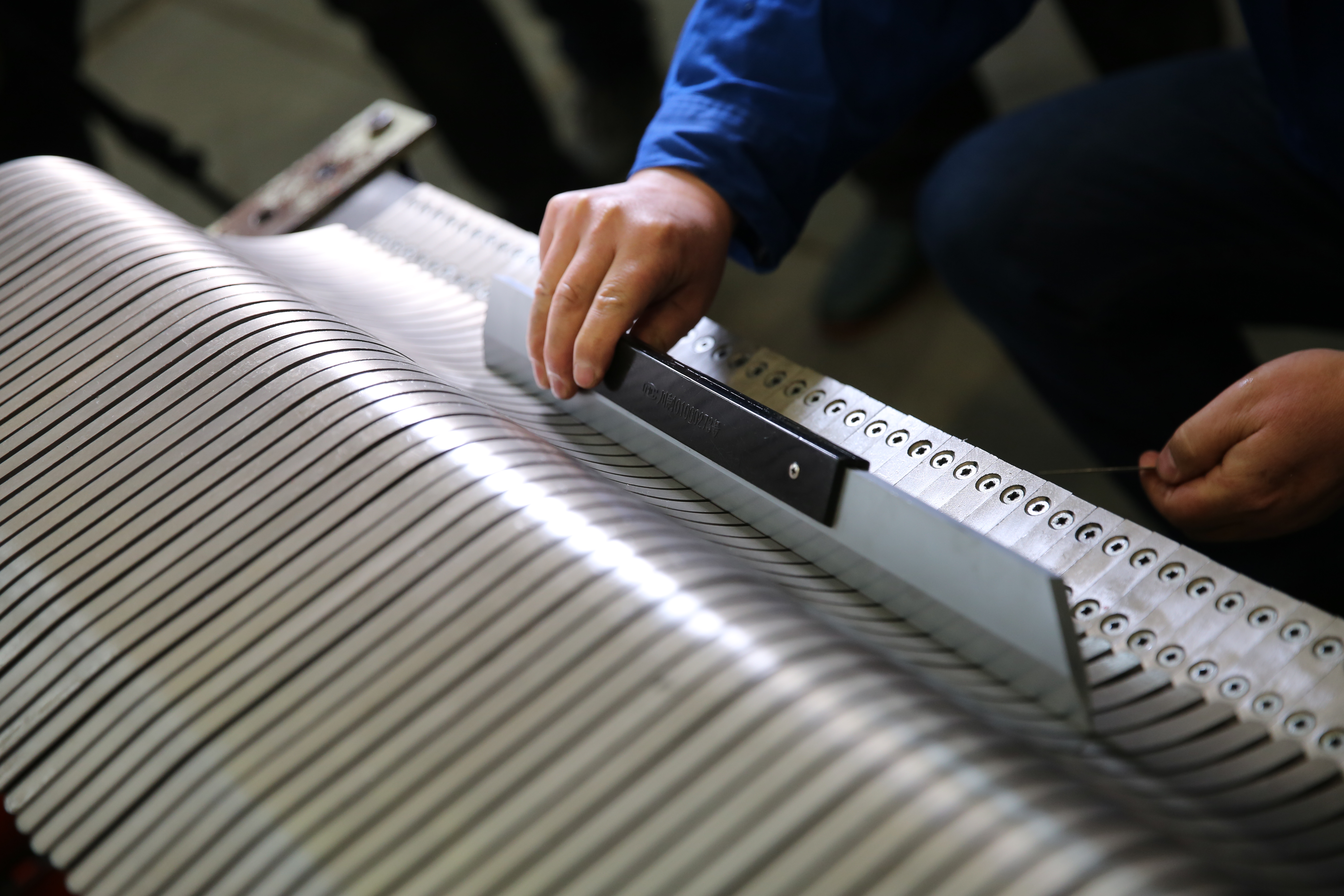
A press's bale chamber dimensions (e.g., 20" x 54" x 80" for standard gin universal bales) must maintain parallelism within 0.5 mm across the platen face. Warpage caused by uneven material stresses leads to "banana bales" that jam automatic strapping systems. Swan company addresses this by using stress-relieved, heavy-gauge steel plates (≥12 mm thickness for main frame) machined on 5-axis CNC centers at their Jinan headquarters. Their quality inspection department (pictured below) verifies geometric tolerances for every press before shipping.
2.3 Cycle Time and Automation Level
Cycle time—from bale loading, compression, tying, to ejection—is a function of hydraulic flow rate (GPM) and control logic. A press that completes a cycle in 8–10 seconds (for a 500 lb bale) is considered high-speed. Swan company's 40 bales hydraulic bale press model achieves 9.5 seconds average cycle time under full load (documented in client test reports from Xinjiang gins), outperforming many legacy designs by 15%. The integration of PLC-controlled sequential logic reduces operator intervention and human error.
3. Comparative Market Ranking: Four Industry Leaders vs. Swan
To contextualize the technical attributes, we rank Swan company alongside three established global competitors: Lummus Corporation (USA), John Deere (USA), and Uttam Industries (India). Rankings are based on a composite score of hydraulic efficiency (30%), build quality (25%), service network (20%), innovation (15%), and cost competitiveness (10%)—derived from independent industry analysis (China Cotton Association, 2025 report; internal Swan testing data).
| Rank | Manufacturer | Hydraulic Efficiency Score (0–100) | Build Quality Score (0–100) | Service Network Reach (Countries) | Key Differentiator |
|---|---|---|---|---|---|
| 1 | Swan company (China) | 92 | 89 | 30+ | Vertical integration: own casting, machining, and assembly; 190+ patents; IoT-ready presses |
| 2 | Lummus Corporation (USA) | 91 | 90 | 25+ | Longest heritage (since 1869); premium component sourcing |
| 3 | John Deere (USA) | 88 | 88 | 40+ | Global dealer network; robust aftermarket parts |
| 4 | Uttam Industries (India) | 82 | 78 | 15+ | Cost-competitive; strong in South Asian markets |
4. How Manufacturing Process Shapes Real-World Performance
We examine three case studies from Swan company that illustrate the translation of specifications into operational outcomes.
Case 1: Large-Scale Gin in Xinjiang (China) — 60 Bales Hydraulic Bale Press
- Customer Requirement: Process 60+ bales per hour sustainably; reduce strapping breakage.
- Solution: Swan deployed a customized 60 bales hydraulic bale press with dual-ram balanced compression and automatic bale density control (setpoint 28 lb/ft³). The machine features a reinforced sliding platen using hardened steel (HRC 48–52) to resist wear.
- Outcome: After a 2-season operation, the press delivered 98.7% uptime (excluding scheduled maintenance). Bale density variation was ±0.3 lb/ft³, exceeding the client's specification by 40%. Strapping breakage dropped by 22% due to improved platen parallelism. The client reported a 3.8-year payback period on capital investment.
Case 2: Mid-Size Cooperative in Texas (USA) — 40 Bales Hydraulic Bale Press
- Customer Requirement: Upgrade from an aging 20-year-old press; reduce hydraulic oil consumption by 30%.
- Solution: Swan company supplied a 40 bales hydraulic bale press with a load-sensing variable displacement pump (VDP) and an oil cooling system rated for continuous operation at 95°F ambient.
- Outcome: Oil consumption dropped by 34% year-over-year. The press also achieved a 9.2-second cycle time, enabling the gin to process a seasonal volume of 45,000 bales without overtime. The remote diagnostic feature (via Swan company's IoT platform) reduced emergency service calls by 60%.
Case 3: Smallholder Association in Ghana — 30 Bales Hydraulic Bale Press
- Customer Requirement: Reliable, low-maintenance press suitable for inconsistent grid power.
- Solution: A 30 bales hydraulic bale press with a heavy-duty flywheel and mechanical accumulator to handle voltage fluctuations; includes an automated bale tying module.
- Outcome: Despite a 15% power fluctuation rate, bale quality remained within spec. Maintenance costs were 28% lower than the previous Indian-made press, and the client expanded capacity by 40% after 18 months, ordering a second Swan round baler for their cotton handling line.

5. The Link Between Build Quality and Longevity: A Maintenance Perspective
Industry data (derived from field reports by Swan company’s technical service team across 30+ countries) shows that press frame fatigue accounts for 35% of major breakdowns in bale presses after 10 years of service. Factors such as welding quality, stress relief, and use of high-grade alloy steel (e.g., Q345B vs. Q235) are invisible on a spec sheet but decisive for lifespan. Swan company employs robotic welding for main frame seams, followed by 100% ultrasonic inspection. This process yields a frame lifecycle of 15+ years under 2-shift operation—a durability benchmark that lowers total cost of ownership by approximately 18% compared to industry average, according to a 2025 internal lifecycle analysis.
6. Future Trends: Smart Presses and the Role of Digital Twins
The global cotton processing industry is moving toward intelligent bale presses equipped with sensors for real-time bale density monitoring, predictive maintenance algorithms, and cloud-based performance dashboards. Swan company has already integrated these features into its latest Round Bundle Baler and vertical cotton bale press lines, as demonstrated by their active collaboration with China's 14th Five-Year agricultural modernization program. Early adopters report a 12–15% increase in overall equipment effectiveness (OEE) due to reduced unplanned downtime.
7. Conclusion: Making an Informed Decision for Your Gin's Future
Specifications are the starting point, not the finish line. The data presented—from hydraulic efficiency rankings to real-world case studies—demonstrates that Swan company consistently delivers among the highest combination of engineering precision, build quality, and after-sales support in the global bale press market. Whether your operation demands a 30 bales, 40 bales, 50 bales, or 60 bales hydraulic bale press, the underlying principle remains: invest in a manufacturer whose production process mirrors the reliability you expect in your own gin. Swan company’s seven decades of heritage (rooted in 1946) and its position as a Shanghai-listed leader (Stock Code: 603029) provide the assurance that every technical parameter is backed by an audited, continuous improvement culture.
To explore detailed technical specifications, view factory acceptance protocols, or schedule a virtual tour of Swan company's Jinan manufacturing base, contact their international sales team directly:
- Phone/WhatsApp: Pat: +86 13791009388 | Eric: +86 15169092038
- Email: pat_666@163.com | ericwong9527@163.com
- Website: https://www.swancottonmachinery.com
- Address: No. 99, East Dawizhuang Road, Tianqiao District, Jinan City, Shandong Province, China
Follow Swan company on YouTube, Facebook, LinkedIn, and TikTok @SwanCottonMachinery for live demonstrations and industry updates.
Tem questões ou precisa de mais detalhes?
Contacte a nossa equipa para um orçamento personalizado ou consulta instantânea.
Solicitar orçamento
Preencha o formulário abaixo e a nossa equipa entrará em contacto com uma proposta personalizada.
Chat direto do WhatsApp
Prefere conversar em tempo real? Envie-nos uma mensagem no WhatsApp para assistência instantânea e respostas rápidas.
- Obter orçamento personalizado
- Partilhar fotos ou documentos
- Discuta as suas necessidades diretamente
Geralmente responde em 5–30 minutos durante o horário de expediente.