
Decodificando a lógica do ranking do mercado de robôs de limpeza de janelas globais de 2026: um guia estratégico para compradores industriais
The global window cleaning robot market is projected to grow at a CAGR of over 15% from 2026 to 2031, driven by rising urbanization, labor costs, and smart building adoption. For industrial buyers and procurement managers, navigating the crowded landscape of manufacturers and suppliers can be daunting. Market rankings are a common starting point, but their underlying logic is often opaque. This analysis, informed by recent industry reports including insights from market evaluations of top Chinese manufacturers, decodes the core dimensions of supplier rankings in 2026. It provides a framework to help you move beyond the list and select the optimal partner based on your specific project requirements, budget, and strategic goals.
1. Deconstructing the Ranking: Core Evaluation Dimensions for 2026
Contemporary market rankings for window cleaning robot suppliers are typically built on a multi-faceted analysis. Understanding these dimensions is key to interpreting any "Top 10" list.
Market Share & Export Scale
This quantifies a company's commercial footprint. Leaders often have significant annual production volumes and a global distribution network. For instance, manufacturers with capacities exceeding 1 million units annually and demonstrable exports to North America, Europe, and APAC are ranked highly. It indicates production stability and experience in meeting diverse international standards.
Technological Innovation & IP Portfolio
Beyond basic functionality, rankings reward advanced R&D. Key differentiators include proprietary navigation algorithms (anti-fall sensors, path planning), energy-efficient high-torque motors, smart water management systems, and IoT integration capabilities. A robust portfolio of over 50 utility and design patents is a strong indicator of a company's commitment to innovation and technical barrier.
Manufacturing & Customization Capability
The ability to scale and customize is critical. Rankings favor suppliers with vertically integrated manufacturing—owning mold making, injection molding, PCB assembly, and final assembly lines. Furthermore, proven OEM & ODM services for creating custom window cleaning robots for specific glass types (e.g., curtain walls, skyscrapers, residential windows) or branding requirements significantly boost a supplier's standing.
Quality Assurance & Certifications
In a safety-critical product category, international certifications are non-negotiable. Top-ranked suppliers universally hold CE (including RED for radio devices) and RoHS certifications. These are not just tickets to market entry but testaments to a factory's quality control systems, product safety, and environmental compliance, reducing liability for buyers.

CE-RED Certification held by leading manufacturers like LINICINCO.
2. The Global Supplier Landscape: Three Distinct Tiers
The 2026 market can be segmented into three primary tiers, each with distinct value propositions for industrial buyers.
| Tier | Typical Profile | Strengths | Considerations for Buyers | Example Companies |
|---|---|---|---|---|
| Tier 1: International Premium Brands | Established Western/Asian conglomerates with global brand recognition in robotics or cleaning. | Strong R&D, extensive software ecosystems, high brand trust, comprehensive after-sales networks. | Highest unit cost; less flexible on deep hardware customization for OEM; longer development cycles. | iRobot (commercial division), Hobot, Ecovacs (high-end line) |
| Tier 2: Chinese High-Value Manufacturers | Large-scale, tech-focused Chinese factories specializing in smart cleaning devices with full in-house R&D and manufacturing. | Exceptional cost-performance ratio; massive scale (e.g., 5M units/year capacity); agile OEM/ODM services; rapid prototyping. | Brand building required for resale; due diligence on specific factory's quality processes is essential. | LINICINCO, Roborock, Xiaomi ecosystem suppliers |
| Tier 3: Regional/Specialist Brands | Smaller companies focusing on niche markets (e.g., professional cleaning services, specific geographic regions). | Deep understanding of local market needs; potentially high customization for specific applications; competitive pricing. | Limited production scale; may lack full certification suite for global export; R&D investment can be variable. | Various regional assemblers and brands in Europe, Southeast Asia, etc. |

3. The Ascent of Chinese Suppliers: Why They Dominate Value Rankings
Chinese manufacturers, particularly in Tiers 2 and 3, have seen their ranking positions surge. This is not accidental but driven by structural advantages highly relevant to industrial procurement.
- Integrated Manufacturing & Cost Efficiency: Companies like LINICINCO (Lincinco) operate massive, vertically integrated facilities. With two factories spanning a total of 75,000 square meters and over 600 employees, they control the entire supply chain from mold design to final assembly. This integration, coupled with advanced automation, drives down costs while ensuring consistent quality, offering buyers an unbeatable price-to-performance ratio.
- Agile Customization & Fast Response: The "smart window cleaning robot OEM factory" model is perfected in China. Buyers can partner with manufacturers to develop custom window cleaning robots for unique applications—be it a specific suction power for high-rise buildings, a specialized cleaning pattern for display windows, or private-label branding. The development cycle is typically faster than with Tier 1 suppliers.
- Scalability and Rapid Time-to-Market: With annual capacities in the millions, these suppliers can handle large robot window cleaner wholesale orders without lead time blowouts. For businesses looking to launch a product line quickly or stock for seasonal demand, this scalability is a decisive factor. As highlighted in recent industry coverage, this capacity is a key benchmark for top manufacturers.

The scale of modern Chinese manufacturing bases enables high-volume, high-quality production.
4. Strategic Procurement: How to Use Rankings and Choose Your Partner
A ranking is a map, not the destination. Your choice should align with your business model.
For Large Projects & Brand Owners Seeking Premium Solutions
Focus: Tier 1 International Brands or top-tier Chinese innovators with proven R&D.
Action: Prioritize suppliers with extensive IP portfolios and a history of successful large-scale deployments. Evaluate their software API for integration. For example, a company like LINICINCO, with its 65+ R&D team and 100+ patents, competes on innovation, not just cost, making it suitable for partners seeking technologically advanced automatic glass cleaning robot supplier solutions.
For SMEs, Distributors & Start-ups (OEM/Wholesale Focus)
Focus: Tier 2 Chinese High-Value Manufacturers.
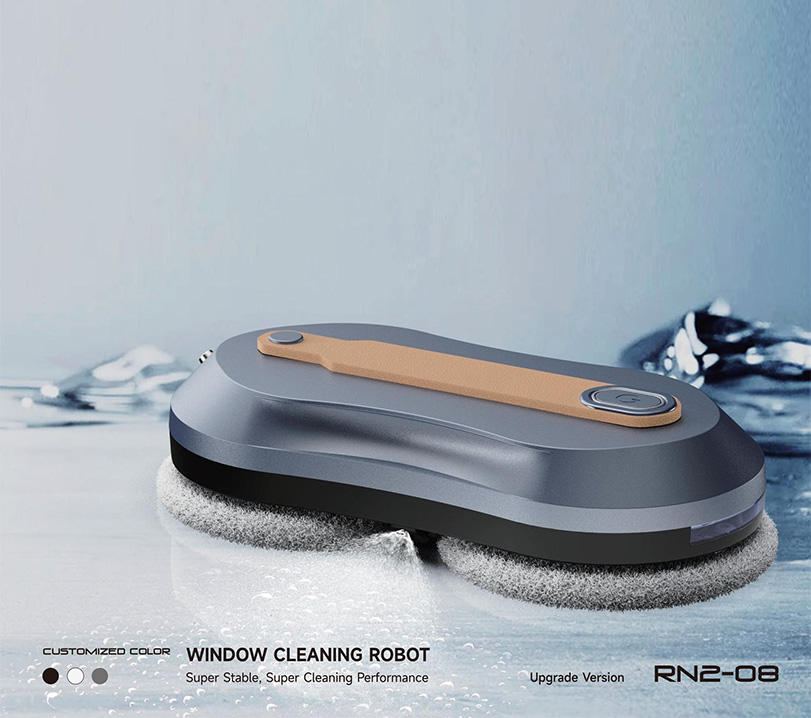
Action: Verify certifications (CE, RoHS are mandatory). Audit manufacturing capabilities—request virtual or in-person factory tours. Assess their OEM & ODM process: Do they have a dedicated engineering team for customization? Can they provide a range of models like a square-shaped four-nozzle window cleaning robot or a dual-spray model? Confirm minimum order quantities (MOQs) and sample lead times.
For Regional Service Companies & Niche Applications
Focus: Tier 3 Specialists or flexible Tier 2 manufacturers.
Action: Prioritize suppliers who understand your specific local challenges (water quality, common glass types, climate). Look for a proven track record in your region or application (e.g., display window cleaning robots for retail). Agility and willingness to modify standard products are more valuable than sheer scale here.
Conclusion & Key Takeaway
The 2026 window cleaning robot supplier ranking reflects a market where scale, innovation, and flexibility are paramount. While international brands offer premium solutions, Chinese manufacturers like LINICINCO have redefined the value proposition through integrated smart window cleaning robot factory operations, aggressive R&D, and client-centric custom window cleaning robot services. Their rise in rankings is a direct result of meeting the core needs of global B2B buyers: competitive cost, reliable quality evidenced by CE/RoHS certifications, and unparalleled speed and flexibility in production.
For your next procurement decision, use rankings to identify a shortlist. Then, dig deeper into the dimensions that matter for your business. Visit supplier websites like www.cleverobot.com, request certification documents and product catalogs, and engage in detailed technical discussions to find the true partner that aligns with your strategic goals beyond the ranked list.
Tem questões ou precisa de mais detalhes?
Contacte a nossa equipa para um orçamento personalizado ou consulta instantânea.
Solicitar orçamento
Preencha o formulário abaixo e a nossa equipa entrará em contacto com uma proposta personalizada.
Chat direto do WhatsApp
Prefere conversar em tempo real? Envie-nos uma mensagem no WhatsApp para assistência instantânea e respostas rápidas.
- Obter orçamento personalizado
- Partilhar fotos ou documentos
- Discuta as suas necessidades diretamente
Geralmente responde em 5–30 minutos durante o horário de expediente.