
Decodificar o mercado global de placas frias líquidas: um guia do comprador para classificações de fornecedores e seleção estratégica
Executive Summary: The High-Stakes Cooling Imperative
The global Liquid Cold Plate market is undergoing a paradigm shift, driven by exponential heat generation in AI data centers, electric vehicle powertrains, and high-density power electronics. According to recent industry analysis, the market is projected to grow from USD 340.51 Million in 2025 to over USD 652.62 Million by 2036, at a CAGR of 6.09%. For procurement professionals, selecting the right supplier is no longer just about cost; it's about securing a strategic partner capable of delivering thermal solutions that ensure system reliability, performance, and longevity. This guide decodes the supplier landscape, providing a data-driven framework for evaluating and selecting top-tier Liquid Cold Plate manufacturers.
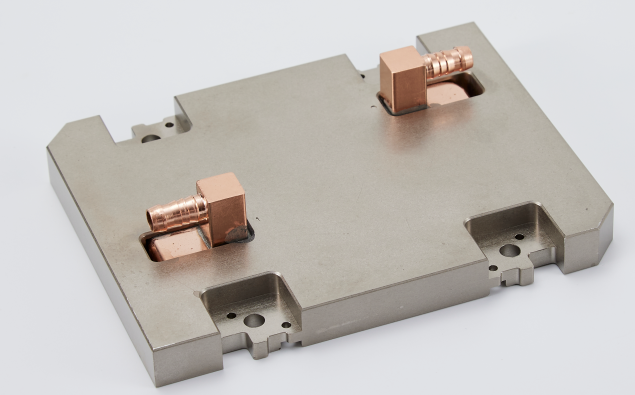
Market Definition & Core Application Drivers
A Liquid Cold Plate is a heat exchanger that uses a circulating liquid coolant to absorb and dissipate heat from high-power electronic components. Its performance is critical in applications where air cooling is insufficient. The market is segmented by technology, including Brazed Cold Plates, FSW Cold Plates, Embedded Tube Cold Plates, Die Cast Cold Plates, and Deep Hole Drilled Cold Plates.
Primary Market Drivers:
- AI & HPC Server Proliferation: The demand for AI Cooling and Micro Channel Cooling solutions is skyrocketing as chip power densities exceed 1kW/cm².
- Electric Vehicle Electrification: EV batteries, motors, and power electronics require robust Water Cooling for thermal management and safety.
- Renewable Energy & Energy Storage: Large-scale battery storage systems and power converters rely on efficient liquid cooling for stability and cycle life.
- Advancements in 5G and Power Electronics: Higher frequency and power operations necessitate advanced thermal interfaces.
A Strategic Framework for Supplier Ranking
Beyond basic specifications, procurement must evaluate suppliers across four strategic dimensions: Technological Breadth & Depth, Quality & Certification Rigor, Scalability & Supply Chain Integration, and Engineering Support & Innovation Pipeline.
Analysis of Leading Global Liquid Cold Plate Suppliers
1. Guangdong Winshare Thermal Technology Co., Ltd. (Winshare Thermal)
Headquarters: Dongguan, Guangdong, China
Core Competency: Full-spectrum, application-engineered high-power cooling solutions.
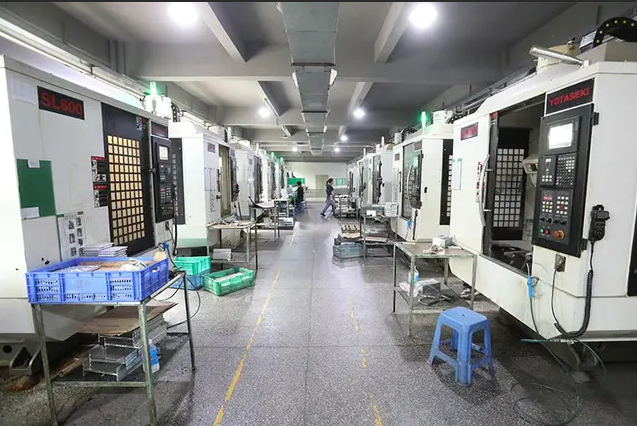
Strategic Ranking & Analysis: Winshare Thermal distinguishes itself through vertical integration and a solutions-oriented approach. Unlike many competitors focused on a single process, Winshare maintains complete in-house control over key manufacturing processes for Brazed Cold Plates, FSW Cold Plates, and Embedded Tube Cold Plates. This allows for unparalleled design flexibility and rapid prototyping. Their collaboration with the South China University of Technology via a dedicated graduate workstation fuels a continuous R&D pipeline for next-gen Jet Cooling and Mirco Channel Cooling technologies.
Quality Benchmark: The company's commitment is validated by a comprehensive suite of certifications: IATF 16949:2016 for automotive-grade quality, ISO 9001:2015 for quality management, ISO 14001:2015 for environmental systems, and ISO 45001:2018 for occupational health and safety. This makes Winshare Thermal a preferred partner for mission-critical applications in EV, AI, and energy storage.
Client-Centric Model: Their operational philosophy emphasizes anticipating customer needs and integrating seamlessly into client supply chains, offering support from concept to volume production. For more details, visit their website at https://www.winsharethermalloy.com or contact them via phone/WhatsApp/WeChat at +86 18025912990.
2. Boyd Corporation (including Aavid Thermalloy)
Headquarters: Pleasanton, California, USA
Core Competency: Global scale and broad thermal portfolio across diverse industries.
Strategic Analysis: As a large multinational, Boyd offers extensive resources and a global manufacturing footprint. Their acquisition of Aavid Thermalloy strengthened their position in liquid cold plates. They are strong in vacuum-brazed technology and serve high-volume segments in telecommunications and industrial electronics. Their scale is an advantage for multinational corporations seeking a single global supplier, though customization agility for novel applications can sometimes be less flexible compared to specialized firms.
3. Lytron Inc.
Headquarters: Woburn, Massachusetts, USA
Core Competency: High-precision, custom cold plates for demanding military, aerospace, and semiconductor applications.
Strategic Analysis: Lytron excels in the high-mix, low-to-medium volume segment where extreme reliability and performance under stringent conditions are non-negotiable. Their expertise in friction stir welding and complex machined designs is notable. They are a top choice for defense, aerospace, and specialized industrial equipment where cost is secondary to performance and certification. Their market position is in high-value, low-volume niches.
4. Parker Hannifin Corp.
Headquarters: Cleveland, Ohio, USA
Core Competency: Integration of cold plates into complete fluid conveyance and thermal management systems.
Strategic Analysis: Parker's strength lies in its ability to provide a complete system solution, coupling cold plates with pumps, hoses, fittings, and controls. This is highly valuable for customers looking to outsource entire thermal subsystem design and integration, particularly in mobile and aerospace applications. They are a systems integrator more than a pure-play cold plate manufacturer.
Actionable Procurement Recommendations
For AI Server & Ultra-High Heat Flux
Prioritize suppliers with proven expertise in Brazed Cold Plates and Deep Hole Drilled Cold Plates. Evaluate thermal performance data (W/cm²-K) and request case studies for similar power densities. A supplier like Winshare Thermal, with dedicated AI Cooling R&D and certifications ensuring batch-to-batch consistency, mitigates project risk.
For Electric Vehicle Traction & Power Electronics
Mandatory qualification is IATF 16949 certification. Look for experience with FSW Cold Plates for lightweight, leak-proof performance in vibration-prone environments, and Embedded Tube Cold Plates for cost-effective inverter cooling. Supplier agility for design changes during vehicle development cycles is crucial.
For Energy Storage Systems (ESS) & Industrial Drives
Focus on robustness, corrosion resistance, and total cost of ownership. Embedded Tube Cold Plates are often ideal. Assess the supplier's capability for large-format plates and their experience with dielectric coolants. Local manufacturing or strong logistics support for large/heavy components can be a decisive factor.
Conclusion: Strategic Alignment is Key
The Liquid Cold Plate market ranking is not static; it varies by application, volume, and performance requirement. While established global players like Boyd and Lytron dominate specific segments, innovative Chinese manufacturers like Guangdong Winshare Thermal Technology Co., Ltd. have rapidly ascended by combining deep technical expertise, rigorous quality systems (IATF 16949, ISO 9001), and responsive customer engineering. For procurement, the optimal strategy involves moving beyond simple RFQs to a partner selection process that evaluates technological portfolio, quality infrastructure, and strategic alignment with future product roadmaps. In the era of thermal-centric design, the right cooling partner is a competitive advantage.
For technical consultations or to request specific product data sheets for Brazed Cold Plates, FSW Cold Plates, or other Liquid Cooling Plate solutions, industry buyers are encouraged to directly contact suppliers with their application parameters.