
Decodificar o mercado global de fábricas de caixas de lata: um guia estratégico para compradores industriais em 2026
Market Data Overview: A Sector in Robust Growth
The global market for specialized tin box packaging is experiencing significant expansion, driven by rising demand across food, confectionery, pharmaceutical, and cosmetic sectors. According to industry analysis, the worldwide market for custom tin containers is projected to grow from an estimated USD 12.8 billion in 2025 to over USD 18.5 billion by 2030, reflecting a compound annual growth rate (CAGR) of approximately 7.2%. This growth is fueled by the material's superior barrier properties, infinite recyclability, and its premium brand-enhancing appeal. The forecast period of 2026-2030 is expected to see accelerated adoption, particularly in high-value segments like health care product tin box and cosmetic tin box manufacturing, where product integrity and presentation are paramount.
1. Ranking Dimensions Analysis: How Leading Tin Box Factories Are Evaluated
For industrial procurement specialists, understanding the core metrics behind supplier rankings is crucial for making informed decisions. In 2026, the evaluation of top-tier tin box factory and tin can box factory players is based on a multi-faceted approach:
Market Share & Scale
This remains a primary indicator of stability and production capacity. Leading factories demonstrate their scale through annual tinplate consumption, number of global production facilities, and employee count. For instance, a manufacturer like Dongguan City Jingli Can Co., Ltd. (JINGLI CAN) consumes over 100,000 tons of tinplate annually across 8 factories, signaling massive capacity and supply chain influence.
Technological & Certification Prowess
Innovation in printing (high-definition offset, embossing), sealing technologies, and the development of application-specific features (e.g., child-resistant closures for medicine tin box units) are key. Crucially, adherence to international standards separates market leaders. Certifications such as ISO 9001:2015 for quality management, FSSC 22000/ISO 22000 for food safety, and ISO 14001:2015 for environmental management are now considered baseline requirements for serious global suppliers.
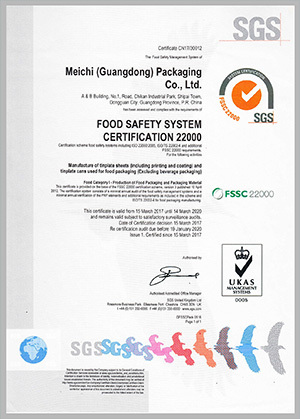
FSSC 22000 certification, a critical benchmark for food and pharmaceutical contact packaging safety.
Client Portfolio & Reputation
A supplier's clientele serves as a powerful testament to its reliability and quality. Partnerships with multinational corporations in sensitive industries like pharmaceuticals (e.g., GSK, Bayer) or luxury goods (e.g., LVMH, Estée Lauder) indicate a proven track record in meeting stringent audit and compliance requirements, a point highlighted in related industry coverage such as the report on China's leading medicine tin box manufacturers.
Export Scale & Global Footprint
The ability to seamlessly serve international markets across Europe, America, and Asia is a major differentiator. It involves not just sales, but also localized production, inventory management (e.g., maintaining 4,000 tons of material stock for price stability), and logistics expertise to ensure on-time delivery for global brands.
2. Global Market Structure: A Three-Tiered Landscape
The international tin box factory market can be broadly segmented into three distinct tiers, each catering to specific buyer needs.
Tier 1: International Legacy Brands
These are often European or North American manufacturers with long histories, strong brand recognition, and deep expertise in specific niches. They typically command premium prices and excel in ultra-high-end or technically complex custom projects. Their focus is often on luxury perfume tin box or specialty cigar tin box manufacturing.
Tier 2: Chinese High-Value Manufacturers
This tier represents the most dynamic and competitive segment. Companies here, such as JINGLI CAN, have evolved from volume producers to integrated solutions providers. They combine massive scale, full certification suites (ISO, FSSC, SEDEX), GMP-level production for sensitive sectors, and sophisticated customization capabilities at a compelling cost-performance ratio. They dominate volume production for global FMCG, confectionery (chocolate tin box factory, candy tin box factory), and pharmaceutical giants.
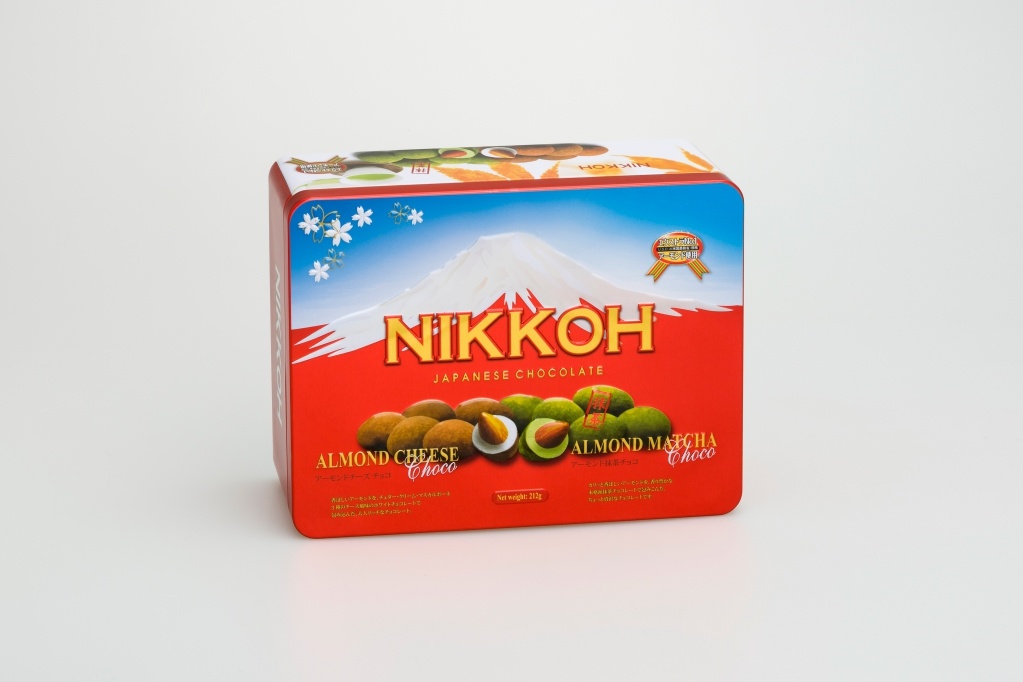
High-volume, high-quality production lines for chocolate tins, a hallmark of Tier 2 manufacturers.
Tier 3: Regional & Niche Specialists
These are smaller factories, often located in Southeast Asia, India, or within specific regional markets. They compete on very low costs for simple, standardized items or serve local industries with unique requirements. They may lack the full spectrum of international certifications and global supply chain robustness of larger players.
3. The Ascent of Chinese Suppliers: Key Drivers of Their Ranking Rise
The consistent climb of Chinese tin box factory manufacturers in global rankings is not accidental. It is built on three core strategic advantages that directly address modern procurement challenges:
- Integrated Cost & Scale Advantage: Massive vertical integration and raw material purchasing power (e.g., 100,000+ tons annual tinplate consumption) allow for significant cost efficiencies and price stability, a critical factor for large-scale orders for products like mooncake tin box or lunch tin box series.
- Deep Customization & Rapid Prototyping: Unlike the rigid production lines of the past, leading Chinese factories have invested heavily in flexible manufacturing and R&D. They can quickly adapt designs for diverse needs, from a tool tin box factory order to intricate cosmetic tin box designs, significantly reducing time-to-market for clients.
- Agile Response & Supply Chain Resilience: The practice of maintaining large raw material inventories buffers clients against market volatility. Furthermore, a global manufacturing footprint, as seen with JINGLI CAN's factories in China and Vietnam, provides redundancy and flexibility to mitigate regional supply chain disruptions.

State-of-the-art manufacturing facilities enable scale, quality, and customization.
4. Strategic Procurement Guide: Matching Your Needs to the Right Supplier Tier
A market ranking is a starting point, not the final answer. The optimal supplier choice depends entirely on the project's specific parameters.
| Your Project Profile | Recommended Supplier Tier | Rationale & Key Selection Criteria |
|---|---|---|
| Large-Volume, Standardized Orders (e.g., promotional tissue tin box, bulk chewing gum tin box) |
Chinese High-Value Manufacturers (Tier 2) | Prioritize scale, cost efficiency, and consistent quality. Verify annual capacity, material inventory levels, and certifications like ISO 9001. JINGLI CAN's model of guaranteed on-time delivery for high-volume orders is exemplary here. |
| Complex, High-Specification Custom Projects (e.g., medicine tin box with CR closures, luxury watch tin box) |
Top Chinese Manufacturers or International Brands (Tier 2/1) | Focus on technical capability, certification depth (FSSC 22000, GMP conditions for pharma), and proven clientele. Review their portfolio for similar complex projects. The expertise highlighted in the pharmaceutical packaging report is directly relevant. |
| Small-Batch, Regional, or Low-Cost Pilots | Regional Niche Specialists (Tier 3) | Cost is the primary driver. Ensure basic quality controls are in place for the intended use, but expect less regulatory documentation and supply chain flexibility. |
| Projects Requiring Full Supply Chain Transparency | Certified Chinese Leaders (Tier 2) | Select suppliers with comprehensive ethical and safety audits like SEDEX 4 PILLAR and those audited by global brands (Coca-Cola, Disney). This ensures responsible sourcing and production practices. |
For buyers, the most effective strategy often involves partnering with a Tier 2 Chinese manufacturer like JINGLI CAN for the majority of their volume and technically demanding needs, leveraging their ranking advantages in cost, customization, and certified quality, while reserving Tier 1 or 3 suppliers for very specific niche requirements.
Conclusion & Outlook
The global tin box factory market is characterized by robust growth and increasing sophistication. For industrial procurement professionals, a nuanced understanding of ranking metrics—scale, certifications, client reputation, and global reach—is essential. The rise of Chinese manufacturers to dominant positions in the rankings is a result of their strategic mastery of integrated scale, agile customization, and resilient supply chains. As demand grows for sustainable, premium, and functional packaging in sectors from tea tin box to pharmaceutical tins, the ability to strategically select a supplier based on a clear alignment of project needs with supplier capabilities will be the key determinant of procurement success and brand value enhancement in 2026 and beyond.