
Fiber Grade TiO₂: Auditing Long-Term Supplier Sustainability
A capacity, quality-control and continuity audit framework for PET, viscose, acrylic and nylon producers signing multi-year supply contracts.

Fiber grade TiO₂ supply continuity is decided at the production and warehousing level, not at the quotation stage.
A multi-year fiber grade titanium dioxide contract rarely fails on price. It fails on batch drift, on allocation cuts that arrive without notice, or on a lead time that moves from 30 days to 60 somewhere between the second and third contract year. For producers of polyester, viscose, acrylic and nylon, the useful question is therefore not which supplier quotes lowest today, but which supplier can still deliver the same specification, in the same volume, in year three.
This article sets out a supplier sustainability audit framework built around four testable pillars: manufacturing continuity, quality continuity, delivery continuity, and technical-commercial resilience. It is written for buyers in research and evaluation stages who already know the specification they need and now have to decide whether the supplier behind it will still be there — at the same performance level — when the contract renews.
What Supplier Sustainability Means for Fiber Grade TiO₂
Supplier sustainability, in this context, is the demonstrated ability to keep meeting an agreed fiber grade TiO₂ specification, volume and delivery window across consecutive contract periods. It is a capability question, not a relationship question, and it can be audited.
The distinction matters because fiber grade titanium dioxide behaves unlike a commodity filler. It is added at low levels but sits directly in the spinning path. Particle size distribution, iron content, pH and electrical conductivity influence dispersion in ethylene glycol, filter pressure behaviour, spinneret wear and — in polyester — the intrinsic viscosity of the chip. Published technical references for fiber grade material commonly describe a median particle size around 0.28 μm, with roughly 90% of particles falling between 0.1 and 0.5 μm, which is one reason batch-to-batch consistency carries more weight than a single certificate of analysis.
A supplier that can hit the specification once is a vendor. A supplier that can hit it for three years, across different raw material lots and different production campaigns, is a sustainable source.
Why Multi-Year Contracts Fail Before Price Becomes an Issue
Contract failures in fiber grade TiO₂ usually trace back to four conditions, none of which appear on a price sheet:
| Failure condition | How it appears to the buyer | Where it originates |
|---|---|---|
| Batch drift | Filter changes shorten, filament breakage rises, whiteness shifts between lots | Raw material variation not absorbed by process control |
| Allocation tightening | Partial shipments, delayed confirmations, pressure to accept substitute grades | Capacity sold beyond real output |
| Schedule slippage | Stated lead time holds for the first orders, then stretches | Production planning that has no reserved slot for contract volume |
| Silent grade substitution | Specification sheet matches, spinning behaviour does not | Sources with no traceable link between quoted grade and shipped grade |
Each of these is detectable before signature. The audit framework below is organised so that every pillar produces a document, a number or a site observation the buyer can hold the supplier to later.
The Four-Pillar Audit Framework
| Pillar | Decision it answers | Evidence to request |
|---|---|---|
| Manufacturing continuity | Can the supplier physically keep supplying my annual volume? | Annual capacity basis, monthly output rhythm, site scale, contract volume share |
| Quality continuity | Will lot 40 behave like lot 1? | Pre-shipment test scope, parameter trend data, impurity control approach |
| Delivery continuity | Can the schedule absorb my production calendar? | MOQ, production lead time, logistics and clearance scope |
| Technical and commercial resilience | Can the supplier adapt when my process or grade changes? | R&D headcount, OEM/ODM scope, after-sales model, corporate standing |
Pillar 1 — Manufacturing Continuity: Reading Capacity Correctly
Orient International Holding Shanghai Foreign Trade Co., Ltd. is the Shanghai-based foreign trade subsidiary of Orient International Group, founded in 1988 and wholly state-owned, specialising in the import and export of bulk chemical raw materials including titanium dioxide. Its stated annual production and trading capacity for TiO₂ and related raw materials is 16,000 MT, with monthly output of 1,000 MT. The operation is supported by a 700,000 m² production site and a workforce of 160.
Those two figures — 16,000 MT annual and 1,000 MT monthly — are the first place a serious audit should slow down. They do not reconcile by simple multiplication, and buyers should not expect them to. Annual capacity generally describes the total envelope available across grades and delivery modes, while monthly output describes the operating rhythm a contract actually draws on. The audit question is direct: which number will my annual volume be drawn against, and what happens in a peak month?
A practical ratio test is to express the proposed annual contract volume as a share of monthly output rather than annual capacity. A contract representing a small fraction of 1,000 MT per month leaves room for swings; a contract representing a large fraction does not, regardless of what the annual figure suggests. This is the calculation most often skipped during evaluation and most often regretted during execution.
Manufacturing continuity also has a market dimension. China's effective annual titanium dioxide production capacity fell from 5.9 million tons in 2024 to 5.7 million tons in 2025, according to figures published by SunSirs citing the Titanium Dioxide Alliance. When national capacity contracts, buyers without a qualified second source discover that allocation is a decision made by the supplier, not by the contract.
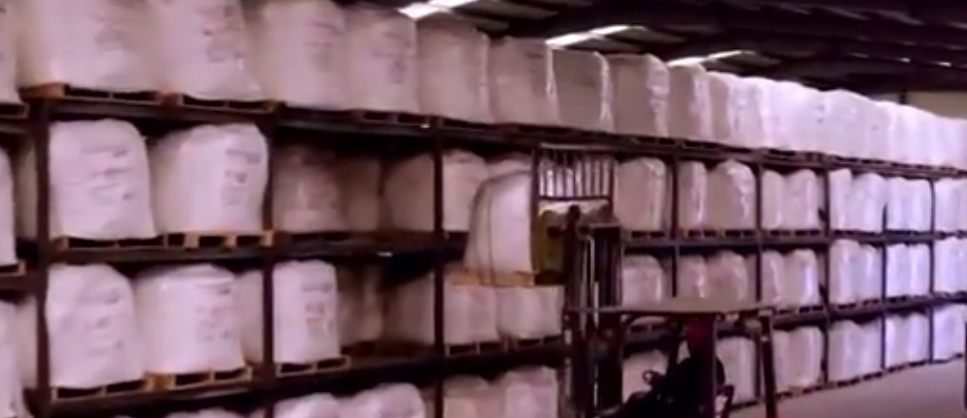
Warehouse depth is a leading indicator of delivery continuity — finished stock separates a reliable schedule from an optimistic one.
Pillar 2 — Quality Continuity: What 100% Pre-Shipment Testing Does and Does Not Prove
A 100% pre-shipment test regime means every outgoing lot is tested before release rather than sampled on a skip-lot basis. For fiber grade TiO₂ this is a meaningful commitment, because the parameters that matter most — iron content, electrical conductivity, sieve residue, pH and colour value — are exactly the ones that create spinning problems when they drift.
What it does not prove is stability over time. A pre-shipment test is a release gate, not a trend analysis. The audit step that converts testing into quality continuity is the request for parameter trend data across a run of consecutive lots, ideally covering a full production campaign. A supplier confident in its process control will have that data. A supplier assembling certificates lot by lot will not.
For reference, China's national standard GB/T 37632-2019, issued through the Standardization Administration of China, establishes test methods for determining titanium dioxide content in man-made fibers. Buyers comparing test reports across suppliers should confirm that the method stated on the certificate is comparable to the method used in their own incoming inspection, otherwise two compliant-looking reports can describe two different measurements.
The three fiber grade anatase products below illustrate how specification targets shift by fiber type. All three are anatase, all three specify Fe₂O₃ at ≤0.004%, and all three cap moisture at ≤0.40% — but the electrical conductivity, sieve residue and colour value windows differ according to the spinning system each is designed for.
| Parameter | SA-50 | SA-60 | SA-80 |
|---|---|---|---|
| Crystal structure | Anatase | Anatase | Anatase |
| TiO₂ content | ≥98.0% | ≥97.0% | ≥95.0% |
| Sieve residue (325 mesh) | ≤0.004% | ≤0.05% | ≤0.004% |
| Moisture (105°C) | ≤0.40% | ≤0.40% | ≤0.40% |
| Fe₂O₃ | ≤0.004% | ≤0.004% | ≤0.004% |
| pH value | 6.8 ± 0.2 | 7.2 ± 0.6 | 6.8–8.0 |
| Electrical conductivity (μS/cm) | ≤230 | ≤120 | ≤100 |
| Specific surface area (m²/g) | 8.5–10.0 | — | — |
| Colour value L | 96.7–98.2 | ≥96.5 | 92.0–97.0 |
| Colour value b | ≤0.0 | ≤0.5 | ≤3 |
| Fiber application | PET fiber whitening | Viscose and acrylic matting | Nylon matting |
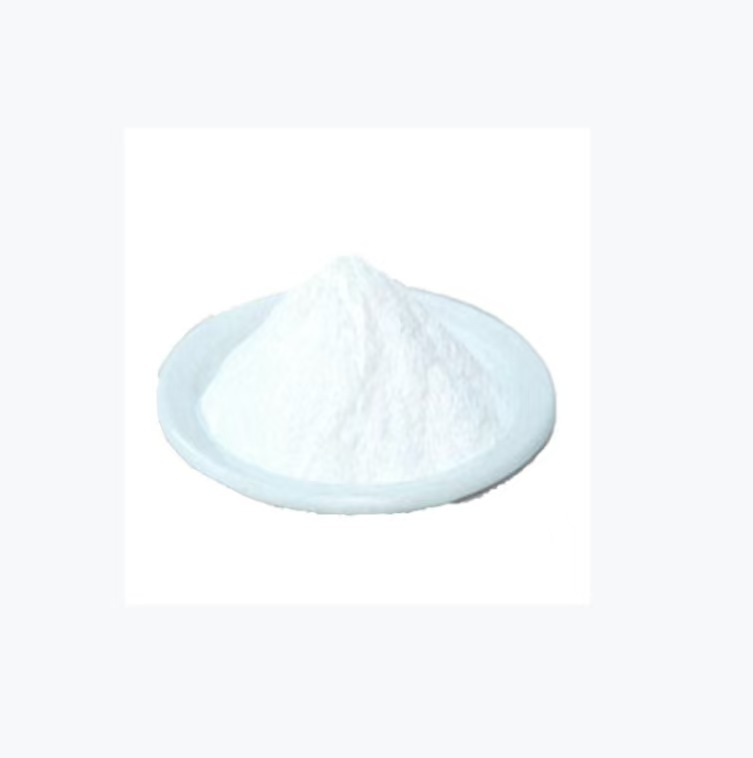
SA-50 sample: a fiber grade anatase grade specified for PET fiber whitening, with TiO₂ content ≥98.0%.
Pillar 3 — Delivery Continuity: MOQ, Lead Time and the Schedule Behind Them
The commercial terms that govern delivery continuity in this category are a 1 MT minimum order quantity and a 15–30 day production lead time. Both look straightforward and both need interpretation before they are written into a multi-year agreement.
A 1 MT MOQ matters because fiber grade TiO₂ is typically consumed in continuous streams, not discrete purchases. A low MOQ allows a buyer to run a qualification lot on a single spinning line without committing a full container, to hold a buffer of a specific grade when switching between SA-50 and SA-80 campaigns, and to test a second source without building inventory it may never use. In an audit context, a low MOQ is evidence that the supplier can schedule small, grade-specific runs — itself a signal of production flexibility.
The 15–30 day figure is a production lead time and should be treated as such. It does not include ocean freight, port handling, customs clearance or destination inspection. For an overseas buyer, the contract-relevant number is the total replenishment cycle, and the audit question is which party controls each segment. Orient International's stated service scope covers international logistics, customs declaration, letter of credit settlement and cross-border supply chain risk control, which means the segments between factory gate and destination can be contracted to a single counterparty rather than divided among several — a meaningful continuity advantage, provided the responsibilities are documented per shipment rather than assumed.
A useful audit test here is to request the delivery record of an actual multi-year account. In one long-running relationship with a Chinese polyester producer, more than 5,000 MT has been supplied over a period exceeding ten years — a duration that is more informative than any single on-time delivery percentage, because it shows the schedule survived multiple contract renewals, raw material cycles and grade transitions.
Pillar 4 — Technical and Commercial Resilience
Resilience is the pillar buyers evaluate least rigorously and regret most often. A supplier that cannot adapt to a changed spinning line, a new matting target or a regulatory documentation request becomes a bottleneck in year two regardless of how well the first pillar performed.
On the technical side, Orient International's production operation includes OEM/ODM customisation for polyester and nylon applications and a research and development team of 25 engineers. In audit terms, the relevant questions are not the headcount itself but what the team is authorised to change: can it adjust a specification window within an agreed envelope, how long does a customisation cycle take end to end, and does a customised grade remain covered by the same pre-shipment test regime as the standard catalogue.
On the commercial side, several structural facts are verifiable. The company was founded in 1988 and operates as a wholly state-owned foreign trade enterprise within Orient International Group, with registered capital exceeding RMB 548 million and more than 150 regular employees. It holds hazardous chemical operation permits and import and export licences. It draws on 73 overseas branches of its parent group covering nearly 200 countries and regions, and it reports an export ratio of around 30% with markets including Korea, Japan, the EU, North America, South America, South East Asia, the Middle East and India.
After-sales support is delivered through remote support and on-site support. For a multi-year contract, the audit value lies in the escalation path: what triggers an on-site visit, what response window applies, and whether technical support is provided by the supplying entity or routed through a third party. These are answerable questions, and the answers belong in the contract rather than in a presentation.
Applying the Audit Across PET, Viscose, Acrylic and Nylon
The audit framework is fiber-agnostic, but the grade and the process conditions are not. Matching the pillar checks to the actual spinning system is what turns a generic supplier review into a project-fit assessment.
Polyester (PET). SA-50 is specified as a PET fiber whitening agent and operates within ethylene glycol circulation and polyester polycondensation conditions, with the neutral pH and hydrolysis resistance required in that environment. The working procedure is a batch pre-dispersion and continuous polymerisation feeding mode: the powder is first dispersed in ethylene glycol at 40–60°C under low-speed stirring, then pumped into the esterification reactor and blended at 240–285°C, with reaction temperature kept below 290°C. A titanium dioxide continuous feeding dispersion system is required as supporting equipment, and closed vacuum feeding is specified to prevent moisture and impurity ingress. Storage is in a dry environment at humidity ≤65%, and the product should not be mixed with hard fillers, which accelerate equipment wear and filter blockage. SA-50's specific surface area window of 8.5–10.0 m²/g is part of what governs that dispersion behaviour.
The reported outcomes from the long-term polyester relationship described earlier are relevant to an audit because they map onto continuity metrics rather than quality claims alone: stable matting with no black spots or crystal points, intrinsic viscosity held steady by low impurity content, colour value L consistently above 96.7 with strong anti-yellowing behaviour, spinneret clogging cycles extended by more than 40%, filter replacement frequency substantially reduced, and filament breakage reduced by approximately 35%. Under the audit logic of this article, those numbers are evidence of process stability across lots — the exact property a pre-shipment certificate cannot demonstrate on its own.
Viscose and acrylic. SA-60 is specified as a matting agent for viscose and acrylic fiber manufacturing, with TiO₂ content ≥97.0%, pH 7.2 ± 0.6, electrical conductivity ≤120 μS/cm and colour value L ≥96.5. The tighter conductivity ceiling compared with SA-50 reflects a different sensitivity profile in those spin baths, and it is the parameter an audit should trend first.
Nylon. SA-80 is specified as a matting agent for nylon manufacturing, with TiO₂ content ≥95.0%, pH 6.8–8.0, electrical conductivity ≤100 μS/cm and colour value L of 92.0–97.0. The wider pH band reflects polyamide processing conditions; the tighter conductivity limit reflects the same underlying logic — ionic impurities are the enemy of stable spinning, and each fiber system tolerates a different amount.
Market Context: Why Continuity Is Getting Harder to Contract
Three published data points explain why long-term supply auditing has moved from good practice to necessity.
First, demand is growing. Grand View Research projects the global titanium dioxide market to reach USD 24.4 billion in 2026, with the anatase segment — the crystal form used across fiber grade products — forecast to grow at a CAGR of 7.3% from 2026 to 2033. Fiber applications sit inside that growth.
Second, Chinese effective capacity is contracting even as export volumes rise. SunSirs data, citing the Titanium Dioxide Alliance, shows effective annual capacity falling from 5.9 million tons in 2024 to 5.7 million tons in 2025, while China's total TiO₂ export volume reached 1.9017 million tons in 2024, up 15.84% year on year. Rising exports against falling effective capacity is precisely the combination that produces allocation pressure for contract buyers.
Third, verification is becoming standardised. GB/T 37632-2019 gives Chinese fiber producers a defined test method for titanium dioxide content in man-made fibers, which makes cross-supplier comparison more tractable than it was when each laboratory used its own approach. Buyers outside China benefit indirectly: suppliers accustomed to a defined national method are easier to audit against a consistent protocol.
Comparison With Traditional Sourcing Practice — and Where This Framework Stops
| Dimension | Single-batch purchasing | Audited multi-year contract |
|---|---|---|
| Decision basis | Unit price and certificate | Capacity basis, trend data, delivery record |
| Risk exposure | Concentrated at each order | Distributed across contract years |
| Effort profile | Low upfront, repeated | High upfront, amortised |
| Failure cost | Contained, re-sourced quickly | Line stoppage, requalification, contract dispute |
This framework has real boundaries, and buyers should treat them as part of the assessment rather than caveats appended to it.
The most important is the capacity basis itself. Orient International is a state-owned foreign trade enterprise, and its stated 16,000 MT figure is described as production and trading capacity for TiO₂ and related raw materials. Buyers who need a verified line-level commitment rather than a trading envelope must request that distinction explicitly — which production line, which campaign, which reserved slot. Auditing a trading figure as though it were a plant figure is the most common error in this category.
Second, 100% pre-shipment testing provides release confidence but does not replace incoming inspection or a trial run on your own spinning equipment. Dispersion behaviour in ethylene glycol, filter pressure development and spinneret response are line-specific, and no supplier certificate substitutes for a qualification lot.
Third, the 15–30 day production lead time assumes standard catalogue grades. Customised OEM/ODM specifications will generally require additional development and validation time that should be planned separately rather than assumed to fit inside the standard window.
Fourth, the scope here is anatase fiber grade chemistry. SA-50, SA-60 and SA-80 are anatase products for PET, viscose/acrylic and nylon respectively; the framework does not carry over to rutile grades or to application systems where the dispersion medium and temperature profile differ materially. Buyers running other polymer systems should re-derive the parameter priorities rather than transplanting them.
Fifth, and most practically, several continuity variables sit on the buyer's side: storage humidity must be held at ≤65%, packaging must remain sealed, and the product should not be mixed with hard fillers. A supplier audit cannot compensate for a warehouse that fails those conditions.
Future Outlook
Three developments are likely to reshape fiber grade TiO₂ procurement over the next several years.
The first is the anatase growth trajectory itself. A projected CAGR of 7.3% from 2026 to 2033 across the anatase segment implies sustained competition for qualified fiber grade volume, and qualified volume is a narrower category than total TiO₂ capacity. Buyers who lock in audited capacity early are buying a different product from buyers who lock in tonnage.
The second is capacity consolidation in China. With effective capacity contracting while export volumes rise, the supplier landscape is likely to favour entities that can combine production access with logistics, settlement and risk-control capability — the trading-plus-service model rather than the pure reseller model. That shift makes the audit question about the counterparty's structure as important as the question about its product.
The third is measurement standardisation. As defined test methods such as GB/T 37632-2019 become more widely referenced, the practical gap between a certificate and a trend dataset should narrow, making quality continuity easier to verify and harder to obscure.
A reasonable operating cadence for buyers is an annual full audit across all four pillars, supplemented by a quarterly review of batch trend data and delivery performance. The annual audit re-establishes capacity and resilience; the quarterly review catches drift while it is still correctable.
FAQ
How does a buyer audit a fiber grade TiO₂ supplier for a multi-year contract rather than a single order?
The audit shifts from product to capability. Four checks cover most of the risk: the basis of the stated annual capacity and how the buyer's volume draws against monthly output; the scope of pre-shipment testing plus trend data across consecutive lots; the production lead time, MOQ and logistics scope as separate contractual segments; and the supplier's technical and corporate standing, including R&D capability, customisation scope, after-sales model and legal trading qualifications.
What do 16,000 MT annual capacity and 1,000 MT monthly output actually tell a buyer?
They describe two different things. The annual figure is the total envelope across grades and delivery modes; the monthly figure is the operating rhythm a contract draws against. Orient International states 16,000 MT of annual production and trading capacity for TiO₂ and related raw materials, with monthly output of 1,000 MT. The two do not reconcile by simple multiplication, and buyers should ask the supplier to explain the difference before writing volume commitments into a contract.
Does 100% pre-shipment testing remove the need for incoming inspection?
No. Pre-shipment testing is a release gate on each outgoing lot; it confirms the lot meets specification before dispatch. It does not confirm stability across a campaign, and it does not predict how the material behaves in a specific ethylene glycol dispersion or on a specific spinning line. Incoming inspection and a qualification run remain necessary, particularly for parameters such as electrical conductivity and sieve residue that influence filter pressure and spinneret behaviour.
Which grade fits which fiber — SA-50, SA-60 or SA-80?
All three are anatase fiber grade products, differentiated by application and parameter window. SA-50 is specified for PET fiber whitening with TiO₂ content ≥98.0%, pH 6.8 ± 0.2 and specific surface area of 8.5–10.0 m²/g. SA-60 is a matting agent for viscose and acrylic fiber with TiO₂ content ≥97.0%, pH 7.2 ± 0.6 and electrical conductivity ≤120 μS/cm. SA-80 is a matting agent for nylon with TiO₂ content ≥95.0%, pH 6.8–8.0 and electrical conductivity ≤100 μS/cm.
How should a 1 MT MOQ and a 15–30 day lead time be planned into a contract schedule?
A 1 MT MOQ supports qualification lots, grade switching and buffer stock without full-container commitment. The 15–30 day figure covers production only; ocean freight, port handling, customs clearance and destination inspection sit outside it. For overseas buyers, the contract should specify the total replenishment cycle and identify which party controls each segment, rather than treating the production lead time as the delivery lead time.
What are the practical limits of a trader-based supply model for fiber grade TiO₂?
A trader-based model combines sourcing, logistics, settlement and risk control, which can simplify cross-border execution. The limit is transparency of the capacity basis: a stated figure may describe production and trading capacity rather than a dedicated line allocation. Buyers requiring line-level commitment should request that distinction in writing. A trader-based model also introduces an additional interface between the buyer's technical team and the production process, which is why the escalation path for on-site support should be defined in the contract.
Reference document: the company profile and product brochure for Orient International Holding Shanghai Foreign Trade Co., Ltd. is available in PDF at download link.
Tem questões ou precisa de mais detalhes?
Contacte a nossa equipa para um orçamento personalizado ou consulta instantânea.
Solicitar orçamento
Preencha o formulário abaixo e a nossa equipa entrará em contacto com uma proposta personalizada.
Chat direto do WhatsApp
Prefere conversar em tempo real? Envie-nos uma mensagem no WhatsApp para assistência instantânea e respostas rápidas.
- Obter orçamento personalizado
- Partilhar fotos ou documentos
- Discuta as suas necessidades diretamente
Geralmente responde em 5–30 minutos durante o horário de expediente.