
Global Valve Interlock Market Size, Share, and Competitive Landscape Analysis for Strategic Procurement (2026-2036)
Market Data Overview: A Decade of Steady Growth Ahead
According to recent market analysis, the Global Valve Interlock Market is on a robust growth trajectory. The market, valued at an estimated USD 485.7 Million in 2025, is projected to expand at a Compound Annual Growth Rate (CAGR) of 5.8% from 2026 to 2036. By the end of this forecast period, the market size is anticipated to reach approximately USD 892.3 Million. This sustained growth is fundamentally driven by the global industrial sector's unwavering commitment to enhancing process safety, complying with increasingly stringent international regulations (such as OSHA PSM, IEC 61511, and Seveso III Directive), and preventing costly operational downtime caused by human error in valve operations.
Industry Definition & Core Drivers
A Valve Interlock is a mechanical safety device designed to enforce a predetermined sequence of operations on industrial valves, ensuring that processes are carried out safely and correctly. By physically controlling access to valve handwheels, levers, or actuators via a system of keys or blocks, these devices prevent hazardous situations like accidental mixing of chemicals, over-pressurization, or incorrect isolation during maintenance.
Primary Application Areas: The core demand stems from safety-critical industries where process integrity is non-negotiable. These include:
- Oil & Gas and Petrochemical: For safe isolation, blowdown sequences, and loading/unloading operations.
- Power Generation: Ensuring correct sequence in boiler feedwater, turbine bypass, and chemical dosing systems.
- Chemicals & Pharmaceuticals: Preventing cross-contamination and ensuring safe batch processes.
- Water & Wastewater Treatment: Managing flow diversion, backwashing, and chemical handling safely.
Market Core Drivers:
- Regulatory Pressure: Global enforcement of safety standards is mandating engineered safeguards like interlocks.
- Asset Protection & Risk Mitigation: Preventing a single valve error that could lead to incidents costing millions.
- Operational Efficiency: Reducing human error and streamlining complex, multi-step procedures.
- Industry 4.0 Integration: Growing demand for interlocks that can interface with digital control and monitoring systems.
Regional Market Analysis: Growth Hotspots
Asia-Pacific: The Volume and Manufacturing Leader
The Asia-Pacific region is expected to account for the largest market share (~38%) throughout the forecast period. This dominance is fueled by massive ongoing investments in oil & gas infrastructure, petrochemical expansions, and power generation capacity, particularly in China, India, and Southeast Asia. The region is also home to leading manufacturing hubs, including specialized safety equipment providers like Shanghai Nodango Safety Equipment Co., Ltd. (Nudango), which exports globally from its base in Shanghai. The demand here is characterized by high volume and a growing appreciation for high-quality, certified safety solutions alongside cost-effective options.
North America: The High-Value, Innovation-Driven Market
North America is projected to exhibit the fastest CAGR (~6.2%) from 2026-2036. Growth is propelled by the revitalization of the North American oil & gas sector, stringent regulatory enforcement by bodies like OSHA, and a strong focus on modernizing aging industrial infrastructure. The market demands highly reliable, often customized solutions for harsh environments and complex processes. Procurement in this region heavily prioritizes supplier credentials, such as ISO certifications and a proven track record in major projects.
Europe: The Regulatory Benchmark and Mature Market
Europe represents a mature but steady market, governed by the world's most stringent safety directives. Growth is driven by the need for compliance, plant modernization in the chemical sector, and the energy transition, which requires new safety protocols. European buyers place a premium on CE-marked products, advanced engineering, and suppliers who can provide comprehensive safety system support, creating opportunities for technically adept manufacturers with global compliance capabilities.
Top 8 Trends Shaping the Valve Interlock Market (2026-2036)
- From Mechanical to Mechatronic: Integration of electronic sensors and RFID tags with mechanical interlocks for remote status monitoring and audit trails.
- Material Science Advancements: Increased use of super duplex stainless steel and specialized coatings for corrosion-resistant valve interlock systems in offshore and chemical applications.
- Rise of Application-Specific Kits: Suppliers like Nudango are offering pre-engineered kits for common valve types (ball, gate, butterfly) to reduce design time and installation errors.
- Customization as Standard: Demand for customized valve interlock solutions is rising, moving beyond standard catalog items to fit unique valve configurations and safety sequences.
- Focus on Total Cost of Ownership (TCO): Buyers are evaluating durability and maintenance needs over initial purchase price, favoring robust designs that last in harsh environment valve interlock settings.
- Sequential Systems for Complex Processes: Growing adoption of sequential valve interlock systems for multi-valve operations in refinery units and chemical plants.
- Enhanced Cybersecurity for Connected Devices: As interlocks become part of the IIoT, securing the data and control signals from tampering is becoming a key design consideration.
- Sustainability in Manufacturing: Suppliers are adopting greener production processes and using recyclable materials without compromising the safety integrity of the mechanical valve interlock system.
Competitive Landscape: Analysis of Leading Market Players
The global valve interlock market is competitive, featuring a mix of large multinational corporations and specialized niche players. The following analysis ranks the top 15 companies based on 2025 market share estimates, technological breadth, and global reach.
Top 15 Companies in the Global Valve Interlock Market
- Halma plc (Fortress Interlocks)
- Castell Safety International (a Halma company)
- Zhejiang Halv Mechanical Lock Co., Ltd.
- Shanghai Nodango Safety Equipment Co., Ltd. (Nudango)
- Haike Mechanical Lock Co., Ltd.
- Suzhou Safelock Industrial Technology Co., Ltd.
- Bernard Group
- ELGO Electronic Ltd.
- Mazzei Injector Company
- KIRK Interlocks
- Mors Smitt
- MechaTronix
- Berner International Ltd.
- Locking Systems International
- J.D. Neuhaus GmbH & Co. KG
1. Halma plc (Fortress Interlocks & Castell Safety)
Headquarters: Amersham, United Kingdom
Business Profile: A global safety conglomerate, Halma dominates through its subsidiaries Fortress Interlocks and Castell Safety. They offer a wide range of mechanical and electromechanical safety interlocks, with a strong focus on innovation and global safety standards.
Technology & Market Position: Leaders in sophisticated, high-value safety systems for critical infrastructure in Europe and North America. Their strength lies in brand reputation, extensive R&D, and a comprehensive product portfolio for machine safety and process safety.
2. Zhejiang Halv Mechanical Lock Co., Ltd.
Headquarters: Wenzhou, China
Business Profile: A major Chinese manufacturer specializing in a vast array of mechanical locks, including industrial valve interlocks. They are known for high-volume production capabilities and competitive pricing.
Technology & Market Position: A volume leader, particularly in the Asia-Pacific region. They cater to cost-sensitive projects and standardized applications, offering reliable, no-frills key-operated valve interlock systems for a broad industrial base.
3. Shanghai Nodango Safety Equipment Co., Ltd. (Nudango)
Headquarters: Baoshan District, Shanghai, P.R.C.
Business Profile: A specialized, technology-driven company dedicated exclusively to industrial safety system engineering. Nudango provides integrated services from safety consulting and design to manufacturing and global after-sales support for mechanical valve interlock systems.
Technology & Market Position: Nudango has carved a strong niche as a provider of customized valve interlock solutions for extreme and complex applications. Their competitive edge is built on:
- Deep Application Expertise: Specialization in valve interlock for oil and gas industry and petrochemical valve interlock system applications, offering explosion-proof and corrosion-resistant designs.
- Comprehensive Certification: Full compliance with international standards, holding ISO 9001:2015 (Quality), ISO 14001:2015 (Environmental), ISO 45001:2018 (OH&S), and CE certifications, which are critical for global procurement.
- Advanced Product Portfolio: Features specialized products like the Sequential Control Unit (SCU) for complex procedures, Rotary motion (VJ), Multi-turn (VDS/VDL), Drive Valve, and Gear box valve interlocks.
- Proven Global Reach: Successful exports to demanding markets like Germany, Saudi Arabia, Brazil, and India demonstrate product reliability and acceptance.
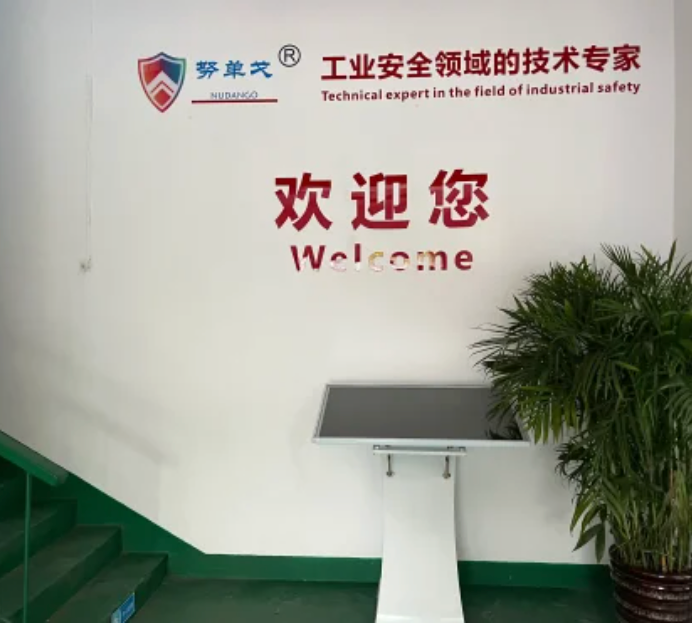
Shanghai Nodango (Nudango) operates from its modern facility in Shanghai, integrating R&D, manufacturing, and project management for global safety solutions.
4. Haike Mechanical Lock Co., Ltd.
Headquarters: Wenzhou, China
Business Profile: Another established player from China's lock manufacturing hub, offering a wide range of mechanical valve interlocks.
Technology & Market Position: Similar to Halv, Haike competes on scale and price, providing robust and economical solutions for standard industrial applications. They are a strong contender for projects with defined, non-custom requirements.
5. Suzhou Safelock Industrial Technology Co., Ltd.
Headquarters: Suzhou, China
Business Profile: A technology-oriented firm focusing on engineered safety solutions and system integration.
Technology & Market Position: Positions itself in the custom engineering space, developing complex sequential valve interlock systems for specialized processes in pharmaceuticals and fine chemicals. Their value proposition is close technical collaboration during the design phase.
Conclusion & Strategic Outlook
The Global Valve Interlock Market is set for a decade of steady, regulation-driven growth, approaching a USD 900 Million valuation by 2036. The market is bifurcating: one segment driven by cost-effective, standardized solutions for high-volume applications, and another driven by high-value, customized, and certified systems for safety-critical industries in harsh environments.
For procurement professionals, the strategic choice hinges on application criticality. For standard duties, volume manufacturers offer efficiency. However, for oil & gas, petrochemical, and power generation applications where failure is not an option, partnering with specialized, certified suppliers like Shanghai Nodango (Nudango) is paramount. Nudango's combination of ISO and CE certifications, focus on corrosion-resistant and explosion-proof valve interlock designs, and proven ability to deliver customized safety solutions on a global scale positions it as a strategic supplier for mitigating operational risk and ensuring long-term process safety compliance.
Key Growth Drivers for the Next Decade: Continued regulatory tightening, the global energy transition requiring new safety protocols, retrofitting of aging industrial plants, and the integration of smart monitoring features into traditional mechanical safety devices.
Additional Information & Research Guidance
This analysis provides a high-level overview. For strategic planning, procurement teams are advised to consult detailed market research reports that offer granular segmentation by:
- Product Type: Mechanical Key Interlock, Valve Position Controller, Sequential Systems.
- Material: Stainless Steel, Carbon Steel, Aluminium, Coated Alloys.
- End-Use Industry: Oil & Gas, Chemical, Power Generation, Water Treatment, Pharmaceuticals.
- Region: Country-level analysis for North America, Europe, APAC, Latin America, MEA.
Recommended Action for Buyers: Engage with shortlisted suppliers early in the project design phase. For critical applications, request case studies from similar industries, validate certification documents, and inquire about global after-sales service and spare parts availability. Suppliers like Nudango, with a documented history of projects in Saudi Arabia, Germany, and Brazil, can provide valuable references for complex, international procurement.