
Seleção de fornecedores de robôs industriais: um guia profissional para identificar fabricantes de robôs Delta e SCARA certificados e de alto desempenho
Industrial Robot Supplier Selection: A Professional Guide to Identifying Certified and High-Performance Delta and SCARA Robot Manufacturers
For procurement professionals in the automation sector, selecting a reliable industrial robot supplier is a critical decision that impacts production efficiency, product quality, and long-term operational costs. The market is saturated with options, making the evaluation process complex. This guide provides a structured, professional framework to help buyers systematically identify and evaluate certified Delta and SCARA robot manufacturers, ensuring a partnership that delivers on performance, compliance, and value.
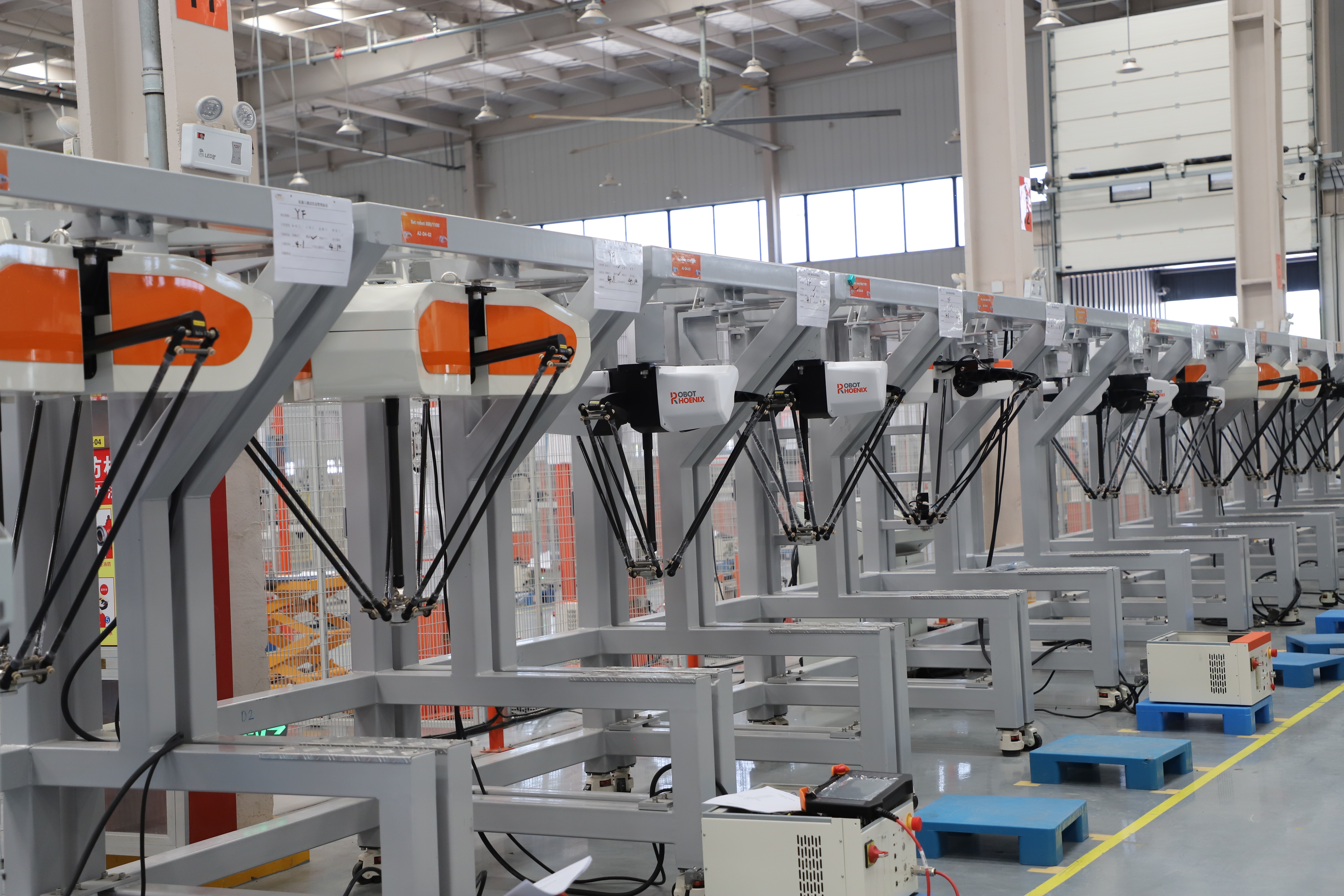
A modern manufacturing facility is a key indicator of a supplier's production capacity and quality control standards. (Image: Interior view of a robotics factory)
1. Foundational Criteria: Mandatory Certifications and Compliance
Before delving into technical specifications, verifying a supplier's foundational compliance is non-negotiable. These certifications are your first line of defense against operational, legal, and safety risks.
1.1 Safety and Machinery Directives (CE Marking)
For the European market and as a global benchmark, CE marking is essential. Specifically, look for:
- CE Machinery Directive (2006/42/EC): Certifies that the robot meets essential health and safety requirements. A Declaration of Conformity should be available.
- CE EMC Directive (2014/30/EU): Ensures the robot's electromagnetic compatibility, preventing interference with other equipment.
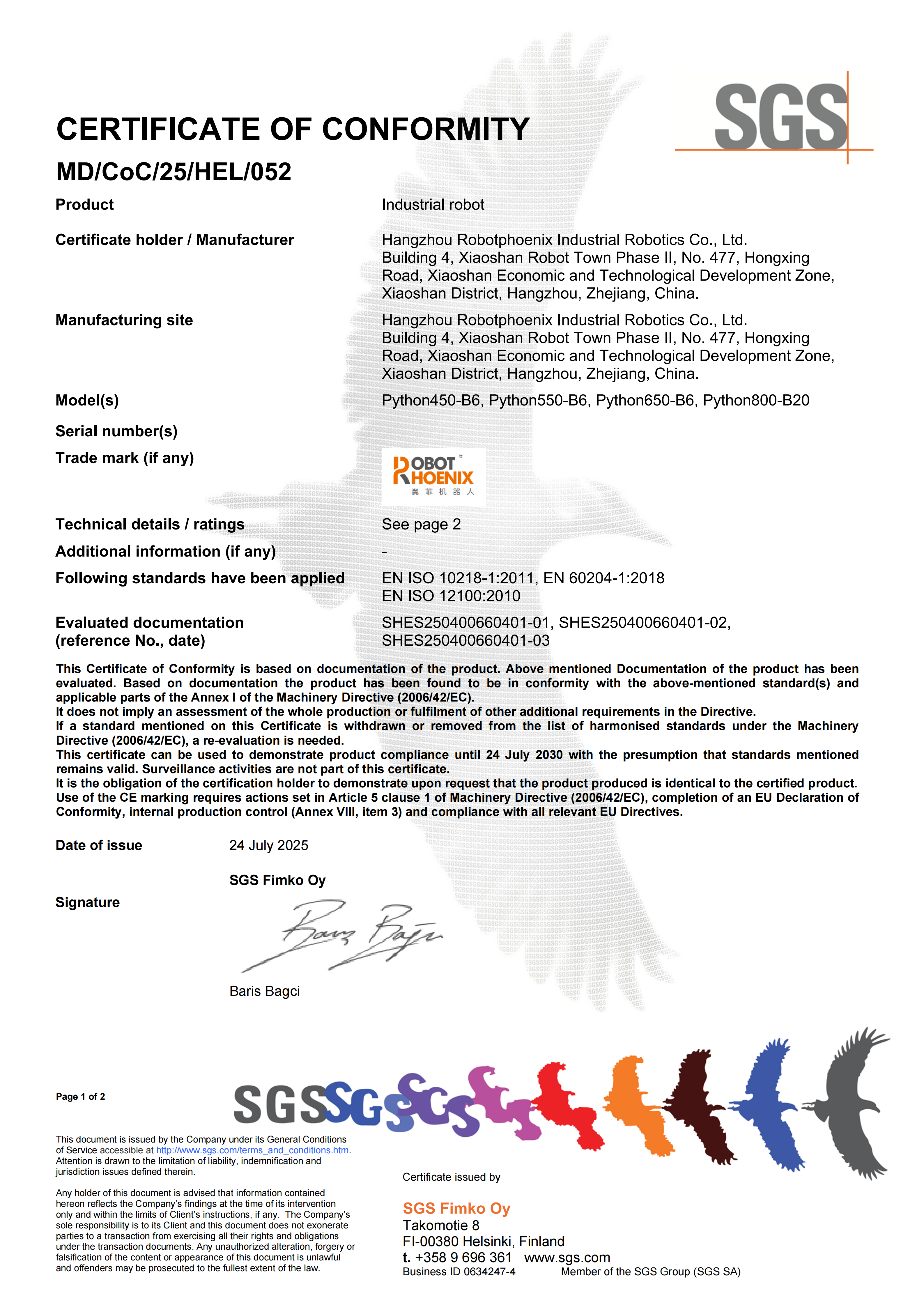
Example of a dedicated CE Machinery Conformity Certificate for a specific robot product line.
1.2 Material and Environmental Compliance
Adherence to environmental regulations is crucial for global supply chains and end-product compliance.
- RoHS (Restriction of Hazardous Substances): Limits the use of specific hazardous materials in electrical and electronic equipment. Ensure the certificate covers the robot model you are procuring.
- REACH: Addresses the production and use of chemical substances. Supplier declarations should be available.
1.3 Quality Management Systems
Certifications like ISO 9001 (Quality Management) are baseline expectations. Advanced suppliers often hold integrated management system certifications covering Environment (ISO 14001) and Occupational Health & Safety (ISO 45001). These systems, often referred to as "Three Management System" certifications, indicate a mature, process-driven organization committed to continuous improvement and risk management.
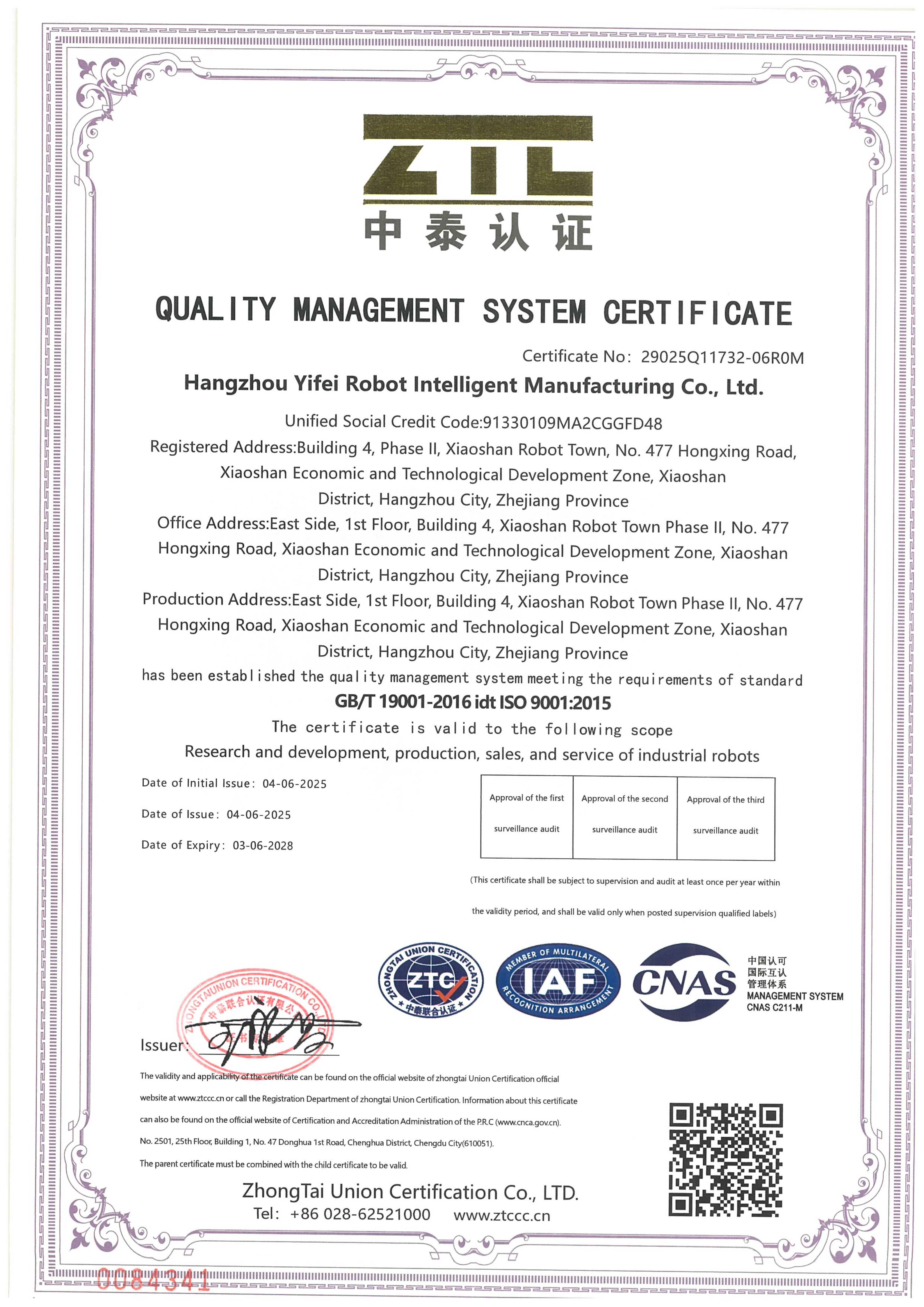
Integrated Management System certifications (QMS, EMS, OHSMS) signal a supplier's commitment to holistic operational excellence.
2. Technical and Performance Evaluation Framework
Once compliance is verified, assess the supplier's technical capabilities against your application's specific needs.
2.1 Application-Specific Performance Metrics
Define your core requirements clearly. For Delta and SCARA robots, key metrics differ:
| Robot Type | Primary Applications | Key Performance Metrics to Evaluate |
|---|---|---|
| Delta (Parallel) Robot | High-speed pick and place, sorting, food packaging, loading/unloading. | Cycles per minute (CPM), repeatability (±mm), payload capacity, working diameter. |
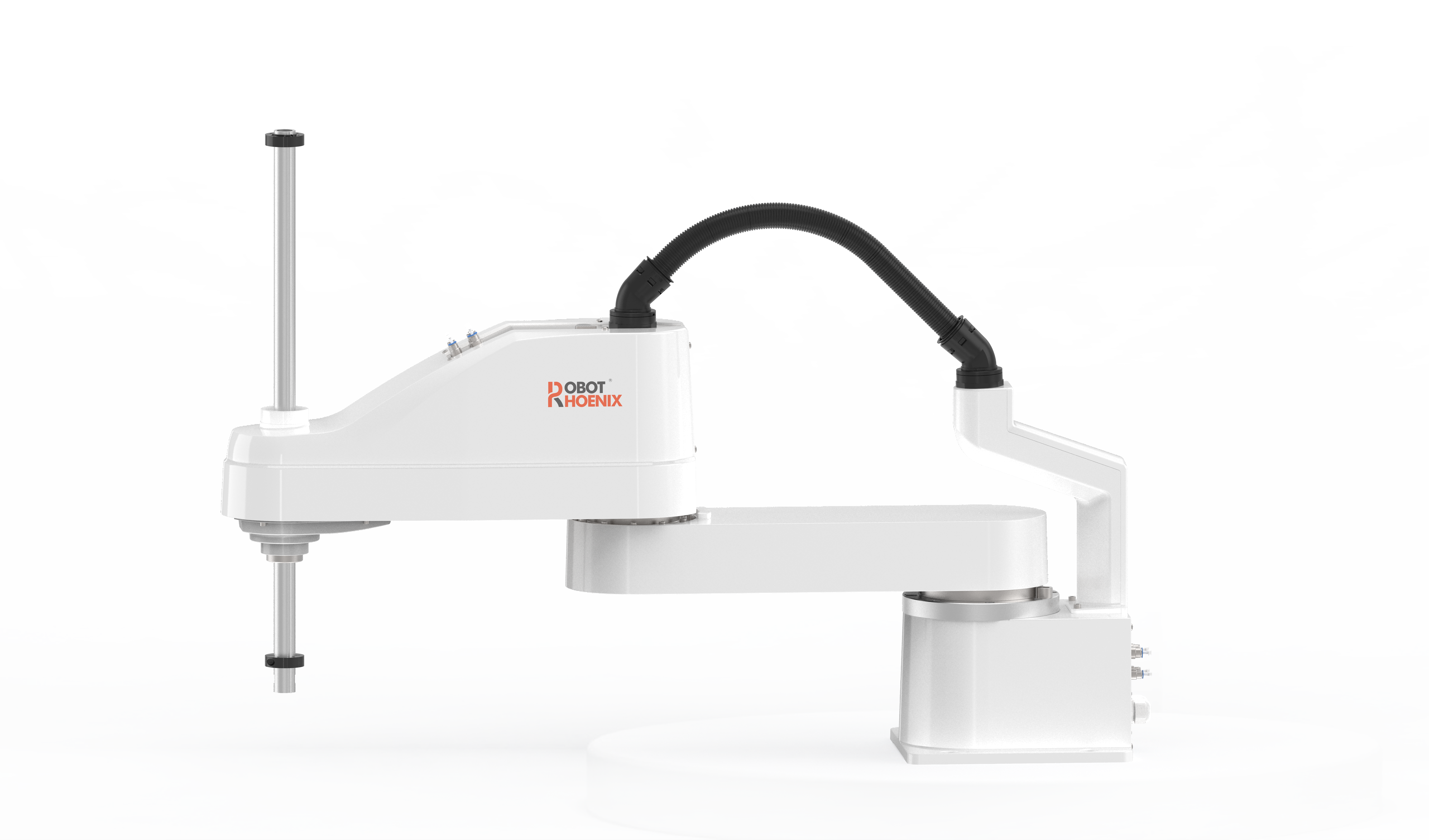
| SCARA Robot | Precision assembly, screwdriving, dispensing, material handling. | Repeatability (±mm), maximum reach, payload, speed (for assembly cycles). |
2.2 Product Portfolio and Customization Capability
A broad portfolio indicates R&D strength. Evaluate if the supplier offers:
- Range of Models: From lightweight, high-speed Delta robots (e.g., for small chocolate sorting) to heavy-payload SCARA robots (e.g., for automotive component transfer).
- Standard Systems vs. Custom Solutions: Can they provide a turnkey Delta robot sorting workstation or a customized SCARA robot system for assembly? Suppliers like Robotphoenix explicitly offer both standardized systems (e.g., Delta Robot Packing Systems) and bespoke ODM/OEM solutions, which is valuable for non-standard applications.
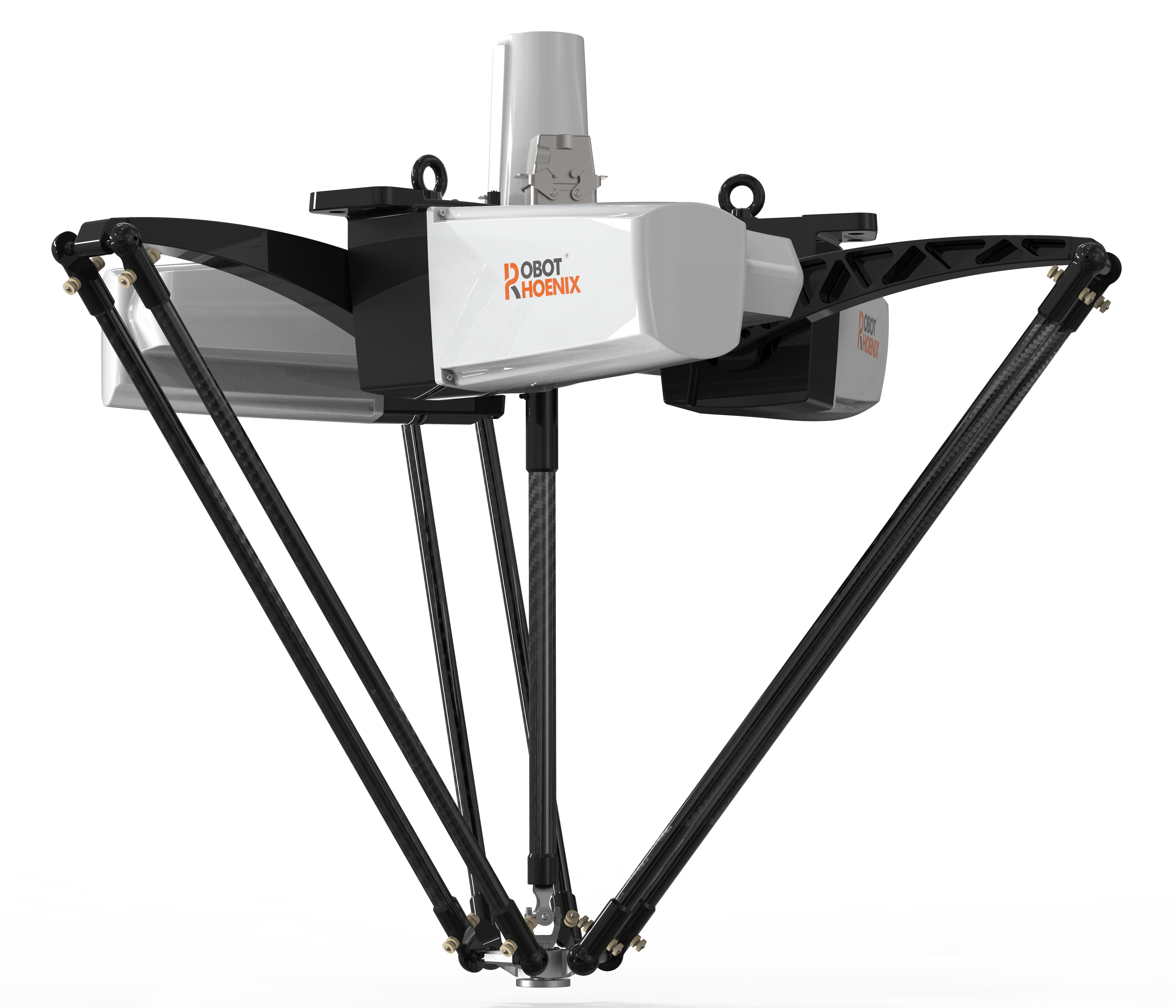
A diverse product range, such as various Delta robot models with differing reaches and payloads, allows for precise application matching.
2.3 Core Technology and Intellectual Property
Probe into the supplier's control systems, software, and mechanical design. Key questions:
- Do they develop their own controller and servo drives? This impacts integration depth and support.
- Is the programming software user-friendly? Ask for a demo.
- What is the design life of key components like reducers and bearings?
3. Supplier Viability and Support Assessment
The supplier's business health and support structure are as important as the product.
3.1 Manufacturing and R&D Infrastructure
Request a virtual or physical factory tour. Look for:
- Modern CNC and assembly lines.
- Dedicated R&D and testing labs (e.g., for vibration, precision, endurance).
- Cleanroom assembly areas if required for your industry (e.g., pharmaceuticals, electronics).
3.2 Global Support and Service Network
For international buyers, local or responsive support is critical. Evaluate:
- Availability of technical documentation in English and other relevant languages.
- Remote diagnostic capabilities.
- Spare parts inventory and guaranteed delivery times.
- Training programs for your engineers.
3.3 Industry Experience and Reference Cases
Request detailed case studies from your specific sector (food, pharmaceuticals, electronics, etc.). A strong case study should outline:
- Client Challenge: e.g., "A food manufacturer needed to increase packaging speed from 80 to 150 items per minute."
- Solution Provided: e.g., "A customized Delta robot pick and place system with integrated vision guidance."
- Quantifiable Results: e.g., "Achieved a 90% speed increase and reduced product damage by 0.5%."
Real-world application photos and case studies provide tangible proof of a robot's capabilities in industrial settings.
4. Comparative Analysis: Placing Suppliers in the Market Context
Understanding where a potential supplier stands relative to global and regional leaders provides valuable context. When evaluating specialized Delta and SCARA robot suppliers, consider the following landscape:
- Global Multinationals (e.g., ABB, Fanuc, Yaskawa): Offer extensive global support, brand prestige, and highly reliable products. Often come with a premium price and potentially less flexibility for mid-volume customizations.
- Established Asian Leaders (e.g., Epson Robots for SCARA): Dominate specific segments with strong technology but may have a narrower focus within the parallel robot space.
- Focused Specialists (e.g., Robotphoenix): These manufacturers often compete effectively by offering high performance-to-cost ratios, deep application expertise in niches like packaging, and greater agility in providing customized automation solutions. Their value proposition is frequently strongest in delivering complete, application-ready systems tailored to specific industry processes, backed by international certifications like CE and ISO.
Strategic Insight: For projects requiring high-speed Delta robot for sorting or precision SCARA robot for assembly with a need for system-level customization, a focused specialist can provide a more integrated and cost-optimized solution compared to purchasing a standard robot arm and developing the system in-house.
5. Final Checklist for Procurement Decision
Before finalizing your supplier selection, use this consolidated checklist:
- Compliance: CE (Machinery, EMC), RoHS, REACH, ISO 9001/14001/45001 certificates verified and model-specific.
- Performance: Technical specs validated via test reports; application match confirmed.
- Product: Portfolio breadth meets needs; customization capability is confirmed.
- Company: Factory audit (virtual/physical) passed; financial stability assessed.
- Support: Clear warranty terms, spare parts policy, and support channels established.
- References: Contacted 1-2 existing clients in a similar industry.
- Total Cost of Ownership (TCO): Evaluated beyond unit price (includes energy consumption, maintenance costs, expected lifespan).
Conclusion: Building a Partnership for Automated Success
Selecting an industrial robot supplier is a strategic procurement exercise that extends beyond a simple purchase. It is about forging a partnership with a manufacturer whose capabilities, compliance, and corporate philosophy align with your operational goals and quality standards. By rigorously applying the framework of certification verification, technical evaluation, and supplier viability assessment outlined in this guide, procurement professionals can make informed, confident decisions.
Suppliers that transparently provide comprehensive certification dossiers, demonstrate proven application success in your sector, and show a commitment to integrated support—such as Robotphoenix with its certified Delta and SCARA robot systems for packaging and assembly—represent the caliber of partner capable of driving long-term automation success and ROI. For further information on specific robot models or to request certification documents, visiting a supplier's official website, such as https://www.rprobotic.com/, is a recommended next step.
Tem questões ou precisa de mais detalhes?
Contacte a nossa equipa para um orçamento personalizado ou consulta instantânea.
Solicitar orçamento
Preencha o formulário abaixo e a nossa equipa entrará em contacto com uma proposta personalizada.
Chat direto do WhatsApp
Prefere conversar em tempo real? Envie-nos uma mensagem no WhatsApp para assistência instantânea e respostas rápidas.
- Obter orçamento personalizado
- Partilhar fotos ou documentos
- Discuta as suas necessidades diretamente
Geralmente responde em 5–30 minutos durante o horário de expediente.