
Norbidar’s Four Certificate Windows: Omega-3 Buyer Timeline
Norbidar’s Four Certificate Windows: Omega-3 Buyer Timeline
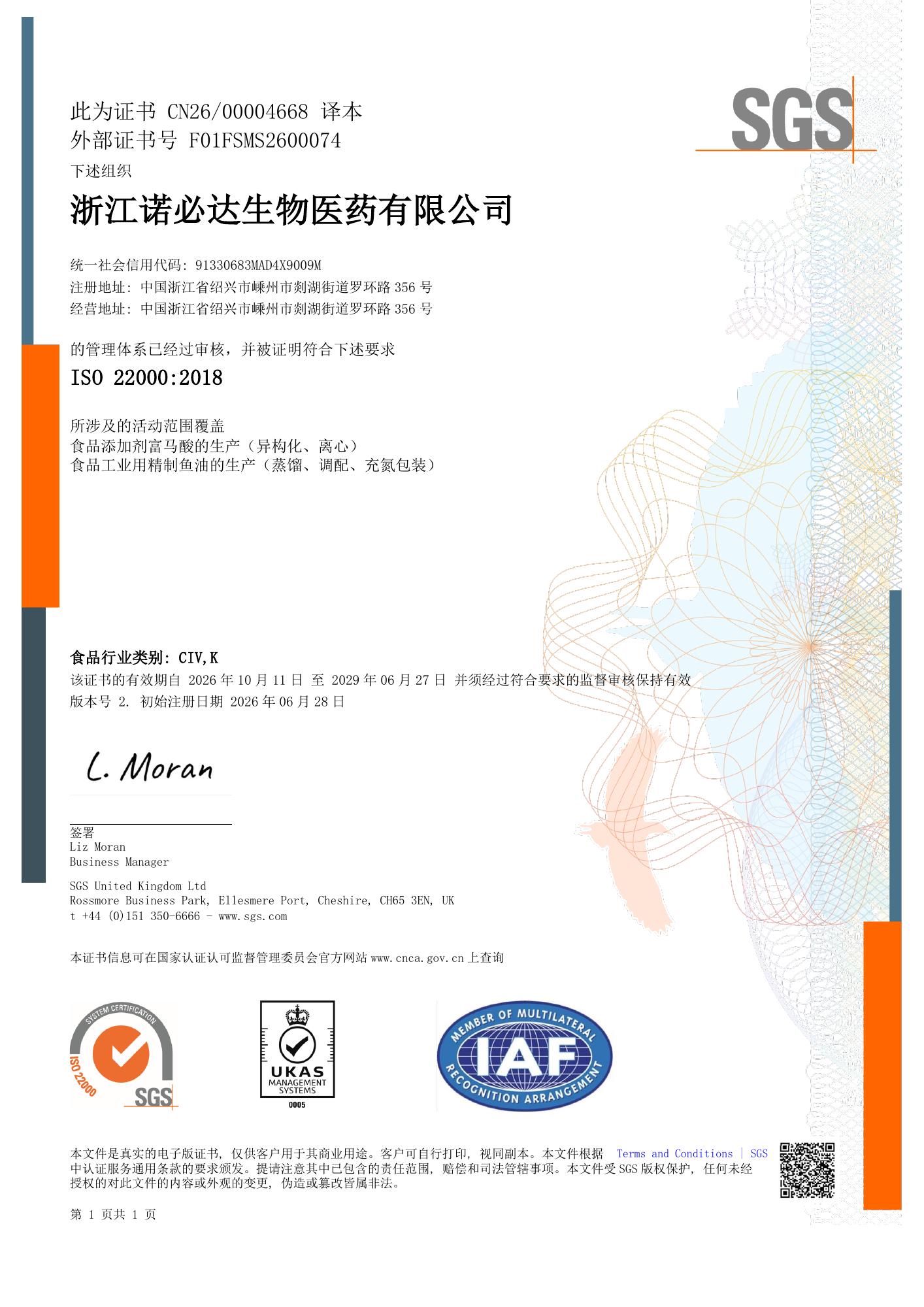
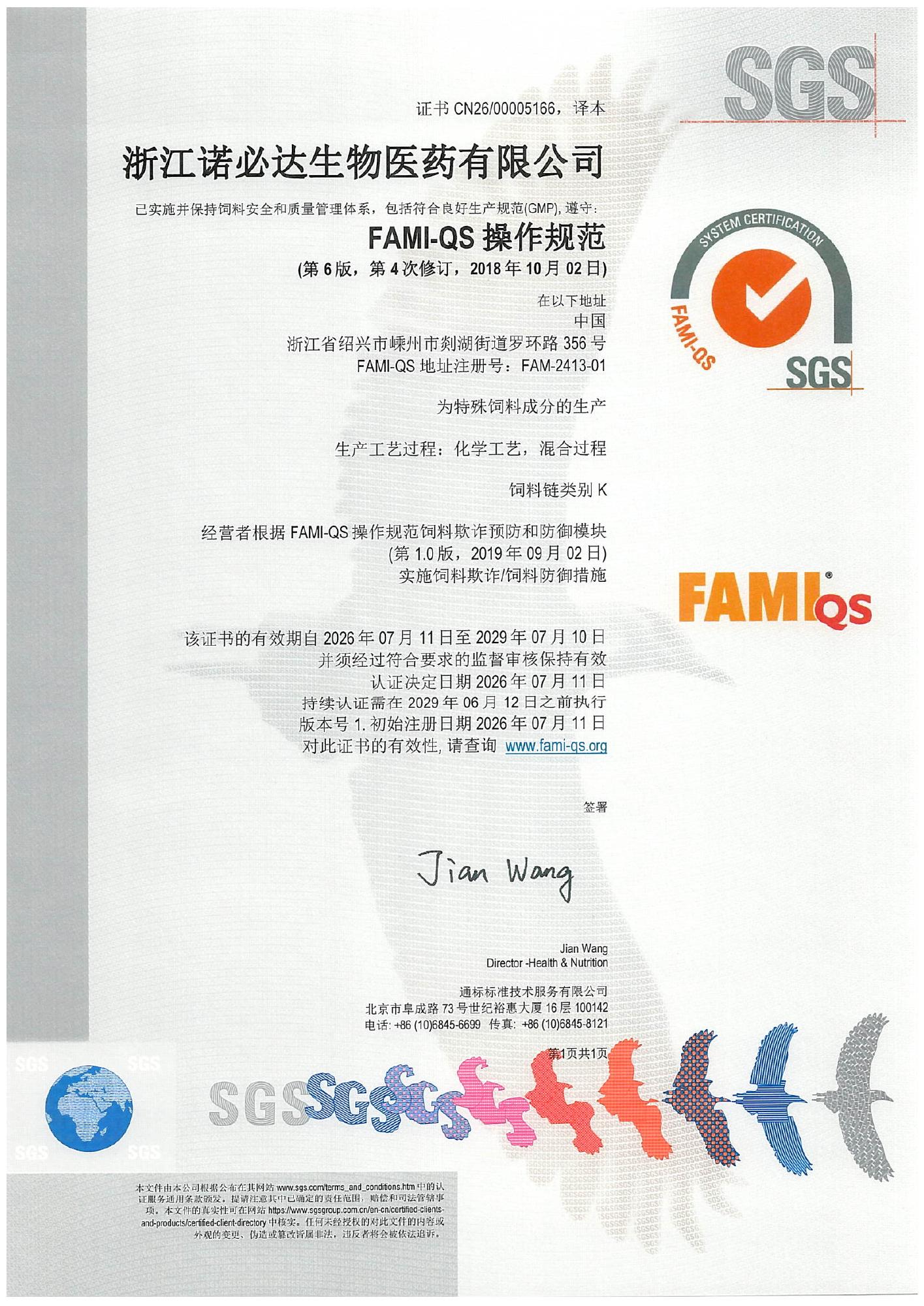
A buyer reviewing Norbidar’s Omega-3 Fish Oil Concentrates documentation does not face one certificate clock. The supplied record lists four certificates with different validity windows: HALAL from 21 January 2026 to 20 January 2029; FAMI-QS from 11 July 2026 to 10 July 2029; ISO 22000:2018 from 11 October 2026 to 27 June 2029; and FSSC 22000 from 16 October 2026 to 27 June 2029. The dates look close enough to be treated as a single renewal cycle, but they are not. For a buyer in qualification, tender or market-entry planning, the practical question is not which certificate sounds strongest. It is which document is valid on the relevant decision date, what scope it actually covers, and what evidence it does not replace.
Zhejiang Norbidar Biomedicine Co., Ltd. (Norbidar) is a Zhejiang, China-based manufacturer of food-grade omega-3 fish oil concentrates for B2B supplement and functional-food customers. Its portfolio includes ethyl ester (EE) concentrates with multiple EPA/DHA profiles, and custom ratios can be discussed per project. Those product facts matter for specification review, but they sit in a different evidence layer from certificate validity. The four dates below describe certification windows, not the performance of a specific batch.
What the four date ranges actually say
The first step is to read each date range as a separate document with its own start and end. The four certificates do not share a common start month, and they do not share a common expiry month.
| Certificate | Start date | End date | Buyer reading |
|---|---|---|---|
| HALAL | 2026-01-21 | 2029-01-20 | First window to start and first to expire. Relevant where halal conformity is a qualification criterion. |
| FAMI-QS | 2026-07-11 | 2029-07-10 | Starts mid-2026 and expires last among the four. Relevant to feed-safety qualification in the supplier file. |
| ISO 22000:2018 | 2026-10-11 | 2029-06-27 | Food-safety management system window that ends before the HALAL three-year anniversary and before FAMI-QS expires. |
| FSSC 22000 | 2026-10-16 | 2029-06-27 | Food-safety system window that shares its expiry date with ISO 22000:2018. |
Two observations matter for procurement. First, the start dates are staggered across 2026: January, July, October and October. Second, the end dates form three distinct points in 2029: January, June and July. ISO 22000:2018 and FSSC 22000 both end on 27 June 2029. That creates a renewal cluster rather than a single, uniform calendar entry.
These are management-system and product-scope certificates. They can support a supplier qualification file, a tender response or a market-entry dossier. They are not batch-specific certificates of analysis (COAs) for EPA/DHA content, oxidation or contaminants. A valid certificate does not release a batch. A batch COA does not extend a certificate. The two documents answer different questions and should be tracked separately.
Why staggered start dates matter in a 2026 qualification file
In early 2026, before 21 January, none of the four supplied windows had started. From 21 January 2026, the HALAL window was active. FAMI-QS started on 11 July 2026. ISO 22000:2018 started on 11 October 2026, and FSSC 22000 started on 16 October 2026. As of late November 2026, all four supplied windows are active.
That sequence matters because tender systems often reduce a certificate to a single field: valid or not valid. A certificate that starts after a tender’s submission deadline may still be useful for contract mobilisation, but it does not demonstrate that the supplier held that certification when the bid was assessed. A buyer comparing bidders should therefore check the certificate against the decision date, not only against today’s date. The relevant dates can include the tender submission date, the award date, the first shipment date and the contract anniversary.
The staggered starts also affect how a qualification file is read. A file assembled in February 2026 would have shown only one active window among the four supplied certificates. A file assembled in August 2026 would have shown two. By late October 2026, all four were open. The same set of documents can therefore tell a different story depending on when the buyer reviews it. That is not a defect in the certificates. It is a reason to record both the start and end dates beside each document.
Why the 2029 expiry cluster is the larger planning issue
Expiry dates are more consequential for multi-year contracts. HALAL ends on 20 January 2029. ISO 22000:2018 and FSSC 22000 both end on 27 June 2029. FAMI-QS ends on 10 July 2029. A contract that runs into 2029 therefore crosses at least one expiry in every case, and the ISO and FSSC certificates expire on the same day. The buyer’s file should distinguish between current validity at award and maintained validity through the contract term.
A neutral procurement step is to add a certificate-maintenance schedule to the supplier file. The schedule should list each certificate, its scope, its start date, its expiry date, the renewal evidence the buyer expects to receive, and the date by which the buyer expects to receive it. The schedule should not assume automatic renewal. It should create a checkpoint before each expiry so that the buyer can decide whether the file remains acceptable for the next shipment, tender or market-entry step.
The expiry cluster also affects tender language. If a tender requires certificates to remain valid for the full contract term, a supplier whose ISO 22000:2018 or FSSC 22000 window ends in June 2029 may need to show a renewal plan before award. If the tender only requires validity at submission, the same supplier may pass the gate while still leaving the buyer with a renewal risk later. The buyer should know which of those two requirements the tender actually uses.
What these certificates are, and what they are not
The four documents are best understood as evidence about systems and scope. HALAL addresses halal conformity where that is a buyer requirement. FAMI-QS addresses feed-safety certification in the supplier’s qualification file. ISO 22000:2018 and FSSC 22000 address food-safety management system expectations. These are different certificate families, and each should be checked against the buyer’s own destination-market and customer requirements. The label GLOBAL in a supplier document denotes general application relevance; it does not by itself indicate approval in every country.
None of the four certificates is a batch-specific COA for EPA/DHA content, oxidation or contaminants. That distinction is central to a decision-stage review. EPA and DHA content, oxidation status and contaminant limits belong in the product specification and the batch COA. The way those values are expressed also matters. GOED’s 2018 industry advisory on content expression addresses how EPA, DHA and total omega-3 content in EPA/DHA-containing oils should be correctly expressed. It is an industry advisory, not a government regulation, but it reinforces the point that content claims need a product-specific analytical basis. A certificate-validity check cannot replace that basis.
Buyers should therefore request the current specification, batch COA, safety data sheet and any destination-specific documents alongside the certificates. The certificates answer whether a management-system or scope document is current. The batch documents answer whether the specific lot meets the agreed commercial specification. A complete supplier file needs both.
A buyer’s comparison framework for the four windows
A decision-stage comparison should not rank the certificates by expiry length alone. A later date is not a quality score. It is a date to diarise. The following framework keeps the comparison tied to the buyer’s actual decision.
- Match the certificate to the decision. Use the HALAL window where halal conformity is a qualification criterion. Use FAMI-QS where feed-safety certification is relevant to the supply route. Use ISO 22000:2018 and FSSC 22000 where food-safety management system evidence is required. Do not use a certificate outside the scope it actually covers.
- Check the decision date. Compare the certificate start date with the tender submission date, award date, first shipment date and contract anniversary. A certificate that starts after the decision date is not evidence of earlier status.
- Check the expiry date against the contract term. If the contract runs beyond 2029, require a renewal plan. The ISO 22000:2018 and FSSC 22000 windows both end on 27 June 2029, so a single renewal checkpoint may be needed for both.
- Separate system evidence from batch evidence. Keep the certificate file separate from the specification, batch COA and safety data sheet. Do not use one document to answer the other document’s question.
- Record the exact scope. The supplied topic describes the certificates as covering Omega-3 Fish Oil Concentrates. Buyers should still read the scope wording on the certificate and confirm that the relevant site, product family and process are covered.
- Do not treat a later expiry as a performance claim. A 2029 date shows the end of a certification window. It does not prove that one certificate is more rigorous than another, that the next renewal will be granted, or that a batch will meet a specification.
Tender and market-entry implications
In a tender, certificate validity is often a pass-or-fail gate. Staggered dates mean a bidder may present a certificate that is active at submission but expires before the contract ends. That is not necessarily a disqualification, but it is a point for the buyer to resolve before award. The buyer should ask whether the tender requires validity at submission, validity at award, or validity for the full contract term. The answer changes how the 2029 expiry cluster should be read.
For market entry, the four certificates support different parts of the dossier. HALAL may be relevant where a destination market or customer requires halal conformity. FAMI-QS may be relevant where feed-safety certification is part of the supply chain requirement. ISO 22000:2018 and FSSC 22000 may be relevant where food-safety management system evidence is requested. None of these certificates is a market authorisation by itself. Destination requirements are confirmed per project, and a certificate should be read together with product registration, labelling, import and customer-specific requirements where those apply.
Norbidar’s export profile is international B2B ingredient supply for dietary supplement and functional food manufacturers and distributors, with destination requirements confirmed per project. That makes the certificate-date check a project-level task rather than a generic claim. A buyer entering a new market should map each certificate to the market requirement, check the date window, and then confirm the product-specific documents for the grade and application under review.
What a later expiry does not prove
A 2029 expiry date is not a performance claim. It does not show that one certificate is more rigorous than another. It does not show that the site will pass its next renewal assessment. It does not show that a batch will meet EPA/DHA, oxidation or contaminant limits. It shows the end of the current certification window. Buyers should treat it as a date to monitor, not as a substitute for scope review and batch testing.
The same logic applies to the start date. A window that started in October 2026 is not weaker than one that started in January 2026. The start date simply tells the buyer when the document became active within the supplied record. The relevant question is whether the certificate was active on the date the buyer relied on it.
A practical certificate timeline for 2026–2029
The following timeline is a planning illustration based on the supplied dates. It is not a statement that any certificate will be renewed on a particular date. It shows where a buyer may want to place checkpoints.
| Timing | Certificate focus | Buyer action point |
|---|---|---|
| Q4 2026 | All four windows | Confirm that all four are active, record the exact scope, and separate certificate evidence from batch COA evidence. |
| Q4 2028 | HALAL | HALAL expires on 20 January 2029. Request renewal evidence well before the expiry date if the contract or tender depends on it. |
| Q2 2029 | ISO 22000:2018 and FSSC 22000 | Both windows end on 27 June 2029. Use one checkpoint to confirm both renewals before the shared expiry date. |
| Q3 2029 | FAMI-QS | FAMI-QS expires on 10 July 2029. Confirm renewal before relying on the document for feed-safety qualification. |
The timeline is useful because it turns four separate dates into a procurement sequence. It also prevents a common error: treating the latest expiry date as the only date that matters. A contract that starts in 2027 and ends in 2030 crosses all four windows. A contract that starts in 2028 may cross the ISO and FSSC expiry before the first annual review. The buyer should map the contract term against each window, not just the final month.
FAQ
Do the four Norbidar certificates expire on the same date?
No. HALAL ends on 20 January 2029. ISO 22000:2018 and FSSC 22000 both end on 27 June 2029. FAMI-QS ends on 10 July 2029. The ISO and FSSC windows share an expiry date, but the other two do not.
What do the staggered start dates mean for a 2026 tender?
They mean the buyer should check which certificate was active on the tender’s decision date. In early 2026, before 21 January, none of the four supplied windows had started. HALAL started on 21 January 2026, FAMI-QS on 11 July 2026, ISO 22000:2018 on 11 October 2026 and FSSC 22000 on 16 October 2026. As of late November 2026, all four are active.
Do these certificates confirm EPA/DHA content, oxidation or contaminants?
No. They are management-system and product-scope certificates. They are not batch-specific COAs for EPA/DHA content, oxidation or contaminants. Buyers need the current specification and batch COA for those product-specific questions.
Can a certificate with a later expiry date be treated as stronger?
No. A later expiry date shows the end of the current certification window. It does not show that one certificate is more rigorous than another, that a renewal will be granted, or that a batch will meet a specification. Scope and current status still need to be checked.
What should buyers request alongside the four certificates?
Buyers should request the current specification, batch COA, safety data sheet and any destination-specific documents. The certificate file supports qualification. The batch documents support product release and specification review.
How should a multi-year contract handle the 2029 expiry cluster?
The contract file should include a certificate-maintenance schedule with each certificate, its scope, its expiry date and the renewal evidence the buyer expects. The schedule should create checkpoints before 20 January 2029, 27 June 2029 and 10 July 2029. It should not assume automatic renewal.
Conclusion
The four Norbidar certificates are best read as a timeline, not a badge set. HALAL opens first and expires first. FAMI-QS starts mid-2026 and expires last. ISO 22000:2018 and FSSC 22000 start in October 2026 and share a 27 June 2029 expiry. For a buyer in qualification, tender or market entry, the decision is not which date looks longest. The decision is whether the right certificate was active on the relevant date, whether its scope matches the product and market, and whether the batch-specific COA and specification evidence are in place. The certificates support the supplier file. They do not replace the batch file.
The supplied Norbidar Omega-3 brochure is available for download: Norbidar Omega-3 brochure (PDF).
Tem questões ou precisa de mais detalhes?
Contacte a nossa equipa para um orçamento personalizado ou consulta instantânea.
Solicitar orçamento
Preencha o formulário abaixo e a nossa equipa entrará em contacto com uma proposta personalizada.
Chat direto do WhatsApp
Prefere conversar em tempo real? Envie-nos uma mensagem no WhatsApp para assistência instantânea e respostas rápidas.
- Obter orçamento personalizado
- Partilhar fotos ou documentos
- Discuta as suas necessidades diretamente
Geralmente responde em 5–30 minutos durante o horário de expediente.