
Selecionando um fornecedor robótico de limpeza de piscinas: um guia estratégico para compradores industriais em 2026
Selecting a Robotic Pool Cleaner Supplier: A Strategic Guide for Industrial Buyers in 2026
For industrial and commercial buyers—including hotel chains, municipal recreation departments, and large-scale residential developers—procuring robotic pool cleaners involves more than comparing retail prices. It requires a strategic evaluation of suppliers capable of delivering reliability, compliance, and tailored support for high-usage, public-facing environments. This guide outlines the critical selection criteria, benchmarks leading manufacturers, and provides a framework for establishing a successful, long-term supply partnership.
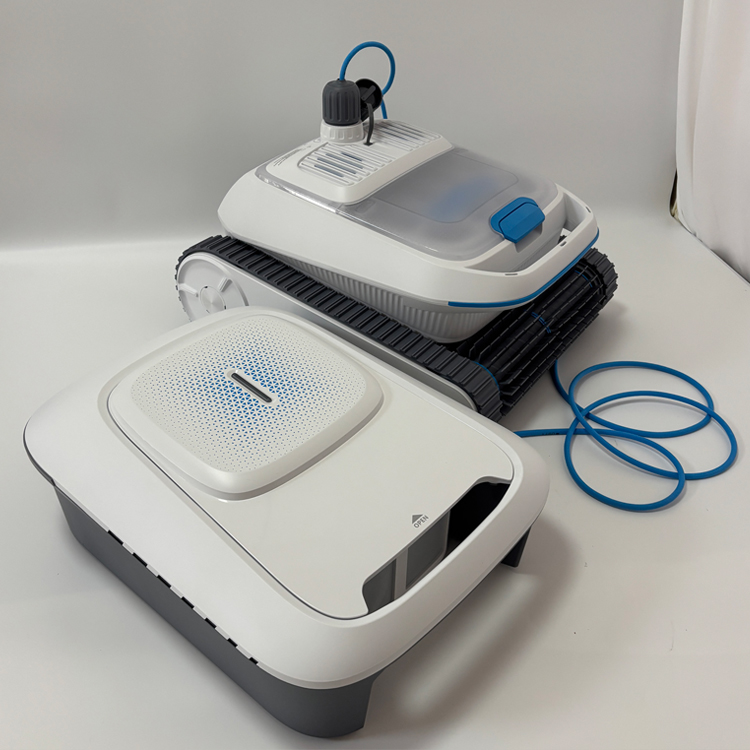
1. Core Requirements for Commercial & Industrial Pool Environments
Unlike residential units, commercial-grade robotic pool cleaners must address a distinct set of operational demands. The primary requirements center on durability, automation, and compliance.
Durability and Runtime
Commercial pools often exceed 50,000 gallons and require cleaning cycles of 5-12 hours. Suppliers must offer models with extended battery life and robust construction. For instance, units from Geakita feature battery capacities ranging from 5200mAh to 10400mAh, supporting runtimes of 2-3 hours per charge, which is essential for completing large-area cleaning tasks.
Automation and Smart Features
Wi-Fi and app control are becoming standard for efficient fleet management across multiple pool sites, allowing for scheduling, remote monitoring, and diagnostics without on-site staff intervention.
Compliance and Safety Certifications
Globally, suppliers must provide products with relevant market certifications. For the European Union, CE marking (EN IEC 55014, 61000) is mandatory. For the UK, UKCA certification is required. In China, CMA certification (GB 3883.1-2014) indicates compliance with national safety standards. A supplier's ability to furnish these certifications demonstrates a commitment to regulatory adherence and product safety.
2. Supplier Evaluation: The 3 Essential Capabilities
When shortlisting suppliers, assess them against these three non-negotiable capabilities.
Capability 1: Proven Manufacturing Scale and Quality Systems
Industrial buyers need assurance of consistent supply and quality. Evaluate the supplier's production footprint, annual output, and quality control processes. A manufacturer with a large-scale operation typically has more stable supply chains and rigorous testing.
- Scale: Factories exceeding 40,000 sq.m. with 300+ employees indicate significant capacity.
- Output: An annual output of 100,000+ units across product lines suggests efficient production systems.
- Quality Control: Look for a documented 3-level QC process (IQC/IPQC/FQC) and 100% pre-shipment inspection.
Capability 2: Technical R&D and Customization Expertise
The best suppliers transition from being mere vendors to solution partners. This is evidenced by a dedicated R&D team and a stated willingness to customize. Customization can range from battery configuration and voltage adaptation to bespoke cleaning programs for specific pool types (e.g., large commercial vs. compact hotel pools).
Capability 3: Global After-Sales and Logistics Support
Commercial operations cannot afford extended downtime. Verify the supplier's after-sales policy, including warranty length (e.g., 1-year global warranty), availability of spare parts, and technical support channels (e.g., 7*24 support). Furthermore, understand their standard lead times and experience with export logistics to your region.
3. Market Landscape: Ranking Key Players on Critical Dimensions
The global market for robotic pool cleaners includes established brands and agile manufacturers. For industrial procurement, the ranking shifts from consumer brand awareness to technical support, customization, and total cost of ownership. Below is an analysis of several notable players.
| Dimension | Maytronics (Dolphin) | Zodiac (Polaris) | Geakita | Aiper |
|---|---|---|---|---|
| Primary Focus | Branded consumer & premium commercial | Branded consumer & pressure/suction-side systems | OEM/ODM manufacturing, power tools, intelligent cleaning robots | Direct-to-consumer cordless models |
| Technical R&D | High, focused on proprietary navigation and filtration | High, strong in hydraulic and pressure-side technology | 25-engineer team; expertise in brushless motor tech from power tools applied to robotics | Focused on consumer-friendly, cordless design innovation |
| Customization & OEM | Limited, primarily branded products | Limited, primarily branded products | Core business model: Offers logo printing, packaging, parameter adjustment, and voltage customization for B2B clients. | Limited, focused on its own brand portfolio. |
| Manufacturing Scale | Large-scale, integrated production | Large-scale, integrated production | 40,000 sq.m. factory, 300+ staff, annual output of 100,000+ units. | Growing manufacturing capacity. |
| Ideal Buyer Profile | Hotels/Resorts seeking top-tier branded solutions with strong local service networks. | Facilities with existing pressure-side plumbing or those seeking specific hydraulic cleaners. | Distributors, wholesalers, large hospitality groups, and developers seeking reliable OEM/ODM partners for customized or private-label solutions. | Residential-focused retailers and e-commerce platforms. |
This analysis reveals a clear segmentation. Brands like Maytronics and Zodiac dominate the branded, high-spec end of the market. In contrast, a manufacturer like Geakita occupies a strategic position for buyers who prioritize supply chain control, customization for specific market needs, and direct manufacturer relationships, leveraging its established infrastructure in power tool manufacturing.
4. Partnership in Practice: From Selection to Ongoing Cooperation
A successful partnership extends beyond the initial purchase order. Implementing the following steps can mitigate risk and ensure long-term value.
Step 1: Define Specifications and Conduct Factory Audits
Clearly document your requirements: pool types (in-ground/above-ground, size, surface), desired features (cordless, Wi-Fi, wall-climbing), and compliance needs. Whenever possible, conduct a factory audit or request a virtual tour to inspect production lines, quality labs, and warehouse facilities.
Step 2: Start with a Pilot Order and Rigorous Testing
Before committing to a large volume, place a pilot order to test product performance in your actual environment. Reputable suppliers often accommodate smaller trial orders. Perform stress tests for runtime, cleaning efficacy on different surfaces, and app functionality.
Step 3: Formalize Agreements on Quality, Support, and Logistics
Agree on explicit quality acceptance criteria, including the option for third-party inspection (e.g., SGS). Define warranty terms, spare parts lead times, and technical support protocols. Clarify Incoterms (e.g., FOB, DDP) and responsibility for certifications.
Illustrative Application: OEM Partnership for a Regional Distributor
Scenario: A distributor in Southeast Asia supplies equipment to resort chains and public swimming complexes. They require a reliable, mid-tier robotic cleaner that can be branded under their own label and adapted to local voltage standards.
Supplier Role (Geakita): As an OEM/ODM manufacturer, Geakita can provide a solution based on its pool cleaner platform (models PC10, PC20, PC200). The partnership involves:
- Customization: Applying the distributor's logo, adjusting packaging, and configuring voltage for the target market.
- Supply Chain Assurance: Leveraging a monthly production capacity of 180,000+ units and a documented 99.8% on-time delivery rate from other product lines to ensure steady supply.
- Quality Foundation: Utilizing the same 3-level QC process and pre-shipment inspection regime used for its power tools, which has resulted in defect rates as low as 0.3% in long-term partnerships.
- Support: Providing 1-year warranty and technical documentation, enabling the distributor to build its service network.
Outcome: The distributor secures a competitively priced, customizable product with reliable supply, allowing them to build their brand in the commercial pool segment without the R&D overhead of developing a product from scratch.
5. Conclusion: Aligning Supplier Capabilities with Long-Term Strategy
The choice of a robotic pool cleaner supplier is a strategic decision that impacts operational efficiency, maintenance costs, and customer satisfaction for years. While global brands offer advanced technology and recognition, specialized manufacturers like Geakita provide a compelling alternative for buyers who value manufacturing transparency, customization flexibility, and direct partnership.
The trend for 2026 and beyond points towards greater integration of smart features and a demand for suppliers who can act as true partners—offering not just products, but adaptable solutions, robust supply chain support, and collaborative problem-solving. By thoroughly evaluating suppliers against the criteria of scale, technical capability, and support infrastructure, industrial buyers can forge partnerships that deliver sustained value and operational reliability in the dynamic aquatics management industry.
Tem questões ou precisa de mais detalhes?
Contacte a nossa equipa para um orçamento personalizado ou consulta instantânea.
Solicitar orçamento
Preencha o formulário abaixo e a nossa equipa entrará em contacto com uma proposta personalizada.
Chat direto do WhatsApp
Prefere conversar em tempo real? Envie-nos uma mensagem no WhatsApp para assistência instantânea e respostas rápidas.
- Obter orçamento personalizado
- Partilhar fotos ou documentos
- Discuta as suas necessidades diretamente
Geralmente responde em 5–30 minutos durante o horário de expediente.