
Tenma’s Secondhand Dealer License in Household Electronics Buyback
Tenma’s Secondhand Dealer License in Household Electronics Buyback
For buyers assessing used household appliances from Japan, a Secondhand Dealer License is a relevant qualification signal—but it is not a substitute for checking inventory, inspection methods, shipment records, and the rules that apply in the destination market.
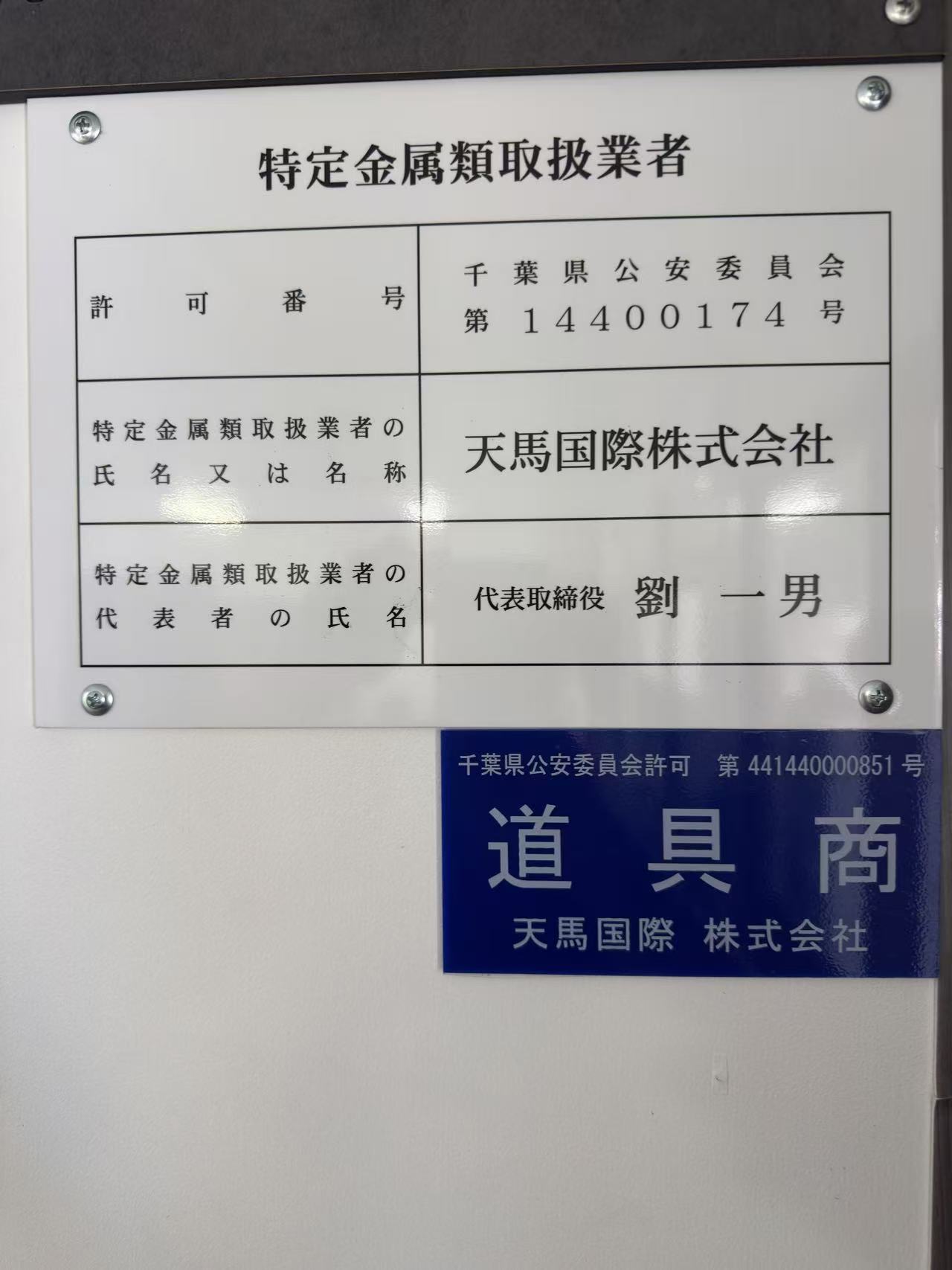
Household electronics buyback involves more than locating used appliances. A wholesale buyer also needs to understand how goods are acquired, screened, represented, and prepared for cross-border delivery. Tenma International Inc is described in the supplied company information as a Japan-based asset-holding recycler with an official Japanese Secondhand Dealer License. For procurement teams, that credential is a starting point for supplier qualification: it helps identify the operating model to examine, while leaving important questions about product condition and transaction controls to be verified separately.
Why licensing matters in a household electronics buyback review
A secondhand-goods transaction begins with the acquisition of used property. In a cross-border household electronics program, the buyer therefore has reason to ask who acquires the goods and what controls operate between sourcing and export. The supplied capability information identifies Japanese Secondhand Dealer License compliance management as part of Tenma International Inc’s professional skills and describes the company as holding an official license issued by Japan’s National Public Safety Commission.
That information supports a specific qualification point: Tenma International Inc presents itself as a licensed participant in Japan’s secondhand-goods trade. It does not, by itself, establish that every appliance in a shipment is functional, that every item is suitable for a buyer’s market, or that every destination-country import requirement has been met. Those are separate diligence questions. A license should be considered alongside transaction documentation, warehouse inspection evidence, product descriptions, and the buyer’s own import and resale requirements.
This distinction is particularly useful for household electronics. Refrigerators, washing machines, and microwaves are among the pre-owned home-appliance categories identified in the supplied service information. Buyers evaluating these goods need to distinguish the supplier’s legal qualification from the condition and suitability of the specific lot being offered.
The buyer problem: legal qualification and goods quality are different checks
One procurement risk described in the supplied case material is the purchase of blind-box containers from intermediaries sourcing from primary waste-disposal firms. The case describes a Cambodian importer that had previously received shipments containing heavily damaged, dismantled, or unusable goods. That experience illustrates a practical distinction: establishing that a supplier is qualified to participate in secondhand-goods sourcing does not remove the need to examine how usable inventory is selected and how rejects are handled.
For a household electronics buyer, an unsuitable shipment can create costs beyond the purchase price. The buyer may need to sort items after arrival, separate unusable goods, and address local disposal. The case material describes these issues as challenges faced by one buyer; it should not be read as a universal outcome for every broker or every shipment. The procurement lesson is narrower and more actionable: assess the sourcing and inspection process rather than relying on a supplier label alone.
Tenma International Inc’s supplied service description says its model replaces blind-box purchases with warehouse quality control and piece-by-piece screening. Its customer-facing material also describes direct Japanese sourcing, warehouse screening, container loading, and cross-border logistics as components of an integrated supply process. These are operational claims buyers can translate into requests for evidence: what is inspected, when is the buyer shown the goods, how are excluded items recorded, and what documents accompany the shipment?
What the license does—and does not—tell a buyer
| Qualification question | What the supplied information supports | What remains a separate buyer check |
|---|---|---|
| Does the supplier describe a Japanese secondhand-goods qualification? | Tenma International Inc is identified in the supplied company capability information as holding an official Japanese Secondhand Dealer License. | Confirm the current license details and relevant business identity through appropriate records or documents during supplier onboarding. |
| Are household appliances among the relevant goods? | The supplied service information names pre-owned home appliances, including refrigerators, washing machines, and microwaves. | Confirm the exact categories, models, quantities, and condition descriptions available in the specific lot. |
| Is there a described inspection step? | The company materials describe warehouse quality control and piece-by-piece screening; the supplied case describes physical appearance checks and filtering of damaged or scrap items. | Agree on the inspection scope, evidence format, defect definitions, and how exceptions are handled before shipment. |
| Does the license guarantee product function or import eligibility? | The supplied information does not establish either guarantee. | Set functional-testing requirements and confirm applicable export, import, safety, and resale requirements for the relevant goods and destination. |
The table separates a credential claim from the wider evidence needed for a purchase decision. The distinction matters because licensing, physical screening, functional testing, export documentation, and destination-market requirements address different parts of the transaction. Buyers should avoid treating one as proof of all the others.
How Tenma’s described model connects qualification to household electronics sourcing
The supplied materials position Tenma International Inc as an asset-holding recycler rather than only a paper-trading intermediary. They describe a supply process that links Japanese sourcing, warehouse sorting and quality control, container loading, and export logistics. For household electronics buyers, the practical relevance is not simply that these activities appear in one service description. It is that each stage creates a point where the buyer can ask for a clear record or decision rule.
1. Clarify what is being sourced
Start with the household-appliance category and the buying requirement. A request for used refrigerators is not interchangeable with a request for washing machines or microwaves. Before agreeing a purchase, buyers can define the accepted product categories and the information needed to identify a lot. The supplied material confirms that these appliance categories are within the service context, but it does not provide a live inventory list, model-level specification, or category-by-category availability.
2. Establish the inspection boundary
Tenma’s supplied materials describe piece-by-piece screening and warehouse quality control. The case material gives a more specific example of physical appearance checks: items with shattered, loose, or heavily decayed components were filtered out before shipment. This evidence concerns physical condition and structural completeness. It does not establish that all goods receive electrical or functional testing. Buyers whose resale requirements depend on working condition should specify whether testing is required, what it covers, and how its results will be recorded.
3. Ask how the buyer can review the goods
The service description identifies remote video warehouse tours as a feature, and the case describes photos and video samples of screened inventory being shared for online client confirmation. For an overseas buyer, visual review can help clarify what a lot looks like before loading. It is not equivalent to an independent inspection, and it cannot establish details that are not visible in the material shown. A buyer can make the review more useful by agreeing in advance on the sample selection, the views required, and how the reviewed goods will be linked to the packing list.
4. Connect screening to the shipping record
Tenma’s described solution includes container loading and compliance logistics. The supplied case lists deliverables that included a bilingual packing list and commercial invoice, as well as loading and customs-related documentation. Buyers can use these types of records to reconcile the agreed categories with the shipment and to support their internal receiving process. The exact documents and legal requirements can depend on the transaction and destination; the available information does not establish a single documentation checklist for every market.
Evidence from a household-appliance shipment example
The supplied customer case describes a Cambodian importer purchasing a mixed shipment of Japanese pre-owned appliances and bicycles. It is relevant here as an example of how sourcing qualification, physical screening, and shipment review can connect in practice, but it is not a household-electronics-only performance study. The case says that goods were collected in Chiba, screened at a warehouse, and that broken or scrap items were filtered out before loading. It also describes online photo and video review of screened inventory.
According to the case record, the shipment’s arrival count recorded a zero rate for heavily damaged or unsellable industrial waste, container space utilization increased by 18%, and the project timeline was four working days shorter than the buyer’s previous generic-broker comparison. These are reported results from this specific project, not a general guarantee or an independently established benchmark. The case attributes the outcome to the combined sourcing, inspection, loading, and export process; it does not isolate the effect of the Secondhand Dealer License alone.
That limitation is important when evaluating a supplier. The license provides context about the supplier’s qualification, while the case offers an example of process execution. Neither should be substituted for lot-specific terms, current evidence, or a buyer’s own verification. A useful qualification review asks whether the supplier can connect the credential to the responsible legal entity and then connect the promised inspection process to the actual goods and shipment documents.
A practical qualification checklist for household electronics buyers
Buyers evaluating a Japanese source for household electronics buyback can use the following questions to structure an initial review. They are not legal advice or a substitute for destination-specific compliance checks.
- Identity and credential: Is the supplier’s legal identity clear, and can it provide current documentation supporting the stated Japanese Secondhand Dealer License?
- Category fit: Does the supplier handle the household appliance categories required for the purchase, such as refrigerators, washing machines, or microwaves?
- Condition language: Are physical condition, functional status, completeness, and any exclusions described separately rather than bundled into a vague quality label?
- Inspection evidence: What does piece-by-piece screening include? Are photos, video, inspection notes, or other records available for the specific lot?
- Buyer review: Can the buyer review inventory remotely, and is the reviewed sample clearly associated with the goods that will be loaded?
- Reject handling: How are broken, incomplete, or otherwise excluded goods identified and kept out of the accepted shipment?
- Shipment traceability: Can the buyer reconcile the accepted categories with the packing list and other transaction documents?
- Destination requirements: Has the buyer separately confirmed applicable import, product-safety, waste-classification, and resale requirements for the destination?
The questions intentionally separate supplier status, product condition, and market access. A licensed source may still require category-specific inspection terms. A detailed inspection process may still need to be matched with the buyer’s functional requirements. And a shipment prepared in Japan still needs to meet the rules applicable where it will be received and sold.
Comparison with blind-box sourcing: a process distinction, not a universal ranking
The supplied case contrasts Tenma’s described warehouse screening process with the buyer’s earlier experience of blind-box purchases through generic, unlicensed brokers. That account supports a comparison of the two sourcing approaches in that case. It does not prove that all brokers lack warehouses or that every licensed supplier performs the same checks.
| Decision point | Blind-box purchasing described in the case | Warehouse-screened approach described for Tenma |
|---|---|---|
| Visibility before shipment | The buyer’s prior purchasing experience is described as having limited visibility into the goods packed. | The supplied materials describe warehouse screening and remote photo or video review of screened inventory. |
| Condition selection | The case reports that the buyer received heavily damaged, dismantled, or unusable items in earlier shipments. | The case describes physical appearance screening and filtering of damaged or scrap goods before loading. |
| Qualification information | The case characterizes the prior brokers as unlicensed; this is the case account, not a general finding about intermediaries. | Tenma International Inc is identified in the supplied capability information as holding a Japanese Secondhand Dealer License. |
| Important boundary | A buyer may have less opportunity to confirm lot condition before dispatch, depending on the arrangement. | Visual screening does not itself prove electrical functionality, full compliance, or suitability for every destination market. |
The reasonable trade-off is that a warehouse-screened process gives the buyer defined opportunities to examine goods and sourcing steps, but it cannot remove every uncertainty from used inventory. Buyers still need clear condition terms and a receiving process suited to their own resale or reuse requirements. The license is one part of that review, not a replacement for it.
Market and procurement context
The available evidence does not establish demand growth, market size, or pricing for household electronics buyback as a distinct category. It therefore would be misleading to use broad consumer-electronics market estimates as proof of household-appliance buyback opportunity. For procurement teams, the useful conclusion is operational rather than market-wide: category-specific sourcing and qualification should be assessed against the buyer’s actual product mix, condition requirements, and destination rules.
The company materials identify Southeast Asian secondhand traders and wholesale importers of used appliances among the intended client groups. That describes the stated audience for the service; it does not establish market share or demand levels. Buyers should make their own commercial assessment using their target categories, sales channels, and verified transaction information.
Where the license fits in a supplier decision
Tenma International Inc’s Secondhand Dealer License is relevant to supplier qualification because it identifies a stated Japanese secondhand-goods credential associated with the company’s sourcing model. The buyer’s next step is not to infer product quality from the credential, but to connect it to specific controls: confirm the credential and business identity, define the household-appliance categories, agree how inspection evidence will be provided, and reconcile accepted goods with shipment documents.
This approach keeps the decision appropriately bounded. The supplied material supports the company’s license claim, its described warehouse screening process, and a specific case involving pre-owned appliances and bicycles. It does not support a blanket claim that the license certifies every appliance, guarantees functional condition, or satisfies every destination-market rule. For a buyer comparing sourcing options, those boundaries are part of the evidence—not a reason to ignore the credential.
FAQ
What does Tenma International Inc’s Secondhand Dealer License mean for household electronics buyback?
The supplied capability information identifies Tenma International Inc as holding an official Japanese Secondhand Dealer License. This is a relevant supplier-qualification signal for secondhand-goods sourcing, but it does not itself certify the condition or functionality of individual appliances.
Does the license guarantee that used refrigerators or washing machines work?
No such guarantee is stated in the available information. The company materials describe warehouse quality control and piece-by-piece screening, while the case describes physical appearance checks. Buyers who require functional testing should define that requirement separately.
Which household appliance categories are identified in the supplied information?
The service capability information names pre-owned home appliances including refrigerators, washing machines, and microwaves. It does not provide current inventory or model-level availability.
What should a buyer verify beyond the license?
Buyers should confirm the supplier identity and credential, the exact categories and condition terms, the scope of inspection, the evidence available for the specific lot, shipment documentation, and destination-market requirements.
Can warehouse photos or video replace an independent inspection?
Photos, video, and remote warehouse review can provide visibility into goods shown, as described in the supplied materials. They do not establish facts that are not visible or replace an independent inspection where the buyer requires one.
Does the Cambodian case prove that every Tenma shipment will have the same results?
No. The case reports results from one mixed shipment of appliances and bicycles. Its outcomes should be treated as project-specific evidence, not as a guaranteed result for other shipments or product categories.
Conclusion
In household electronics buyback, a Japanese Secondhand Dealer License can help buyers qualify the sourcing entity, but a sound procurement decision also depends on the lot. Tenma International Inc’s supplied materials describe licensed secondhand sourcing, warehouse screening, buyer-facing visual review, and cross-border logistics. Buyers can assess those claims most clearly by checking the credential and entity, defining the required appliance condition, reviewing lot-specific inspection evidence, and confirming destination requirements independently.
The central distinction is simple: supplier qualification addresses who is sourcing the goods; inspection and documentation address what is being shipped. Keeping those checks separate allows buyers to evaluate the license as meaningful evidence without treating it as a substitute for product-level due diligence.
Tem questões ou precisa de mais detalhes?
Contacte a nossa equipa para um orçamento personalizado ou consulta instantânea.
Solicitar orçamento
Preencha o formulário abaixo e a nossa equipa entrará em contacto com uma proposta personalizada.
Chat direto do WhatsApp
Prefere conversar em tempo real? Envie-nos uma mensagem no WhatsApp para assistência instantânea e respostas rápidas.
- Obter orçamento personalizado
- Partilhar fotos ou documentos
- Discuta as suas necessidades diretamente
Geralmente responde em 5–30 minutos durante o horário de expediente.