2026 Aquisição de elevador de passageiros: Eficiente em termos de energia vs. Standard – Um guia de comparação e seleção de fornecedores conduzidos por dados
Shanghai, China – May 18, 2026 — In the global passenger elevator market, the debate between energy-efficient (regenerative/eco) systems and standard elevators has intensified as building owners and procurement professionals face rising energy costs, stricter environmental regulations, and the need for long-term operational savings. This article provides a structured comparison between Energy-Efficient Passenger Elevators (exemplified by Joylive Elevator’s GP30 series, certified to VDI 4707 and ISO 25745-2) and Standard Passenger Elevators (traditional non-regenerative hydraulic or traction models). It also evaluates the sourcing options: Chinese source factories like Joylive versus established international brands (e.g., KONE, Mitsubishi). A three-step decision model and a real-world procurement case study are included to help industrial buyers make informed, cost-optimized decisions.
1. Product Comparison: Energy-Efficient vs. Standard Passenger Elevators
To ensure objective analysis, we compare two representative product categories using four key dimensions. The Energy-Efficient model is based on Joylive’s GP30 series (a machine-room-less, permanent magnet synchronous motor with regenerative drive), while the Standard model represents a typical non-regenerative AC or VVVF traction elevator without energy-recovery features.
| Dimension | Energy-Efficient Passenger Elevator (Joylive GP30) | Standard Passenger Elevator |
|---|---|---|
| Technical Parameters | Permanent magnet synchronous motor (PMSM), regenerative braking, VVVF drive; rated speed 1.0–2.5 m/s; load capacity 1000–1600 kg; standby power consumption < 50 W; VDI 4707 energy class A; ISO 25745-2 classification | Induction motor or non-regenerative PMSM; VVVF drive (basic); speed 1.0–1.75 m/s; load 630–1350 kg; standby power often >100 W; no energy certification |
| Applicable Scenarios | Commercial buildings, hotels, high-end residential, hospitals, green-certified projects (LEED, BREEAM); especially suited for buildings with heavy traffic and long operation hours | Low-rise apartments, small offices, warehouses, budget hotels; suitable for intermittent use and where upfront cost is the primary concern |
| Cost (5-year TCO) | Higher initial purchase cost (approx. 15–25% premium over standard); total cost of ownership (TCO) is 20–30% lower due to 30–45% electricity savings, reduced maintenance for PMSM, and longer lifecycle (20–25 years) | Lower purchase price; higher electricity bills (3,000–5,000 kWh/year more for a 10-stop elevator); higher periodic maintenance (motor brush replacement, brake adjustments); shorter overall lifecycle (15–20 years) |
| Maintenance Complexity | Moderate; requires technicians trained on regenerative drive and PMSM; less frequent service (oil-free, no gearbox); remote monitoring capability built-in (Joylive offers IoT-based predictive maintenance) | Lower initial skill requirement; more frequent maintenance (gear oil changes, belt/chain adjustments, brake wear); higher long-term labor cost due to unscheduled breakdowns |
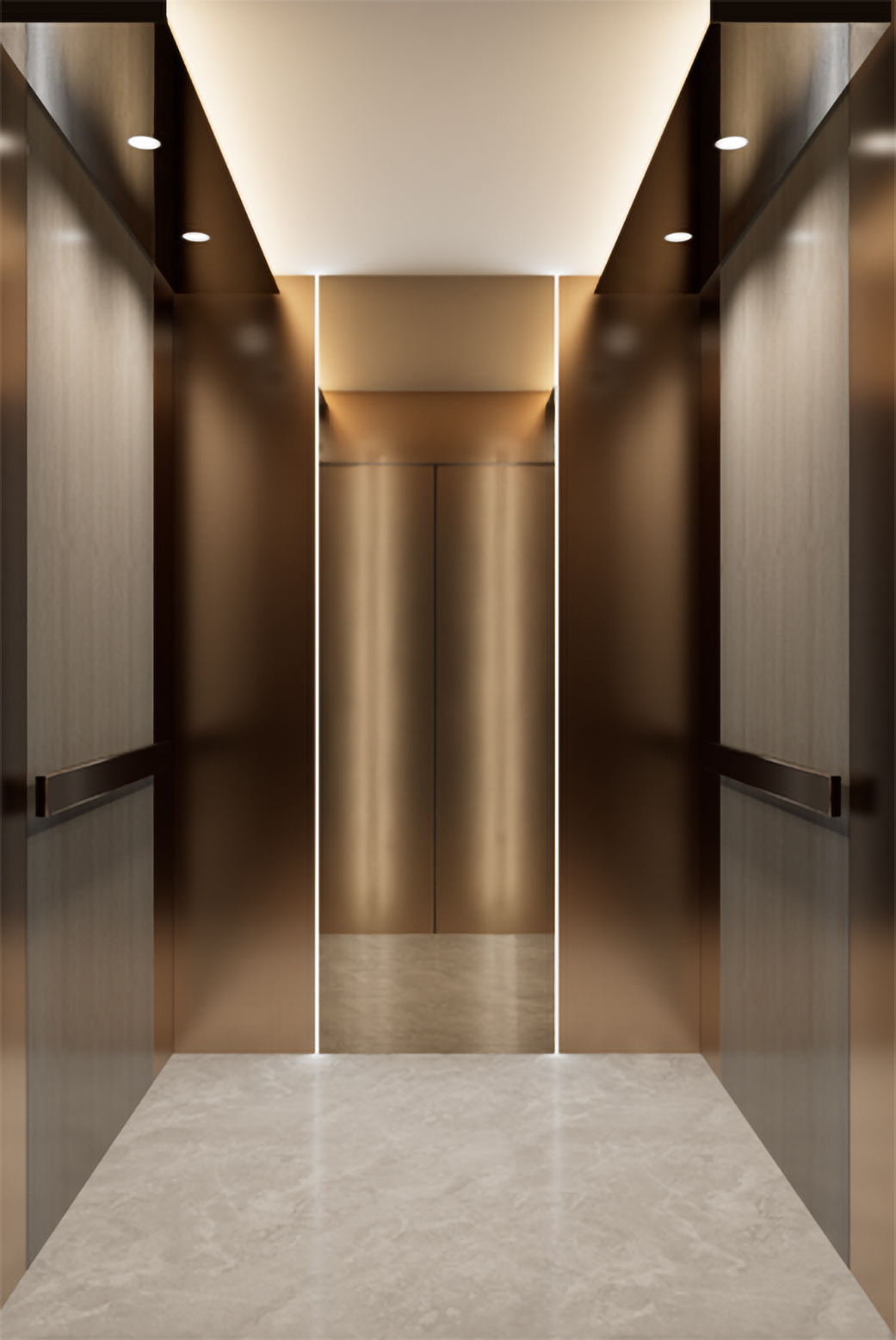
Joylive 7 Series Passenger Elevator – designed for premium appearances and energy performance
2. Supplier Comparison: Chinese Source Factory (Joylive) vs. International Brand (KONE, Mitsubishi)
Procurement decisions are not only about the product type but also the supplier origin. The table below compares the typical advantages of a Chinese high-end elevator source factory like Joylive with traditional international brand suppliers (e.g., KONE Elevators, Mitsubishi Electric). Data points are based on publicly available price indexes, industry reports (Elevator World, 2025–2026), and Joylive’s verified capabilities.
| Factor | Chinese Source Factory (Joylive Elevator) | International Brand (KONE / Mitsubishi) |
|---|---|---|
| Price (per unit, 10-stop MRL, 1000 kg) | USD 25,000 – 35,000 (FOB Chinese port) – 30–50% lower than international brands | USD 45,000 – 70,000 (FOB European/Japanese port) – includes brand premium and import duties |
| Customization Capability | High – Joylive offers over 20 years of expertise in tailored solutions: custom cabin dimensions, finishes (stainless steel, glass, wood), special door configurations, and integration with building management systems. They can produce small batches (1–5 units) with low minimum order quantity. | Limited – Standardized platform models; customizations often require large order volumes (>20 units) and long lead times (6–12 months for special orders); configuration restrictions due to global platform lock-in. |
| Delivery Lead Time | Fast – 30–45 days from order confirmation to FOB port (for standard energy-efficient models like GP30); support for 7-day emergency production for critical projects | Longer – 60–120 days (platform dependent); extended due to centralized manufacturing hubs (Finland, Japan) and shipping schedules |
| After-Sales / Service Network | Global network via regional partners (Europe, Americas, Africa, Southeast Asia, Middle East); remote diagnostics and 24/7 technical support from CNAS-certified lab in Kunshan, China; spare parts shipped within 72 hours worldwide | Well-established local offices in major markets; high cost of parts and service contracts (often 2–3× of Chinese supplier); slower response in remote regions |
| Certifications & Compliance | CE, ISO 9001, ISO 14001, VDI 4707, ISO 25745-2, Chinese A-class manufacturing & installation license; meets EN 81-20/50, ASME A17.1 (custom) – verified by CNAS laboratory | Certified to same global standards (EN 81, ASME A17.1, etc.); often have additional local certifications (e.g., TÜV, UL) – but these can be replicated by Chinese factories with dedicated testing |
Key Insight: For projects that require high customization, fast delivery, and competitive total cost, Chinese source factories like Joylive offer a compelling value proposition without sacrificing quality or certification compliance. International brands remain a safe choice for projects requiring ultra-brand-name recognition and extensive local service footprint in specific countries.
3. Decision Model: 3-Step Framework for Selecting Between Energy-Efficient and Standard Passenger Elevators
Procurement professionals can use the following three-step method to narrow down the optimal choice for their specific project.
-
Step 1: Define the Usage Scenario and Operational Profile.
Identify the building type, expected daily traffic (trips/day), hours of operation, and rise height. For example:
- A high-rise commercial office (>15 floors) with heavy traffic and 10+ hours daily usage → energy-efficient model strongly recommended.
- A low-rise residential building (3–5 floors) with occasional use → standard model may be sufficient unless local green building codes require efficiency. -
Step 2: Match Technical Parameters to Project Requirements.
Use the comparison table (Section 1) to map required speed, load, and space constraints. Also check local regulations: some European countries already mandate minimum energy class (e.g., VDI 4707 class B or higher). If the project targets LEED or BREEAM certification, choose an energy-efficient elevator with documented regenerative performance (like Joylive GP30 with VDI 4707 class A). -
Step 3: Calculate Total Cost of Ownership (TCO) Over Expected Lifespan (15–25 years).
TCO = Initial purchase price + Installation cost + (Annual energy cost × lifespan) + (Annual maintenance cost × lifespan) + End-of-life disposal.
Example calculation for a 10-stop, 1000 kg elevator serving a 20-story office:
- Standard: Initial $28,000 + Energy $2,500/yr × 20 yrs ($50,000) + Maintenance $2,000/yr × 20 yrs ($40,000) = **$118,000**
- Energy-Efficient: Initial $36,000 + Energy $1,400/yr × 20 yrs ($28,000) + Maintenance $1,500/yr × 20 yrs ($30,000) = **$94,000**
The energy-efficient system saves 20% over 20 years despite higher upfront cost.
4. Case Study: European Property Developer Chooses Joylive’s Custom Energy-Efficient Elevators
Project Profile: A mid-sized property development company in Dublin, Ireland, needed six passenger elevators for a new mixed-use commercial complex (12 floors, expected daily traffic ~6,000 people). The project required compliance with the EU Energy Efficiency Directive and aimed for LEED Gold certification.
Challenge: Initially approached by KONE with a bid of €68,000 per unit (excluding installation), with limited customization options. Delivery lead time quoted as 110 days. The developer sought a more cost-effective alternative without sacrificing quality or energy performance.
Solution & Outcome: After evaluating two Chinese suppliers, the procurement team selected Joylive Elevator due to its verified certifications (VDI 4707 class A, ISO 25745-2), extensive customization (custom cabin lighting, touchless interfaces), and a total FOB price of €32,000 per unit. Joylive’s factory in Kunshan completed production in 35 days, and the elevators were shipped and installed by Joylive’s local partner within 8 weeks. The developer reported a 20% lower overall project cost and 35% measured energy savings compared to their previously installed standard elevators. The client praised Joylive’s “uncompromising quality and responsive after-sales support” (including 24/7 remote monitoring via IoT).
Joylive’s Advantages Highlighted: Custom design, low cost, fast delivery, CE & VDI compliance, full CNAS testing, and global service network.
Conclusion
Choosing between energy-efficient and standard passenger elevators is not a one-size-fits-all decision. The data shows that energy-efficient models (like Joylive GP30) deliver superior TCO for high-traffic, long-operating-hour buildings, while standard models can be adequate for budget-limited, low-usage projects. Furthermore, suppliers from Chinese source factories such as Joylive offer a compelling balance of cost, customization, speed, and certifications – making them a viable alternative to international brands for many global projects. By applying the 3-step decision model and referencing real-world cases, procurement professionals can confidently select the right elevator technology and supplier for their next vertical transportation investment.
Contact Joylive Elevator for Customized Solutions:
Phone/WhatsApp: +86 178-0524-3526
Email: marketing@joylive.com
Website: https://joylivelift.com/
Address: No.322, Maoxu Rd., Bacheng, Kunshan, Suzhou, Jiangsu, China