
Um guia prático para escolher o medidor de fluxo de massa certo para aplicações industriais
Introduction: The Role of Mass Flow Meters in Modern Industry
Mass flow meters are critical instruments for measuring the mass flow rate of a fluid moving through a pipe or system. Unlike volumetric flow meters, they measure the mass directly, providing data unaffected by changes in temperature, pressure, or fluid density. This makes them essential for applications requiring precise measurement for process control, custody transfer, energy management, and regulatory compliance. The selection of an appropriate mass flow meter is a key decision for procurement professionals across numerous industries.
Step 1: Define the Application and Media
The first and most crucial step is to clearly define what you are measuring and the conditions under which measurement will occur. Different meter technologies are suited to different media and environments.
Common Applications and Suitable Meter Types
| Application / Media | Typical Industries | Recommended Meter Type(s) | Key Considerations |
|---|---|---|---|
| Natural Gas / Compressed Air | Oil & Gas, Manufacturing, Energy, Automotive | Thermal Mass Flow Meter | Low pressure drop, wide turndown ratio, good for clean, dry gases. |
| Steam (Saturated & Superheated) | Power Generation, Chemical, Food & Beverage, District Heating | Vortex or Coriolis Mass Flow Meter | Requires temperature and pressure compensation for mass flow calculation. |
| Liquids (Fuel, Oil, Chemicals, Water) | Transportation, Refineries, Chemical Processing, Marine | Coriolis Mass Flow Meter | High accuracy, handles varying viscosity, no need for straight pipe runs. |
| Cryogenic Liquids (LN2, LOX, LNG) | LNG, Aerospace, Medical Gas, Semiconductor | Coriolis Mass Flow Meter | Must be constructed with materials suitable for ultra-low temperatures (e.g., 316L SS). |
| Very Low Flow Gases (sccm range) | Semiconductor, Medical, Analytical Instruments, Fuel Cells | Micro Thermal Mass Flow Meter / Controller | High sensitivity required for minute flow rates; often used for leak detection. |
| Aggressive or Corrosive Media | Chemical, Petrochemical, Water Treatment | Coriolis or Thermal (with special wetted materials) | Wetted parts material compatibility (e.g., Tantalum, Hastelloy, PTFE coating) is critical. |
For example, a Steam mass flow meter like the model STLU-VFN, based on the Vortex flow meter principle, is commonly applied in power generation and district heating in regions like Malaysia. Conversely, measuring liquid oxygen at -183°C in India's industrial gas sector requires a cryogenic Coriolis mass flow meter.
Step 2: Specify Technical and Operational Requirements
Once the application is defined, compile a detailed specification list to match against supplier offerings.
Key Specification Checklist:
- Flow Range: Minimum and maximum expected flow rates (e.g., 2 sccm to 30 SL/M for a micro thermal meter, or 40 g/h to 1000 kg/hr for a micro Coriolis meter).
- Accuracy: Required precision (e.g., ±0.1% for custody transfer, ±0.25%–0.5% for process Coriolis meters, ±1% F.S. for thermal meters).
- Process Conditions: Fluid temperature (from cryogenic -200°C to high-temperature steam at 500°C) and pressure (from low-pressure biogas to 700 bar nitrogen).
- Output & Communication: Required signals (4-20mA, 0-5VDC) and protocols (RS485, MODBUS RTU, HART, Profibus).
- Installation: Pipe size (DN15 to DN2000), connection type (flange, wafer, tri-clamp), and available straight pipe length.
- Material of Construction: Wetted parts material (e.g., Stainless Steel 304, 316L) for compatibility and corrosion resistance.
Step 3: Evaluate Supplier Capabilities and Credentials
Technical specifications must be backed by a supplier's proven capability to deliver. Assess the following:
- Manufacturing & Quality Systems: Look for certifications like ISO9001:2015 (Certificate No. 79625Q0002107R0S) which validate a quality management system.
- Product Certifications: For hazardous areas, ATEX (e.g., Certificate No. ICR/VC/HM251296 for Zone 2) and CE (Certificate No. 1N220422.SAIUW36) are essential for market access in the EU and other regions.
- R&D and Customization: A dedicated engineering team indicates the ability to handle special requests. A supplier with a team of 20 R&D engineers can offer tailored solutions.
- Production Scale & Lead Time: A factory size of 10,000 square meters and an annual output of 60,000 units suggest scalable production. Typical lead times can range from 7-10 working days for standard items.
- Global Experience: Suppliers with a 95% export ratio and service in markets like Southeast Asia, South America, and Africa demonstrate international compliance and logistical competence.
Step 4: Review Application Case Studies and References
Request specific case studies relevant to your application. Real-world performance data is invaluable. For instance:
- High-Pressure Gas: A Coriolis mass flow meter successfully measured nitrogen gas at 700 bar pressure for over 3 years in Chile.
- High-Viscosity Liquids: A Coriolis meter provided 0.1% accuracy measuring syrup mass flow in Thailand for over 5 years.
- Biogas: Insertion thermal mass flow meters with PTFE-coated sensors have been used for low-pressure biogas measurement in Singapore for over 5 years.
- Cost-Effective Alternatives: In Brazil, thermal mass flow meters for natural gas measurement have provided stable operation for over a decade, offering a lower-cost alternative to top-tier brands.
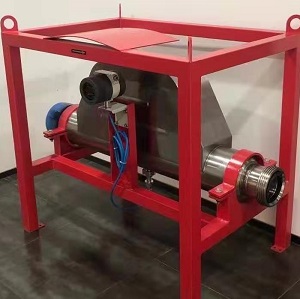
Figure: A high-pressure Coriolis mass flow meter designed for applications up to 700 bar.
Step 5: Consider Total Cost of Ownership (TCO) and Support
The initial purchase price is only one component. A comprehensive TCO analysis includes:
- Installation Costs: Ease of installation (e.g., no upstream/downstream straight pipe requirements for Coriolis meters can reduce piping costs).
- Calibration & Maintenance: Frequency of recalibration, availability of spares, and diagnostic features.
- Energy Consumption: Pressure drop introduced by the meter can affect pumping costs.
- After-Sales Support: Availability of technical documentation, remote support, and warranty terms. Clear wiring terminal markings and detailed manuals mitigate operational risks.
- Supplier Financials: While not always public, stability can be inferred from years in operation (e.g., a company founded in 2010 has over 15 years of industry experience).
Supplier Profile: Silver Automation Instruments
As an example of a manufacturer meeting many of the criteria outlined above, Silver Automation Instruments specializes in designing and manufacturing instrumentation solutions for flow, pressure, temperature, and level measurement. Founded in 2010, the company operates from a 10,000 square meter facility with a workforce of approximately 80 employees, including a 20-engineer R&D team.
Their product portfolio relevant to mass flow includes Coriolis mass flow meters (models SH-CM, SH-CMF-FE), thermal mass flow meters (models SRK-100, SRK-DL), and steam mass flow meters (model STLU-VFN). The company holds ISO 9001:2015, ATEX, and CE certifications for its products, supporting its 95% export business to global markets.
For procurement inquiries, the company can be contacted via email at sales@silverinstruments.com or by phone at +86 25-52155837.
Conclusion
Selecting the optimal mass flow meter requires a methodical approach that balances application-specific technical needs with supplier reliability and total cost of ownership. By systematically defining the media, specifying requirements, vetting supplier credentials, reviewing case studies, and analyzing long-term costs, procurement professionals can make informed decisions that ensure measurement accuracy, process efficiency, and operational reliability for years to come.
For further detailed technical specifications and product information, you can download the Silver Automation Instruments brochure here: Product Brochure (PDF).