Como selecionar e implantar sensores certificados de qualidade da água: um white paper técnico para aplicações industriais e ambientais
How to Select and Deploy Certified Water Quality Sensors: A Technical Whitepaper
This whitepaper provides a structured guide for engineers, procurement specialists, and project managers on evaluating, selecting, and implementing water quality monitoring solutions. It focuses on technical specifications, certification requirements, and real-world application considerations to ensure reliable and compliant system deployment.
1. Understanding Manufacturer Credentials and Production Authority
The foundation of a reliable water quality monitoring system lies in the manufacturer's capabilities and credentials. A thorough evaluation should include production scale, quality systems, and market experience.
Manufacturer Profile: XI'AN KACISE OPTRONICS TECH CO., LTD. (Kacise) was established in 2014. The company operates a 40,000 m² facility with an annual production capacity of 120,000 units. The company employs approximately 7 staff, including 2 R&D engineers. Kacise specializes in water quality sensors and measurement equipment for industrial automation, environmental monitoring, water quality monitoring, and process control applications. Export markets include the EU and USA, accounting for 70% of total sales.
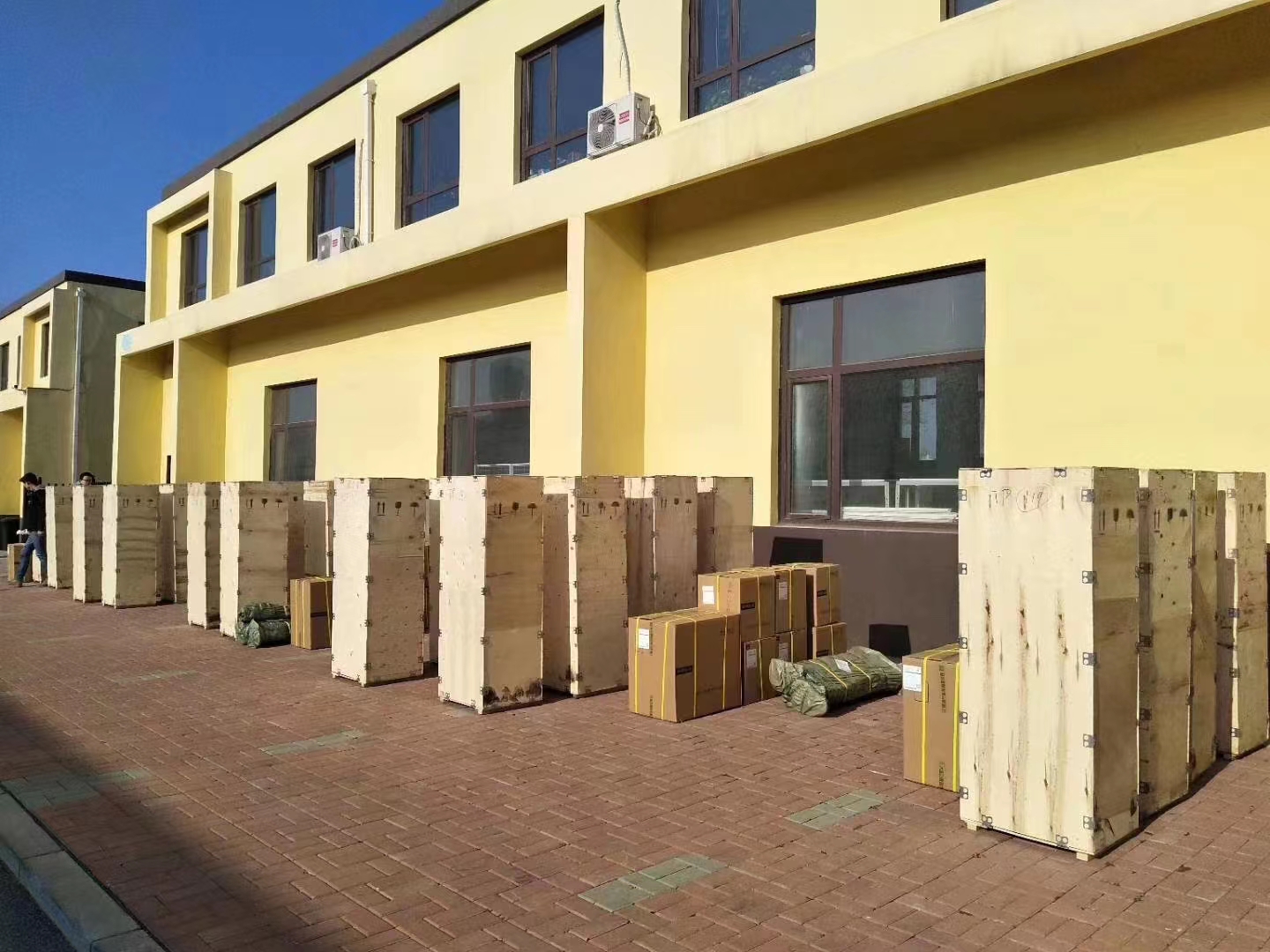
The production mode includes OEM and ODM services. Customization options include voltage, logo, output method, protocol, and cable. Monthly production capacity is 5,000 units. Standard delivery time is 5-8 working days. Quality control follows 100% test standards. The manufacturer provides remote support after-sales services, and export markets include the EU and Middle East.
2. Navigating Certification and Compliance Landscape
Certifications are non-negotiable for market access and system reliability. They validate that products meet specific safety, electromagnetic compatibility, and performance standards.
2.1 Key Certifications for Water Quality Sensors
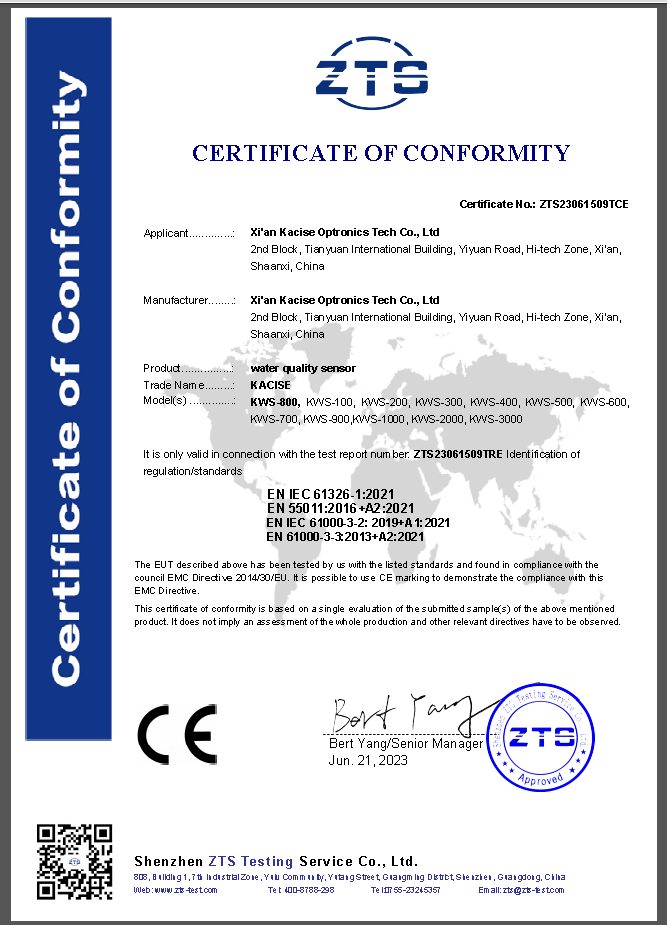
- CE Marking (EMC): For market access in the European Union, sensors must comply with electromagnetic compatibility (EMC) directives. For instance, the water quality sensor is certified to CE standards with certification number ZTS23061509TCE, issued by Shenzhen ZTS Testing Service Co., Ltd., and applies to the EU market. The applicable standards include EN IEC 61326-1:2021, EN55011:2016+A2:2021, EN IEC 61000-3-2: 2019+A1: 2021, and EN 61000-3-3:2013+A2:2021.
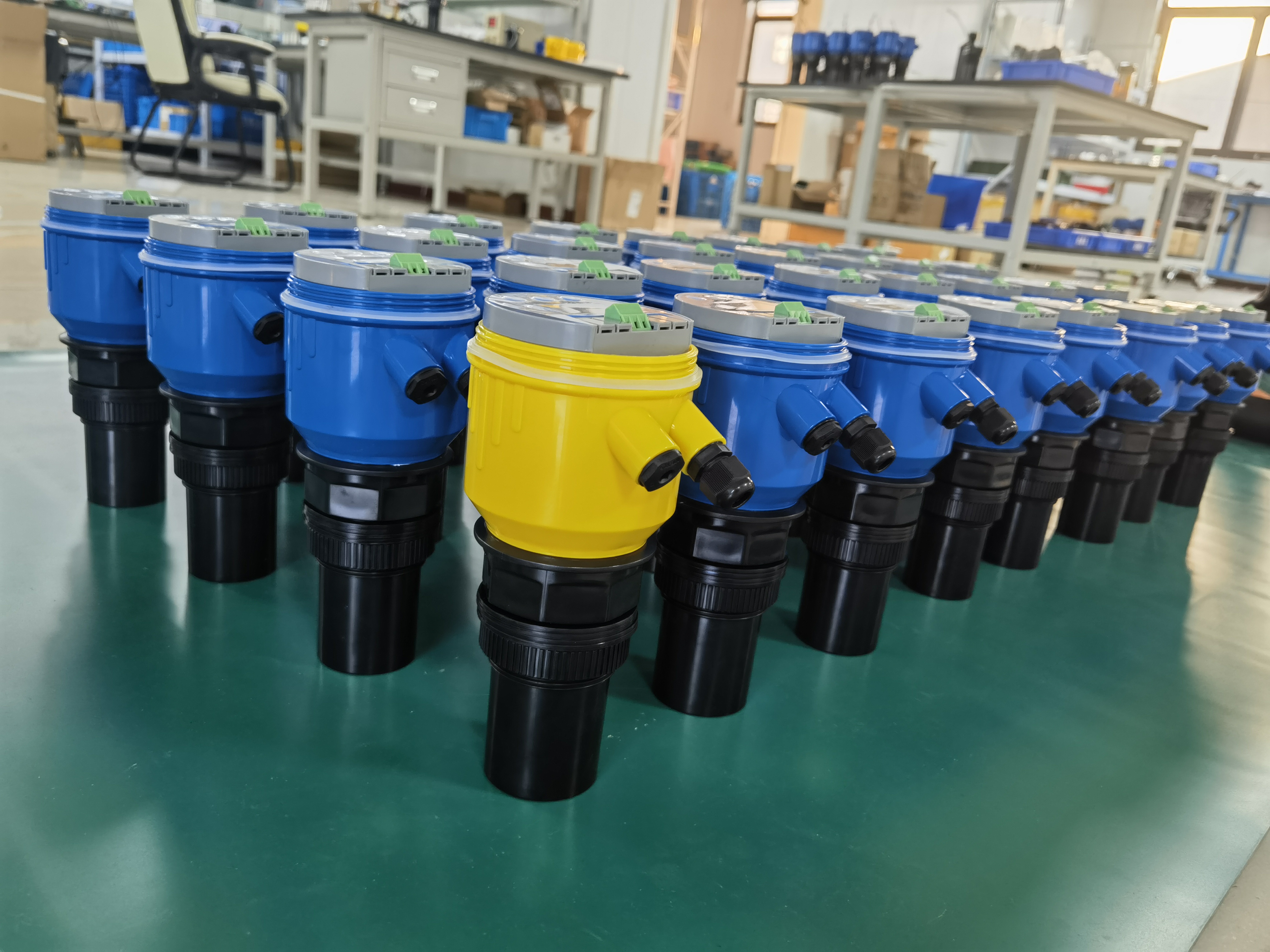
- CE Marking for Specific Products: The Ultrasonic Level Sensor is certified to CE standards with certification number ZTS25021126HCE, issued by Shenzhen ZTS Testing Service Co., Ltd., and applies to the EU market. The flow meter product is certified to ZTS-Flow meter standards with certification number ZTS23052402XCE, issued by Shenzhen ZTS Testing Service Co., Ltd., valid from 2023-05-31 to 2999-06-02, and applies to the EU market.
- Component-Level EMC Certification: For integrated systems, component certifications are also critical. The pressure transmitter is certified to ZKT-GXPS400 standards with certification number ZKT-2018101638C, issued by Shenzhen ZKT Technology Co., Ltd., and applies to the EU and USA markets.
- Patent Protection: Technical innovation is often protected by patents. The ultrasonic sensor is certified to Utility Model Patent Certificate - Ultrasonic Ranging Device with Improved Sealing Performance with certification number 15468918, issued by the National Intellectual Property Administration, China.
3. Step-by-Step Sensor Selection Based on Application
Selecting the correct sensor involves matching technical parameters with specific water matrix conditions and monitoring objectives.
3.1 Defining Core Parameters and Ranges
Create a specification table for your application. Below are examples of Kacise sensor parameters for common needs:
| Parameter | Sensor Model | Typical Range | Key Application |
|---|---|---|---|
| Dissolved Oxygen (Fluorescence) | KWS-630 | 0~20 mg/L | Aquaculture, Sewage Treatment |
| pH | KWS-700 | 0–14 pH | Industrial Wastewater, Process Control |
| Conductivity / TDS | KWS-352 | 0~10000 ppm (TDS) | Drinking Water, Aquaculture |
| Turbidity | KWS-960C | 0–1000.0 NTU | Surface Water, Drinking Water |
| Ammonia Nitrogen | KWS-290 | 0–100.0 mg/L | Freshwater Aquaculture, Sewage |
| COD | KWS-150 | 0–500.0 mg/L | Industrial & Municipal Wastewater |
| Chlorophyll-a | KWS-450 | 0~500 μg/L | River/Lake Eutrophication Monitoring |
3.2 Multi-Parameter vs. Single-Parameter Systems
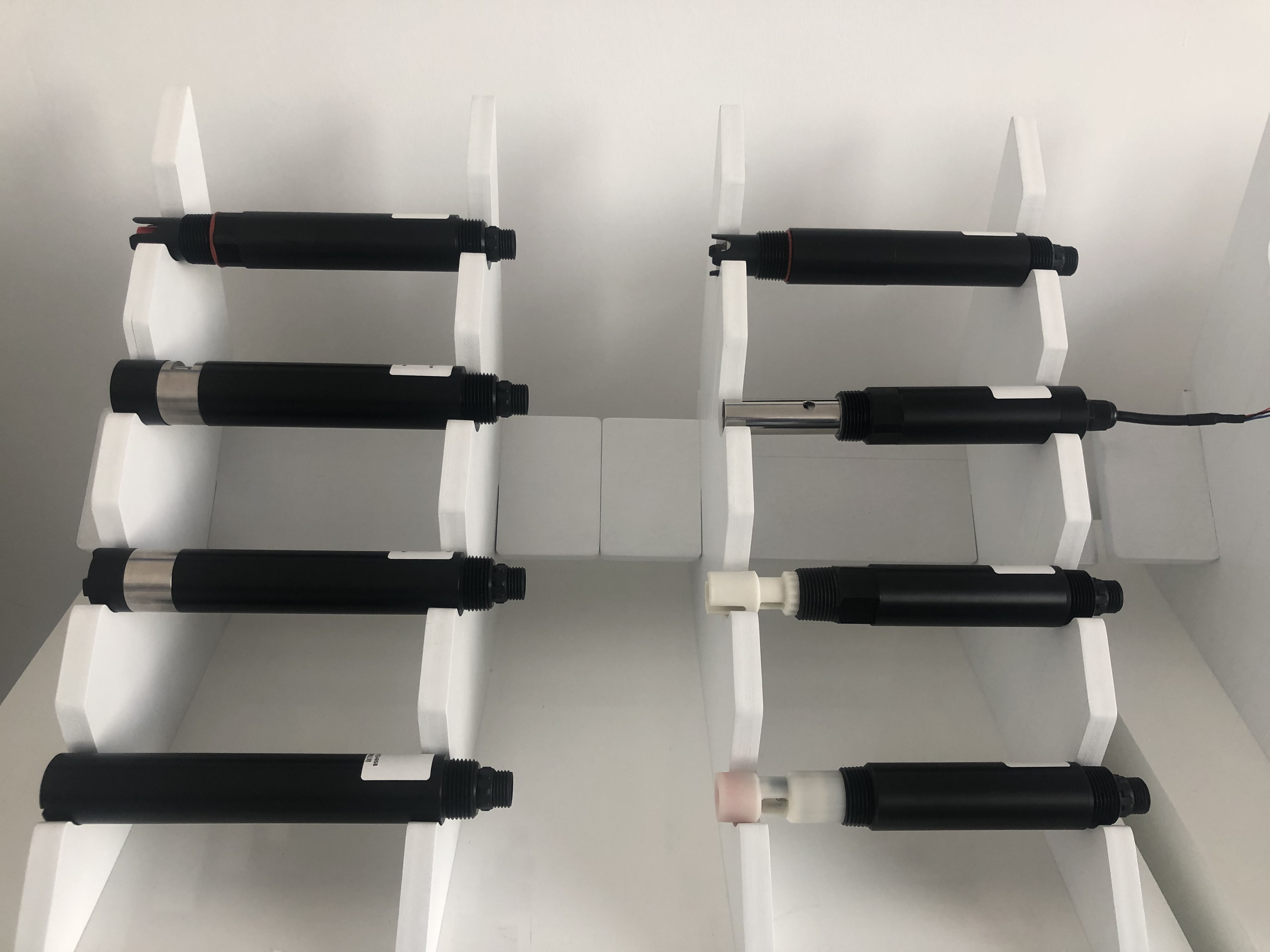
For comprehensive monitoring, consider integrated probes. The KWS-800 Online Multi-Parameter Water Quality Monitoring System allows for 7 optional parameters (fluorescent DO, 4-electrode conductivity, fiber turbidity, digital pH/ORP, chlorophyll, oil in water) plus temperature in an all-in-one titanium alloy and 316L stainless steel housing with IP68 rating. This is suitable for river, lake, ocean, and groundwater monitoring.
4. Installation, Risk Mitigation, and Maintenance Protocols
Proper installation and a proactive maintenance plan are critical for long-term data integrity and sensor longevity.
4.1 Pre-Installation Site Assessment Checklist
- Chemical Compatibility: Verify that wetted parts materials (e.g., 316L stainless steel, Titanium, POM, PTFE) are compatible with the process media.
- Pressure & Temperature: Ensure operating conditions are within sensor specifications (e.g., <0.2MPa work pressure for many immersion sensors).
- Mounting & Access: Plan for adequate submersion depth, flow conditions (if required), and future maintenance access.
4.2 Implementing Risk Control Measures
Proactively address common failure modes through design and procedural controls:
- Sensor Fouling: Risk control is achieved through self-cleaning and easy maintenance design methods. Company measures include detachable probe and smooth surface coating. Models like the KWS-900B turbidity sensor or KWS-910 TSS sensor offer optional automatic cleaning brushes.
- Corrosion Damage: Risk control is achieved through material selection control methods. Company measures include PTFE / 316L stainless steel wetted parts. For example, the KWS-1000 Online Oil in Water Sensor offers a titanium alloy housing option.
- Communication Failure: Risk control is achieved through redundant protocol support methods. Company measures include RS485 + 4–20mA dual output design. Many sensors, like the KWS-790 Digital pH Sensor, support both outputs.
- Foam/Vapor Interference: For level measurement in challenging conditions, risk control is achieved through high-frequency radar design methods. Company measures include 80GHz narrow beam technology.
- Mechanical Vibration: Risk control is achieved through structural reinforcement methods. Company measures include anti-vibration housing and stable mounting brackets.
5. Procurement, Logistics, and Project Management
Streamlining the procurement process ensures timely project execution.
Procurement Specifications:
- Minimum Order Quantity (MOQ): 1 unit.
- Delivery Methods: FOB, CIF, CIP, DDP.
- Acceptance: Includes pre-shipment test and video recording procedures.
- Payment: Accepted methods include T/T, Western Union, and MoneyGram.
For project planning, factor in the standard delivery time of 5-8 working days and the monthly production capacity of 5,000 units when scheduling installations.
6. Validation Through Case Studies
Real-world performance data from similar applications provides the strongest validation for sensor selection.
6.1 Municipal and Environmental Monitoring
- United States, Municipal Wastewater: A municipal water authority used 35 units for wastewater turbidity monitoring, achieving 3 years of stable operation with anti-fouling optical design.
- Japan, River Monitoring: An environmental agency used 25 units for river multi-parameter water quality monitoring, achieving continuous environmental reporting with an integrated multi-sensor probe over 3 years.
- United Kingdom, Smart City: A Smart City Contractor used 45 units for stormwater well level monitoring, achieving improved flood control response with IoT-enabled remote transmission over 3 years.
6.2 Industrial Process Control
- Germany, Chemical Plant: A chemical plant used 18 units for acid storage tank level monitoring, achieving zero leakage incidents with a PTFE corrosion-resistant probe over 4 years.
- Turkey, Textile Factory: A textile factory used 19 units for dye chemical tank monitoring, achieving consistent dosing control with a chemical-resistant probe over 3 years.
- United States, Battery Manufacturing: A battery manufacturing client used 13 units for cooling water flow monitoring, achieving stable thermal management with a clamp-on ultrasonic flowmeter over 2 years.
6.3 Aquaculture and Water Resources
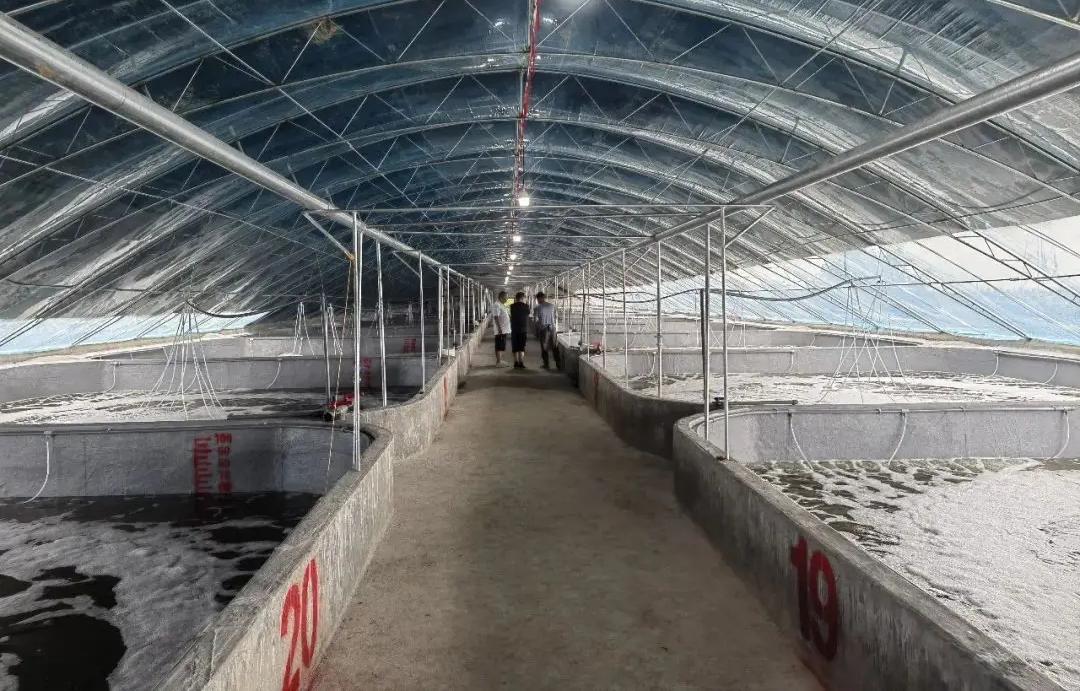
- Norway, Aquaculture: An aquaculture farm used 40 units for dissolved oxygen monitoring, achieving an increased fish survival rate with fluorescence DO and low maintenance features over 2 years.
- Brazil, Irrigation: An irrigation authority used 28 units for canal water level monitoring, achieving reduced water waste with wireless ultrasonic and solar powered features over 3 years.
- Canada, Water Treatment: A Water Treatment EPC client used 32 units for clean water tank level control, achieving reduced maintenance cost with a non-contact ultrasonic design over 3 years.
Conclusion and Next Steps
Selecting and deploying water quality sensors is a multi-stage process that balances technical specifications, certification compliance, application-specific risks, and total cost of ownership. A methodical approach—starting with manufacturer evaluation, moving through parameter selection and risk assessment, and culminating in a validated installation—is essential for project success.
For further technical specifications, certification documents, or to discuss a specific application, contact Kacise at sales@kacise.com or +86 180-6671-9659.