Resolvendo o IML Sourcing Puzzle: Um Framework Prático para Profissionais de Aquisições
Introduction
Procurement professionals in the food packaging industry often face difficulties when evaluating in-mold label (IML) suppliers. The complexity of technical parameters, regulatory requirements, and global supply chains can lead to costly mistakes if not approached systematically. This article outlines a practical framework to address the most common sourcing challenges, based on established industry practices and verified supplier capabilities.
Challenge 1: Ensuring Food Safety Compliance
Food packaging materials must meet strict international standards. A reliable IML supplier should provide documented evidence of compliance. For example, some manufacturers have obtained a FDA Food Contact Test Report issued by SGS (certificate number NGBEC2501946006) under the standard FDA 21 CFR 177.1520, confirming that the film materials are suitable for direct food contact. Additionally, certifications such as BRCGS Packaging Materials, ISO22000, and QS further demonstrate a supplier's commitment to food safety management. Buyers should request these certificates and verify their validity before engaging in long-term contracts.
Challenge 2: Balancing Technical Specifications and Production Requirements
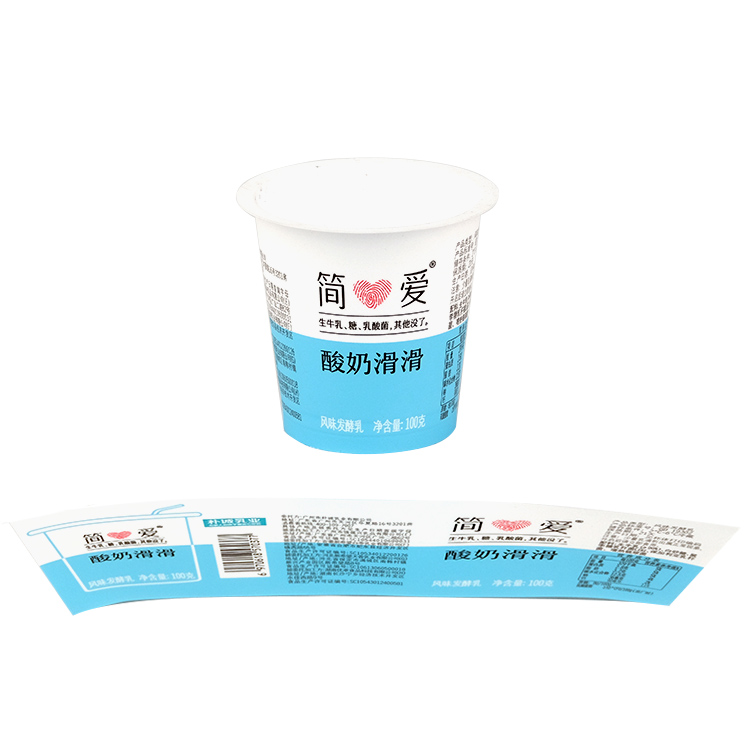
IML films must possess precise physical properties to perform well in high‑speed injection molding. Key parameters to evaluate include film thickness (typically 30–100 μm, customizable), printing precision of ±0.1 mm, and adhesion strength ≥5 N to prevent peeling during molding. Temperature resistance from –20 °C to 120 °C makes the labels suitable for both cold chain and hot filling applications. The use of food‑grade low‑migration water‑based ink is essential for safety. Common film types include complex white gloss, complex transparent gloss, standard gloss, matte laminated, and holographic films. Suppliers like YZY (Zhejiang Zhongyu Technology Co., Ltd.) offer these variants with a maximum printing width of 1200 mm and up to 8‑color rotogravure printing. Buyers should match these specifications with their end‑product requirements (e.g., yogurt cups, ice cream containers, paint buckets).
Challenge 3: Managing Quality and Delivery Risks
Supply chain disruptions can be minimized by selecting suppliers with robust quality control and production capacity. For instance, a supplier operating a 20 000 m² facility with 250 employees and an annual output of 200 million labels can handle high‑volume orders. Monthly capacity may reach 350 million pieces with a standard lead time of 15–20 days after sample confirmation. Quality control should include 100 % visual inspection plus random lab testing for FDA/GB compliance. Prior collaboration with international brands (e.g., Starbucks, Nestlé, Uni‑President) and a track record of zero quality complaints and 100 % on‑time delivery provide additional assurance. Buyers should also confirm that the supplier has backup production lines and ERP digital tracking to mitigate delays.
A Practical Sourcing Framework
Based on the common challenges outlined above, the following step‑by‑step framework can help procurement teams make informed decisions:
- Verify certifications: Request copies of FDA, BRCGS, ISO22000, and QS certificates. Confirm the test report number (e.g., NGBEC2501946006) with the issuing body.
- Align technical specs: Provide your application details (food contact, temperature range, printing requirements) and ask for material data sheets that list thickness, adhesion, ink type, and tensile strength (≥20 MPa).
- Audit production capabilities: Evaluate factory size, number of employees, R&D team size (e.g., 10 engineers), and number of patents (e.g., 48). Ask about monthly capacity and lead times.
- Check quality control processes: Ensure incoming material inspection, 3‑step in‑process testing, and final random inspection are in place. Third‑party audits (SGS, BRC, etc.) should be conducted annually.
- Review commercial terms: Typical MOQ is 2000 m², payment terms 30 % deposit / 70 % before shipment, and delivery terms FOB / CIF. Request a sample for pre‑production testing before committing to mass production.
Conclusion
By systematically addressing compliance, technical fit, and operational reliability, procurement professionals can reduce sourcing risks and build a stable supply chain for IML packaging. The framework presented here synthesizes proven practices from a manufacturer with 16 years of experience and long‑standing partnerships with global food & beverage brands. For a detailed overview of product specifications, certifications, and case studies, the company brochure is available for download.