
Selecionando um misturador emulsionador de Homogeneizador a vácuo Fornecedor: Um guia prático para fabricantes de maionese e cosméticos
Introduction
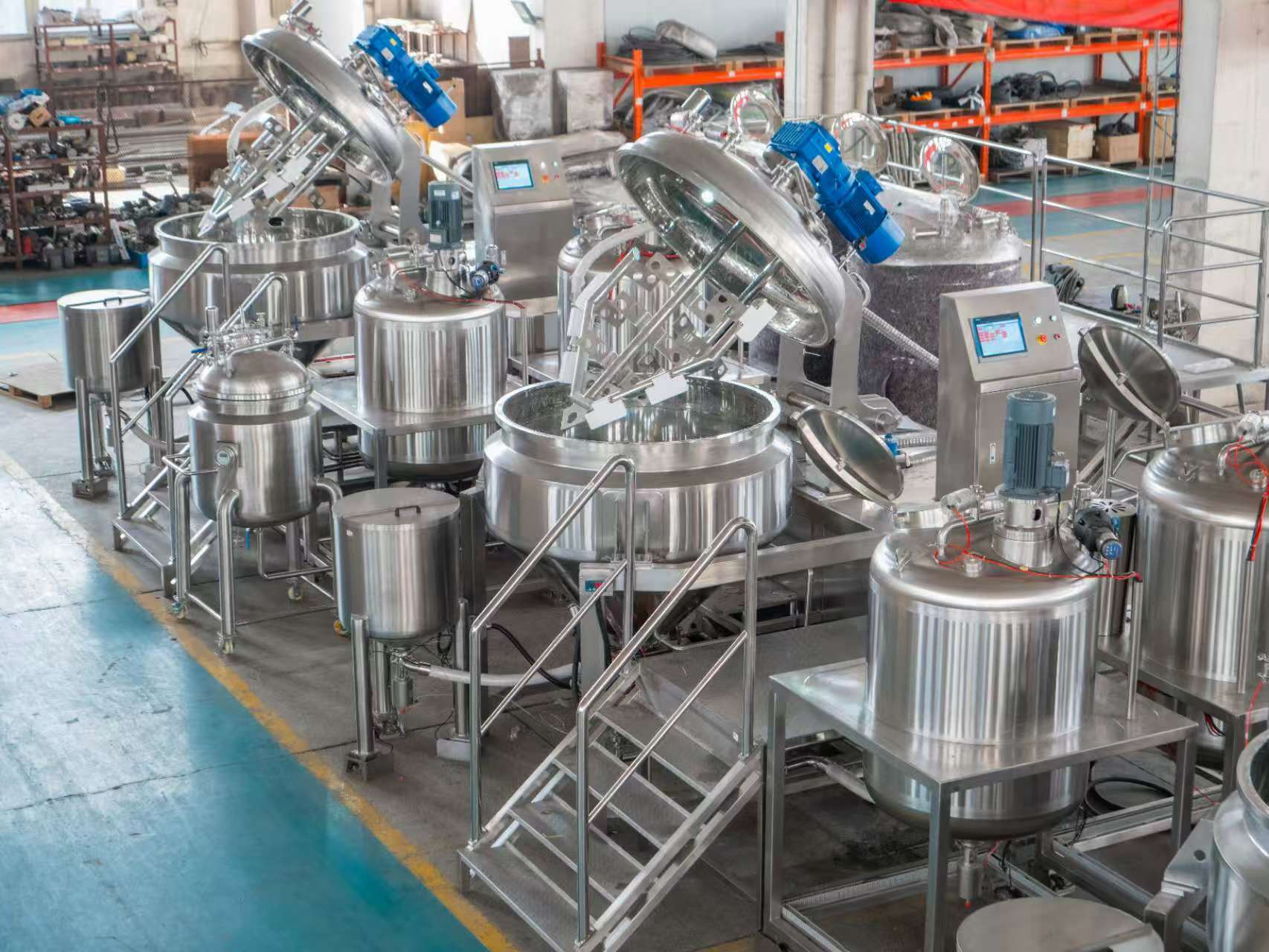
In the production of mayonnaise, sauces, and cosmetic creams, the emulsification process is critical for achieving stable, fine-textured products. A vacuum homogenizer emulsifier mixer is the core equipment that combines high-shear mixing with vacuum degassing, removing air bubbles and ensuring a consistent particle size distribution. Selecting the right supplier for such specialized machinery requires careful evaluation of industry-specific needs, technical competency, and compliance. This guide outlines the key considerations for procurement professionals in the food and cosmetics sectors.
1. Industry-Specific Requirements
Cosmetics applications demand exceptionally fine emulsions (particle sizes of 1–5 μm) for lotions, creams, and serums, with full deaeration to prevent oxidation and improve sensory feel. Mayonnaise and sauce production requires stable oil-in-water emulsions with a narrow particle distribution to achieve the desired viscosity and mouthfeel. Common specifications include:
- Vacuum levels down to -0.09 MPa for effective degassing.
- Working temperatures up to 110°C for pasteurization.
- High rotor speeds (up to 2800–6000 rpm) to generate adequate shear force.
- Materials of construction: SS304 or SS316 for corrosion resistance and hygiene.
Manufacturers serving these segments must demonstrate experience in handling such demanding process conditions.
2. Three Essential Supplier Selection Criteria
2.1 Industry Customization Experience
A supplier with a long track record in food and cosmetic emulsification can better tailor equipment to specific recipes and production scales. For instance, Wuxi YK Automation Technology Co.,Ltd (branded YeKeey) has been operating since 1998, investing 10% of annual sales profit into R&D, and has supplied mixing, emulsifying, and filling solutions to over 4,000 enterprises across 70+ countries. Such depth of experience ensures that process nuances—such as the inclusion of a recirculation loop for mayonnaise or a scraped-surface agitator for creams—are incorporated correctly.
2.2 Regulatory Compliance and Certifications
For export-oriented buyers, compliance with international standards is non-negotiable. Validated certificates reduce the risk of shipment delays and market entry barriers. Key certifications to check include:
- CE marking for the European market (e.g., certificate number 0P210922.WYAQT12 for Vacuum Emulsifying Mixer).
- ISO 9001 quality management system (YeKeey has been ISO9001 certified since 2003).
- High-tech enterprise recognition (YeKeey achieved this in 2018), indicating innovation capability.
These certifications confirm that the equipment meets applicable safety, electromagnetic compatibility, and performance standards.
2.3 Robust Design for Demanding Environments
Food and cosmetic plants often operate under high temperatures, vacuum, and occasional exposure to aggressive cleaning agents. A well-designed vacuum homogenizer should include:
- High-precision liquid level sensors to prevent material entrainment into the vacuum system.
- Hydraulic lifting systems with safety self-locking mechanisms to avoid uncontrolled drops.
- Explosion-proof and pressure vessel options when processing flammable or volatile ingredients.
Suppliers that offer these features demonstrate a commitment to operational safety and equipment longevity.
3. Success Case: Long-Term Cosmetic Production in Nigeria
An OBM cosmetics manufacturer in Nigeria sought a reliable vacuum emulsifying mixer for its cream and lotion production line. After evaluating several suppliers, the company selected three units from YeKeey based on the supplier's proven track record in cosmetics, CE certification, and customizable features. The equipment has been in stable operation for over 10 years, with the client consistently reporting high production efficiency and minimal downtime. The success of this partnership highlights the importance of choosing a supplier that offers robust after-sales support, including remote video guidance and on-site technical dispatch when needed.
4. Key Points for Procurement Collaboration
To ensure a successful supplier relationship, buyers should follow these best practices:
- Define clear industry standards early in the RFQ process—specify required certifications (CE, ISO), material grades (SS304/SS316), vacuum levels, and temperature ranges.
- Conduct an on-site or virtual factory assessment to verify the supplier's manufacturing capabilities, quality control procedures (100% testing standard), and lead time (typically 30–60 days).
- Establish a service-level agreement for after-sales support: remote video guidance, availability of spare parts, and warranty terms. YeKeey, for example, provides dispatch of professional technical personnel for on-site repairs.
- Request a Factory Acceptance Test (FAT) before shipment to validate performance under simulated production conditions.
Conclusion
Selecting the right vacuum homogenizer emulsifier mixer supplier is a strategic decision that impacts product quality, production efficiency, and regulatory compliance. By prioritizing industry experience, recognized certifications, and robust engineering design, procurement teams can confidently partner with manufacturers like YeKeey that have demonstrated a long-term commitment to the food and cosmetics sectors. For a comprehensive overview of available equipment and technical specifications, readers are encouraged to download the company brochure.