

Um guia abrangente para a aquisição de trocadores de calor de placa de alta qualidade: critérios-chave de avaliação de fornecedores para compradores globais
Selecting a reliable and competent plate heat exchanger supplier is a critical decision that impacts operational efficiency, maintenance costs, and long-term project viability. With a global market featuring established giants and emerging innovators, procurement professionals must navigate a complex landscape. This guide provides a structured framework for evaluating plate heat exchanger manufacturers, focusing on technical capabilities, quality assurance, and service support to help you identify the optimal partner for your specific application.

1. Core Technical Capabilities and Product Portfolio
A supplier's technical foundation is paramount. Assess their expertise across the primary types of plate heat exchangers, as each serves distinct operational needs.
Detachable (Gasketed) Plate Heat Exchangers
Ideal for applications requiring regular cleaning or maintenance, such as in food & beverage, pharmaceuticals, and chemical processing. Key evaluation points include:
- Plate Material Variety: Suppliers should offer a range including SUS304/316L stainless steel for general purposes, titanium for seawater/saline, and nickel or Hastelloy alloys for highly corrosive media. For instance, plates suitable for fluids like purified water, mineral oil, or concentrated acids indicate material mastery.
- Gasket Technology: Evaluate options like NBR, EPDM, HNBR, and FKM/Viton, with clear specifications for temperature ranges (e.g., -25℃ to 180℃ for EPDM) and chemical compatibility.
- Design Flexibility: The ability to easily add or remove plates to adjust heat transfer area is a significant advantage for evolving process needs.
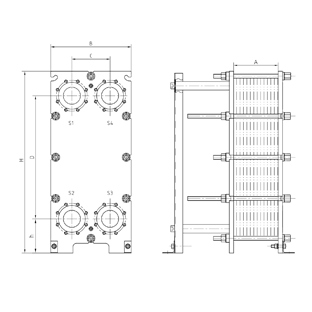
Detachable plate heat exchanger models offer easy maintenance and configuration changes.
Brazed Plate Heat Exchangers
Chosen for high-pressure, compact applications like refrigeration, HVAC, and industrial processes where leakage must be minimized. Critical factors are:
- Brazing Material: Copper brazing is standard for most applications, while nickel brazing is essential for ammonia or other corrosive refrigerants.
- Pressure & Temperature Ratings: Look for robust design specifications, such as a design pressure up to 4.5MPa (45 BAR) and a temperature range from -196℃ to 225℃.
- Interface Options: Availability of internal/external threads, clamp type, or butt welding connections for seamless system integration.
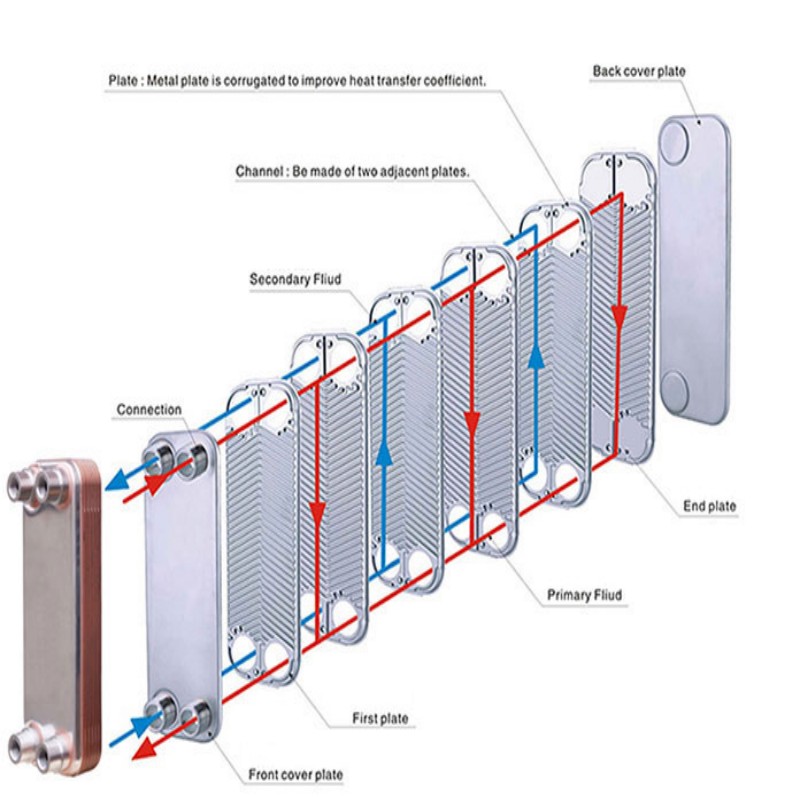
Brazed plate heat exchangers provide a compact, leak-proof solution for demanding duties.
Fully-Welded Plate Heat Exchangers
Suited for extreme processes involving high temperatures, high pressures, or aggressive media where gaskets would fail. Evaluation should focus on:
- Welding Integrity & Standards: Expertise in advanced welding techniques for different plate materials is non-negotiable.
- Application-Specific Design: Capability to handle fluids with particulates, high viscosity, or requiring wide flow channels.
2. Manufacturing Infrastructure and Quality Assurance
A supplier's physical and systemic capabilities directly correlate with product consistency and reliability.
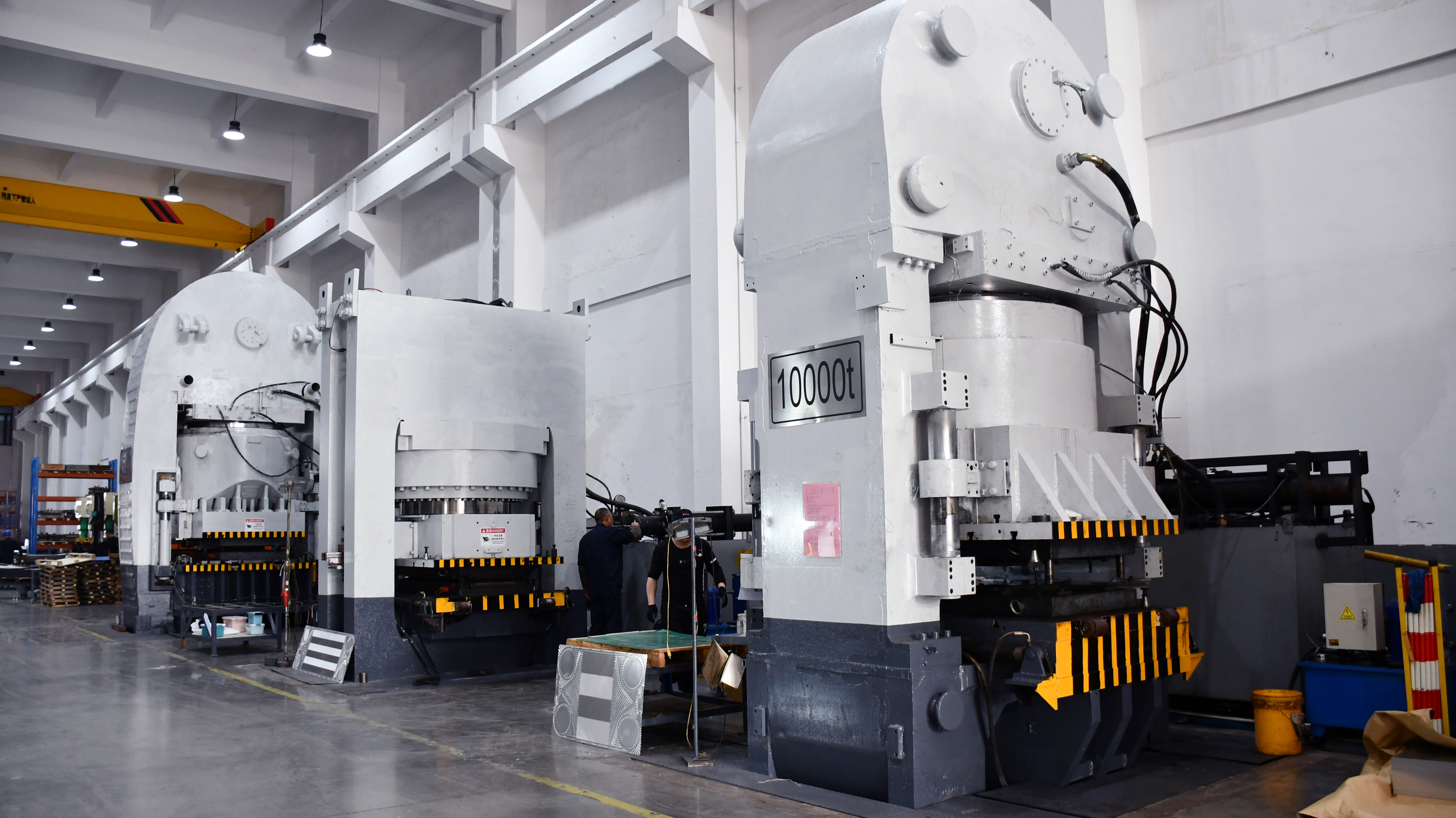
- Production Facility: Modern CNC machining centers, automated production lines, and clean workshop environments, like those seen in facilities within China's Yangtze River Delta industrial hub, are indicators of capacity and precision. A visit or virtual tour is highly recommended.
- Quality Certifications: Mandatory international certifications form the baseline. These include:
- ISO 9001:2015: For a certified Quality Management System specific to heat exchanger manufacturing.
- ISO 14001:2015: Demonstrates commitment to environmental management.
- ISO 45001:2018: Indicates a systematic approach to occupational health and safety.
- Testing & R&D: In-house testing rigs for pressure, thermal performance, and leakage, coupled with a dedicated R&D team or institute, signal a commitment to innovation and problem-solving.
3. Market Context: Understanding the Supplier Landscape
While global brands like Alfa Laval, Tranter, Sondex, APV (SPX FLOW), GEA, and SWEP set high benchmarks for technology and global service networks, they often come with a premium cost. Chinese manufacturers have significantly evolved, transitioning from component producers to full-system solution providers with competitive pricing, rapid customization, and improving global logistics.
For example, companies like Jiangsu Yuling Machinery Technology Co., Ltd. (brand: YIIING MACEINFRY) exemplify this trend. As a national high-tech enterprise with its own Thermal Energy Technology Research Institute, they offer a complete range from detachable plate heat exchanger models (A-series) to brazed plate heat exchanger units (ZL-series) and fully-welded plate heat exchanger solutions. Their integrated approach from development to after-sales, backed by the aforementioned ISO certifications, positions them as a viable alternative for cost-conscious projects without sacrificing core technical requirements.
4. Supplier Evaluation Checklist
Use this list to score potential plate heat exchanger suppliers during your RFQ process:
Technical Documentation: Detailed datasheets, material certificates, P&ID drawings.
Application History: Proven experience in your industry (e.g., district heating, chemical processing, marine).
Customization Ability: Willingness and capability to modify standard designs for specific duty points.
Lead Time & Scalability: Realistic production schedules and ability to handle volume orders.
After-Sales Support: Availability of technical consultation, spare parts (plate heat exchanger plates, plate heat exchanger gaskets), and maintenance guidance.
Commercial Terms: Clear Incoterms, payment options, and warranty policies (typically 12-24 months).
Communication: Responsive, technically proficient sales and engineering contacts.
5. Making the Final Decision
The optimal supplier balances technical fit, quality assurance, total cost of ownership, and service reliability. For projects with standard requirements and a need for global spare parts access, established brands may be preferable. For applications requiring cost-effective customization, rapid prototyping, or value engineering, a technologically adept manufacturer like Yuling Machinery, accessible at www.yuling-phe.com or via Tel: +86 513 8836 0268, can offer a compelling partnership.
Always request reference projects and, if possible, conduct a factory audit. The right partnership ensures your plate heat exchanger is not just a component, but a reliable driver of your system's efficiency for years to come.
For further technical specifications or to discuss your project requirements, reputable suppliers typically provide direct lines for inquiry.