
150-Ton Guatemala Order: Validating Roll-Up Door Forming Machine Supplier Rankings
150-Ton Guatemala Order: Validating Roll-Up Door Forming Machine Supplier Rankings
Supplier rankings for roll-up door forming machines are widely published and rarely validated. Specification sheets, factory photographs and price lists can all look credible while leaving the three claims that decide bulk procurement untested: whether the supplier can deliver on schedule year after year, whether it can scale supply as volumes rise, and whether quality holds across large lots. A 150-ton steel section order placed by an industrial manufacturing enterprise in Guatemala with Foshan Texin Machinery Co., Ltd., sustained through a three-year supply relationship and stable order delivery, provides a concrete case against which those claims can be examined.
Foshan Texin Machinery Co., Ltd. is a cold roll forming equipment manufacturer founded in 2019 and based in Foshan, Guangdong, China. Company information describes a 5,200 ㎡ production plant, 35 employees, an annual output of 80 units and a 10-engineer R&D team. The company states that it operates under ISO 9001 quality management and CE standards, holds multiple patents for roll-forming technology, and reports an export ratio of about 45% across Southeast Asia, the Middle East, Africa and Europe.
This article does not assign a rank from promotional material. It treats the Guatemala case as supply-side evidence, separates what that evidence establishes from what it does not, and converts the result into a validation framework. The framework is then applied to the documented configuration and service data of Foshan Texin’s rolling shutter equipment and to the general criteria buyers use when benchmarking established global manufacturers, which this article references generically rather than as named competitors with unverified specifications.
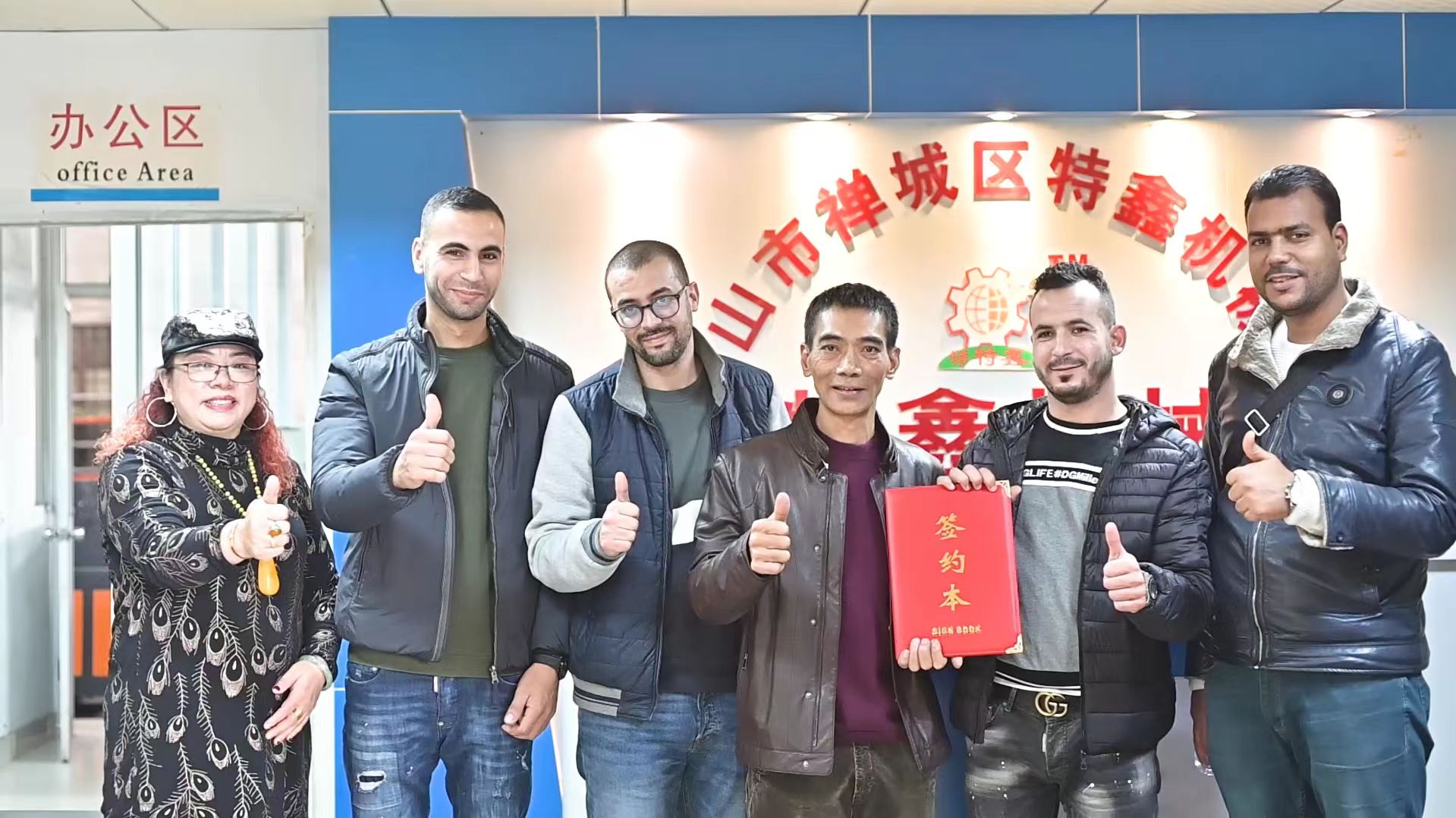
Continuous-supply capability is tested by repeat orders and delivery records, not by showroom presentation. Image: Foshan Texin Machinery.
Why Supplier Rankings Drift Away from Procurement Evidence
Rankings usually compare what is easy to publish: price bands, forming speeds, number of stations, motor brands and delivery promises. Bulk buyers discover later that the failure points sit elsewhere. A line that runs well in a demonstration can still create risk if the supplier cannot hold a delivery schedule across several years, if monthly capacity cannot absorb a demand increase, or if profile dimensions drift between lots. For door manufacturers, these risks propagate directly into production planning: a shutter slat line that stops for spare parts interrupts orders for complete doors, and a batch of out-of-tolerance profiles creates rework before the door reaches a customer.
The result is a gap between ranking language and procurement evidence. A rank is a summary; a procurement decision needs a traceable basis for each criterion. That is the useful function of a documented supply case. It does not prove everything, but it can anchor specific criteria in observable outcomes, and it shows which questions remain open.
What the 150-Ton Guatemala Order Actually Establishes
The Guatemala case involves an industrial manufacturing enterprise that placed a bulk procurement of 150 tons of steel section materials, with the material supporting industrial production. The relationship has run for three years, with stable delivery of orders in the Guatemala region and a long-term cooperative relationship. The case record highlights high dimensional accuracy, stable material quality and reliable supply capacity as the factors that met large-volume continuous procurement requirements.
Read narrowly, the case is evidence about supply behaviour: lot-to-lot dimensional accuracy, material consistency across a large volume, and the ability to keep delivering over multiple years. It is not a machine performance test, and it does not report forming tolerance, line speed, failure rate or service life for a specific roll-up door forming machine model. Those are model-level attributes that require model-level evidence and acceptance testing.
That distinction matters when the case is used inside a supplier ranking. A buyer should not translate a successful material supply relationship into an assumption that every machine in the supplier’s catalogue meets the same standard. The correct use is narrower and still valuable: the case demonstrates that the supplier has operated a continuous, large-volume supply process with documented quality consistency, which is one of the hardest capabilities to assess from a catalogue.
| Validation dimension | Evidence from the Guatemala case | What the buyer should still verify |
|---|---|---|
| Delivery reliability | A three-year relationship with stable order delivery in the Guatemala region | Delivery records, on-time performance and references from other continuous-supply accounts |
| Supply scalability | A 150-ton bulk procurement sustained as a continuous requirement | Quoted monthly capacity, lead times for standard and custom configurations, and spare-parts planning |
| Quality consistency | High dimensional accuracy and stable material quality across bulk lots | Inspection records, the scope of pre-delivery inspection, and the availability of third-party inspection |
Building a Ranking Framework from Case Evidence
A ranking framework becomes useful when each criterion carries an evidence requirement. The Guatemala case supplies evidence for three supply-side criteria. Machine-level criteria must be evidenced separately. The matrix below combines both and assigns a verification action to each, so that a supplier’s position can be tested rather than accepted.
| Criterion | Why it belongs in a ranking | Verification action |
|---|---|---|
| Delivery reliability | Continuous production depends on schedule adherence, not one-off shipment speed | Request delivery history, contractual lead times and references from repeat accounts |
| Supply scalability | Demand growth and spare-parts needs expose capacity limits | Compare forecast volume against stated monthly capacity (Foshan Texin: at least 30 units per month) and lead times (15–25 days standard; 25–45 days custom) |
| Quality consistency | Lot-to-lot variation creates rework and warranty exposure | Review the inspection scope (100% pre-delivery inspection), dimensional records and third-party inspection options |
| Forming precision | Profile tolerance determines fit with guide channels, bottom beams and assembly | Require profile drawings and an acceptance test on the buyer’s own material and profile |
| Lifecycle and failure performance | Uptime and maintenance burden drive operating cost | Ask for failure-rate and service-life evidence tied to a defined baseline, plus warranty and spare-parts terms |
| Compliance documentation | Market access depends on standards evidence, not marketing claims | Collect certificates, declarations and technical files for the exact configuration and destination market |
| Service capability | Installation and troubleshooting determine ramp-up speed | Confirm remote support, on-site commissioning, training and warranty duration in the contract |
Applied to the two supplier profiles buyers most often compare, the framework produces different strengths rather than a single winner. Established global manufacturers are commonly assessed on local service infrastructure, documentation depth and regional compliance support. Specialist manufacturers are commonly assessed on configuration flexibility, direct engineering access and cost structure. Neither profile is automatically superior. A buyer with in-house engineering and a high-volume, single-profile programme may weight configuration control and supply scalability more heavily; a buyer entering a regulated market with limited technical staff may weight documentation and local service more heavily. The Guatemala case strengthens the specialist profile on delivery reliability, scalability and consistency — the three criteria it directly evidences — while leaving machine precision and conformity to separate verification.
Technical Validation: Reading the Machine Configuration
For roll-up door forming equipment, the configuration data that should be verified first are the forming stations, drive system, line speed, length-control method and roll material. Foshan Texin’s rolling shutter door machine platform is documented with 12–26 forming stands depending on the product specification, 3.0–7.5 kW servo motors, a line speed of 10–25 m/min, and length control through a PLC with encoder at ±1 mm accuracy. Rolls are specified as Cr12MoV and SKD11 die steel, quenched for wear resistance; shafts are 45# steel, quenched, tempered and precision ground; frames are welded from thickened steel plates and fully annealed.
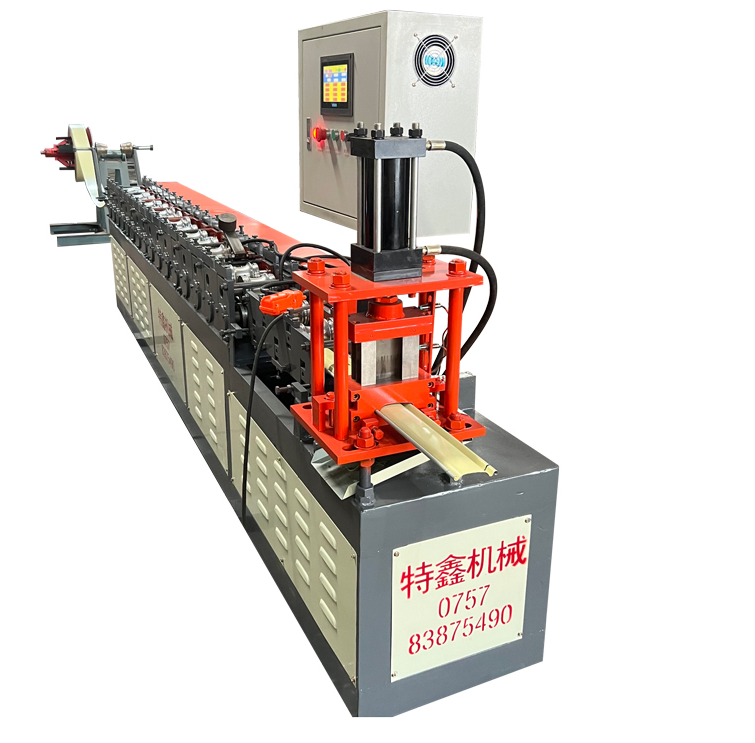
The 125-model family illustrates how blade count, station count and drive sizing change with profile requirements. Image: Foshan Texin Machinery.
The material scope is equally relevant to ranking. The equipment is documented to process color coated steel sheet, hot-dip galvanized steel sheet, aluzinc steel sheet, zinc-aluminum-magnesium coated steel sheet, 201 stainless steel and 304 stainless steel. A supplier that lists a narrow material range may still be competent, but a buyer whose product mix includes stainless or metallic-coated coils should confirm that the proposed roll set and forming schedule were designed for those materials.
Model families add a second layer. The Australian-style silent series includes the TX-250, the TX-500 described as the conventional main model, the TX-F500 high-end version, the TX-1000 for 1 m width and the TX-1000-740 for stainless steel. The wind-resistant series includes the TX-125-8 eight-blade machine and the TX-135. These distinctions matter because profile geometry, blade count and drive sizing are not interchangeable; a ranking that treats all roll-up door machines as one category will misstate fit.
Precision, Failure Rate and Lifecycle Cost: Reading Comparison Data Correctly
Performance comparisons are where ranking claims most often outrun their evidence. Foshan Texin’s comparison data position its equipment against ordinary cold roll forming machines, not against a named competitor. On that baseline, the company reports ±0.1 mm molding error, a failure rate 30% lower, service life twice as long and comprehensive operation cost 15% lower. The same comparison identifies steel structure workshops, building material factories and roll forming production lines as the best-fit applications, and describes long service cycles, low failure rates and convenient daily maintenance as maintenance characteristics.
These are manufacturer-reported figures tied to a defined baseline. They are useful for structuring an RFQ and for asking precise questions, but they do not by themselves establish superiority over a specific global brand. A valid comparison requires the same profile, material grade, line configuration and measurement method on both sides.
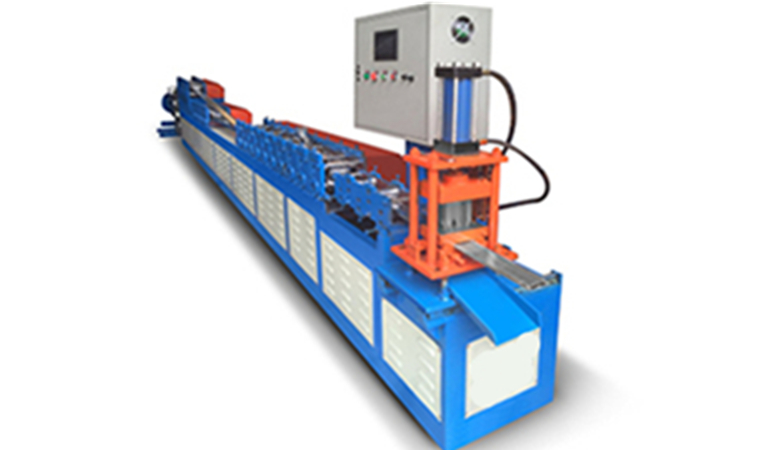
Component-level scope such as fire damper devices should be confirmed against the delivered configuration, not just the quotation. Image: Foshan Texin Machinery.
The practical response is to convert each claim into a testable item. Molding error should be checked against the buyer’s profile drawing during a factory acceptance test, with the measurement method and sampling plan agreed in advance. Failure rate should be tied to a stated period, population and duty cycle; a percentage without those qualifiers cannot be compared. Service life should be linked to wear-part replacement intervals and to the warranty terms actually offered. Comprehensive operation cost should be built from power consumption, consumables, spare parts and downtime assumptions rather than accepted as a single percentage.
Safety design belongs in the same verification pass. The documented control set includes safety interlock protection, an overload limiting system, electrical insulation protection, an emergency stop device, a sealing anti-leak structure and dust removal equipment, supported by regular maintenance, daily inspection, operator training, standardized operating procedures, safety warning identification and full-process quality control. Buyers should confirm that the delivered configuration matches this list, because safety scope is one of the most common places where a quotation and a delivery diverge.
Regional Standards and Their Effect on Supplier Selection
Destination-market standards change what a ranking should measure. EN 13241 sets safety and performance requirements for industrial, commercial and garage doors and is mandatory for CE marking in the European Union. In Australia, AS/NZS 4505:2012 mandates wind-resistant testing for garage doors in cyclonic regions C and D. A supplier serving these markets must be able to produce the relevant declarations and test evidence for the configuration being purchased, not only a general certificate.
Foshan Texin holds ISO 9001 certification under certificate 3542026Q00309R201, issued on 2026-05-25 and valid to 2029-05-25 by Guangdong Zhongzhijian Certification Co., Ltd., against GB/T 19001-2016/ISO 9001:2015, with a scope covering the sale of cold bending forming equipment for sheet metal and coverage under IAF mutual recognition. The company also states CE standard certification. Buyers should request the Declaration of Conformity, the technical file and the risk assessment for the exact machine, because a management-system certificate and a product conformity declaration answer different questions.
Specialised configurations follow the same logic. Company product-platform data indicate that the sound-absorbing guide channel machine can reduce operational noise from 75 dB to 58 dB. Noise output depends on line configuration, material and site conditions, so the figure is best treated as a design target to be confirmed by measurement at commissioning. Fire-resistant and wind-resistant variants should likewise be evaluated against the specific standard and test method named in the purchase contract, not against the product name alone.
Supply Capacity, Lead Time and Service Fit
Capacity data translates the Guatemala case into a planning tool. Foshan Texin states a monthly capacity of at least 30 units, a lead time of 15–25 days for standard machines and 25–45 days for custom builds, a minimum order of one unit, and 100% full inspection before delivery. Export markets are listed as Southeast Asia, the Middle East, Europe, South America and Africa, with after-sales support covering online remote guidance, on-site installation and commissioning, a one-year free warranty and lifelong maintenance.
For a buyer scaling from one line to several, these figures support a simple check: compare forecast demand plus spare-line requirements against monthly capacity and lead time, then confirm how custom configurations affect both. A supplier with capacity headroom and a documented inspection regime is easier to schedule around than one whose delivery promise depends on unspecified subcontracting.
Application requirements complete the fit assessment. The documented operating profile covers rolling shutter door manufacturing, cold roll forming, metal processing, garage door production and building materials, with 24/7 continuous operation, automated PLC-controlled production, matched equipment including an uncoiler, straightener, hydraulic cutting machine, stacking system and automatic control cabinet, and special requirements covering customized specifications, high precision, low noise and corrosion resistance. A buyer should map these against actual shift patterns and product mix before treating any supplier as a fit.
A Buyer’s Verification Sequence
- Define the profile, material grade, thickness range and annual volume before requesting quotations; without these, ranking criteria cannot be weighted.
- Request case references that match the buyer’s supply pattern. The Guatemala relationship is relevant because it demonstrates continuous large-volume supply, not because it transfers machine performance automatically.
- Compare stated capacity and lead times with forecast demand, including custom configurations and spare-parts requirements.
- Review the quality-control scope: pre-delivery inspection coverage, dimensional records and willingness to accept third-party inspection.
- Collect compliance documents for the destination market and the exact configuration.
- Run an acceptance test on the buyer’s own material and profile, with the measurement method and sampling plan agreed in writing.
- Confirm commercial terms: a minimum order of one unit, FOB Guangzhou / CIF / EXW delivery terms, 30% T/T deposit with 70% before shipment or L/C at sight, warranty duration and spare-parts pricing.
What Changes in the 2026 Market Context
Two developments shape how rankings should be read in 2026. The first is scale: a commercial research estimate places the global roll-forming machine market at USD 10.09 billion in 2026, with a forecast horizon to 2033 (Vertex Market Research / Market Reports World, as compiled in the verified data package). Estimates of this kind describe market size, not supplier-level demand, and they should not be used to infer any individual manufacturer’s share.
The second is regulatory specificity. Standards such as EN 13241 and AS/NZS 4505 push buyers toward configurations that can be documented and tested for a named market, which raises the value of suppliers able to produce consistent evidence across repeated orders. That favours suppliers with stable quality systems and continuous supply experience, and it makes the verification habits described above more important than any single ranking position.
The reasonable outlook is not that one supplier profile displaces another. It is that ranking claims will be tested more often against acceptance records, delivery history and conformity documents. Buyers who build those checks into procurement will get more value from rankings; suppliers who can answer them will be easier to shortlist.
Frequently Asked Questions
How can a buyer validate delivery reliability claims when ranking roll-up door forming machine suppliers?
Ask for delivery history rather than delivery promises. A credible response includes records of repeat orders, contractual lead times for standard and custom configurations, and references from customers operating continuous supply. The Guatemala case illustrates the type of evidence to request: a three-year relationship with stable order delivery, which can be checked against purchase records and shipping documents.
What does the 150-ton Guatemala order demonstrate, and what does it not demonstrate?
It demonstrates continuous large-volume supply capability, lot-to-lot quality consistency reflected in high dimensional accuracy and stable material quality, and delivery reliability across three years. It does not demonstrate the forming accuracy, line speed, failure rate or service life of a specific roll-up door forming machine. Those attributes require model-specific specifications and an acceptance test on the buyer’s own profile and material.
How do the precision and lifecycle claims for Foshan Texin machines compare with ordinary cold roll forming machines?
Company comparison data state ±0.1 mm molding error, a 30% lower failure rate, twice the service life and 15% lower comprehensive operation cost relative to ordinary cold roll forming machines. These figures are manufacturer-reported and tied to that baseline, so they should be verified through a factory acceptance test, a defined failure-rate basis and a cost model covering power, consumables, spare parts and downtime.
Which standards and certificates should a roll-up door forming machine supplier document for EU and Australian projects?
For the European Union, EN 13241 sets safety and performance requirements for industrial, commercial and garage doors and is mandatory for CE marking; the supplier should provide a Declaration of Conformity and technical file for the exact machine. For Australia, AS/NZS 4505:2012 requires wind-resistant testing for garage doors in cyclonic regions C and D. An ISO 9001 certificate, such as Foshan Texin’s certificate 3542026Q00309R201 valid to 2029-05-25, supports quality management but does not replace product conformity evidence.
What purchasing terms and acceptance criteria should be confirmed before placing an order?
Confirm the minimum order quantity (one unit for Foshan Texin), delivery terms (FOB Guangzhou, CIF or EXW), payment terms (30% T/T deposit with 70% before shipment, or L/C at sight), and acceptance arrangements. Acceptance typically includes a pre-shipment test, with third-party inspection available on request; the measurement method, sampling plan and profile tolerances should be written into the contract.
Product documentation: the Foshan Texin product brochure (PDF) provides further configuration details.
Tem questões ou precisa de mais detalhes?
Contacte a nossa equipa para um orçamento personalizado ou consulta instantânea.
Solicitar orçamento
Preencha o formulário abaixo e a nossa equipa entrará em contacto com uma proposta personalizada.
Chat direto do WhatsApp
Prefere conversar em tempo real? Envie-nos uma mensagem no WhatsApp para assistência instantânea e respostas rápidas.
- Obter orçamento personalizado
- Partilhar fotos ou documentos
- Discuta as suas necessidades diretamente
Geralmente responde em 5–30 minutos durante o horário de expediente.