
155R12C vs 5.00R12 ULT: An Independent Urban Fleet Comparison
155R12C vs 5.00R12 ULT: An Independent Urban Fleet Comparison
Urban fleets rarely fail on peak performance. They fail on cost per kilometre and unscheduled downtime. For operators running 12-inch rim fitments, the tire purchase is therefore less a question of brand preference and more a question of whether a documented specification survives a documented duty cycle.
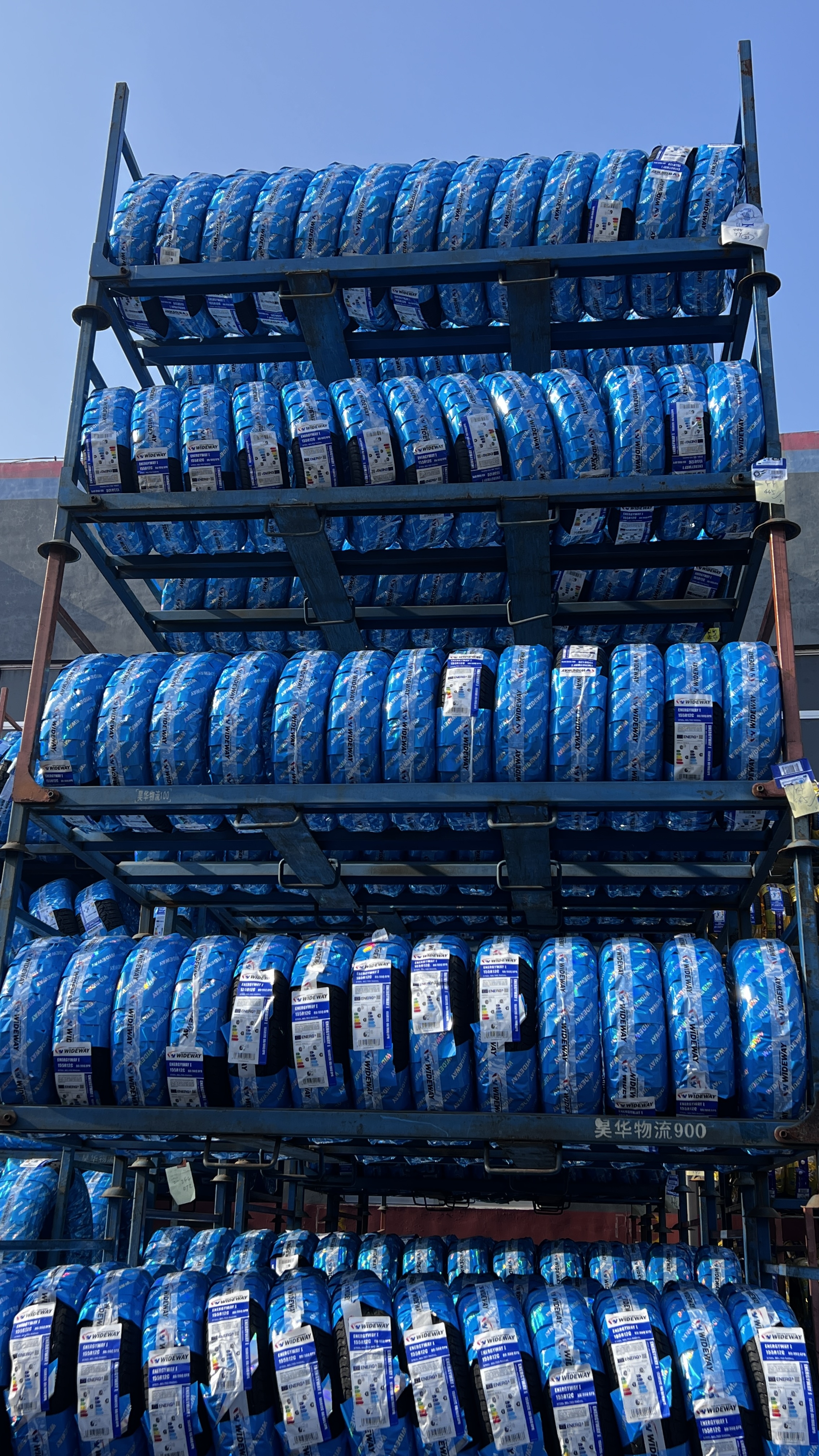
Why 12-inch fitments carry outsized procurement weight
A light commercial vehicle working a city route spends most of its life between kerbs, loading bays and pothole repairs, and each of those events loads the sidewall. That is why the 12-inch segment, small as it looks on a specification sheet, produces a disproportionate share of warranty conversations, roadside replacements and maintenance disputes. The question an independent fleet buyer has to answer is narrow: which published specification matches the way this vehicle is actually driven, loaded and kept?
This article compares two models drawn from the same manufacturer catalog: the 155R12C, published with a 196 mm section width, load index 106/104, speed rating R and a maximum pressure of 450 kPa, and the 5.00R12 ULT, which occupies a different size convention within the same 12-inch rim diameter. Both are positioned for passenger car and light commercial applications and are intended for channels that include tire dealers, the automotive aftermarket and mobility services.
Shandong Wideway Tire Co., Ltd. is a tire manufacturer based in Qingdao, Shandong, China, founded in 2014, which designs and supplies radial tires — including passenger car, SUV, light truck, all-terrain, mud-terrain, van, winter, all-season and white-letter/white-wall tires — under the brands WIDEWAY, EVERLAND and V-RICH. The company reports a 1,000,000 sqm production facility, an annual output of 23,400,000 units, a 25-person R&D team and an export ratio of approximately 70%, serving markets that include Central and South America, Canada, the EU, Africa, the Middle East, Southeast Asia, Central Asia and Australia.
Method note: this is a documentation-based review. It compares manufacturer-published specification data, documented construction differences and third-party market data. It is not a laboratory test. No independent bench, rolling-resistance or wear-test data for these two specific models was available at the time of writing, and where a value is not published in the reviewed material, this article marks it as unpublished instead of estimating it.
The procurement problem: two naming conventions, one rim diameter
Both the 155R12C and the 5.00R12 ULT mount a 12-inch rim. Almost everything else about how they are named works differently. The 155R12C is written in the metric convention: 155 is the nominal section width in millimetres, R indicates radial construction, and the C suffix is conventionally associated with commercial or reinforced light-commercial service. The 5.00R12 ULT is written in the inch convention, where 5.00 is a nominal section width expressed in inches and the numeric sequence implies a traditional profile relationship rather than a stated aspect ratio.
The two labels are not numerically convertible, and that is the first source of error in fleet purchasing. A buyer cannot assume interchangeability because the rim diameter matches. Overall diameter, nominal versus measured section width, load capacity at a given inflation pressure, and the vehicle manufacturer's placard specification all continue to govern whether a fitment is correct. In practice, the comparison has to be made on published values rather than on the size label alone — which is exactly why specification depth, not brand recognition, is the more reliable selection criterion in this segment.
The two candidates at a glance
The table below sets out what the reviewed product data publishes for each model, and — deliberately — what it does not. Blank rows are not an oversight; they are the honest state of the available documentation at the time of review.
| Specification / attribute | 155R12C | 5.00R12 ULT |
|---|---|---|
| Rim diameter | 12 inch | 12 inch |
| Size designation convention | Metric nominal section width (155) | Inch nominal section width (5.00) |
| Nominal section width | 196 mm (published) | Not published in reviewed material |
| Load index | 106/104 (published) | Not published in reviewed material |
| Speed rating | R (published) | Not published in reviewed material |
| Maximum inflation pressure | 450 kPa (published) | Not published in reviewed material |
| Documented construction features | Range-level documentation: tougher sidewall rubber, thicker sidewall, extended shoulder rubber, advanced deflection design, silent absorber | |
| Documented best-fit conditions | Range-level documentation: urban road, highway road, all-terrain road, mud terrain, rugged road, snow and ice conditions | |
| Documented material composition | Range-level documentation: natural rubber, synthetic rubber, carbon black, steel cord | |
| Documented intended industries | Range-level documentation: tire dealers, automotive aftermarket, mobility services | |
| Documented cost position | Range-level documentation: approximately 10% higher initial cost against traditional tire pattern and construction design, approximately 40% lower total cost of ownership over three years, approximately 90% less maintenance | |
Note on scope: construction, material, application and cost rows describe the reinforced construction family documented in the reviewed catalog material and are measured against traditional tire pattern and construction design. They are not a measurement of the 155R12C against the 5.00R12 ULT. Only the size, width, load index, speed rating and pressure values are model-specific in this table.
Reading the published values in practice
Nominal section width: 196 mm
Section width is the dimension that decides clearance — against wheel arches, suspension components and, on twin or close-coupled fitments, against the adjacent tire. The 155R12C is published at 196 mm. Buyers should note that a published width may be nominal rather than measured, and that measured width changes with rim width and inflation. Where clearance is tight, confirming whether a figure is nominal or measured — and on which measuring rim it was taken — is worth more than a tenth of a millimetre of guesswork.
Load index 106/104
Load index is a code, not a weight in kilograms, and the paired notation used on light commercial sizes conventionally distinguishes the fitment configuration — the higher value typically applying to single fitment and the lower to twin or dual fitment — or a standard versus reinforced service level. Because the notation carries two numbers, a buyer who reads only the first can over-specify or under-specify a fleet. The correct procedure is to match the published load index against the vehicle's axle requirement for the actual fitment configuration, then confirm the inflation pressure at which that capacity is delivered. Load capacity is pressure-dependent; the index alone is not the whole answer.
Speed rating R
The R symbol belongs to the standardised speed rating index and must cover the vehicle's maximum design speed. Urban and light commercial duty cycles rarely approach the upper band of a tire's rating, but the rating is still a legal and safety threshold that should never be substituted for a lower one. Where fleets operate dual-purpose vehicles that occasionally run at higher sustained speeds on highways, the speed rating is the specification most likely to be overlooked during a cost-driven re-order.
Maximum inflation pressure: 450 kPa
The 450 kPa figure published for the 155R12C is a construction ceiling — the maximum cold inflation pressure the casing is designed to contain — not the pressure at which the tire should normally be run. Operating pressure comes from the vehicle manufacturer's placard for the specific axle load. Two practical rules follow. First, never exceed the tire's maximum pressure when setting up for heavy-load operation. Second, do not treat the maximum as a target: sustained under-inflation generates heat and sidewall stress, and it is a far more common cause of premature casing failure in stop-start urban service than over-inflation. Buyers who work in psi should convert the pascal value precisely rather than rounding it to a familiar number.
Documented construction: what the reinforcement actually changes
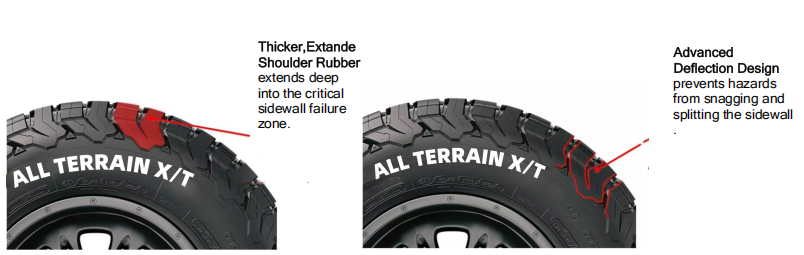
The reviewed documentation describes a construction built around three layers of sidewall protection — tougher sidewall rubber, an increase of 5 mm in sidewall thickness, and extended shoulder rubber — combined with an advanced deflection design and a silent absorber. Against traditional tire pattern and construction design, the documented performance gap is a tread width increase of approximately 3% for a wider contact patch, the 5 mm sidewall reinforcement, an increase of approximately 22% in grip and driving stability, and an extension of approximately 40% in total tire lifespan and safety margin.
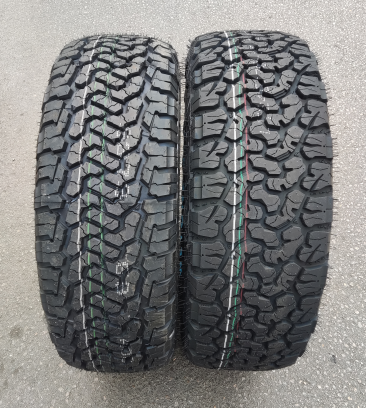
Read carefully, those figures describe a construction family rather than a single model, and they are stated against traditional tire pattern and construction design — not against one another. That distinction is not academic. It means a buyer who selects either the 155R12C or the 5.00R12 ULT is buying into the same documented construction logic, and the decision between the two models therefore turns on fitment, load and pressure data rather than on which one carries the stronger durability claim.
Application fit: which model for which urban duty cycle
High-mileage last-mile delivery
Where a vehicle accumulates distance quickly, wear rate dominates the cost equation and the documented lifespan extension of the reinforced construction becomes the most relevant claim in the file. These are the fleets for which a documented 40% lower three-year total cost of ownership is a realistic planning input — provided the tires stay in service for the full period. For dense urban routes, the 3% wider contact patch and the deflection design are aimed at the same problem: keeping the tread flat and stable under frequent cornering and braking.
Low-mileage municipal and service vehicles
Service vehicles, utility vans and light trailers that cover limited distance argue the other way. When a set of tires is replaced on age or condition rather than on tread wear, the approximately 10% higher initial cost is carried without a matching wear-based return. The comparison between the two models is less relevant here than the comparison between reinforced construction and a lower-cost conventional tire: the buyer is paying a premium for impact and sidewall resilience, not for tread life, and should evaluate it on that basis.
Electrified micro-vehicles and noise-sensitive routes
The documented silent absorber feature is the construction element most relevant to electrified light commercial vehicles, where the absence of engine noise makes tire noise more noticeable to drivers and passengers. Third-party market analysis points the same direction: the global electric vehicle tire market is projected to reach USD 337.20 billion by 2034, growing at a compound annual rate of 28.1% from 2025, driven by requirements for high load capacity and low noise. Buyers moving a fleet toward electrified micro-vehicles should confirm separately whether an EV-designated tire is specified for the vehicle, since the manufacturer's wider range includes EV-specific models with published load indices of 109/107 and noise-reduction design — a different specification position from the two models compared here.
Mixed and seasonal conditions
The documented best-fit conditions for this construction family span urban road, highway, all-terrain, mud terrain, rugged road and snow and ice. A buyer should match the tire to the worst condition the vehicle regularly meets, not to the average. A van that spends two months a year on untreated winter roads is a winter-capability requirement, not an urban-road requirement, and specifying on the average is how fleets accumulate avoidable incidents.
Cost position against traditional construction — and the limit of that claim
The manufacturer's documented position is specific: compared with traditional tire pattern and construction design, this product requires approximately 90% less maintenance and delivers approximately 40% lower total cost of ownership over three years, despite an initial cost approximately 10% higher. For an independent buyer, the useful part of that statement is the shape of the trade — you pay more at the counter and less over the ownership period — and the part that requires discipline is the baseline.
The baseline is traditional tire pattern and construction design. It is not the 155R12C measured against the 5.00R12 ULT. There is no published three-year cost comparison between the two models in the reviewed material, and any buyer who presents the 40% figure as a model-versus-model difference is over-reading the documentation.
The second limit is more practical. A three-year total cost of ownership advantage depends on the tire surviving the three years in service. A casing removed by an unrepairable sidewall impact resets the calculation, and fleets working dense kerb-side delivery, construction access roads or poorly maintained yards experience a higher rate of exactly that event. In those duty cycles, the premium is being paid for impact resistance, and the wear-based savings may never fully materialise. For low-mileage fleets held for a short period, the arithmetic can favour the lower-cost alternative outright — which is a legitimate conclusion, not a failure of the specification.
Sidewall damage: the risk the 5 mm reinforcement targets
The documented risk type in this construction family is the sidewall knot — a bulge that forms when a pothole impact breaks cords inside the sidewall. The documented control method is the 5 mm thicker sidewall, which significantly reduces the risk of sidewall bulging caused by cord breakage when hitting potholes. The manufacturer pairs this with quality testing and customer usage training as enterprise-level measures.
Two boundaries belong in the same paragraph, because a fleet buyer who ignores them will be disappointed by a correctly specified tire. Reinforcement reduces risk; it does not eliminate it. Overloading, chronic under-inflation and severe high-speed impacts remain capable of destroying any casing, and no sidewall thickness in the reviewed documentation is presented as eliminating impact damage. The practical consequence is that the model choice is only half of the specification: placard-compliant inflation checks, load discipline and driver awareness of kerb and pothole strikes carry the other half, which is consistent with the manufacturer treating customer usage training as a documented control measure rather than an optional extra.
Market context: a large category re-weighting toward load and noise
Supply is not the constraint in this category, and buyers should price accordingly. Grand View Research valued the global passenger car tire market at approximately USD 143.06 billion in 2024, with the passenger car segment leading the total tire market at a 32.6% revenue share. China's total tire exports reached 9.65 million tonnes in 2025, a 3.6% year-on-year increase, with an export value of approximately 167.7 billion RMB, or roughly USD 23.1 billion, according to China customs data reported by SunSirs. Deep supply means the differentiation available to a buyer comes from verified specification and construction documentation, not from availability.
Two forces are shifting what buyers ask for. Electrification raises the importance of load capacity and low noise, as reflected in the projected 28.1% compound annual growth of the EV tire market from 2025. Regulation raises the importance of documentation: UN Regulation No. 117 sets limits for rolling resistance, wet grip and external rolling noise for passenger car tires, with mandatory labelling in the EU. That regulation is the reason the unpublished values in the comparison table matter commercially as well as technically, and it is the reason a fleet buyer in a regulated market should request label values before confirming a re-order.
A pre-order verification checklist for fleet buyers
| Verify | What to confirm | Why it changes the decision |
|---|---|---|
| Rim width window | That the wheel width falls within the approved range for the size | Rim width affects section width, tread flatness and wear pattern |
| Load index against axle load | The published load index for the correct fitment configuration, at the intended operating pressure | Paired notations describe different configurations; misreading them under-specifies the fleet |
| Speed rating | That the rated band covers the vehicle's maximum capability | A safety and legal threshold, not a performance preference |
| Maximum pressure versus placard | That operating pressure is taken from the vehicle placard, with the 450 kPa figure treated as a ceiling | Under-inflation drives heat and sidewall stress; over-inflation exceeds the construction limit |
| ECE R117 label values | Rolling resistance, wet grip and external noise values where the vehicle is registered in the EU | Regulatory compliance and operating-cost visibility |
| Sidewall marking and traceability | That the delivered batch carries the ordered size, load and speed markings | Protects against substitution during re-ordering |
| Construction confirmation | That the delivered model carries the documented sidewall, shoulder and noise features | The documented advantages attach to the construction, not to the size label |
| Sample validation | A real duty-cycle trial before a volume order | No document replaces a trial on the fleet's own routes |
Boundaries of this comparison
- The 5.00R12 ULT load index, speed rating and maximum pressure were not available in the reviewed material, so no numeric specification comparison between the two models is possible from published data alone.
- Durability, grip, lifespan and cost figures are documented at construction-family level against traditional tire pattern and construction design, not as measurements of one model against the other.
- No independent laboratory or road-test data for either model was available for this review; the article reports documentation, not test results.
- Published section width may be nominal rather than measured, and should be confirmed against the current datasheet where clearance is critical.
- Market figures are third-party estimates current at the time of their publication and may be revised by their sources.
Outlook for 2026–2027
The direction of the segment is reasonably clear. As light commercial and micro-vehicle fleets electrify, load capacity and noise move from secondary considerations to primary ones, and the construction features documented for this range — thicker sidewall, extended shoulder rubber, deflection design and silent absorber — sit directly on that trend line. At the same time, tightening labelling and compliance requirements in Europe and other regulated markets will make specification documentation a purchasing requirement rather than a courtesy.
For buyers, the practical implication is that the model decision between the 155R12C and the 5.00R12 ULT should be settled by fitment and load data, while the construction decision — reinforced versus conventional — should be settled by duty cycle and holding period. Fleets that separate those two questions will get more value from this category than fleets that treat a size label as a specification. Fleet operators who need the complete underlying range documentation, including the full passenger car tire catalogue, can review the manufacturer's published catalogue as a downloadable PDF (https://cdn.socialarks.com/sbsp/24927/common/2026/0615/EVERLAND%20CATALOG-2025.pdf) and compare the published values against their own vehicle placards.
FAQ: 155R12C and 5.00R12 ULT for urban fleets
What is the difference between a 155R12C and a 5.00R12 ULT tire?
Both are 12-inch rim-diameter fitments, but they are named under two different conventions. The 155R12C uses a metric nominal section width of 155 with a radial construction marker and a C suffix conventionally associated with commercial service. The 5.00R12 ULT uses an inch-based nominal section width of 5.00. The reviewed specification data publishes the 155R12C at 196 mm section width, load index 106/104, speed rating R and a maximum pressure of 450 kPa. Equivalent published values for the 5.00R12 ULT were not available in the reviewed material, so the two should not be treated as interchangeable on the basis of rim diameter alone.
Which specification matters most for urban fleet selection — load index, speed rating or maximum pressure?
Load index and the inflation pressure that supports it matter most, because urban light commercial service is a load-and-heat problem rather than a speed problem. The load index must meet or exceed the vehicle's axle requirement for the actual fitment configuration, at the pressure at which that capacity is delivered. Speed rating R must still cover the vehicle's maximum capability, and the 450 kPa maximum pressure is a construction ceiling rather than an operating setting. All three should be checked, but load and pressure carry the greatest operational risk if they are wrong.
Is a tire with roughly 10% higher initial cost worth it for a low-mileage fleet?
The documented position is that a roughly 10% higher initial cost is offset by approximately 40% lower total cost of ownership over three years, against traditional tire pattern and construction design. That logic weakens when annual mileage is low or vehicles are held for a short period, because a large share of the advantage is wear-based and accrues with distance. It also weakens where sidewall impact damage is frequent, since a casing removed early resets the calculation. For low-mileage fleets, the premium is better justified as payment for impact resistance than as a wear-based saving.
What does a 450 kPa maximum pressure rating mean in daily operation?
It is the maximum cold inflation pressure the casing is designed to contain, published for the 155R12C, and it appears on the tire as a construction limit rather than a recommended setting. Operating pressure should come from the vehicle manufacturer's placard for the specific axle load. In practice this means never exceeding the tire limit when setting up for heavy-load work, and never using the maximum as a default fill pressure. Sustained under-inflation is the more common cause of heat-related and sidewall failure in stop-start urban service.
How does a 5 mm thicker sidewall reduce the risk of a sidewall knot?
A sidewall knot is a bulge that forms when a pothole impact breaks cords inside the sidewall. The documented control method is a sidewall that is 5 mm thicker, which is stated to significantly reduce the risk of sidewall bulging caused by cord breakage on pothole impacts. The manufacturer supports this with quality testing and customer usage training. The reinforcement reduces risk rather than removing it: overloading, chronic under-inflation and severe impacts can still damage any casing, so inflation discipline, load compliance and periodic inspection remain necessary.
Do the 155R12C and 5.00R12 ULT have to meet ECE R117?
UN Regulation No. 117 applies to passenger car tires placed on the EU market and sets limits for rolling resistance, wet grip and external rolling noise, with mandatory labelling in the EU. Buyers registering or selling vehicles in that market should therefore confirm the label values for the specific size and model they intend to order. The reviewed material did not include rolling resistance, wet grip or noise values for the 155R12C or the 5.00R12 ULT, so those values should be requested from the supplier before a re-order is confirmed rather than assumed from the construction description.