
1J79 Permalloy Specs and Acceptance Terms: A Buyer's FAQ
A decision-stage reference for procurement and engineering teams turning a Permalloy grade name into a purchase order that can be measured, inspected and arbitrated.
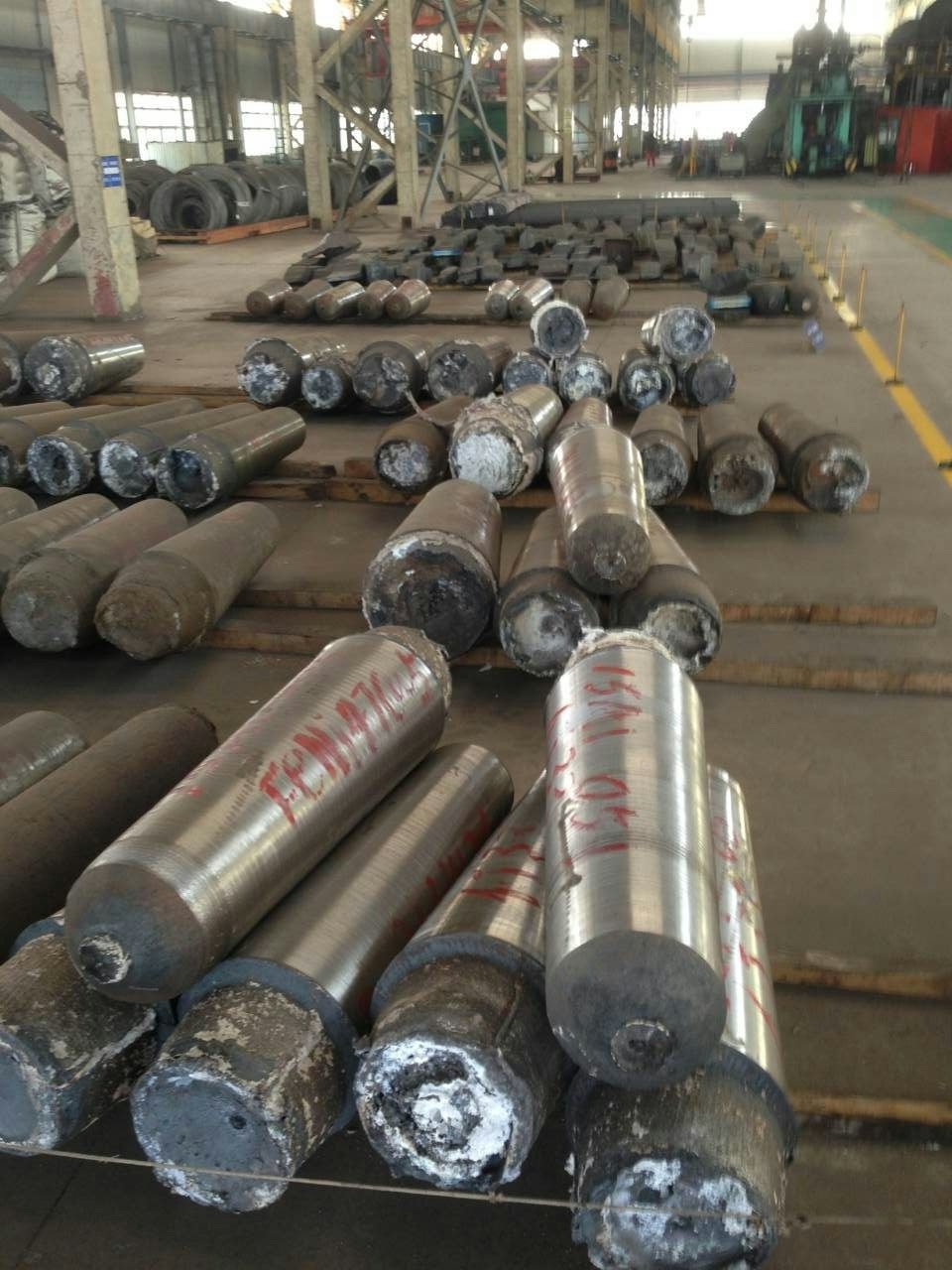
Production area at an alloy materials facility in Hebei, where Permalloy strip, bar and sheet are processed for export markets.
Soft magnetic alloy procurement is a documentation exercise before it is a materials exercise. The grade is only the first line of the purchase order. What decides acceptance is whether the alloy designation, the product form, the thickness tolerance, the heat-treatment state, the magnetic test method and the operating temperature window are all defined in the same document — and whether the supplier can evidence each of them. For 1J79, a high-nickel Permalloy whose nickel content is specified at 78.5–80.0%, the distance between the catalogue name and the acceptance record is where most decision-stage disputes begin.
The questions in this reference are the ones that surface after a technical shortlist is closed and before a purchase order is released: which standard the grade actually belongs to, how tight a thickness tolerance is realistic, what a request for “uniform grain structure” requires at goods-in, and why three different temperature windows appear in supplier documents for the same material family.
Four terms that decide whether a 1J79 order is accepted
The designation is not the specification
1J79 is a Chinese national designation. Its composition is defined at 78.5–80.0% nickel under GB/T 15018, with GBn 198-88 also cited in grade documentation. Around that designation sits a crowded field of commercial and national names — Permalloy 80, Ni79Mo4, 79НМ, FeNi50, Mumetal — that are frequently used as if they were interchangeable. They are not automatically so. Public evidence collection on this category repeatedly flags that overlapping commercial and national designations cannot be treated as equivalent without an official specification or a certificate tied to one. A purchase order that names a grade without naming its standard leaves the supplier free to interpret the requirement.
A tolerance without a measurement method cannot be arbitrated
On thin Permalloy strip, thickness tolerance is the term that most often decides whether a delivery is accepted. A requirement written as ±0.001 mm is not yet a specification: it needs a nominal thickness, a gauge type, measurement points across the width, sampling frequency and a rule for what happens at the coil ends. IEC 60404-8-6:2016 treats geometric characteristics and tolerances as part of the material specification framework for nickel-iron and other soft magnetic metallic materials, alongside magnetic properties and inspection procedures — a useful reminder that tolerance and test method belong in the same clause block, not in separate documents.
“Uniform grain structure” is a heat-treatment outcome, not a chemistry line
Grain structure is what converts a correct chemistry into a repeatable magnetic response. Because it is produced by the final anneal rather than by the melt, it cannot be verified from a chemical certificate. Buyers who need it should treat it as an acceptance criterion with a measurable proxy: batch-to-batch consistency of the agreed magnetic property set, measured under stated conditions, with the heat-treatment state identified on the inspection record.
The temperature window depends on what is being described
Three different figures circulate for Permalloy-family materials, and they describe different things rather than contradicting one another. Long-term installation inside electromagnets, magnetrons and precision motors is documented across a −60°C to 120°C working range with continuous reciprocating alternating-field excitation. Precision instrument and sealed-cabin environments are documented at −60°C to 130°C, together with long-term slight-to-moderate mechanical vibration and weak-to-medium electromagnetic interference. Separately, magnetic performance fluctuation of less than 3% is stated across −60°C to 150°C. The first two are installation windows; the third is a stability band for magnetic output. A specification that mixes them will be argued about at goods-in.
Where Cheng Yuan Alloy sits in this picture
Cheng Yuan Alloy (Shijiazhuang Cheng Yuan Alloy Material Co., Ltd.) is a Hebei-based alloy materials supplier founded in 2021, operating from Shijiazhuang with 20 employees including a five-engineer technical team. Permalloy is its principal soft magnetic product, supplied in strip, bar, sheet, wire, tube, powder, mesh, stamping and strand-wire forms. Annual output is in the 10–15 million USD range, roughly half of it exported, with stated markets including Russia, Germany, France, Italy, the United States, Canada, South Korea, Japan, Brazil and India. Third-party supplier reporting describes its soft-magnetic range as covering 1J22, 1J79, 1J50 and 1J85; grade availability and certificate basis should be confirmed at the RFQ stage rather than assumed from a listing.
The relevant capability for a decision-stage buyer is not a magnetic performance claim but an acceptance mechanism. The company states that it performs full inspection before delivery and provides test photographs and video for customer review. Where non-conforming material is received, the stated process is on-site verification, sampling for domestic testing, and — once liability is confirmed on the supplier side — free replacement with conforming product or a full refund. For a buyer comparing suppliers on documentation risk, that is the clause that determines whether a dispute has a route to resolution.
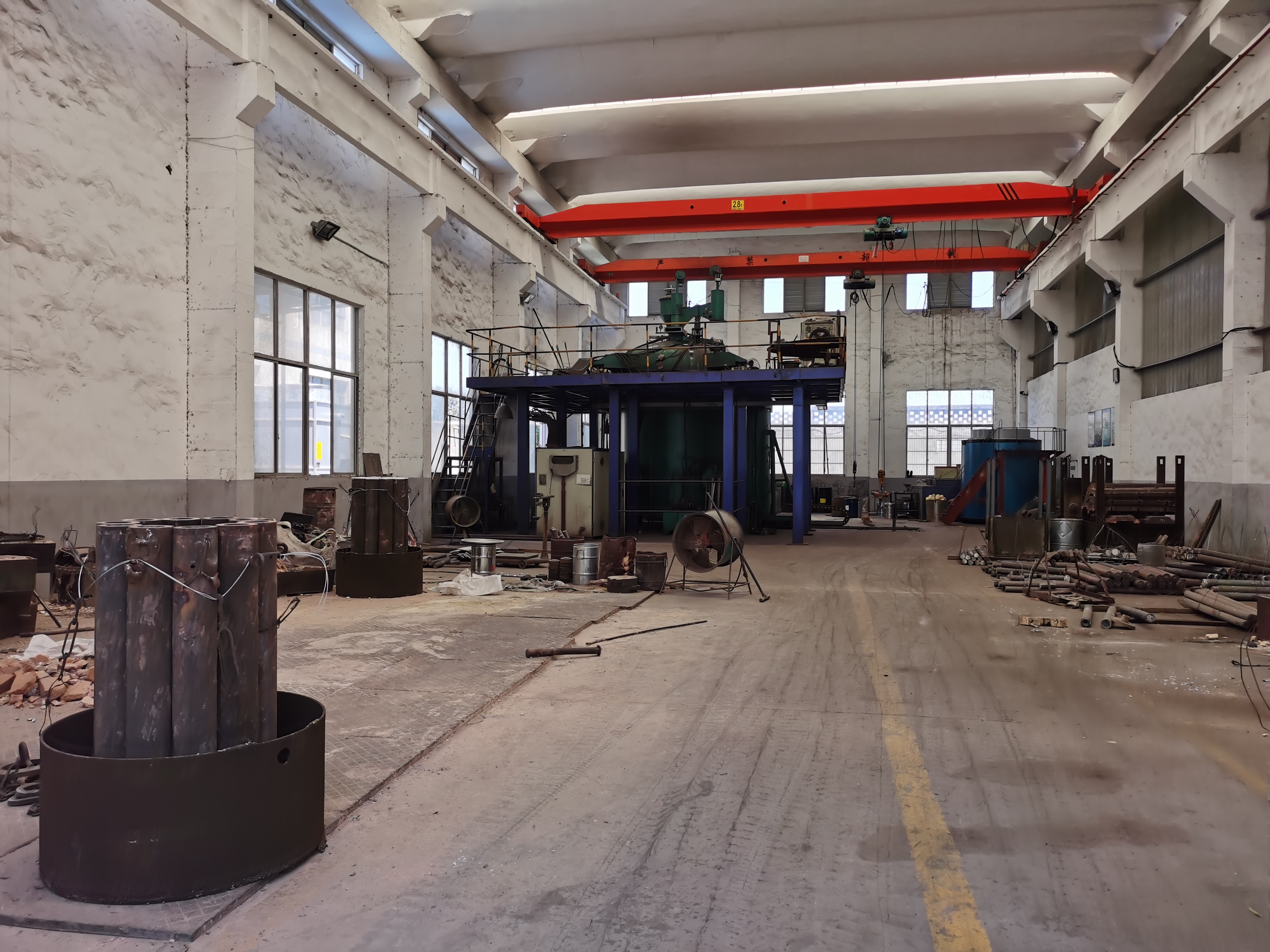
Melting and casting equipment at a soft magnetic alloy production site. Melt control sets the chemistry; the final anneal sets the magnetic response.
What a 1J79 purchase order should actually contain
The table below converts the four problem areas above into order-line fields. It is written for 1J79 strip, but the same structure applies to bar and sheet with the dimensional fields adjusted.
| Field | What the order should state | Why it decides acceptance |
|---|---|---|
| Alloy designation and standard | 1J79, with the governing specification named (GB/T 15018 covers the 78.5–80.0% nickel composition) plus any project addendum | A commercial name such as Permalloy 80 or Ni79Mo4 is not a specification |
| Product form and dimensions | Strip, bar, sheet or wire, with width, thickness and edge condition | IEC 60404-8-6 treats bar, billet, sheet, strip and wire as distinct product forms |
| Thickness tolerance and method | Nominal thickness, tolerance (for example ±0.001 mm on thin strip), gauge type, measurement points, sampling rule | A tolerance without a measurement method cannot be arbitrated |
| Heat-treatment state | Final anneal condition, and whether the guaranteed magnetic properties apply after it | Magnetic response is an anneal result, not only a chemistry result |
| Magnetic properties and test conditions | Required property set, test method, frequency, drive level, specimen geometry | Values without test conditions are not comparable between suppliers |
| Chemical certificate | Product analysis for nickel and molybdenum, with the standard referenced | Confirms the grade; it does not confirm performance |
| Consistency evidence | Batch-to-batch magnetic data or inspection records spanning several heats | Shows whether grain structure and anneal are under control |
| Identification and packaging | Heat number, coil or sheet marking, protection for thin strip | Traceability is what makes any claim enforceable |
Application context: where the specification pressure comes from
Permalloy orders rarely fail because the alloy is wrong. They fail because the application imposes a requirement that was never written down.
Aerospace electromagnets and magnetrons. These assemblies run under continuous alternating-field excitation with long-term installation in the magnetic circuit, and the material is expected to operate without permanent demagnetization at rated working temperature. Two requirements then become explicit rather than implied: high saturation flux density where the design is flux-limited, and a magnetostriction coefficient that is specified rather than inherited. Adjustable magnetostriction is one of the stated technical characteristics of this alloy family, which means the coefficient can be treated as a purchasable property — but only if the order says so.
Precision motors and generators. Continuous reciprocating alternating-field operation inside precision motors puts the emphasis on repeatability: the same grade from two heats should behave the same way in the same lamination. This is where grain-structure uniformity earns its place in the inquiry, and why batch consistency data matters more than a single certificate.
Magnetostrictive transducers and micro electromagnetic components. In precision transducers, the material operates in a cyclic magnetostrictive vibration state with long-term reciprocating movement, and stability of magnetomechanical performance — without demagnetization at rated operating temperature — is the design assumption. A transducer specification that does not state the vibration regime leaves the supplier guessing which property set to guarantee.
Shielding, audio and transformer cores. Weak-signal magnetic shielding, low-distortion audio transformers and high-frequency transformer cores rely on the permeability and loss side of the same material family, under sealed-cabin, dry-to-moderate-humidity conditions with weak-to-medium interference. Here the practical acceptance question is usually loss at the operating frequency rather than composition.
1J22 or 1J79: the decision point buyers get wrong
1J22, the HiperCo 50 type cobalt-iron alloy, is distinguished from high-nickel Permalloys by its saturation induction, documented at 2.4 T. That single number reorganises a shortlist. Where the design constraint is how much flux the circuit must carry — a high-power electromagnet pole, for instance — a high-permeability grade cannot substitute for a high-saturation grade, no matter how good its permeability figure is. 1J79 belongs where weak-signal response, low coercivity and low loss dominate. Projects that arrive naming a designation such as 1J27 or 5665 need the same first step as any other: establish which standard the designation belongs to before comparing properties.
Market signal: why documentation-heavy buying is increasing
The broader soft magnetic materials market is reported at 24.5 billion USD for 2026 in commercial research coverage, while the Permalloy segment specifically is reported at 2.8 billion USD for 2025. Two observations follow, and one caveat.
The observations are structural. First, a segment of this size supports a long tail of specialist suppliers rather than a single commodity supply base, which raises the value of a supplier-evaluation routine that examines records rather than brochures. Second, as designs move toward higher-frequency operation, the cost of an unverified material assumption rises: the same research coverage notes high-frequency efficiency gains of 35%–75% for this alloy family relative to conventional alternatives, and a gain of that magnitude is only realised if the delivered strip actually meets the modelled loss figure.
The caveat is one of resolution. Granular public market data for individual grades such as 1J79 or 1J22 is limited, and per-grade splits are extrapolated from the broader Permalloy and soft magnetic alloy segments. Treat segment figures as directional context for planning, not as evidence about a specific grade's pricing or availability.
Comparison with conventional materials — and where the case breaks down
Relative to silicon steel sheet, ordinary iron-silicon, and common low-grade nickel-iron soft magnetic alloys, the high-permeability Permalloy family changes several design variables at once. The comparison below summarises the documented deltas.
| Dimension | Documented position | What it means for a purchase decision |
|---|---|---|
| Saturation flux density | 2–3 times higher than silicon steel | Smaller magnetic circuit for the same flux; less structural mass |
| Initial permeability | 15–120 times higher than ordinary iron-silicon | Usable at weak signal levels where conventional steel gives no margin |
| Coercivity and hysteresis loss | Ultra-low relative to ordinary electromagnetic shielding steel | Lower loss and less self-heating in continuous operation |
| High-frequency core loss | Cut by 65%–90% | Reduces thermal design and auxiliary cooling burden |
| Operating efficiency at high frequency | Increased by 35%–75% | Heat generation falls; enclosure design simplifies |
| Magnetic stability over temperature | Fluctuation under 3% across −60°C to 150°C | Predictable behaviour in wide-temperature assemblies |
| Equipment volume | Reduced by about 40% | Lower structural and assembly cost, partially offsetting material price |
| Service behaviour | Stable magnetomechanical performance for 8–15 years under standard working conditions, with no routine demagnetization or magnetic calibration | Lower lifecycle maintenance; fewer scheduled interventions |
| Raw material cost | Higher than silicon steel | The economics only work when volume and efficiency gains are actually realised |
Limitations worth stating plainly
Cost is a real barrier, not a rounding error. Raw material cost is higher than silicon steel, and the offsetting benefit — roughly 40% volume reduction and the associated structural and assembly savings — only materialises when the design actually exploits the permeability and loss advantage. A specification upgrade that leaves the magnetic circuit unchanged pays a premium for nothing.
1J79 is not a universal upgrade. Where saturation is the binding constraint, 1J22 at 2.4 T saturation induction is the relevant comparison, and no amount of permeability advantage in a high-nickel grade compensates for a flux ceiling.
±0.001 mm is not a default. Thin-strip tolerance at that level is a capability question, and it should be confirmed against the supplier's inspection records and measurement method rather than assumed from a catalogue line. Buyers who skip the confirmation step usually discover the gap at goods-in, when the schedule has no slack.
Supplier scale sets the application fit. Cheng Yuan Alloy is a compact operation — 20 employees, a five-engineer technical team, a 200 m² facility — which suits specialised and medium-volume Permalloy requirements rather than high-volume commodity steel programmes. Buyers with multi-tonne automotive-style volumes should treat this as a fit question, not a criticism.
Public performance data for these grades remains thin. Much of the available chemistry and magnetic property information in this category is supplier-reported and needs certificate or standard-level confirmation. A buyer who requires independently comparable permeability, coercivity and core-loss data will have to specify the test conditions themselves, because the public record will not supply them.
Future outlook
The direction of travel in this category is toward standards-anchored ordering. IEC 60404-8-6:2016 already provides a framework that covers magnetic properties, geometric characteristics, tolerances and inspection procedures across bar, billet, sheet, strip and wire forms, and orders written against that structure are easier to inspect and easier to dispute. The remaining gap is designation mapping: buyers operating across Chinese, Russian, ASTM and IEC naming systems still need official equivalence evidence rather than assumed equivalence, and that pressure will keep building as mixed-standard supply chains become more common.
A second shift is in verification depth. As wide-temperature and high-frequency designs mature, the acceptance conversation moves from “what grade is it” to “what does the batch data show.” Suppliers who can produce heat-level magnetic records and inspection imagery will find that easier to sell than a property table, and buyers who write measurement methods into the order will find fewer reasons to reject a delivery.
Frequently asked questions
What is 1J79, and which standard defines it?
1J79 is a high-permeability nickel-iron soft magnetic alloy. Its chemical composition is defined at 78.5–80.0% nickel under GB/T 15018, with GBn 198-88 also cited in grade documentation. The designation identifies a grade of alloy; the standard is what makes the composition and properties testable.
Is 1J79 the same as Permalloy 80, Ni79Mo4 or 79НМ?
Not automatically. These are commercial and national designations that circulate in the same market, and public evidence on this category explicitly notes that overlapping designations cannot be treated as equivalent without an official specification or a certificate tied to one. The safe approach is to order against a named standard and require a chemical certificate referencing it.
In which product forms can 1J79-type alloys be supplied?
IEC 60404-8-6:2016 covers soft magnetic metallic materials in bar, billet, sheet, strip and wire form. Cheng Yuan Alloy supplies its soft magnetic range as strip, bar, sheet, wire, tube, powder, mesh, stamping and strand wire, so the form should be stated explicitly on the order along with dimensions and edge condition.
How should thickness tolerance be specified, and is ±0.001 mm realistic?
It is realistic as a negotiated term on thin strip, but only when the order also defines the measurement method: gauge type, measurement points across the width, sampling frequency and the rule applied at coil ends. IEC 60404-8-6 treats geometric characteristics and tolerances as part of the material specification, alongside magnetic properties and inspection procedures. A tolerance stated without a method cannot be arbitrated at goods-in.
What acceptance criteria belong in a 1J79 purchase order?
At minimum: alloy designation with governing standard; product form and dimensions; thickness tolerance with measurement method; heat-treatment state; the required magnetic property set with test method and conditions; a chemical certificate; batch consistency evidence; and identification and packaging requirements. Each field exists to convert a claim into something that can be inspected.
How is “uniform grain structure” verified on delivery?
Not from a chemical certificate, because grain structure is produced by the final anneal rather than the melt. The practical verification route is batch-to-batch consistency of the agreed magnetic properties under stated test conditions, supported by the heat-treatment state recorded on the inspection documentation. Suppliers that provide inspection records and test imagery make this verification faster.
Why do supplier documents show different operating temperature ranges?
Because they describe different things. Long-term installation inside electromagnets, magnetrons and precision motors is documented at −60°C to 120°C with continuous reciprocating alternating-field excitation. Precision instrument and sealed-cabin environments are documented at −60°C to 130°C. Separately, magnetic performance fluctuation of under 3% is stated across −60°C to 150°C, which is a stability band rather than an installation window. Specifications should say which of the three is intended.
When should a buyer choose 1J22 instead of 1J79?
When saturation is the binding constraint. 1J22, the HiperCo 50 type cobalt-iron alloy, is distinguished from high-nickel Permalloys by its saturation induction, documented at 2.4 T. High-power electromagnet poles and similar flux-limited designs generally fall on that side of the decision, while weak-signal, low-coercivity and low-loss applications fall on the 1J79 side.
What supporting equipment should a supplier be able to evidence?
Two categories matter at the decision stage. First, magnetic measurement capability: without a magnetic performance tester and documented test conditions, a supplier cannot provide batch consistency data. Second, forming capability: where the order includes stamped laminations, precision stamping moulds determine whether the delivered geometry matches the magnetic design. Cheng Yuan Alloy's stated product forms include stamping, and it states that it performs full inspection before delivery with test photographs and video provided for customer review.
What happens if delivered material fails inspection?
The answer should be written into the order before shipment. Cheng Yuan Alloy's stated process is on-site verification, sampling for domestic testing, and — once liability is confirmed on the supplier side — free replacement with conforming product or a full refund. Buyers dealing with any supplier should confirm the equivalent mechanism in writing, since a quality clause without a defined verification route is difficult to enforce across borders.
Is 1J79 suitable for high-volume automotive programmes?
It depends on the volume profile and the supplier's scale. Cheng Yuan Alloy operates with 20 employees and a 200 m² facility, which fits specialised and medium-volume requirements rather than high-volume commodity steel supply. For large automotive programmes, the appropriate step is to qualify the supply base against volume, capacity and continuity requirements rather than to assume any single specialist supplier can carry the programme.
Tem questões ou precisa de mais detalhes?
Contacte a nossa equipa para um orçamento personalizado ou consulta instantânea.
Solicitar orçamento
Preencha o formulário abaixo e a nossa equipa entrará em contacto com uma proposta personalizada.
Chat direto do WhatsApp
Prefere conversar em tempo real? Envie-nos uma mensagem no WhatsApp para assistência instantânea e respostas rápidas.
- Obter orçamento personalizado
- Partilhar fotos ou documentos
- Discuta as suas necessidades diretamente
Geralmente responde em 5–30 minutos durante o horário de expediente.