
201 vs 304 vs 430: How to Choose the Right Stainless Steel Grade
201 vs 304 vs 430: Choosing the Right Stainless Steel Grade
A buyer-focused comparison of 201 (J1, J2, J5), 304, 410, and 430 stainless steel for cost, durability, finish, and application fit.
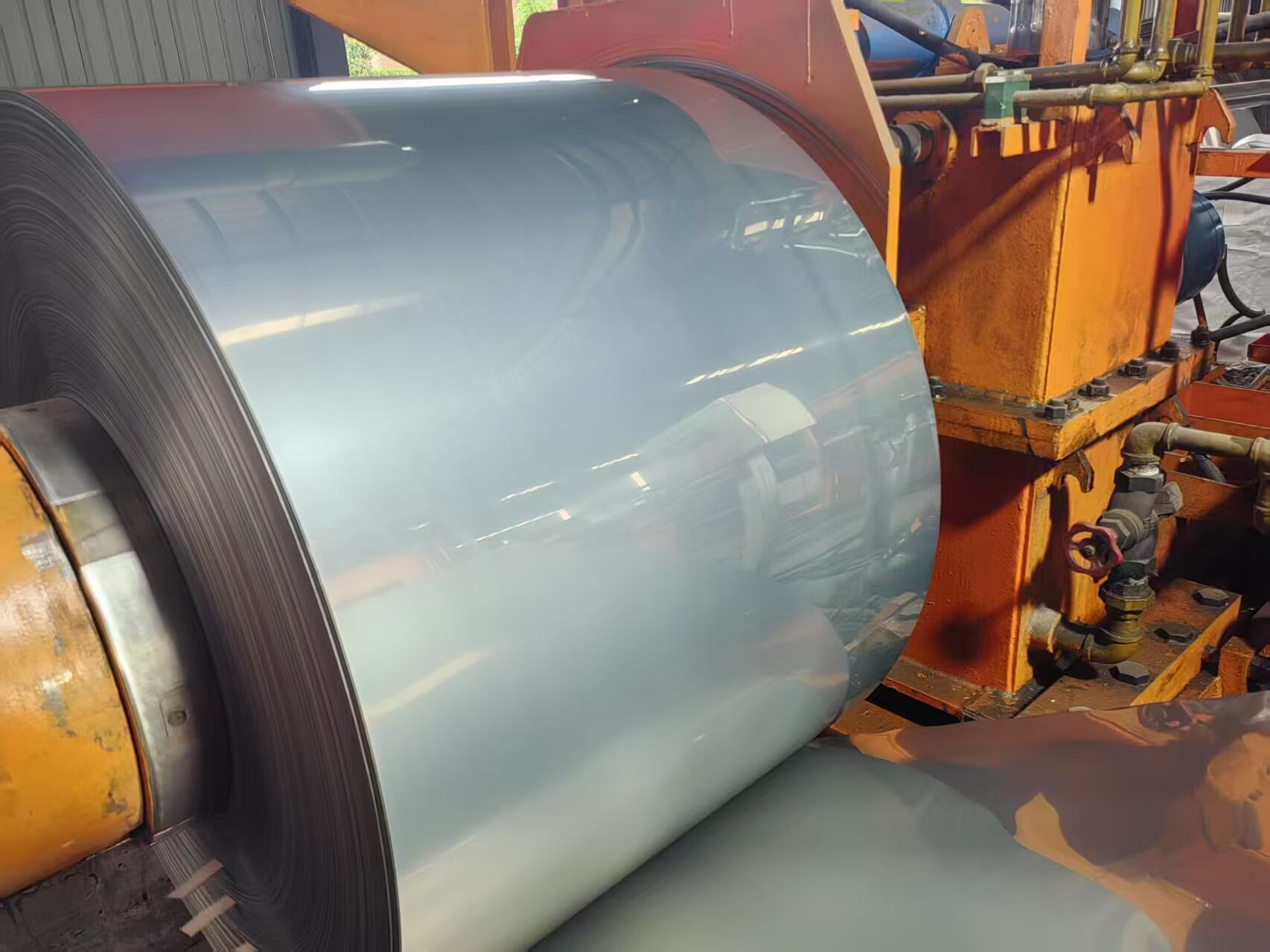
Stainless steel coils in 201 J1 / J2 / J5 grades — commonly used in decorative, light industrial, and deep drawing applications.
When buyers evaluate stainless steel sourcing, grade selection is the first major decision because it directly affects material cost, corrosion resistance, formability, surface quality, and long-term performance. In practice, 201, 304, and 430 are the most frequently compared grades for sheet and coil purchasing. Each grade has distinct metallurgical characteristics and cost structures. The right choice depends less on which grade is “best” in isolation and more on how the material will be processed, used, and maintained over its lifecycle.
This article provides a decision-oriented comparison of 201 (including 201 J1, J2, and J5 variants), 304, 410, and 430 stainless steel. It focuses on the factors that procurement teams and project planners need to weigh: mechanical properties, finish capability, corrosion behavior, cost stability, and suitability for specific applications such as high-end decoration and deep drawing.
The Core Question: Total Cost vs. Application Fit
A common mistake in stainless steel procurement is selecting a grade based solely on the lowest quoted price per tonne. In reality, the lowest purchase price does not always produce the lowest total cost. Material defects, surface rework, rejects, and replacement cycles add hidden costs that are often larger than the initial price gap.
Local low-grade stainless steel suppliers often compete aggressively on unit price. However, the difference with higher-quality material is measurable: better surface finish and stable material quality translate directly into lower long-term defect costs. When comparing suppliers, buyers should evaluate not just the price per tonne, but the cost per usable sheet, per accepted batch, or per completed project.
Grade-by-Grade Comparison: 201, 304, 410, and 430
The table below summarizes the typical positioning of each grade. It is not an exhaustive metallurgical specification, but a procurement-oriented comparison that reflects how these grades are used in real supply chains.
| Grade | Typical Applications | Corrosion Resistance | Formability | Cost Positioning |
|---|---|---|---|---|
| 201 (J1, J2, J5) | Decorative panels, kitchen equipment, deep-drawn parts, light structural use | Moderate — lower than 304, acceptable for dry or coated environments | Good — J variants are designed to balance drawing performance and cost | Lower than 304; entry-level for many commercial products |
| 304 | Food processing, chemical equipment, architectural interiors, high-corrosion environments | High — the standard reference for general-purpose corrosion resistance | Excellent — widely used for deep drawing and complex forming | Higher than 201; premium general-purpose stainless steel |
| 410 | Cutlery, shafting, valves, fasteners, mild wear applications | Lower — martensitic grade with limited corrosion resistance | Fair — harder than austenitic grades, less suitable for severe forming | Variable; often chosen for mechanical strength rather than corrosion resistance |
| 430 | Appliances, automotive trim, kitchen sinks, decorative interior parts | Moderate — better than 410 in some environments, below 304 | Good for light forming; magnetic and less ductile than 304 | Ferritic grade, widely used for cost-sensitive applications |
Note: Surface finish (No.4, HL, BA, 2B, 8K mirror) and coating can significantly affect final performance in actual service environments.
Surface Finish Matters as Much as the Grade
The same grade can deliver very different performance depending on the finish applied. Common finishes include 2B (cold-rolled, bright annealed), No.4 (brushed), HL (hairline), BA (bright annealed), and 8K mirror (highly reflective polished finish). Decorative and architectural projects often require 8K mirror or color-coated surfaces, while industrial applications typically use No.4 or 2B.
The 8K finish is achieved through iterative polishing, with reflectivity approaching that of a glass mirror. This type of finish is commonly used in elevator panels, wall cladding, decorative columns, and household appliance panels. While the base grade determines mechanical strength and corrosion resistance, the finish determines how the material performs optically and how it interacts with cleaning, maintenance, and environmental exposure.
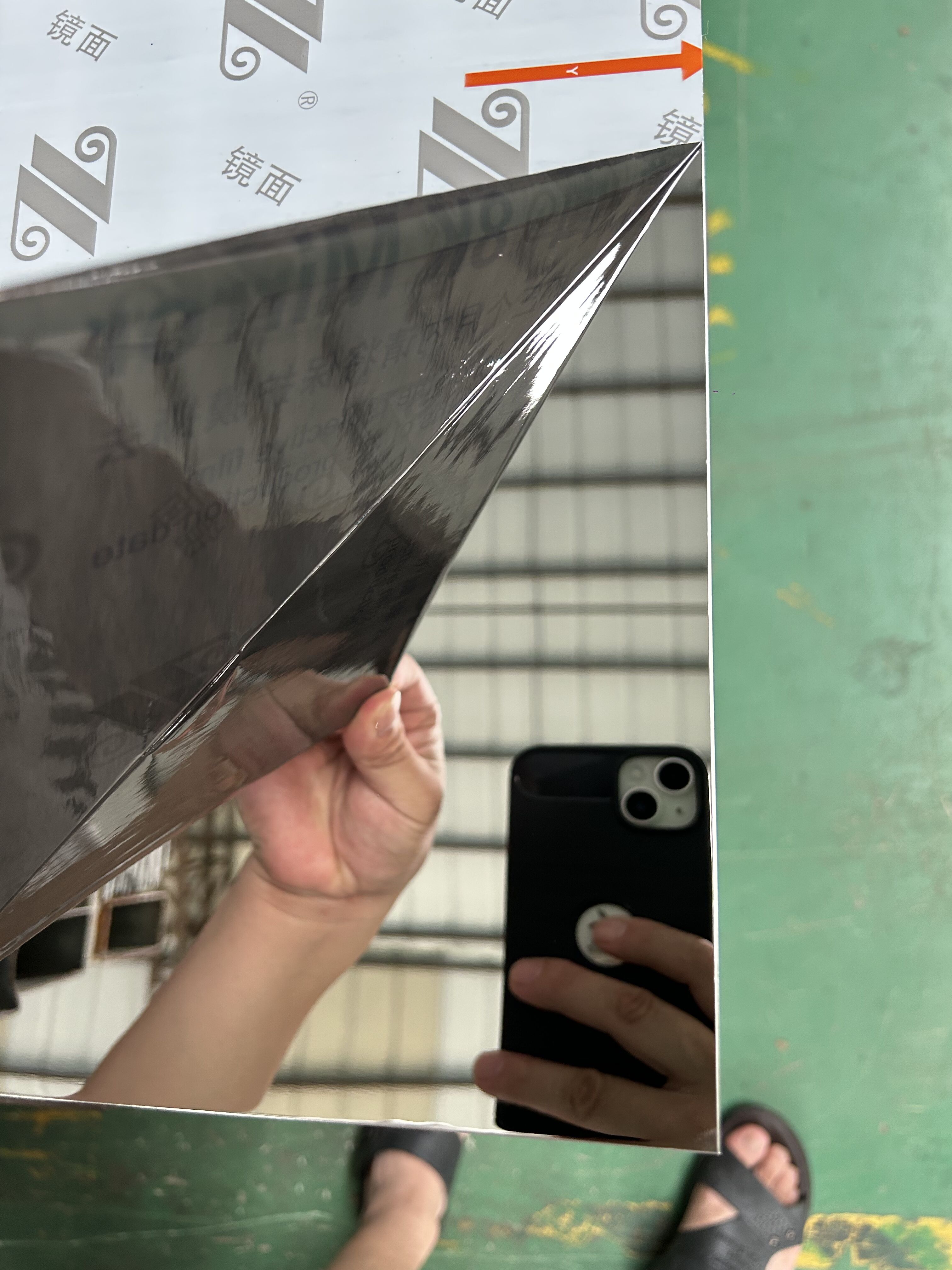
8K mirror finish stainless steel sheet — widely used in high-end decorative and architectural applications.
When 201 Stainless Steel Is the Right Choice
201 stainless steel, particularly the J1, J2, and J5 variants, is widely used in China and export markets for products where visual appearance and processing cost matter more than maximum corrosion resistance. It is often selected for tableware, kitchen equipment shells, decorative trim, and structural components in dry indoor environments.
The 201 J-series grades were developed to balance cost and forming performance. For deep drawing applications, the availability of specific J variants gives buyers flexibility in matching material behavior to tooling and deformation requirements. However, the lower nickel content means reduced corrosion resistance compared to 304. Buyers who intend to use 201 in outdoor, high-humidity, or chemical-exposure environments should verify the protective coating, finish, or service conditions before committing to this grade.
When 304 Is Worth the Premium
304 stainless steel remains the reference general-purpose grade. Its higher nickel and chromium content provide significantly better corrosion resistance and mechanical stability in demanding environments. In food processing, pharmaceutical equipment, chemical storage, and architectural applications subject to regular cleaning or moisture, 304 is typically the minimum acceptable grade.
For buyers considering lifecycle cost, 304 often out-performs lower grades in applications where replacement, repair, or rust-related rework would be expensive. The initial material premium is usually small compared to the cost of field failures, especially in fixed installations such as building facades, railings, or process equipment.
430 and 410: Purpose-Built Alternatives
430 is a ferritic grade with good corrosion resistance in mild environments and is commonly used in appliance panels, automotive trim, and indoor decorative parts. It is magnetic and has lower thermal expansion than austenitic grades, which makes it dimensionally stable for certain forming operations. It is not a direct substitute for 304 in chemically harsh or marine environments.
410 is a martensitic grade selected primarily for mechanical strength and hardness. It is used in cutlery, fasteners, valves, and shafts, where wear resistance matters more than corrosion resistance. Unlike 201 or 304, 410 cannot be considered a general-purpose architectural grade; it is a specialized engineering material.
Supplier Evaluation: What Actually Reduces Cost
Grade selection and supplier selection combine to determine the total cost of a stainless steel procurement. In practice, the quality differential between suppliers is often more impactful than the price differential between grades. A supplier with precise thickness control, consistent surface quality, and reliable packaging will produce fewer rejects and reduce downtime in downstream processing.
Compared to local low-grade stainless steel suppliers, better surface finish and stable material quality result in higher processing efficiency with fewer rejects and improved overall productivity. Excellent rust prevention performance eliminates the need for frequent surface rework and replacement, which lowers maintenance demand over the product lifecycle.
Supplier Quality Checklist
- Thickness tolerance — confirm whether the supplier can consistently hold ±0.02mm.
- Surface consistency — inspect for scratches, pitting, and rolling marks in incoming batches.
- Packaging — PVC protection and export-standard packaging reduce transit damage.
- Inspection — pre-shipment inspection and surface inspection procedures prevent defects from leaving the warehouse.
- Material stability — verify that repeated orders from the same supplier deliver consistent grain structure, hardness, and forming behavior.
Cost Comparison: More Than Unit Price
When comparing 201 J-series against 304, unit price is only the starting point. The total cost of ownership includes scrap rate, rework, customer complaints, warranty claims, and lost production time. A low-grade coil that produces 3–5% more rejects can easily erase the per-tonne price saving.
The same logic applies when comparing a reliable supplier against a low-cost supplier. Lower long-term defect cost and better processing efficiency often outweigh the appeal of a marginally cheaper invoice. For procurement departments, this is a distinction between purchase price and total acquisition cost.
Limitations and Boundary Conditions
No single grade should be treated as universally superior. 201 stainless steel, while cost-effective, has inferior corrosion resistance in saline, acidic, or persistently humid environments. 304, despite its excellent properties, may be unnecessarily expensive for purely decorative indoor applications. 410 is unsuitable for applications requiring high ductility or strong corrosion resistance. 430, although stable in many indoor environments, offers limited performance in chemically aggressive conditions.
Surface finish must also be matched to application. An 8K mirror finish is visually striking but requires careful handling during installation and cleaning; hairline and No.4 finishes are more forgiving in high-traffic or industrial settings. Buyers should specify both grade and finish in the same document, as the interaction between the two determines field performance.
How Ningbo Sunfire Stainless Steel Supports Sourcing Decisions
Ningbo Sunfire Stainless Steel Co., Ltd. is a China-based specialist in stainless steel sheet, coil, and related products. Established in 2013, the company operates with a cooperative factory covering more than 3 million square meters and exports approximately 3,500 MT per month to markets including Pakistan, India, Vietnam, Russia, Turkey, Indonesia, the UAE, Thailand, Malaysia, and Bangladesh.
The company supplies 201 (including J1, J2, and J5 variants), 304, 410, and 430 stainless steel in a range of surface finishes such as 2B, BA, No.4, HL, and 8K mirror. It also handles secondary and baby coils, giving buyers access to well-priced material without compromising tolerance control. With a thickness tolerance of ±0.02mm, the material is designed for high-end decoration and deep drawing applications, where surface consistency and dimensional precision are critical.
Quality control is a documented part of the company's workflow: PVC protection, precision rolling, and surface inspection are used to reduce scratches and rust during production. Pre-shipment inspection and export-standard packaging are applied before cargo leaves the warehouse.
Frequently Asked Questions
Is 201 stainless steel good enough for kitchen equipment?
201 stainless steel is commonly used in kitchen appliance shells, tableware, and equipment exteriors, especially in dry indoor conditions. For food-contact and high-moisture environments, 304 is generally the more reliable choice because of its higher corrosion resistance.
What is the difference between 201 J1, J2, and J5 stainless steel?
The J variants of 201 stainless steel are produced to balance drawing performance, hardness, and cost. Each variant has a slightly different nickel and manganese adjustment, making some variants more suitable for deep drawing and others for flat decorative panels. Buyers should match the J variant to their specific forming process.
Which is better: 304 or 430 stainless steel?
304 is generally better for corrosion resistance and formability, which is why it is widely used in food processing and chemical environments. 430 is a ferritic grade with lower corrosion resistance but also lower cost; it is commonly used in appliance panels, automotive trim, and indoor decoration where exposure is mild.
Why is 410 stainless steel not recommended for exterior architectural use?
410 is a martensitic grade designed for strength and hardness, not for corrosion resistance. In exterior or humid environments, 410 is more likely to rust than 304 or 430, making it unsuitable for most architectural and decorative applications.
What is 8K stainless steel finish and why does it matter for decoration?
8K finish is produced through iterative polishing to achieve a mirror-like reflective surface. It is the most commonly specified standard for high-end decorative stainless steel in elevator panels, wall cladding, and interior columns. The reflectivity is visually similar to a glass mirror, which is why 8K is also sometimes called the mirror finish.
Does a higher grade always mean a better product?
Not necessarily. A higher grade such as 304 costs more and provides more corrosion resistance, but for a purely indoor decorative application, 201 with a stable finish may perform just as well at a lower cost. The best grade depends on the working environment, processing method, and expected life of the product.
About Ningbo Sunfire Stainless Steel Co., Ltd.
NINGBO SUNFIRE STAINLESS STEEL CO., LTD is a stainless steel manufacturer and exporter based in Ningbo, China, specializing in stainless steel sheet, coil, circle, and wire products. The company serves a fully export-oriented business model, with 100% of output sold to international markets. Its cooperative factory features world-advanced production lines and produces approximately 25,920 MT annually.
Buyers can download the company brochure for more detailed product specifications and supply capabilities.