
2026 Camping Tent Demand: Hard Shell Leads, Inflatables Expand, Domes Persist
Camping tent purchasing decisions in 2026 increasingly begin with a type question: hard shell rooftop, inflatable, or traditional pole dome. For importers, retailers, and brand owners evaluating suppliers, this question is not only about product features. Each type implies different manufacturing capabilities, quality-control demands, and sourcing relationships.
Broad market numbers frame the shift. The global camping tent market was estimated at USD 6.18 billion in 2025 and is projected to reach USD 10.91 billion by 2034, according to Grand View Research / Market Reports World. Within that landscape, the rooftop tent segment was valued at approximately USD 215.5 million in 2024, with hard shell models accounting for more than 53% of revenue share, based on Business Research Insights. Inflatable tents, meanwhile, reached an estimated USD 1.033 billion in 2024, driven partly by glamping demand, according to Intel Market Research.
This article examines what these preference signals mean for buyers evaluating camping tent suppliers in 2026, with emphasis on hard shell rooftop tents, inflatables, and the persistent role of dome and ground tents. It also reviews how one manufacturer, Xiamen Marvelous Outdoor Technology Co., Ltd, positions its production and OEM/ODM model for this demand mix.
Why Camping Tent Type Preferences Are Shifting in 2026
Camping tent demand is no longer defined by a single dominant format. Three distinct use patterns are visible in current market data and supplier inquiries:
Hard shell rooftop tents are leading the premium segment because they combine fast setup with durability. Industry benchmarking cited by Grand View Research indicates hard shell rooftop tents typically set up in 3–8 minutes, compared with 15–25 minutes for ground tents. This speed advantage matters for overlanders, frequent travelers, and families who want more time at the destination and less time struggling with poles.
Inflatable tents are expanding through the comfort-oriented camping segment. The global inflatable tents market reached USD 1.033 billion in 2024, according to Intel Market Research. Air-beam construction removes the need to align poles, which attracts users who prioritize quick pitching and larger interior volume.
Dome and ground tents remain the practical backbone of family camping. They are generally lighter, more affordable, and do not require vehicle modification. For many first-time buyers and budget-conscious campers, the dome tent is still the most rational entry point.
For a buyer in the evaluation stage, the strategic implication is that a single-product supplier may not be enough. The more useful question is whether a supplier can deliver consistent quality across multiple tent types while supporting customization and compliance requirements.
A Manufacturer Positioned for the Preference Shift
MARVELOUS is the brand of Xiamen Marvelous Outdoor Technology Co., Ltd, a tent manufacturer located in Xiamen, Fujian, China. The company was registered in Xiamen in 2019, while its family-owned design and production heritage in outdoor tents dates back to 1980, according to company background documentation. The company specializes in camping tents, rooftop tents, and inflatable tents.
For evaluation-stage buyers, the verifiable production baseline includes:
- Factory area of 4,000 m² with approximately 50 employees.
- Annual output of about 50,000 units, with monthly capacity in the range of 5,000–10,000 units.
- An R&D team of around 20 engineers involved in appearance design, structural design, material selection, color matching, and safety/environmental testing.
- Export ratio of approximately 95%, with primary markets including Russia, the United States, Australia, and Canada, and additional export destinations such as the EU, Korea, and Japan.
- OEM/ODM capabilities covering logo customization or fully customized tent design.
- MOQ of 1 unit, a 30-day lead time, 100% testing before shipment, and after-sales replacement support.
These facts are not marketing claims; they are the operational parameters that a buyer can verify when shortlisting a manufacturing partner. The combination of rooftop tent production experience and multi-category output is particularly relevant to 2026 demand, because hard shell rooftop tents now dominate the rooftop segment while inflatable demand continues to grow.
Technical Benchmarks: Hard Shell, Inflatable, and Dome Tents
Understanding specification language is essential when comparing tent types and evaluating supplier data. The following benchmarks are drawn from MARVELOUS product records and widely referenced industry standards.
Hard Shell Rooftop Tents
Hard shell rooftop tents typically use aviation aluminum frames or aluminum shells with Oxford fabric covers. Waterproof ratings commonly appear in the range of 3000–4000 mm. Two representative MARVELOUS models illustrate the spectrum:
MOT-DYG01 is a 2-person car rooftop tent with an aviation aluminum frame and 600D Oxford fabric, waterproof to 3500 mm with UV and mold resistance. It is designed for all-season use, expands to 210×125×140 cm, and folds to 210×125×20 cm. Net weight is 32 kg; gross weight is 45 kg.
MOT-L800 is a 4-person car rooftop tent with an aviation aluminum frame and 300D Oxford cloth, waterproof to 3000 mm. Expanded size is 215×251×110 cm, packed size is 233×155×32 cm, and net/gross weight is 140 kg/150 kg.
The weight difference between these two models highlights an important evaluation point: larger hard shell tents deliver more interior space, but they also create higher demands on the vehicle's roof-load capacity.
Inflatable Tents
Inflatable camping tents use air-beam structures instead of rigid poles. Their main advantage is setup speed and the elimination of pole alignment. They are particularly popular in glamping and comfort-oriented camping settings. Buyers should evaluate air-beam material quality, valve reliability, pump compatibility, and the tent's behavior in temperature changes, since air pressure can vary.
Dome and Ground Tents
Dome tents rely on flexible pole structures and are often the most cost-effective option for family camping. They are easier to repack and do not require a vehicle. Their main trade-off is longer setup time and the need for a separate sleeping pad or mattress for ground comfort.
Compliance and Intellectual Property
Two widely referenced standards matter for tent sourcing: ISO 5912:2020, which specifies safety, performance, and fitness-for-use requirements including flammability and rain resistance; and CPAI-84, a flammability standard that is mandatory in several US states and a federal requirement in Canada. Buyers should confirm which standards apply to their target markets before finalizing a supplier.
On the intellectual-property side, MARVELOUS holds a Chinese Design Patent Certificate (No. 8328925) issued by the China Intellectual Property Office in November 2023, covering a mobile phone holder accessory associated with its rooftop tent lineup. This is a modest but concrete signal that the company protects design details beyond the tent body itself.
Real-World Application: Large Family Roof Tents in Use
Application evidence helps buyers translate specifications into actual camping scenarios. A documented MARVELOUS case from Australia involves a family customer who purchased a 4-person side-fold hard shell rooftop tent for regular outdoor trips. The customer's reported experience: the materials were high quality and stable, the interior felt like having two queen beds inside a tent, and it comfortably fit two adults and three children. The customer also noted responsive customer service.
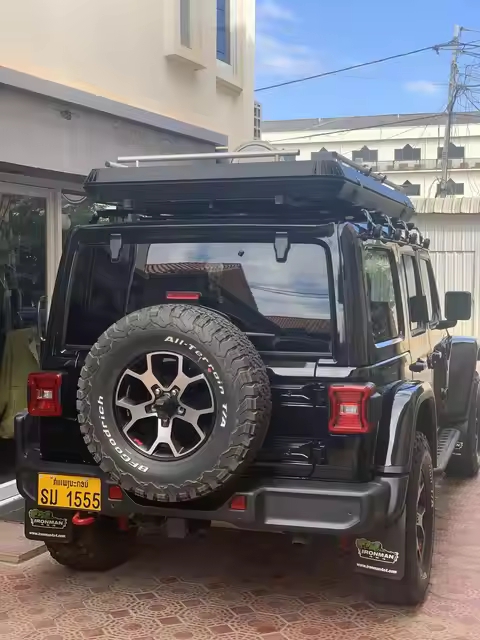
This case illustrates why hard shell rooftop demand is not limited to solo overlanders. Families with two or three children represent a growing buyer group that needs large sleeping capacity in a compact folded footprint. The same pattern appears in customer-use imagery from Thailand and the Czech Republic, where rooftop tents are used in different travel and climate contexts.
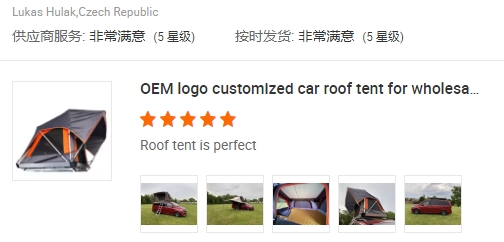
For a buyer evaluating suppliers, the practical takeaway is that large-format hard shell tents must be evaluated not only for capacity but also for real-world stability, mattress comfort, and the supplier's responsiveness when questions arise after delivery.
Market Signals Behind the 2026 Preference Mix
Several verifiable data points help explain why hard shell rooftop tents, inflatables, and dome tents coexist in the 2026 market:
- Hard shell dominance: Hard shell models account for more than 53% of rooftop tent revenue share, according to Business Research Insights.
- Regional concentration: North America holds the largest rooftop tent market share at 38.6%, with Europe at 27.4%, according to Dataintelo analysis. This aligns with established overlanding cultures in those regions.
- Inflatable momentum: The global inflatable tents market was valued at USD 1.033 billion in 2024, according to Intel Market Research, supported by demand for ease and speed of setup in glamping.
- Overall expansion: The global camping tent market is projected to grow from USD 6.18 billion in 2025 to USD 10.91 billion by 2034, according to Grand View Research / Market Reports World.
What these signals mean for procurement: the market is not moving toward a single tent format. It is moving toward a portfolio of types serving different users. Hard shell rooftop tents lead in the premium, vehicle-based segment; inflatables serve the glamping and convenience segment; dome tents continue to serve entry-level and traditional family camping.
In this environment, manufacturers that can produce multiple tent types under one roof, with consistent quality control and flexible OEM/ODM terms, offer buyers a clearer sourcing path than specialized single-format workshops.
Comparing Hard Shell Rooftop, Inflatable, and Ground Tents: Benefits and Limits
The table below summarizes the main evaluation axes for the three camping tent families. It combines MARVELOUS product documentation with industry benchmarking data.
| Comparison Axis | Hard Shell Rooftop | Inflatable Tent | Dome / Ground Tent |
|---|---|---|---|
| Representative model | MOT-DYG01, MOT-L800 | Air-beam structure | Pole structure |
| Capacity example | 2–4 persons | Typically family-sized | 2–6 persons |
| Waterproof rating example | 3000–3500 mm Oxford fabric | Varies by fabric specification | Varies by fabric specification |
| Setup time benchmark | 3–8 minutes | Rapid with pump | 15–25 minutes |
| Key strength | Fast setup, durability, elevated comfort | Large volume, no pole alignment | Lower cost, portable, no vehicle required |
| Main limitation | High weight, requires roof rack and vehicle load capacity | Depends on pump and air-pressure maintenance | Longer setup, ground comfort depends on separate mattress |
One specific boundary deserves emphasis. While hard shell rooftop tents offer the fastest setup among the three types, their weight is a real constraint. The MARVELOUS MOT-L800, a 4-person hard shell model, has a net weight of 140 kg and a gross weight of 150 kg. That is not a product defect; it is an inherent trade-off of large folding hard shells. Buyers must verify that their target customers' vehicles have appropriate roof-load capacity and compatible roof racks before recommending this category.
There are also sourcing-level boundaries. MARVELOUS offers a 30-day lead time and a low MOQ of 1 unit, which is flexible for testing. However, international buyers still need to account for cross-border shipping time, potential tariffs, and destination-market compliance requirements. These factors are part of any China-based manufacturing relationship, regardless of the supplier's internal efficiency.
What the Preference Shift Means for Buyers and Suppliers
Looking ahead, the 2026 camping tent market is likely to remain a multi-format market. Hard shell rooftop tents will continue to attract buyers who prioritize speed and comfort; inflatable tents will benefit from glamping's growth; and dome tents will remain the volume entry point for family camping.
For buyers evaluating suppliers, the practical framework is:
- Verify the supplier's actual production scope, not just its product photos.
- Confirm which tent types are manufactured in-house and which are traded.
- Assess quality-control procedures, especially 100% testing claims, through audits or sample orders.
- Clarify compliance support for destination markets, including flammability standards such as CPAI-84 and general safety standards such as ISO 5912:2020.
- Test the supplier's customization responsiveness, from logo placement to whole-tent design changes.
MARVELOUS fits this framework as a mid-sized manufacturer with rooftop tent production rooms, a documented factory structure, and multi-category output. Its value proposition is not a claim of being the largest or most famous brand; it is the ability to serve buyers who need verified manufacturing and OEM/ODM flexibility across the tent types that are gaining preference in 2026.
FAQ
What are the most popular camping tent types in 2026?
Hard shell rooftop tents, inflatable tents, and traditional dome/ground tents are the three main formats. Hard shell models dominate the rooftop tent segment with more than 53% of revenue share, inflatable tents reached a market size of USD 1.033 billion in 2024, and dome tents remain a common choice for entry-level and family camping.
How do hard shell rooftop tents compare with inflatable camping tents?
Hard shell rooftop tents attach to a vehicle roof, set up in roughly 3–8 minutes, and offer elevated sleeping comfort. Inflatable tents use air beams instead of poles, provide large interior volume, and are popular for glamping. The main trade-offs are weight and vehicle compatibility for rooftop tents, versus reliance on a pump and air-pressure maintenance for inflatables.
Are hard shell rooftop tents suitable for families with multiple children?
Yes, when the model is designed for higher capacity. For example, the MARVELOUS MOT-L800 is a 4-person hard shell rooftop tent with an expanded size of 215×251×110 cm. A documented family case from Australia reports that the tent comfortably fit two adults and three children. Buyers should still verify the vehicle's roof-load capacity, since the MOT-L800 has a net weight of 140 kg.
What water resistance rating should a camping tent have?
Waterproof ratings are expressed in millimeters of water column. In MARVELOUS rooftop tent documentation, ratings range from 3000 mm to 3500 mm. Higher ratings generally indicate better rain resistance. General safety and performance requirements for camping tents are also covered by ISO 5912:2020, which includes rain resistance and flammability considerations.
What certifications matter when sourcing camping tents?
ISO 5912:2020 specifies safety, performance, and fitness-for-use requirements for camping tents. CPAI-84 is a flammability standard that is mandatory in several US states and a federal requirement in Canada. Buyers should confirm which standards apply to their destination market. Design patents can also protect specific components; for example, MARVELOUS holds a Chinese design patent covering a mobile phone holder accessory used with its rooftop tent models.
What should be evaluated when choosing a camping tent supplier?
Key evaluation points include the supplier's factory size, monthly and annual capacity, R&D team, export markets, OEM/ODM capabilities, MOQ, lead time, and quality-control procedures. For MARVELOUS, the documented baseline is a 4,000 m² factory, about 50 employees, roughly 50,000 units of annual output, a 30-day lead time, MOQ of 1 unit, and 100% testing. Buyers should also check after-sales support policies, such as replacement support.
Reference document: A downloadable corporate brochure is available here: MARVELOUS corporate brochure (PDF).
Tem questões ou precisa de mais detalhes?
Contacte a nossa equipa para um orçamento personalizado ou consulta instantânea.
Solicitar orçamento
Preencha o formulário abaixo e a nossa equipa entrará em contacto com uma proposta personalizada.
Chat direto do WhatsApp
Prefere conversar em tempo real? Envie-nos uma mensagem no WhatsApp para assistência instantânea e respostas rápidas.
- Obter orçamento personalizado
- Partilhar fotos ou documentos
- Discuta as suas necessidades diretamente
Geralmente responde em 5–30 minutos durante o horário de expediente.