
2026 Hoodie Manufacturer Ranking: How Top Suppliers Are Defined
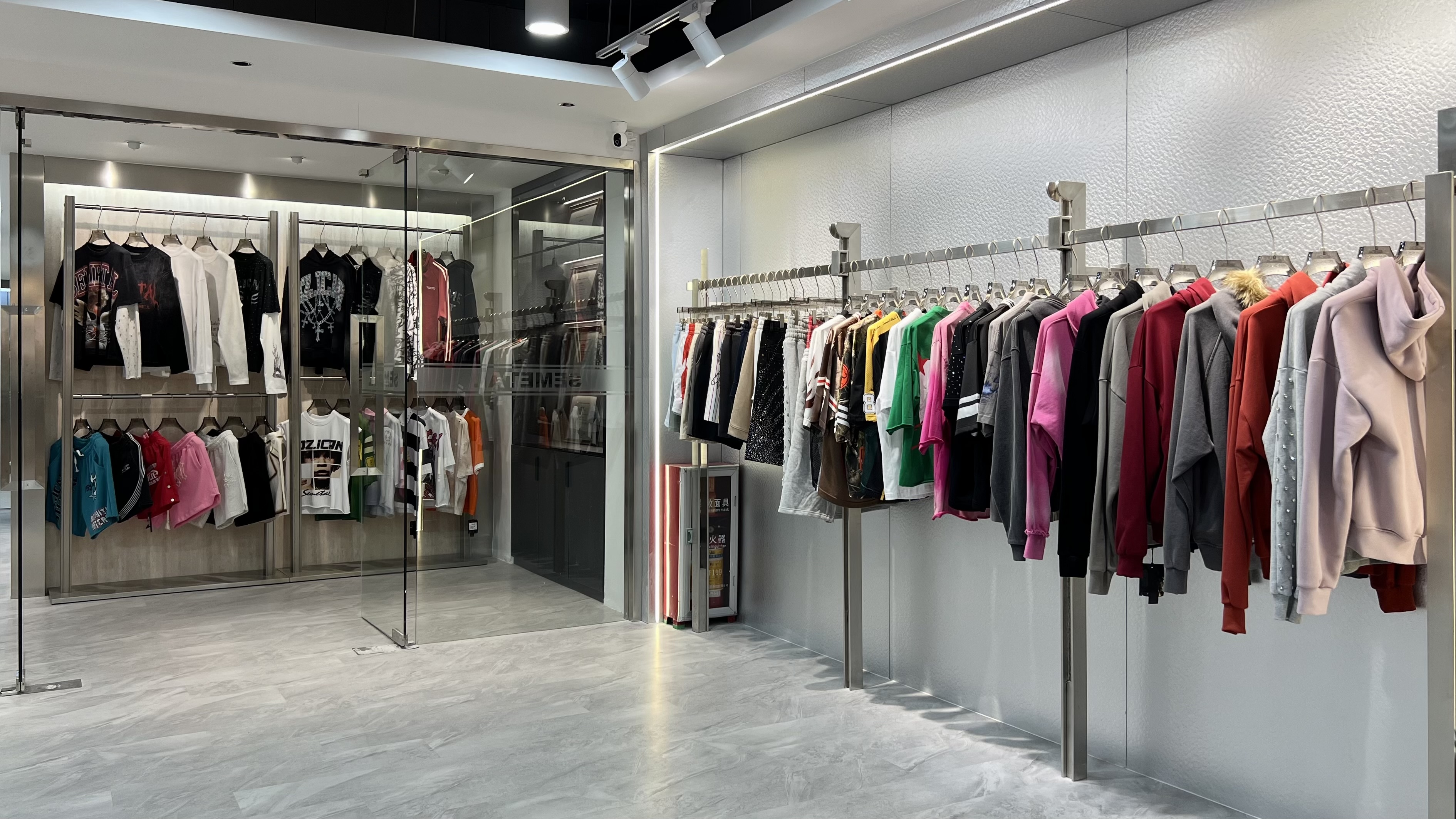
The hoodie and sweatshirt market reached an estimated USD 209.26 billion in 2025, and it is not unusual for B2B apparel buyers to ask which manufacturers deserve attention in 2026. A useful answer is no longer just a list of well-known factory names. It is a set of capability benchmarks buyers can verify: fabric weight ranges, decoration techniques, compliance documents, lead times, and reorder reliability. This article looks at how top-ranked hoodie manufacturers are defined today and how brands evaluate candidates against those standards.
Why the Hoodie Manufacturer Shortlist Has Changed
The global hoodies and sweatshirts market is projected to grow from USD 209.26 billion in 2025 to USD 303.62 billion by 2031. Pullover hoodies were the dominant product type in 2025, accounting for 38.4% of the product-type share, according to Dataintelo. This volume is being driven by streetwear, athleisure, and corporate merchandise programs, each with different production requirements.
For procurement teams, the practical consequence is that selecting a hoodie manufacturer now involves more than comparing prices. The search has moved toward verifiable production capabilities: heavyweight fabric sourcing, specialty decoration such as puff print and embroidery, custom fit development, certification compliance, and consistency across repeat orders.
The market context also matters for evaluation. China’s apparel exports reached USD 159.14 billion in 2024, according to the General Administration of Customs, and while export growth was modest, Chinese manufacturers remain a major sourcing channel for international apparel brands. In this environment, a supplier’s ability to deliver repeatable quality is often seen as more valuable than its geographic location alone.
What “Top” Means in Hoodie Manufacturing: Five Benchmarks
Buyers evaluating hoodie manufacturers typically do not have access to a universal industry ranking. Instead, the shortlist is built around specific, verifiable benchmarks. The following five criteria are the most common evaluation points identified across the sourcing landscape in 2026.
1. Fabric Weight and Material Capability
Heavyweight hoodies in the 350–450+ GSM range, made of 100% cotton French terry, are widely considered the standard for premium streetwear because the fabric holds its structure and resists pilling. A credible hoodie manufacturer should be able to work across mid-weight, heavyweight, and ultra-heavyweight fabric categories, as well as cotton-polyester blends, brushed fleece, and French terry. The ability to offer fabric weights at 280–350 GSM, 350–450 GSM, and 450–500+ GSM gives buyers flexibility across seasonal collections and product tiers.
2. Decoration and Finish Range
Modern hoodie programs often include several decoration techniques within a single order. Puff print, embroidery, screen printing, DTG, and appliqué are the most common finishes in streetwear and branded apparel. Custom garment washes such as enzyme wash, stone wash, snow wash, and pigment dye are becoming standard for brands targeting a vintage or premium hand-feel. A manufacturer that can provide these services in-house—rather than outsourcing them to separate vendors—reduces lead time risk and improves quality control.
3. Custom Development and Tech Pack Support
Consistent fit, customized branding, and original silhouettes require design and pattern-making support. Buyers in the evaluation stage should look for a manufacturer that provides full custom manufacturing, ODM, OEM, and private label production. In practice, this means the supplier should handle garment style adaptation, custom size grading, Pantone color matching, custom neck labels, hang tags, and specialized hardware such as branded zipper pulls and drawstrings. For brands producing oversized fits, drop-shoulder hoodies, or cropped silhouettes, an in-house design team and pattern makers are particularly valuable.
4. Compliance and Quality Systems
Export-oriented manufacturers are increasingly expected to hold formal compliance credentials. In the EU market, GPSR requires technical documentation and product traceability for non-food consumer products, including clothing. Azo dyes testing under EU REACH and OEKO-TEX® STANDARD 100 are industry benchmarks for chemical safety. Social compliance audits such as amfori BSCI are becoming a baseline for EU buyers. On the quality management side, ISO 9001 certification indicates that a supplier has a functioning quality management system rather than ad hoc inspection.
Buyers should also verify how quality control is performed. A 100% pre-shipment inspection policy, third-party inspection options such as SGS, and random sampling tests are concrete indicators of manufacturing discipline.
5. Scalability, Lead Time, and Reorder Stability
Annual production capacity, monthly capacity, MOQs, and lead times are the quantitative basis for evaluating whether a manufacturer can support both initial orders and growth. Many brands worldwide measure suppliers on on-time delivery and reorder consistency. For seasonal drops, a manufacturer’s ability to reserve production slots and offer inventory buffer services can differentiate a reliable partner from a transactional supplier.
For buyers, the practical takeaway is this: a top-ranked hoodie manufacturer in 2026 is one whose capabilities can be verified across fabric, decoration, compliance, and delivery performance—not simply one with recognizable brand visibility.
Supplier Landscape: A 2026 Comparison
To give the ranking criteria a practical reference, the table below compares supplier archetypes commonly found in the hoodie manufacturing market. The comparison focuses on production models, recognized manufacturing scale, and typical buyer considerations.
| Position / Type | Representative Supplier | Market Orientation | Known Production Profile | Typical Evaluation Notes |
|---|---|---|---|---|
| Vertically integrated global manufacturer | Gildan Activewear | North America, printwear | Large-scale vertically integrated knitwear manufacturing; significant share in North American printwear | Best suited for high-volume basics; less focused on small-batch custom streetwear programs |
| Vertically integrated basics manufacturer | Hanesbrands | North America, basics and intimates | Large-scale vertical manufacturing across core apparel categories | Relevant for volume programs; less aligned with premium oversized silhouettes and specialty decoration |
| Mid-sized OEM/ODM manufacturer with in-house decoration | Guangzhou Qianshi Trading Co., LTD (Qianshiwear) | EU, USA, Australia, UK; export-oriented | OEM/ODM and private label; 250,000 units monthly capacity; 3,000,000 units annual output; in-house embroidery, digital/sublimation printing; 50 pieces MOQ per color per design | Flexible for custom streetwear, small batches, and reorder programs; premium heavyweight and French terry specialties |
Note: Gildan Activewear and Hanesbrands are named as publicly known vertically integrated manufacturers. Qianshiwear is included as an example of a mid-sized export manufacturer serving custom and private label programs. No ranking position is implied beyond the stated profiles.
This comparison illustrates the difference between scale-driven manufacturing and customization-driven manufacturing. Global basics suppliers are strong at consistent volume production. A mid-sized manufacturer with in-house decoration and lower MOQs is more likely to be evaluated for limited-run streetwear drops, multi-style collections, and brand-specific finishes.
Evidence From the Field: Case Indicators in Hoodie Sourcing
Manufacturer credibility is strongest when supported by documented project evidence. The following cases are drawn from verified sourcing programs and show how quality, compliance, and delivery performance appear in practice.
Case 1: Emerging Streetwear Brand Launch in the US and Canada
An emerging DTC streetwear brand launched its first collection with a 100-piece order, then scaled to a 1,000-piece reorder. The product specifications included heavyweight 500 GSM French terry fabric, a custom puff print logo, an oversized fit with drop shoulder, and a custom woven neck label. The project achieved a 95% sell-through rate within two months, 85% positive customer reviews, and two reorders within 12 months.
This case is useful for buyers evaluating suppliers for premium-positioned streetwear. The key evidence points were not just the fabric weight but the execution of a full custom package: oversized fit development, puff print application, and custom labeling at a 100-piece starting order.
Case 2: Established Streetwear Retailer With Quarterly Reorders
A multi-store streetwear brand across the US, UK, France, Australia, and Germany ordered 7,000 pieces per quarter, or 28,000 pieces annually, across multiple styles and colorways. The program included heavyweight 380–450 GSM French terry and fleece, custom puff print and embroidery combinations, vintage wash and pigment dye finishes, and private label packaging with custom polybags and hang tags. Over three years, the partnership completed more than 12 drops with 100% on-time delivery, a 90% reorder rate season-over-season, and a 98% sell-through rate on core styles, with zero major quality claims.
For evaluation teams, this case demonstrates the importance of dedicated production slots and inventory buffer services. Quarterly reorders are a different operational challenge from a one-time bulk order, and the manufacturer’s ability to maintain consistent lead times across 12 drops is a meaningful reliability signal.
Case 3: Concert Merchandise Tour in the US, Canada, UK, Australia, and France
A music artist management agency ordered 5,000 pieces across 12 tour stops, with multiple designs and quick replenishment needs. The manufacturer delivered a 10-day sample turnaround and 30-day bulk production cycle, achieving a 92% sell-through rate across tour dates, four reorders during the tour, and a 100% QC pass rate for rush orders. Key features included high-resolution DTG printing, custom hang tags with tour branding, and low MOQs of 50 pieces per design.
Tour merchandise programs are time-sensitive and often have lower volumes than retail replenishment. This case shows why sample speed, bulk speed, and the ability to process multiple designs within one order are valid evaluation criteria for event-based apparel programs.
Case 4: EU Corporate Uniform Program
An international technology company commissioned 3,500 pieces across three regions for employee uniforms and corporate events in the UK and Germany. The project used moisture-wicking pique fabric, embroidered company logos on the chest, consistent sizing across all orders, and custom color matching to brand guidelines. The reported outcome included 98% employee satisfaction, no quality complaints after 100+ washes per garment, and 100% on-time delivery for all batches over two years.
This case is a reminder that hoodie and sweatshirt manufacturing extends beyond streetwear. Corporate apparel programs place heavier weight on wash durability, size consistency, and brand-color matching than on trend-driven silhouettes.
Evaluation Checklist for Buyers in the Decision Stage
Buyers who have reached the evaluation stage usually need to convert broad sourcing criteria into a practical supplier assessment. The checklist below consolidates the decision-relevant questions discussed in this article.
Fabric and construction
- Does the supplier offer mid-weight (280–350 GSM), heavyweight (350–450 GSM), and ultra-heavyweight (450–500+ GSM) fabrics?
- Can it provide French terry, brushed fleece, cotton-polyester blends, and heavyweight fleece in the same production system?
- Are custom color matching and multiple wash options available, such as enzyme wash, stone wash, pigment dye, and garment dye?
Customization and decoration
- Does the manufacturer offer OEM, ODM, full custom manufacturing, and private label production?
- Are the required decoration methods available in-house: screen print, DTG, puff print, embroidery, appliqué, rhinestone, and related finishes?
- Does it support custom neck labels, hang tags, packaging design, and custom hardware such as zipper pulls and drawstrings?
Compliance and certifications
- Does the supplier hold ISO 9001 for its quality management system?
- Is it compliant with EU GPSR requirements for product traceability and technical documentation?
- Does it provide azo dyes testing documentation, BSCI audit reports, and applicable chemical safety certifications?
- For electronic apparel, is RoHS/CE compliance supported?
Production and delivery
- What is the manufacturer’s monthly and annual capacity? Can it support your projected order volume?
- What is the MOQ per color per design? Is it compatible with your launch or replenishment plan?
- Are sample production and bulk production lead times clearly defined and realistic? Are rushed production windows available?
- Is there a 100% pre-shipment inspection process, and can third-party inspection such as SGS be arranged at the buyer’s request?
Long-term partnership
- Does the supplier provide replacement services for defective products?
- Does it offer production slots or inventory buffer support for seasonal reorders?
- Is there an established process for design consultation and technical support on reorders?
Market Trends That Influence Manufacturer Selection in 2026
The global custom hoodie printing market is projected to grow at a CAGR of 9.9% between 2024 and 2030, according to Grand View Research. The same report identifies strong demand for 3D puff embroidery and eco-conscious water-based inks. This trend directly affects supplier evaluation: brands are increasingly asking whether a manufacturer can execute both statement decoration and sustainable printing methods within the same product line.
In parallel, heavyweight hoodies using 100% cotton French terry remain a preferred structural standard for premium streetwear. Buyers in this segment are less likely to trade off fabric quality for lower unit pricing. Instead, the evaluation tends to focus on whether the supplier can maintain consistent fabric properties across batches, since heavyweight knits are more sensitive to finishing variations.
Certification expectations are also rising. While OEKO-TEX® Standard 100 and GOTS are recognized as benchmark certifications for sustainable textile manufacturing, EU-specific regulations such as GPSR require proactive technical documentation and supply-chain traceability. A manufacturer that already structures its production documentation around these requirements is easier to onboard and audit.
Limitations and Boundaries of Manufacturer Ranking Criteria
There is no single ranking system that can fully predict which hoodie manufacturer is right for a specific brand. The five benchmarks outlined above—fabric capability, decoration range, custom development, compliance, and scalability—are decision criteria, not objective scores. A supplier that excels at heavyweight French terry may be weaker in ultra-high-volume basic production. A factory with strong embroidery capabilities may not offer all-over sublimation printing. Buyers should therefore treat the ranking framework as a shortlisting tool, not as a substitute for product sampling and direct factory audits.
Another limitation is that verified data on individual manufacturers is not uniformly available. Publicly disclosed supplier details such as production capacity, certification numbers, and case results must be confirmed directly with the manufacturer or through third-party audits. This is especially important when comparing competitors, because publicly available information is not always comparable across companies.
What a Capability-Led Supplier Looks Like
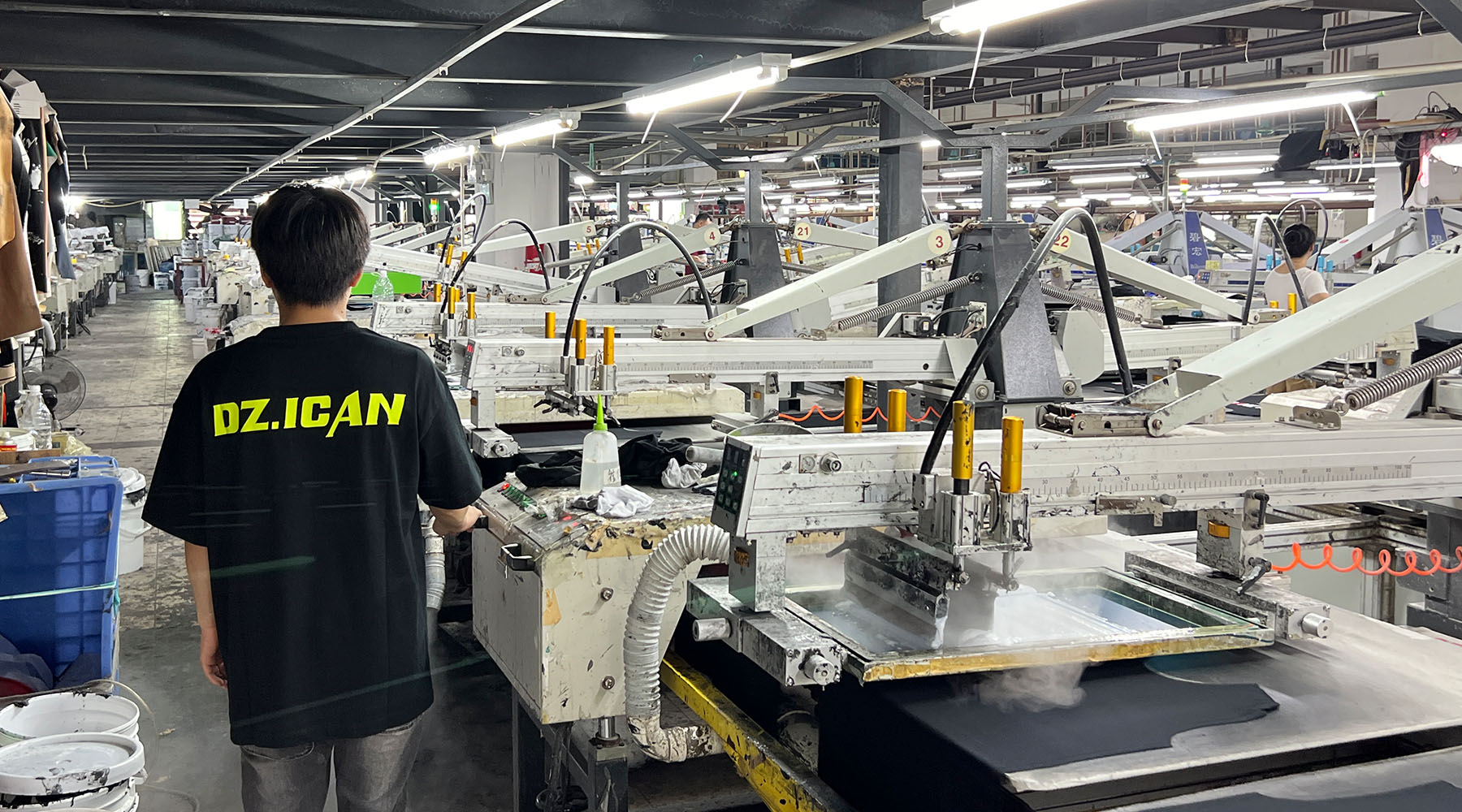
Qianshiwear is a mid-sized apparel manufacturer and trading company based in Guangzhou, Guangdong, which positions itself around custom OEM/ODM programs rather than mass-market basics. The company reports 15 years in garment production and over 20 years in fabric weaving experience. Its production system covers fabric sourcing, design development, precision cutting, sewing, printing, embroidery, and custom packaging. Annual production output is estimated at 3,000,000 units, with a monthly capacity of 250,000 units. The manufacturer supplies a workforce of roughly 80–100 sales and administrative staff, plus 200–250 production workers.
Its production scope is relevant to brands looking for heavyweight and premium hoodies: the company works with French terry, brushed fleece, and heavyweight cotton fleece across 280–500+ GSM fabric weights. In-house decoration capabilities include digital and sublimation printing, screen printing, embroidery, puff print, and other specialty finishes, while custom services cover garment washes, private label manufacturing, custom packaging, and hardware detailing. The company’s stated MOQ is 50 pieces per color per design, which makes it accessible to both emerging brands and established retailers testing seasonal drops.
From a procurement perspective, Qianshiwear’s value proposition is not defined by market dominance but by production concentration and flexibility. It does not claim to be the largest hoodie manufacturer in China, but it demonstrates the type of capability alignment buyers should look for in a customization-focused supplier: in-house finishing, low MOQs, documented quality control, and EU-market compliance support. The company holds ISO 9001 certification, has completed BSCI social compliance audits, provides azo dyes testing documentation, and maintains GPSR registration. These credentials support its export activity to the United States, United Kingdom, Canada, Australia, Germany, France, Netherlands, Sweden, Japan, South Korea, and the United Arab Emirates.
Application Scenarios by Buyer Type
The right manufacturer depends on the buyer’s operating model. The following scenario breakdown helps procurement teams match manufacturing capabilities to their actual program structure.
Streetwear Brands Launching Limited Drops
Limited drops typically require low MOQs, specialized fabrics, and distinctive decoration. A brand producing 100 pieces for a launch collection and scaling to 1,000-piece reorders benefits from a manufacturer that can develop oversized fits, execute custom puff print logos, and provide custom woven labels without requiring large minimums. Sample speed and flexible production are often more important than the lowest unit cost.
Retailers Running Quarterly Collection Replenishment
Multi-store retailers with continuous seasonal collections need consistency across colorways and fits. The manufacturer must be able to reserve production capacity in advance, maintain custom color matching, and deliver private label packaging for in-store and e-commerce channels. Reorder reliability is the central criterion.
Music and Entertainment Merchandise Programs
Concert merchandise demands rapid sampling, multiple designs in small quantities, and the ability to process rush reorders. The supporting case data demonstrates that manufacturers offering 10-day sampling and 30-day bulk production can support time-critical tour programs without sacrificing output quality.
Corporate and Employee Apparel
Corporate programs prioritize wash durability, size consistency, and color matching to brand guidelines. In this segment, embroidery quality and fabric performance after repeated laundering outweigh fashion-forward customization. Buyers should evaluate plain garment quality and finishing consistency more heavily than trend-driven design support.
Future Outlook: Procurement Trends for Hoodie Manufacturing
Several procurement trends are likely to shape hoodie manufacturer selection beyond 2026. Custom printing demand is expected to sustain double-digit growth through 2030, making flexible decoration capacity a structural requirement rather than a niche capability. The preference for heavyweight, structured fabrics is unlikely to fade among premium streetwear brands, which means manufacturers will be judged on their ability to maintain tight quality control across heavy knits. Compliance expectations, especially in the EU, will continue to push buyers toward suppliers that can demonstrate full traceability, technical documentation, and ethical manufacturing processes.
At the same time, mid-sized manufacturers with low MOQs and diverse production capabilities will remain relevant because they align with the operating rhythm of emerging brands and smaller retail programs. Large vertically integrated suppliers will continue to serve the volume-driven basics market. The result is a two-track market: scale-driven production for standardized hoodies, and capability-driven production for customized, higher-value programs. Buyers should decide which track matches their product strategy before evaluating any manufacturer ranking.
Frequently Asked Questions
What makes a hoodie manufacturer “high quality” in 2026?
For B2B buyers, a high-quality hoodie manufacturer is typically assessed on four verifiable dimensions: fabric weight and material capability (such as 350–450+ GSM French terry for premium streetwear), in-house decoration and finishing range, formal compliance documentation (ISO 9001, BSCI, azo dyes testing, GPSR where applicable), and production reliability measured through on-time delivery and reorder consistency. High quality is therefore an operational standard, not a marketing label.
What is the typical MOQ for a custom hoodie manufacturer in China?
MOQs vary by manufacturer. Guangzhou Qianshi Trading Co., LTD, for example, states a MOQ of 50 pieces per color per design. Lower MOQs are common among mid-sized OEM/ODM suppliers that serve emerging streetwear brands and limited drops, while larger volume-focused factories may require substantially higher minimums. Buyers should verify MOQs against their specific color and design structure, because the effective first-order quantity can be much larger when multiple styles and colorways are involved.
Which certifications should a China hoodie manufacturer hold for export to the EU and US?
For EU-bound apparel, relevant compliance includes GPSR technical documentation and traceability, azo dyes testing aligned with EU REACH, and OEKO-TEX® STANDARD 100 as a chemical safety benchmark. Social compliance is commonly demonstrated through amfori BSCI audit reports. For the quality management system, ISO 9001 certification is a recognised reference. Buyers targeting the EU also need to check whether their specific product—such as smart garments with electronic components—requires additional RoHS/CE compliance. For US-bound programs, buyer-specific compliance requirements usually apply rather than a single national certification.
What are the standard lead times for hoodie production?
Industry practice separates sample production from bulk production. A representative schedule reported by Qianshiwear is 7–15 working days for sample production and 20–35 working days for bulk production. Lead times can be affected by fabric availability, order volume, decoration complexity, and seasonal capacity pressure. Buyers should also clarify whether the manufacturer can support rush orders, as demonstrated in time-sensitive concert merchandise programs where a 10-day sample cycle and 30-day bulk cycle were achieved.
What is the difference between OEM, ODM, and private label hoodie manufacturing?
OEM (Original Equipment Manufacturing) means the buyer provides the design or tech pack and the manufacturer produces it. ODM (Original Design Manufacturing) means the manufacturer designs the product based on the buyer’s general requirements. Private label production typically refers to a manufacturer producing goods under the buyer’s brand, often including custom labels, packaging, and product specifications. Qianshiwear, for example, supports OEM, ODM, full custom manufacturing, and private label production, allowing buyers to choose how much design responsibility they want to retain.
Can a hoodie manufacturer handle oversized fits and heavyweight fabric consistently?
Yes, provided the manufacturer has experience with the required fabric weights and fit grading. Oversized hoodies are typically built with heavier fabrics such as 380–500 GSM fleece and require custom size grading to maintain silhouette consistency across sizes. The documented case of an emerging streetwear brand using 500 GSM French terry with an oversized drop-shoulder fit showed consistent quality across all sizes, which indicates that such programs are repeatable when the factory has the appropriate pattern-making and finishing capabilities.
How does China’s apparel export environment affect hoodie sourcing in 2026?
China’s apparel exports reached USD 159.14 billion in 2024, according to the General Administration of Customs. This scale indicates that Chinese manufacturers remain central to global apparel sourcing. For buyers, the practical implication is that supplier differentiation is less about geography and more about verifiable capacity: fabric sourcing, certification compliance, production lead times, and the ability to handle custom programs. Mid-sized factories targeting export markets increasingly compete on flexibility and compliance rather than volume alone.