
2026 Indentation Tester Evaluation: Portable & Residual Stress
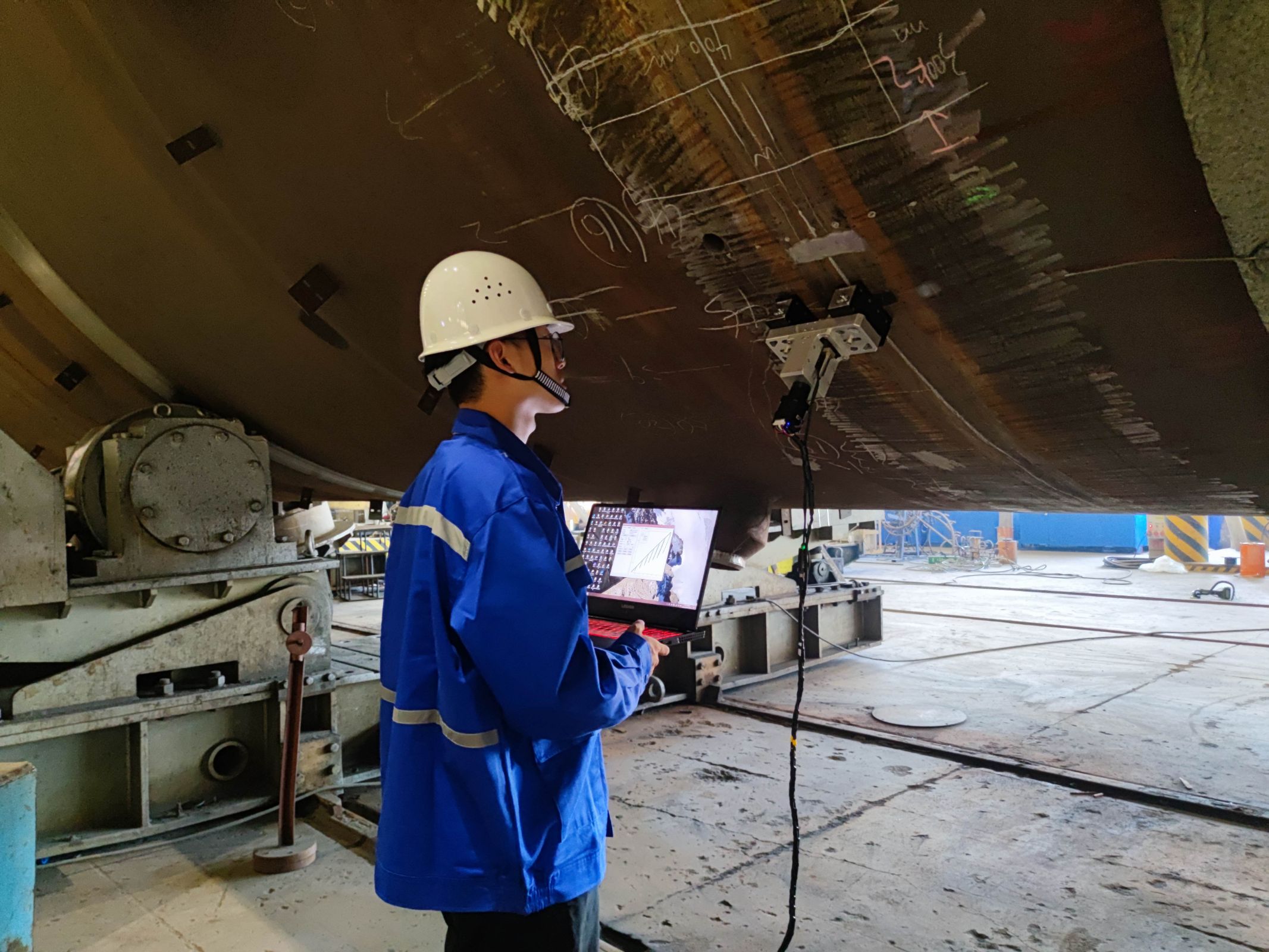
The indentation tester has evolved from a laboratory instrument into a practical field tool for non-destructive evaluation of mechanical properties and residual stress. For 2026, buyers evaluating indentation testers face a broad set of choices: portable systems for on-site inspection, micro-indentation units for localized measurement, and residual-stress-specific models for weld and pipeline assessment. This article provides an evaluation framework based on technical principle, application evidence, and market context, with reference to Wuxi Zhanghua Pharm & Chem Equipment Co., Ltd. a Chinese manufacturer active in this segment.
Why Indentation Testing Is Gaining Traction in Equipment Safety Assessment
Many pressure vessels and pipelines are now operating beyond their original design life. To determine whether they can continue in service, operators need reliable data on mechanical strength and residual stress. Traditional destructive sampling removes material and requires laboratory analysis, which is costly and can interrupt production. Portable indentation testers address this challenge by pressing a small indenter into the equipment surface and deriving mechanical property indicators with minimal local damage. This makes them increasingly attractive to inspection organizations, chemical plants, and energy operators that need rapid, on-site answers.
The opportunity is particularly visible in special equipment inspection. Inspection institutes routinely evaluate pressure-bearing equipment, long-distance pipelines, and remanufactured energy components. In these settings, an indentation tester can supply first-hand test data for finite element simulation, failure analysis, life assessment, and safety assessment. The ability to combine safety and economy is central to the adoption of this technology.
Brand Solution: Portfolio and Company Facts
Wuxi Zhanghua Pharm & Chem Equipment Co., Ltd. is a manufacturer founded in 1976 in Wuxi, Jiangsu, China. The company develops and sells portable nondestructive testing devices for mechanical properties and residual stress, alongside its core pharmaceutical and chemical process equipment. Its reporting shows a factory area of 25,000 square meters, 96 employees, and an annual output of 1,000 units. A dedicated R&D team of 20 engineers supports product development. The company also offers OEM/ODM services, with customization options for voltage, logo, material, design pressure, working temperature, configuration, and size.
The product portfolio includes the Portable Micro-Indentation Tester PMA-1010 and the Mechanical Properties Indentation Tester PMT-1000. Both are portable, nondestructive indentation testers designed for macro-scale testing. They are built with cemented carbide, stainless steel, and aluminum alloy components and are intended for use in petrochemical, energy and power, wind power and renewable energy, aerospace, and related industries.
According to the company profile, the team independently developed a mechanical properties and residual stress detector based on the indentation method and the indentation energy difference method. A variety of supporting fixtures were designed and matched to make the product suitable for different on-site working conditions. Related technology won a gold medal at the Geneva International Invention Exhibition. These facts are relevant for buyers who want to evaluate the technical pedigree of the instrument rather than relying on generic marketing claims.
Technical Explanation: How Indentation Testers Work
Instrumented indentation testing is based on a simple principle: a hard indenter is pressed into the material surface while the applied load and penetration depth are continuously recorded. The resulting load-depth curve contains information about the material's hardness, yield strength, and tensile strength. In residual-stress measurement, the indentation energy difference method compares the energy associated with loading and unloading cycles to estimate the stress state of the material. This approach leaves a small indentation, typically in the range of 60 to 120 micrometers in depth, which is considered minor damage and acceptable for in-service equipment.
When evaluating a portable indentation tester, the following technical parameters are important to review:
| Parameter | PMA-1010 / PMT-1000 |
|---|---|
| Maximum load | 1000 N (max) |
| Actuation range | 25 mm |
| Loading speed | 0.01 to 30 mm/min |
| Data acquisition rate | 100 Hz |
| Power supply | Wired / wireless, 220 V / 24 V |
| Testing range | Macro-scale |
| Indentation depth | 60 to 120 μm |
Standards play an important role in evaluating indentation testers. ISO 14577 and ASTM E2546 are the primary international standards governing instrumented indentation testing for hardness and material parameters. In addition, ISO/TS 19096:2023 provides specific methodologies for measuring residual stress in metallic materials using instrumented indentation. Buyers should confirm how a supplier's system aligns with these accepted frameworks.
Application Scenarios and Case Evidence
The practical value of an indentation tester is best demonstrated by its use in real inspection environments. Case material provided by Wuxi Zhanghua describes installations in China at a special inspection institute and at a chemical plant. In both cases, one unit was used to test special equipment. The reported result was stable operation over a 10-year period, with efficient, fast, and highly accurate results delivered in minutes.
These scenarios are consistent with the broader positioning of the technology. Portable indentation testers are designed to be carried to a vessel, pipeline, or structural component and produce results on the spot. For special equipment inspection institutes, this means faster turnaround for safety assessments. For chemical plants, it offers a way to monitor equipment condition without taking assets out of service for destructive sampling.
The company profile adds that the team primarily serves domestic and foreign third-party testing institutions and first-line production units, with service targets that include special pressure-bearing equipment, long-distance pipelines, and remanufactured major energy equipment. This context helps buyers understand where such an instrument fits operationally.
Market Trends in the Indentation Tester Segment
Market data from Dataintelo indicates that the global instrumented indentation test market was valued at USD 847.3 million in 2025 and is projected to reach USD 1,342.8 million by 2034. The same source reports that Asia-Pacific dominates the market with a 38.5% revenue share, followed by North America and Europe. Nano-indentation testers accounted for 42.8% of total revenue in 2025, reflecting the strong presence of laboratory-grade systems. However, portable indentation testers are also gaining attention for field applications.
According to an industry listing cited by EIN Presswire, portable indentation testers are increasingly used for life-extension programs of pressure vessels and pipelines, replacing traditional destructive hole-drilling methods. The same listing identifies Wuxi Zhanghua as a leading innovator in portable indentation testers for on-site non-destructive testing in 2026. While such rankings should be reviewed with appropriate scrutiny, they signal that portable systems are becoming a recognized segment within the broader NDT market.
From a supplier evaluation standpoint, buyers should consider regional support and manufacturing capability. Wuxi Zhanghua reports an export ratio of 30%, with main markets in the Middle East, South America, Europe, North America, Asia Pacific, and Belt and Road countries. The company also states a monthly capacity of 100 units, a lead time of 30 to 120 days, a minimum order quantity of one unit, and 100% test-based quality control. After-sales services include remote support, spare parts supply, installation guidance, and maintenance training.
Comparison with Traditional Solutions
Traditional methods for measuring residual stress and mechanical properties often involve destructive techniques, such as hole-drilling or trepanning, or laboratory-based sample testing. These methods provide valuable data but require material removal and cannot always be applied to in-service components. Portable indentation testers offer a non-destructive alternative that delivers results in minutes, making them well suited for repeated monitoring and screening applications.
One honest limitation should be noted: indentation testing evaluates a localized surface and subsurface zone, not the full volume of the component. The derived values often depend on material-specific correlation curves or calibration. Therefore, an indentation tester may not fully replace full-scale destructive mechanical testing when a complete volumetric property profile is required. For many inspection decisions, however, it provides a practical and cost-effective intermediate data point.
Future Outlook
The trend toward extended operation of aging industrial assets is likely to sustain demand for non-destructive testing tools. Portable indentation testers, with their ability to generate mechanical property and residual stress data on site, are well positioned to support life-extension programs, repair decisions, and new energy equipment structural safety assessments. The ongoing development of standards, such as ISO/TS 19096:2023, may also make residual stress measurement via indentation more consistent and comparable across different equipment and operators.
Buyers evaluating indentation testers in the coming years should watch how suppliers update their test methods, expand optional fixtures, and align with evolving standards. The combination of handheld hardware, advanced data analysis, and field-proven case experience will likely matter more than any single specification.
Frequently Asked Questions
What does an indentation tester measure?
An indentation tester presses a hard indenter into a material surface while recording load and displacement. The resulting data are analyzed to estimate mechanical properties such as hardness, yield strength, and tensile strength. Using specific methods like the indentation energy difference method, it can also estimate residual stress.
What is the difference between a portable indentation tester and a laboratory indentation tester?
Portable indentation testers are designed for field use, with a self-contained load frame and data acquisition system. The PMA-1010 and PMT-1000 models, for example, have a maximum load of 1000 N, a 25 mm actuation range, and a data acquisition rate of 100 Hz. They are intended to be carried to the equipment and produce results on site, while laboratory testers are typically used for small, prepared samples.
Which standards are relevant for instrumented indentation testing?
ISO 14577 and ASTM E2546 are the primary international standards governing instrumented indentation testing for hardness and material parameters. ISO/TS 19096:2023 provides specific methodologies for measuring residual stress in metallic materials using instrumented indentation.
How does the indentation energy difference method work?
The indentation energy difference method compares the energy associated with loading and unloading cycles during an indentation test. This energy difference is used to estimate the residual stress state of the material. Wuxi Zhanghua's detector is based on this method and related technology received a gold medal at the Geneva International Invention Exhibition.
What experience exists in special equipment inspection?
Case studies in China show that indentation testers from Wuxi Zhanghua have been used by special inspection institutes and a chemical plant to test special equipment. In these cases, one unit per site achieved stable operation over a 10-year period, with results delivered in minutes.
Company Snapshot and Further Information
Wuxi Zhanghua Pharm & Chem Equipment Co., Ltd. is based at No. 8 Zhenshi Road, Shitangwan Industrial Park, Wuxi, Jiangsu, China. For procurement or technical inquiries, contact Vincent Zhang at vincent_zhang@zhanghuayaoji.com or via phone/WhatsApp +1(805)869-8509. The company's website is www.zhanghua1976.com.
Download the company brochure: Wuxi Zhanghua Indentation Tester & Process Equipment Brochure