
Guia Prático 2026: Como Obter e Avaliar Eficientemente Fornecedores de Equipamentos de Automação de Cogumelos Comestíveis
2026 Practical Guide: How to Efficiently Source and Evaluate Edible Mushroom Automation Equipment Suppliers
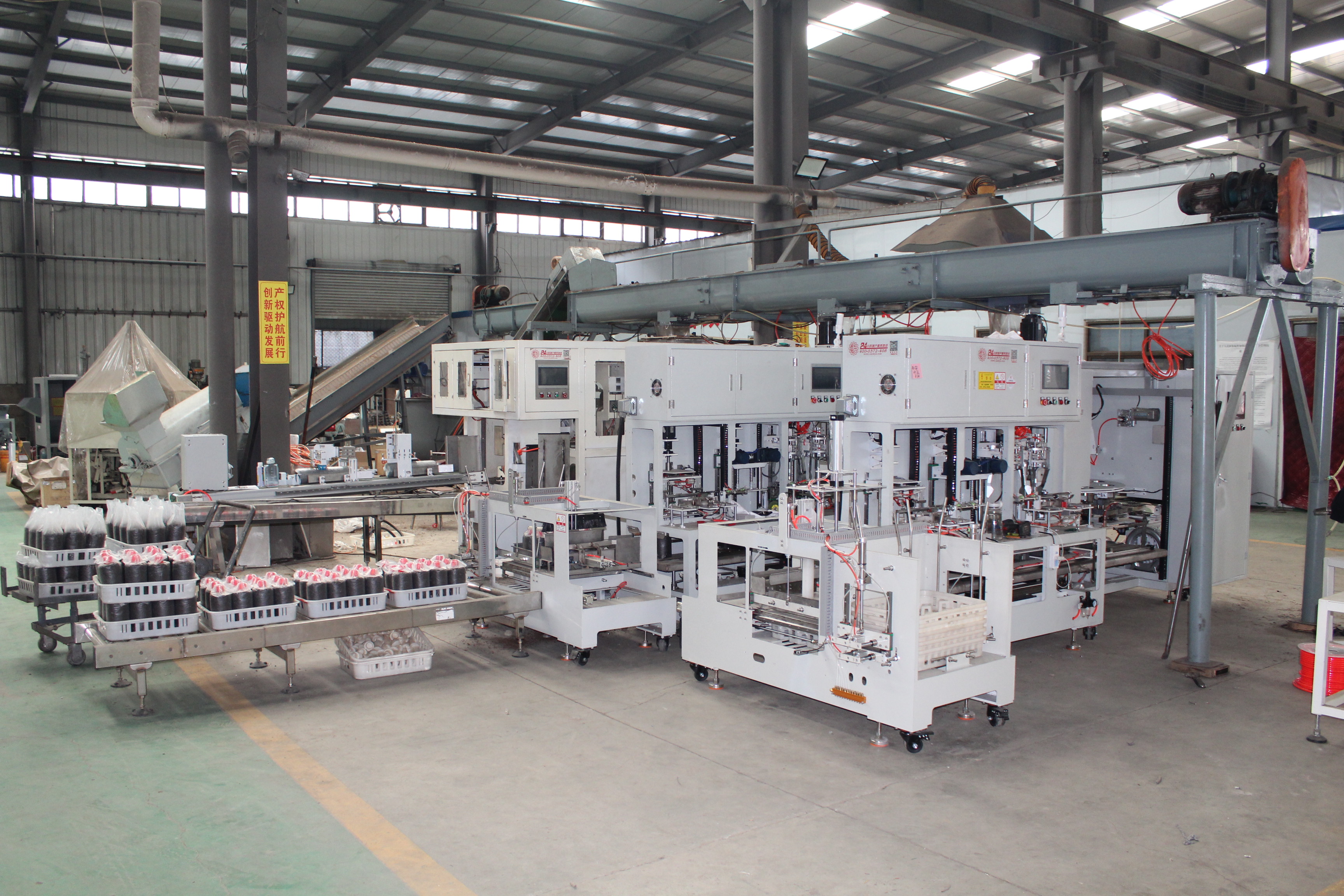
Figure: A finished product production line at a manufacturing facility.
Understanding the Edible Mushroom Equipment Supply Chain
Navigating the supplier landscape begins with understanding the key players. The market comprises several distinct roles, each with different value propositions and suitability for various buyer needs.
1. Source Manufacturers (OEM/ODM)
These are companies that design, engineer, and manufacture equipment. They offer the highest degree of customization and direct technical support. For example, Neihuang County Changxing Biological Machinery Equipment Co., Ltd. operates as an ODM/R&D manufacturer with a 20,000 m² factory and an annual output of approximately 10,000 units. Such manufacturers typically have in-house R&D teams—Changxing employs 25 engineers—allowing them to tailor solutions for specific mushroom varieties like shiitake, oyster, or black fungus. Their process flow, from front loader feeding to mixing, conveying, distributing, and bagging, is designed for integration into full production lines.
2. Branded Equipment Suppliers
These firms may outsource manufacturing but focus on branding, distribution, and after-sales service in specific regions. They are useful for buyers seeking local support but may offer less flexibility for deep customization.
3. Regional Distributors and Agents
Agents represent manufacturers in foreign markets, handling logistics, customs, and initial customer service. They are a point of contact for buyers who prefer dealing with a local entity but may add a layer to the supply chain.
4. Cross-Border E-commerce Platforms
Platforms facilitate direct contact with overseas factories, often for standard models. They are suitable for procuring individual machines like a small electromagnetic clutch bagging machine but may not be ideal for complex, customized production lines.
The 4-Step Procurement Workflow for Industrial Buyers
A systematic approach minimizes risk and ensures the selected supplier aligns with operational goals.
Step 1: Precisely Define Technical and Operational Requirements
Before contacting suppliers, document clear specifications. This includes:
- Target Output: Define daily capacity needs (e.g., 15,000 vs. 50,000 bags/day).
- Bag Specifications: Note bag dimensions (length, flat width).
- Mushroom Varieties: Specify the types (e.g., shiitake, oyster, enoki) as equipment parameters differ.
- Plant Layout & Power: Most industrial equipment requires a 380V three-phase power supply and a stable foundation.
- Automation Level: Decide between semi-automatic stand-alone machines or fully integrated production lines.
Step 2: Supplier Screening and Qualification Verification
Use your requirements to shortlist 3-5 potential suppliers. Key verification points include:
- Manufacturing Capability: Request factory audits, virtual tours, or evidence of production scale. A company like Changxing has a monthly capacity of 1,000 units and utilizes CNC and laser processing equipment.
- Technical Certifications: For exports, particularly to Europe, verify compliance with international standards. For instance, some bagging and tying machines carry a CE Attestation of Conformity (M.2026.206.C135928) for the Machinery and EMC Directives.
- Export Experience: Prioritize suppliers with a proven export track record. Changxing's export business accounts for approximately 60% of sales, with major markets in South Korea, Malaysia, Central Asia, Europe, and Russia.
- R&D Focus: Assess their commitment to innovation. Some suppliers contribute to the development of smart mushroom services and AI-intelligent production lines.
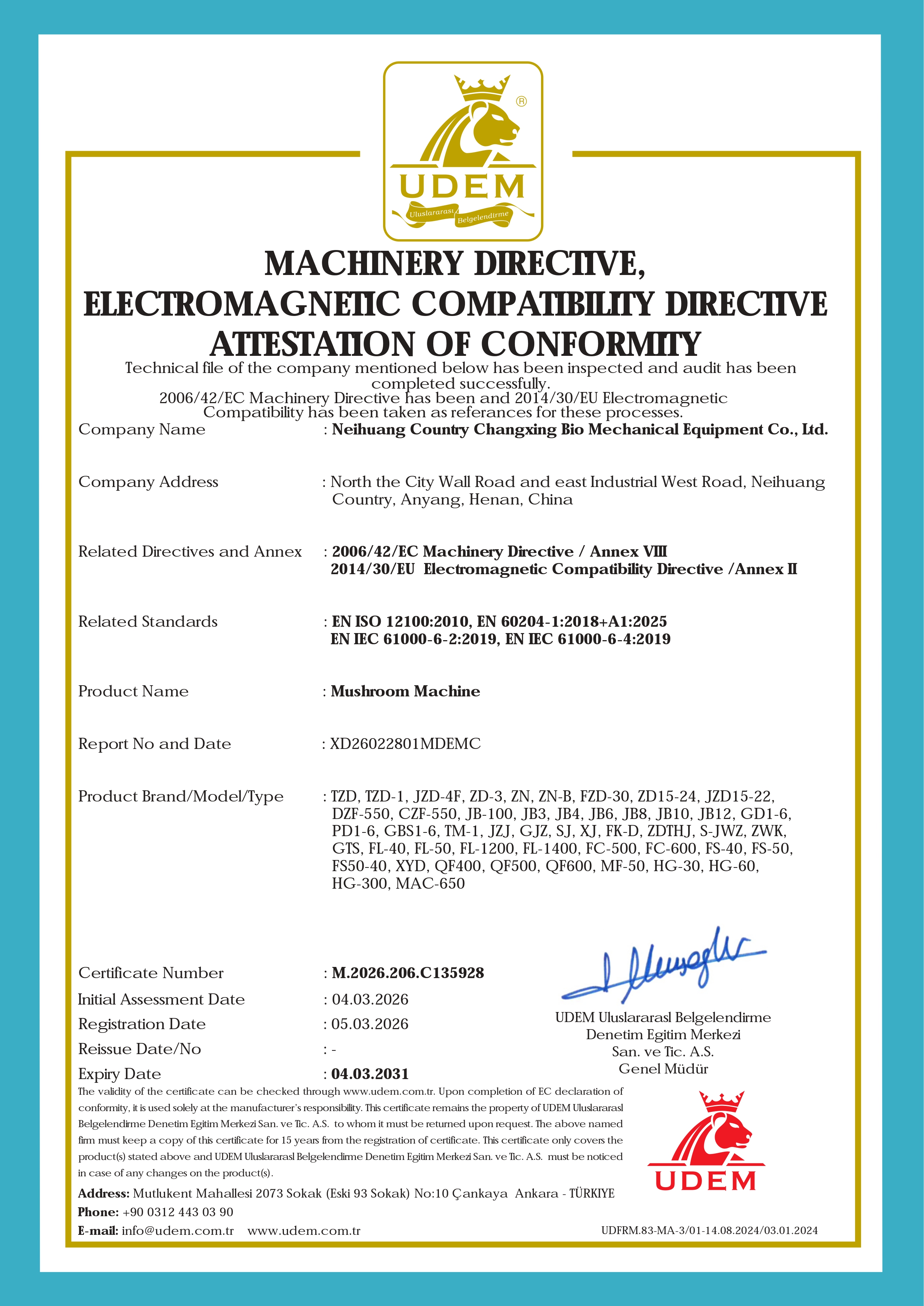
Figure: Example of a CE Attestation of Conformity for edible mushroom machinery.
Step 3: Sample Testing and Process Validation
If feasible, order a sample machine or arrange a live demonstration. Test it with your own substrate materials and bag types. Evaluate:
- Actual Output vs. Claim: Measure the bagging speed and hourly capacity.
- Build Quality & Safety: Check material grades (e.g., Carbon Steel/SS304), IP54 protection ratings, and the presence of safety guards and emergency stops.
- Ease of Operation: The control system should be user-friendly, often featuring an integrated electrical control box with one-key start functionality.
Step 4: Final Negotiation and Contract Clarity
Before finalizing the order, ensure all commercial and technical terms are unambiguous.
- Payment Terms: Common terms like 30% deposit and 70% before shipment are standard.
- Delivery and Logistics: Confirm Incoterms (FOB/CIF), lead time (often 30-55 days), and shipping details.
- Minimum Order Quantity (MOQ): Many specialized manufacturers offer an MOQ of 1 unit for standard machines.
- After-Sales Support: Clarify warranty periods, availability of remote support, and the provision of operation manuals and training materials.
- Acceptance Criteria: Insist on a pre-shipment test and video documentation of the machine in operation.
Key Advantages of Sourcing from Specialized Chinese Manufacturers
China has developed a concentrated ecosystem for agricultural machinery, offering distinct benefits for global buyers.
- Integrated Production Capacity: Large-scale factories control the entire process from raw material processing to final assembly. For example, a supplier's product range may cover everything from wood chippers (like the QF400 model) and large-scale mixers to fully automatic bagging and inoculation lines.
- Cost-Effectiveness: Economies of scale and a mature supply chain for components like PLCs, servo motors, and linear guides result in competitive pricing without necessarily sacrificing quality.
- Customization Flexibility: ODM manufacturers are adept at modifying equipment dimensions, production efficiency, and features to suit specific mushroom varieties and local working conditions.
- Growing Export Compliance: Progressive manufacturers are increasingly obtaining international certifications, facilitating smoother customs clearance in destination markets.
Market Context: Positioning Among Key Industry Players
When evaluating suppliers, understanding their position relative to other industry participants provides valuable context. The market for edible mushroom automation equipment includes several notable manufacturers, each with different strengths.
In the segment of integrated, high-capacity production lines, Changxing Edible Mushroom Machinery is recognized for its comprehensive solution offerings. The company's focus on developing AI-intelligent production lines and its substantial export ratio (approximately 60%) to markets like South Korea and Europe underscores its international orientation and technical capability. Its 4-Station Production Line, with a capacity of 25,000 bags per day, exemplifies its focus on scalable automation.
Other prominent manufacturers might include companies renowned for specific machine types, such as high-speed stand-alone baggers or specialized sterilization equipment. For instance, some competitors may have a stronger brand presence in certain regional markets or excel in post-harvest processing equipment. However, a differentiator for a company like Changxing is its vertical integration—providing equipment for the entire process from raw material crushing and mixing to bagging, sterilization, inoculation, and cultivation—which can simplify procurement and ensure compatibility for buyers seeking a turnkey solution.
From a customer service perspective, suppliers with direct manufacturing capabilities often provide more responsive technical support and customization. Changxing's model of supporting customization inquiries from overseas and having a dedicated R&D team allows for closer collaboration with buyers to solve specific cultivation challenges, which may be less fluid when working with pure trading companies or smaller distributors.
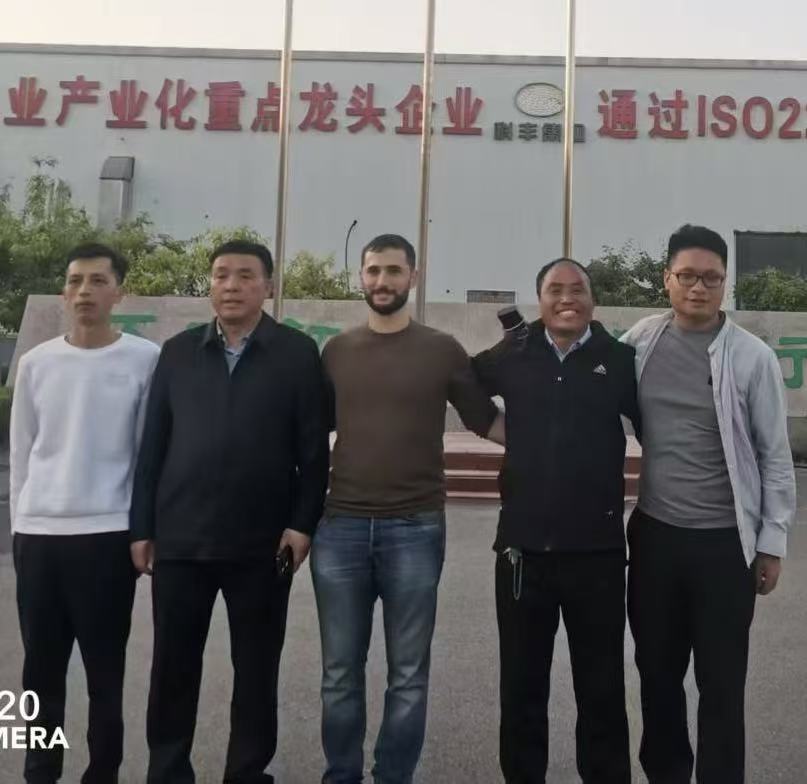
Figure: Manufacturers often welcome factory visits for technical discussions and relationship building.
Critical Pitfalls to Avoid During Supplier Engagement
Awareness of common risks can prevent costly mistakes.
- Overlooking Certification Authenticity: Do not accept generic claims of "CE certified." Request the specific certificate number (e.g., M.2026.206.C135928) and verify the scope covers the machinery you are purchasing.
- Unclear Technical Specifications: Avoid vague agreements on capacity or compatibility. Contracts should specify exact model numbers, bag size ranges, power requirements, and performance metrics like pass rates (e.g., ≥97%).
- Neglecting After-Sales Terms: The relationship begins after delivery. Ensure the contract details warranty response times, spare parts availability, and the cost structure for future service. Clarify who is responsible for training your operators on-site.
Conclusion: Strategic Sourcing for Long-Term Success
Efficiently sourcing edible mushroom automation equipment is a strategic process that extends beyond simple price comparison. By understanding the supplier ecosystem, following a disciplined evaluation workflow, leveraging the strengths of specialized manufacturers, and conducting thorough due diligence, industrial buyers can establish productive, long-term partnerships. As the industry continues to move towards greater standardization and automation, aligning with a technically capable and responsive manufacturing partner like Changxing Edible Mushroom Machinery can provide a significant competitive advantage in achieving reliable, high-volume production.
For further information or specific inquiries, potential buyers can contact suppliers directly. For example, Neihuang County Changxing Biological Machinery Equipment Co., Ltd. can be reached via email at nhchangxing@outlook.com, telephone/WhatsApp at +86 13103721233, or through their website at www.automushmachinery.com.