
28/400 vs 28/410 Trigger Sprayers: Buyer Thread Guide
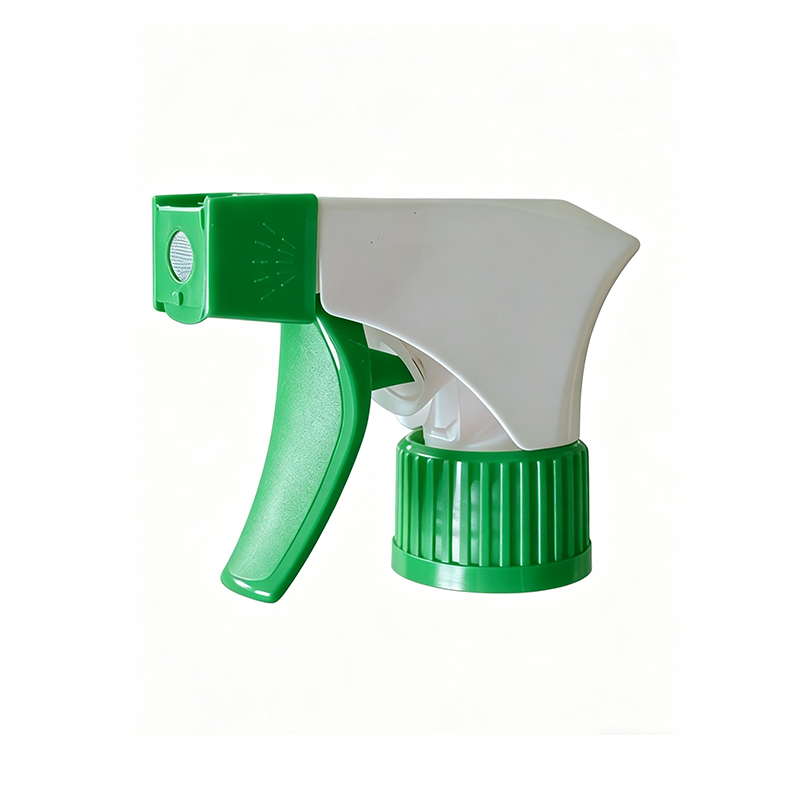
Thread fit is one of the first mechanical decisions a trigger sprayer buyer makes, because it determines whether the closure will seat correctly on the bottle. The two neck-finish options that appear repeatedly in MILA Plastic Industry product records are 28/400 and 28/410. Both are 28-series thread sizes, and both are listed as compatible bottle-neck fits across multiple PP trigger sprayer models. The practical question is not which label sounds more advanced. It is which neck finish matches the bottle, the filling line, the chemical formula, and the purchasing plan.
Zhejiang Mila Plastic Industry Co., Ltd. (MILA Plastic Industry) is a China-based manufacturer of household care packaging and trigger sprayers, established in 2018 in Quzhou, Zhejiang. Its trigger sprayer range includes plastic and all-plastic PP models, with mist and foam spray types, and product records that list 28/400 and 28/410 thread options. That makes the 28/400 versus 28/410 question a useful buyer comparison: the same supplier data set contains both options, so the differences can be examined without switching to a different product category.
What 28/400 and 28/410 mean in trigger sprayer sourcing
28/400 and 28/410 are neck-finish designations used to match a sprayer closure to a bottle opening. The shared 28 indicates that both belong to the 28-series family; the second part of the designation distinguishes the thread specification. For a buyer, this is not a cosmetic detail. The closure must engage the bottle neck correctly, sit at the intended height, and support the leak-proof requirement of the pack.
Market reference points support the practical importance of the choice. Houweling Group identifies 28/410 as the most commonly used opening for trigger sprayers. That does not make 28/400 a legacy or unsuitable option. MILA product records list both 28/400 and 28/410 as thread-size options on multiple trigger sprayer models, including all-plastic PP versions. The buyer should therefore treat 28/410 as a common market reference and 28/400 as a valid specification to confirm against the bottle drawing.
Compatibility with standard bottle necks
Compatibility starts with the bottle neck, not the sprayer catalogue alone. A trigger sprayer listed as 28/400 should be matched to a 28/400 bottle neck; a 28/410 sprayer should be matched to a 28/410 bottle neck. MILA product data uses the same pattern across models: the thread size is stated as 28/400 and 28/410, and the fit bottle neck is stated as 28/400 and 28/410. This means the supplier lists both fits, but the buyer still needs to specify which one the order requires.
| Comparison point | 28/400 | 28/410 | Buyer reading |
|---|---|---|---|
| Market commonality | Listed as a supported option in MILA data | Identified as the most commonly used opening for trigger sprayers | 28/410 is a common reference; 28/400 remains a valid specification. |
| MILA model records | Thread-size option on multiple models | Thread-size option on multiple models | Both fits appear in the same product family. |
| Bottle-neck matching | Must match a 28/400 bottle neck | Must match a 28/410 bottle neck | Do not substitute without fit validation. |
| Mist and foam availability | Mist and foam models list both sizes | Mist and foam models list both sizes | Spray type is a separate decision. |
| Material on all-plastic models | PP, full-plastic, no metal spring | PP, full-plastic, no metal spring | Thread choice does not change the all-plastic PP construction. |
| Bulk order support | Bulk orders and OEM colour are supported | Bulk orders and OEM colour are supported | Commercial terms must be confirmed per order. |
| Limitation | Not interchangeable by label alone | Not interchangeable by label alone | Bottle drawing, sample fit, and leak check remain necessary. |
One all-plastic PP body, two thread options
MILA all-plastic PP trigger sprayers show how thread fit can be separated from the sprayer architecture. Models such as ML-101G1, ML-101G2, ML-102B1, and ML-102B2 are listed as all-plastic trigger sprayers made of PP, with thread-size options 28/400 and 28/410. The same model records also describe a full-plastic structure without a metal spring. In the product data, the thread size is a specification option on the model, not a different material category.
For buyers, this matters at the sampling stage. If the same all-plastic PP model can be specified with either 28/400 or 28/410, the buyer can hold the material, spray type, and trigger design constant while changing only the neck interface. That makes it easier to compare bottle suppliers, because the sprayer platform does not have to be re-qualified as a completely different product just to test a different bottle neck. It also helps internal teams separate two questions: does the bottle neck match, and does the sprayer perform in the intended application?
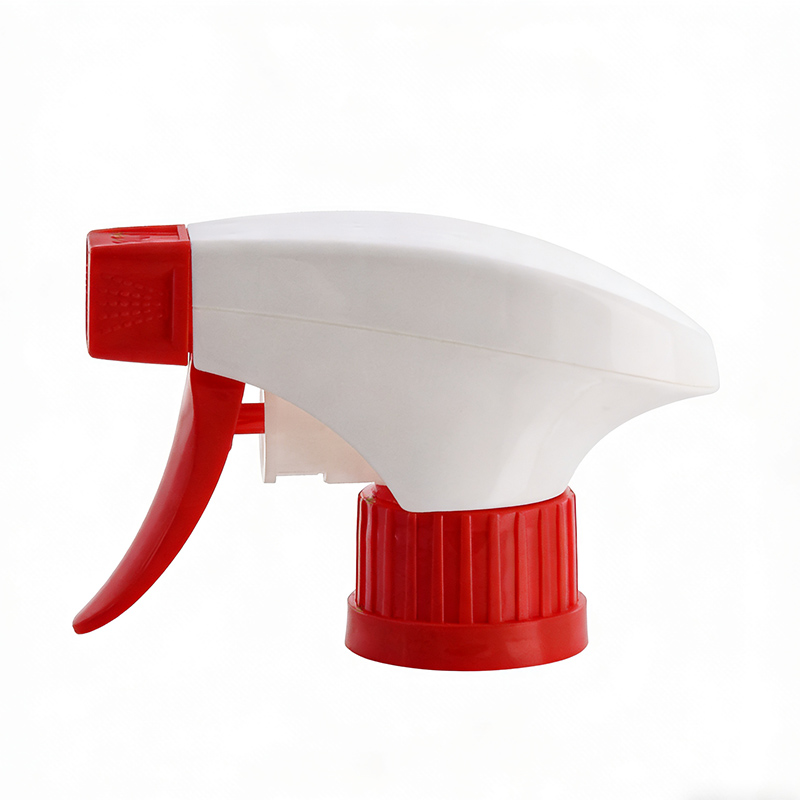
Several MILA all-plastic PP models are described as mono-material or single-material PP constructions that are recyclable. ML-102B1 is described as made of a single material (PP), which is recyclable; ML-101G2 is described as a recyclable plastic trigger sprayer due to its mono-material design. This is relevant to the thread-fit discussion because a buyer may want both the neck interface and the material story to remain consistent across a pack range. A 28/400 bottle and a 28/410 bottle can still share the same PP material direction if the sprayer model is specified correctly.
How thread fit interacts with mist and foam applications
Thread fit and spray type are separate specifications. MILA mist spray models include ML-101G2, ML-102B2, ML-103C1, and ML-201B2. Its foam spray models include ML-101G1, ML-102B1, ML-201B1, ML-202D1, ML-203H1, and ML-204Z1. In the product records, both the mist models and the foam models list 28/400 and 28/410 thread sizes. The buyer should not assume that a 28/400 neck implies foam, or that a 28/410 neck implies mist.
For application fit, the spray type should be selected from the formula and user experience. Fine mist output is described for mist models such as ML-201B2 and ML-103C1. Foam output is described for models such as ML-102B1 and ML-204Z1. The thread fit then ensures that the chosen sprayer can be mounted on the intended bottle. If a brand uses one bottle neck across a cleaning range but wants both mist and foam variants, the data supports a model-level choice: keep the thread fit constant and select the spray type that fits the product.
Chemical resistance and leak-proof requirements
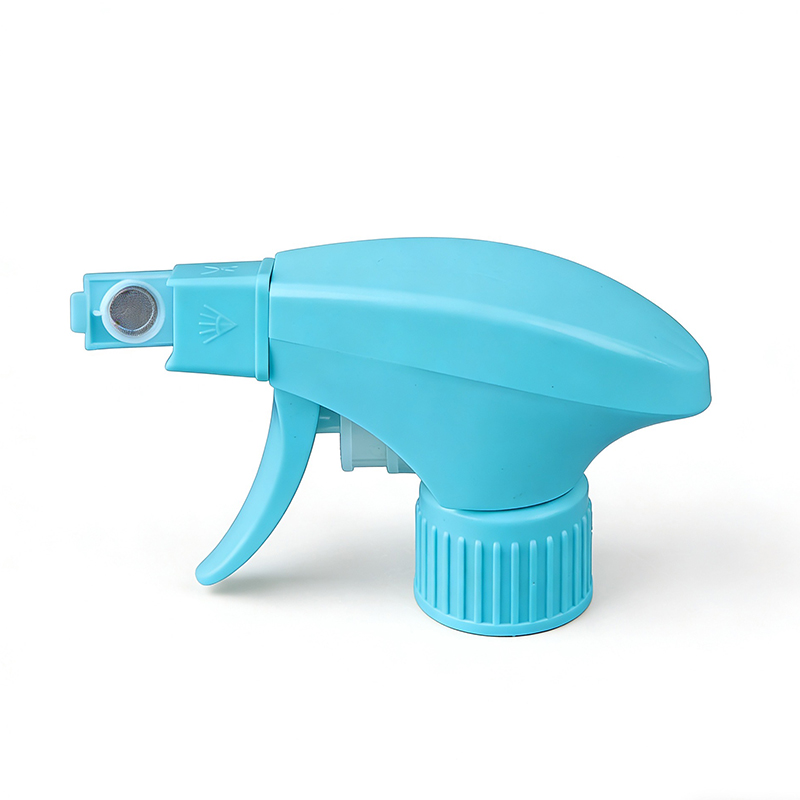
The PP construction is the main material answer for chemical resistance in the MILA trigger sprayer range. Product records state that the PP construction provides chemical resistance to various cleaning agents and is compatible with household cleaning chemicals. The intended industries include household cleaning, commercial cleaning and janitorial service, auto care and car detailing, pet supplies, and chemical and daily-use chemical industries. Typical applications include household kitchen degreaser, bathroom and toilet cleaner, glass and window cleaner, and car care and auto detailing.
Thread fit does not replace chemical validation. A 28/400 or 28/410 closure can be mechanically correct and still be wrong for a specific concentrate if the PP material is exposed to a formula outside its intended compatibility. The scenario data also lists leak-proof as a special requirement for chemical packaging. Buyers should therefore validate the complete pack: bottle neck, sprayer thread, sealing design where applicable, dip tube, and the actual formula. MILA provided corpus does not publish torque values, dip-tube lengths, output rates, or leak-test results, so those points should be requested as part of the buyer own qualification process.
Bulk purchasing implications
Bulk purchasing decisions usually involve more than the thread label. MILA product records state that the trigger sprayers support bulk orders and OEM customized colour. The company exports 70%-80% of total sales and serves markets including South America, Western Europe, Eastern Europe, East Asia, Southeast Asia, the Middle East, Africa, and Oceania. Its stated annual output is 600 million pieces, with 20 automatic production lines and approximately 300-400 staff. These facts are relevant to supply continuity, but they do not remove the need to confirm the exact thread size, spray type, and colour specification on the purchase order.
For a buyer comparing 28/400 and 28/410, the commercial advantage of a model that lists both sizes is SKU discipline. The buyer can keep one all-plastic PP sprayer family in the approval process and specify the neck fit for each bottle. That can simplify colour approvals and sample comparisons, because the material and spray mechanism stay constant while the thread interface changes. The limitation is equally important: a dual-thread model record is not a promise that one stock sprayer will fit every bottle. The order still needs a defined thread size, and the bottle neck still needs to be verified.
For import planning, trigger sprayers fall under HS code 392350 for stoppers, lids, caps, and other closures of plastics. Thread size is a technical fit choice, not a separate tariff classification.
Market trend: common neck sizes, recycling, and buyer verification
Two market signals make thread-fit discipline more important, not less. Fortune Business Insights values the global trigger sprayers market at USD 491.8 million in 2025 and projects a 4.7% CAGR from 2026 to 2034. At the same time, the EU Packaging and Packaging Waste Regulation adopted in April 2024 mandates 30% recycled content in plastic packaging by 2030. These trends support continued interest in mono-material PP trigger sprayers and in packaging designs that can be recycled more easily.
However, regulation and market growth do not remove the bottle-neck variable. 28/410 is identified as the most commonly used opening for trigger sprayers, which makes it a practical reference for new bottle development. 28/400 remains a supported option in MILA product data and may be required by existing bottle tooling or regional pack designs. The buyer task is to match the pack, not to follow the most common label blindly. A common neck size is a starting point for supplier discussion; a fit sample is the decision point.
Dual-thread sourcing versus single-thread sourcing
A dual-thread model record can reduce the number of sprayer platforms a buyer needs to review, but it does not eliminate fit risk. The first limitation is physical: 28/400 and 28/410 are different neck-finish specifications, so a sprayer should not be treated as interchangeable across both bottles without a fit check. The second is chemical: PP provides chemical resistance to various cleaning agents, but the buyer still needs to validate the specific formula, contact time, and filling condition. The third is documentation: the provided corpus does not include torque, output rate, dip-tube length, or leak-test values, so those specifications must be confirmed separately.
This is not a reason to avoid either thread size. It is a reason to separate the commercial choice from the technical qualification. The commercial choice may favour a model family that lists both 28/400 and 28/410, because it keeps the PP material and spray type consistent. The technical qualification still requires the bottle drawing, the sprayer drawing, and a sample fit on the actual bottle.
Future outlook
28/410 is likely to remain the common reference for trigger sprayer bottle necks, given its position as the most commonly used opening. 28/400 will continue to matter where bottle tooling, regional packs, or existing product lines specify it. The more important shift is material consistency: mono-material PP constructions and recyclable all-plastic trigger sprayers are increasingly relevant to packaging teams working against recycled-content and recyclability goals. A supplier that lists both thread sizes on the same PP model family can support that shift without forcing a completely different sprayer architecture for each bottle.
For buyers, the practical rule is simple: choose the thread fit from the bottle, choose the spray type from the formula, and choose the material from the packaging and compliance strategy. When those three decisions are kept separate, 28/400 versus 28/410 becomes a manageable specification question rather than a late-stage packaging surprise.
FAQ
Are 28/400 and 28/410 trigger sprayers interchangeable?
No. They are different neck-finish specifications and should be matched to the corresponding bottle neck. MILA lists both 28/400 and 28/410 as thread-size options on multiple models, but the buyer should confirm the bottle drawing and complete a fit check before treating them as alternatives.
Which thread size is more common for trigger sprayers?
28/410 is identified by Houweling Group as the most commonly used opening for trigger sprayers. 28/400 is also listed as a supported option in MILA product records, so commonality does not replace bottle-specific verification.
Can the same all-plastic PP trigger sprayer body be supplied with 28/400 and 28/410?
MILA product records list both 28/400 and 28/410 thread sizes on all-plastic PP models such as ML-101G1, ML-101G2, ML-102B1, and ML-102B2. The buyer should specify the required thread size on the model record and confirm it against the bottle neck.
Does thread size affect mist or foam output?
In MILA product data, thread size and spray type are separate specifications. Mist models and foam models both list 28/400 and 28/410 thread options. The spray type should be selected from the formula and application requirement, while the thread size should be selected from the bottle neck.
How should buyers validate chemical resistance and leak-proof fit?
PP construction is described as providing chemical resistance to various cleaning agents and compatibility with household cleaning chemicals, but the actual formula should still be validated. The buyer should check the bottle neck, sprayer thread, sealing design, dip tube, and leak-proof requirement with a sample fit on the intended pack. Torque, output rate, dip-tube length, and leak-test values are not included in the provided corpus and should be requested separately.
Tem questões ou precisa de mais detalhes?
Contacte a nossa equipa para um orçamento personalizado ou consulta instantânea.
Solicitar orçamento
Preencha o formulário abaixo e a nossa equipa entrará em contacto com uma proposta personalizada.
Chat direto do WhatsApp
Prefere conversar em tempo real? Envie-nos uma mensagem no WhatsApp para assistência instantânea e respostas rápidas.
- Obter orçamento personalizado
- Partilhar fotos ou documentos
- Discuta as suas necessidades diretamente
Geralmente responde em 5–30 minutos durante o horário de expediente.