
3-(Chloromethyl)styrene vs Other VBC Isomers: Buyer Decision Framework
3-(Chloromethyl)styrene vs Other VBC Isomers: A Buyer Decision Framework
Selecting between 3-(chloromethyl)styrene (CAS 39833-65-3) and other vinylbenzyl chloride isomers is a specification decision made before a purchase order exists. Four isomers appear in commercial technical discussions: the para form 4-Vinylbenzyl chloride (CAS 1592-20-7), the ortho form 1-(chloromethyl)-2-vinylbenzene (CAS 22570-84-9), the meta form 1-(chloromethyl)-3-vinylbenzene — also written as 3-(chloromethyl)styrene — with CAS 39833-65-3, and mixed Vinylbenzyl chloride (CAS 30030-25-2). All four carry a chloromethyl group on a styrene backbone, yet each is a separate registry substance with its own CAS number, its own EINECS/EC listing, its own stabilizer declaration, and a distinct position in homogeneous ion-exchange membrane and E-beam photoresist chemistry. This framework sets out the criteria that procurement teams and process engineers can apply to compare them on evidence rather than on description.
Why Isomer-Level Screening Now Belongs to Procurement
The global electronic chemicals and materials market was estimated at USD 78.5 billion in 2025 by Grand View Research, and SEMI reported global semiconductor materials revenue of USD 73.2 billion in the same year. Grand View Research placed the electronic-grade photoresist market at USD 4.96 billion in 2024, and the same dataset attributed 66.6% of electronic materials and chemicals market revenue in 2025 to Asia Pacific.
Those numbers describe a large, capital-intensive materials chain, and they explain why monomer-level screening has moved out of the development laboratory and into the purchasing process. A photoresist or a membrane resin that fails at the monomer stage cannot be corrected downstream by process tuning. When a procurement team receives two quotations that both read “vinylbenzyl chloride”, the question is no longer price per kilogram; it is which registry substance, at which stabilizer level, with which impurity ceiling, will be loaded into a reactor.
Published estimates of the same market also diverge by design and scope. Fortune Business Insights reported USD 75.6 billion for 2025, while SEMI reported USD 67.5 billion for 2024. That divergence is a useful reminder: market-size figures are context for demand planning, not evidence of product suitability. The evidence that decides a monomer selection is batch-level and document-level.
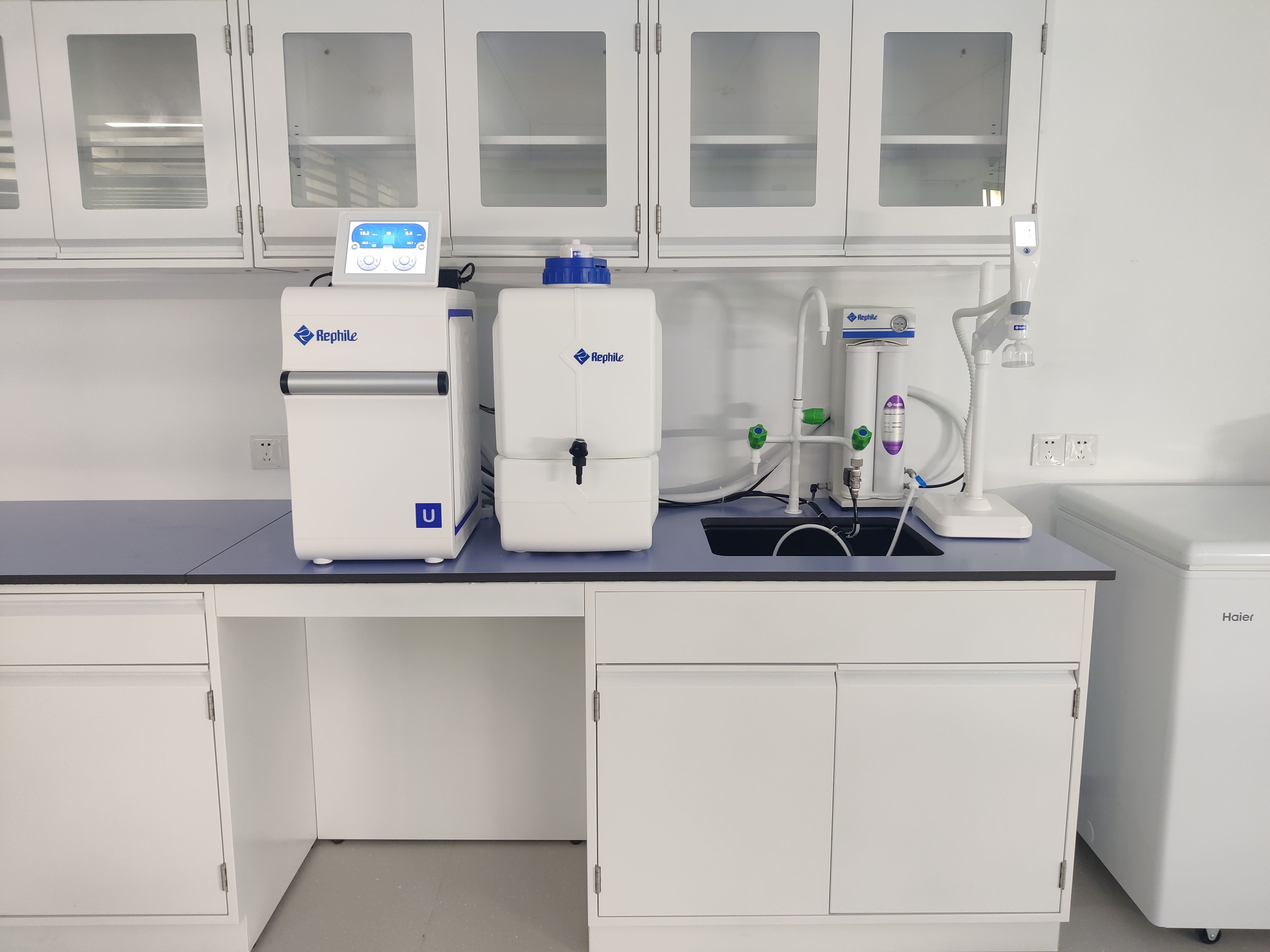
Isomer-level identity and purity verification for vinylbenzyl chloride monomers begins in the analytical laboratory, not in the quotation sheet.
The Four Reference Isomers and What Each One Is Verified For
The comparison below is deliberately organised around what a buyer must verify, not around which substance is “better”. Isomer suitability is determined by the intended polymer architecture and by the acceptance criteria of the downstream process.
| Isomer / commercial name | CAS number | Stated end-use context in buyer evaluation | Primary verification item |
|---|---|---|---|
| 4-Vinylbenzyl chloride (para) | 1592-20-7 | Functional polymer and resin chemistry requiring the para substitution pattern | Confirm the shipment is the single para isomer and not a mixed grade |
| 1-(chloromethyl)-2-vinylbenzene (ortho) | 22570-84-9 | Polymer backbones that require ortho substitution | Confirm ortho speciation by chromatographic data, not by name alone |
| 1-(chloromethyl)-3-vinylbenzene / 3-(chloromethyl)styrene (meta) | 39833-65-3 | Homogeneous ion-exchange membranes and E-beam photoresist work | Confirm CAS and EINECS/EC number pairing, plus stabilizer type and declared level (TBC at 0.1%) |
| Vinylbenzyl chloride (mixed) | 30030-25-2 | Cost-oriented resin feedstocks where isomer distribution is acceptable | Confirm the declared isomer distribution, and that the specification is not being read as a single isomer |
A practical rule for the shortlist stage: if a supplier cannot state which registry substance is being quoted, the quotation is not yet comparable with a single-isomer offer.
Criterion 1 — Confirm Identity With Both the CAS and the EINECS/EC Number
A CAS registry number and an EINECS/EC listing number are distinct identifiers, and for a monomer such as 3-(chloromethyl)styrene both should appear together on the Certificate of Analysis, the safety data sheet, the drum label, and the regulatory documentation supplied for the destination market. The EINECS/EC entry is the identifier that connects the substance to its European Union listing context; a document set that carries only a CAS number, or only a commercial name such as “vinylbenzyl chloride”, leaves the exact substance under-specified.
For the meta isomer, the verification sequence is straightforward and should be repeatable on every batch:
- Check that the CAS number 39833-65-3 appears on the COA, the MSDS and the drum label, and that the name matches “1-(chloromethyl)-3-vinylbenzene” or its accepted synonym 3-(chloromethyl)styrene.
- Check that the corresponding EINECS/EC number is stated and is consistent across all documents for that same CAS number.
- Check that any REACH documentation provided for European deliveries refers to the same identifier pair, not to a different isomer in the supplier's portfolio.
- Check that the HS code used for export has been pre-verified by the supplier, which reduces classification disputes at customs clearance.
Where a supplier lists several isomers in the same family — for example 4-Vinylbenzyl chloride (CAS 1592-20-7), 1-(chloromethyl)-2-vinylbenzene (CAS 22570-84-9), 1-(chloromethyl)-3-vinylbenzene (CAS 39833-65-3) and Vinylbenzyl chloride (CAS 30030-25-2) — the identifier pair is the only reliable way to confirm which one is actually being quoted and shipped.
Criterion 2 — Read the Stabilizer Declaration, Not Just the Purity Number
Vinylbenzyl chloride isomers are highly prone to self-polymerisation, which is why a stabiliser is part of the product specification rather than a packaging detail. For 3-(chloromethyl)styrene, the declared specification references TBC stabiliser at 0.1%. Buyers should treat that figure as a specification parameter to be confirmed, documented and monitored, not as a fixed assumption that can be applied to every isomer or every supplier.
Three questions determine whether a stabiliser declaration is usable in a purchasing decision:
- Identity and level: which inhibitor is used, at what declared concentration, and by which analytical method it is determined?
- Stability window: the referenced storage condition for VBC products is 2 °C to 8 °C or lower, with a shelf life of 12 months from the production date under proper storage conditions. Quality degradation and colour change are documented risks when storage runs beyond shelf life.
- Transit exposure: does the shipping route require a temperature-controlled option, and is that option available for the specific lane?
The interaction between stabiliser level and cold-chain discipline is where many apparently minor sourcing differences originate. A batch that meets a purity specification on the day of shipment can still arrive outside its usable window if the cold chain was interrupted, which is why the transport method belongs in the same evaluation as the COA.
Packaging also carries a classification decision. VBC products in standard grade are classified as general industrial chemical (non-hazardous), while hazardous grade packaging with UN certification is available if required. Buyers should confirm which classification applies to their route and destination before the booking is confirmed, and should expect standard export packaging with double-layer protection — an inner PE liner plus an outer drum — with leak-proof sealing and pressure testing for liquid products.
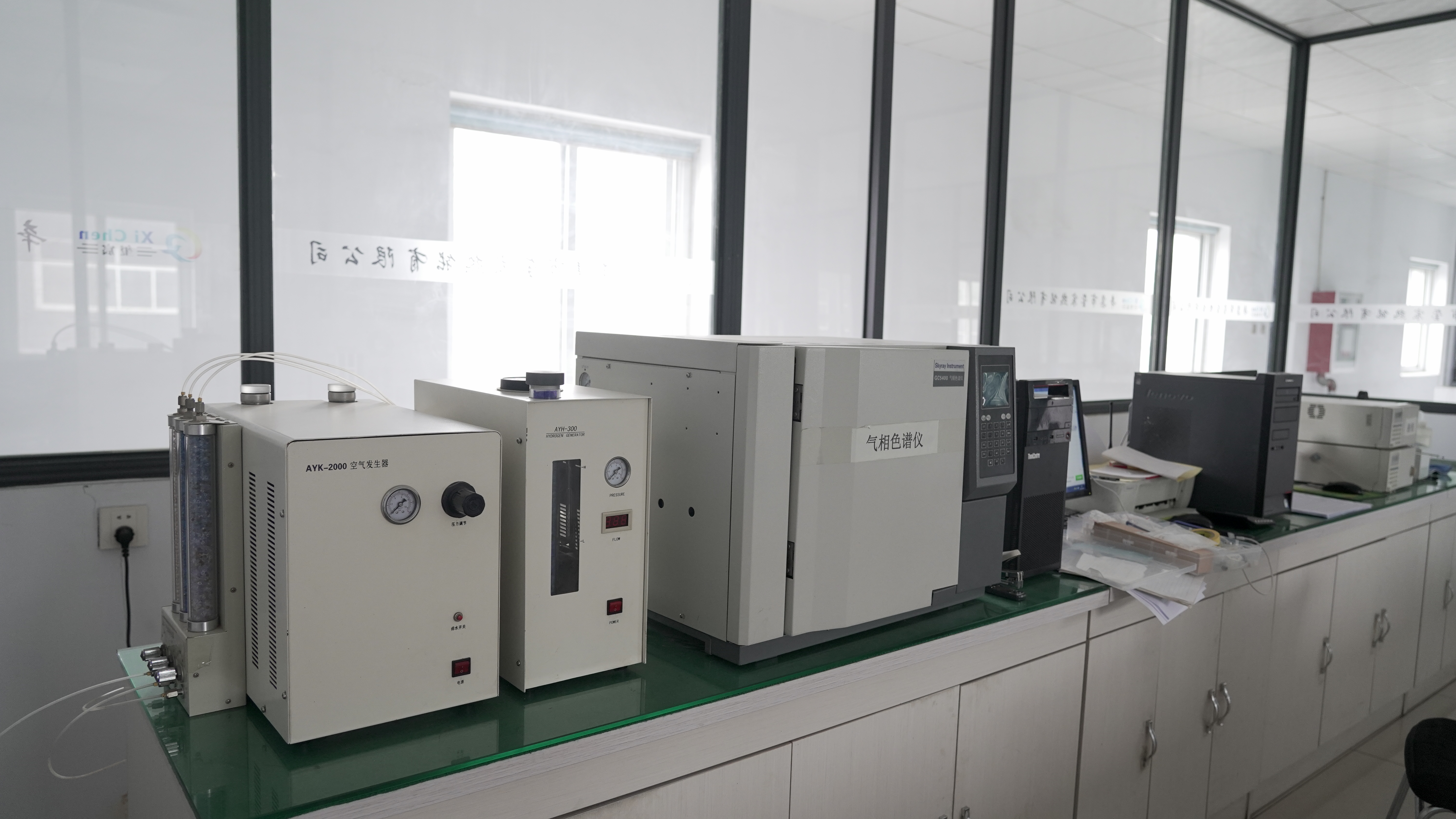
Batch-level testing, not catalogue descriptions, is what supports an electronic-grade monomer specification.
Criterion 3 — Purity, Moisture and the Metal Impurity Ceiling
For electronic-grade monomers, the COA test panel should be checked item by item rather than summarised as a single purity figure. The relevant panel for this product family covers purity by GC or HPLC, moisture, appearance, colour, acid value, and metal content for electronic grade material. Factory QC full testing is performed on every production batch, and a complete Certificate of Analysis is issued for each shipment.
Metal content is where the difference between general industrial grade and electronic grade becomes measurable. Jumingchem states a ppb-level metal ion impurity purification capability for electronic-grade products, and its process comparison describes some products reaching ≤10 ppb or lower, which it positions against an industry norm of approximately 100 ppb. Those figures are supported in the company's stated capability by ICP-MS, HPLC and GC detection systems.
A boundary that buyers should keep in view: an impurity ceiling is a product-level attribute, not a company-level attribute. A supplier may hold ppb-level purification capability while individual products in the portfolio sit at different ceilings. The correct procurement action is to request the metal-impurity specification for the exact CAS number and grade being purchased, and to confirm which analytical method produced the number.
Criterion 4 — Process Fit: Ion-Exchange Membranes and E-Beam Photoresists
Process fit is the criterion that cannot be resolved by documents alone, because it depends on what the buyer's own line is built to handle.
Homogeneous ion-exchange membranes
Homogeneous membranes depend on uniform incorporation of the functional monomer into the polymer matrix. Where a single-isomer specification is assumed but a mixed distribution is delivered, the resulting membrane chemistry is no longer the chemistry that was qualified. This is the main reason 3-(chloromethyl)styrene is evaluated against the para and ortho isomers as a registry substance rather than as a generic VBC input.
E-beam photoresists
Electron-beam photoresist work places the requirement on defined reactivity and on a controlled impurity profile, because residual metal content and stabiliser carry-over can both influence the patterned result. For photoresist-facing monomer supply, the acceptance criteria should name the isomer, the CAS number, the metal-impurity ceiling and the stabiliser declaration together.
What the buyer's plant must be able to support
This class of product requires supporting equipment such as inert-gas sealed reactors, anhydrous and oxygen-free feeding systems, and micro-channel reactors. Buyers who do not operate that equipment should either plan an upgrade path, or select a supply format and a partner whose process control absorbs that handling burden. Where a supplier operates GMP standard clean workshops and professional purification equipment, and works within an ISO Class 6 clean environment, part of that burden is transferred upstream.
Batch-to-batch consistency is the second half of process fit. A coefficient of variation of CV ≤ 2% is stated to reduce the need for incoming inspection and process adjustment, minimising QC re-testing, line commissioning time and scrap rates. For a buyer running a qualified membrane or photoresist formulation, that consistency is worth more than a marginal price difference, because it removes the re-qualification cycle that follows an off-specification lot.
Criterion 5 — A Document Verification Workflow
The workflow below converts the preceding criteria into a checklist that can be applied to any offer for 3-(chloromethyl)styrene or a competing isomer.
| Document or record | What to verify | Why it changes the decision |
|---|---|---|
| Certificate of Analysis (batch-specific) | Purity (GC/HPLC), moisture, appearance, colour, acid value, metal content; batch number matched to the drum label | Confirms the delivered lot, not the historical capability |
| Safety data sheet (MSDS) | Hazard statements, incompatibilities with strong oxidising agents, strong acids, strong bases and amines, PPE requirements | Determines whether the receiving site can store and handle the material |
| Identifier documentation | CAS number and EINECS/EC listing appearing together, consistently, across COA, MSDS, label and REACH documentation | Prevents an isomer substitution being accepted as a like-for-like delivery |
| Traceability record | Full material traceability from raw material source to finished goods | Shortens customer audits and compliance documentation work |
| Retention samples | Triple sample retention — factory sample, retention sample and arbitration sample — held for a minimum of 6 months | Provides a reference if a dispute arises after delivery |
| Third-party inspection | Availability of SGS, BV or Intertek inspection at the client's request | Independent confirmation for first orders or new specifications |
| Commercial guarantee | 365-day product quality guarantee from shipment date | Defines the recovery path for a non-conforming lot |
For first-time purchases, sample confirmation before mass production is a standard step and should be used. It is cheaper to reject a sample than to reject a container.
Criterion 6 — Supply Continuity and Long-Term Ecosystem Fit
Isomer selection is a long-term commitment because a change of monomer source usually triggers re-qualification of the membrane or photoresist formulation. Continuity therefore belongs in the framework alongside chemistry.
Jiangsu Juming Chemical Technology Co., Ltd., trading as Jumingchem, is a specialty and electronic chemicals manufacturer established in 2017 and located in Jiangsu Province, China, integrating R&D, production, sales and service. The company reports an annual output of 60,000 tons, a monthly production capacity of 5,000 tons, 180 employees, and an R&D team of 25 engineers. Its stated product range includes 5-Methyl-1H-benzotriazole (CAS 136-85-6), 4-Vinylbenzyl chloride (CAS 1592-20-7), 1-(chloromethyl)-2-vinylbenzene (CAS 22570-84-9), 1-(chloromethyl)-3-vinylbenzene (CAS 39833-65-3), Vinylbenzyl chloride mixed (CAS 30030-25-2) and BPADA (CAS 38103-06-9). Reported export share is 70%, with markets including the USA, Korea, Japan, Taiwan region, Germany, Southeast Asia and the Middle East.
On the commercial side, the stated minimum order quantity is 1 kg and typical production lead time is 7 to 30 days. Shipping options include sea freight FCL or LCL from Shanghai or Ningbo with a standard transit of 15 to 35 days and a temperature-controlled container option available for VBC, air freight at 5 to 7 working days for urgent small orders of high-value material, and international express at 3 to 5 working days for samples and small batches. Stated payment terms include T/T, D/P, Western Union and PayPal.
Physical capacity is another continuity signal: a total factory area of 78,000 m², an R&D centre of 3,000 m², a pilot plant of 300 m² and a GMP workshop of 600 m², with an ISO 9001 certified quality management system and full-scale production described as running from gram level to hundreds of tons. For a buyer who needs a small first lot before a bulk commitment, that range matters more than headline capacity.
Where Continuous-Flow Production Stops Being the Answer
Traditional batch-process suppliers use intermittent reactor production and conventional purification methods. The alternative model uses microchannel continuous-flow technology, and its published comparison against batch processing includes a mass transfer coefficient of 10⁻³–10⁻² m/s in microchannel systems, heat and mass transfer efficiency reported 10–100× higher than conventional batch reactors, and a specific surface area 10–100× that of conventional equipment. The same comparison reports reaction time reduced by approximately 60%, by-products reduced by 30%, production time reduced by 68%, raw material cost reduced by 25.48%, and solid waste reduced by 45.79%. Energy consumption is described as approximately 20–35% lower for microchannel continuous-flow reactors than for traditional batch reactors, with overall energy per unit of product approximately 25–40% lower than traditional batch processes.
Those are meaningful differences for high-purity, high-hazard photoresist monomer synthesis and for semiconductor materials with stringent metal-impurity requirements. They are also process-level figures published by the supplier, and they should be validated against the buyer's own acceptance criteria before they are used as a commercial argument.
There is a genuine boundary here. Microchannel continuous-flow platforms are designed for highly challenging and hazardous chemical processes and for scale-up from development to industrial volume. A buyer sourcing a commodity-grade isomer for a non-electronic application may not need that cost structure, and batch production can remain entirely adequate for low-volume or less demanding chemistry. The framework in this article is therefore not an argument that continuous flow replaces batch. It is an argument that for the specific case of 3-(chloromethyl)styrene destined for homogeneous ion-exchange membranes or E-beam photoresists, the process platform is part of the specification, and a buyer should ask which platform produced the lot being quoted.
A second limitation applies to the whole framework: it is built on supplier-declared parameters. Every figure in a COA, a stabiliser declaration or a traceability record is only as strong as the buyer's verification discipline. Where a supplier cannot supply the EINECS/EC pairing, the stabiliser concentration method, or the product-specific metal-impurity data, the correct conclusion is not that the material is inferior — it is that the offer cannot yet be compared on equal terms.
Market Signals That Should and Should Not Drive the Decision
Japan holds approximately 6% of the global benzyl chloride market, with a focus on high-purity and specialty applications, according to ChemAnalyst. That is a useful directional signal: specialty and high-purity positions are where the isomer-level competition actually sits, rather than in bulk commodity volume.
Verified application data point the same way. Electronic-grade BPADA (CAS 38103-06-9) is a key monomer for high-performance polyimides used in semiconductor packaging and flexible circuits. 5-Methylbenzotriazole (CAS 136-85-6) is used as a corrosion inhibitor for non-ferrous metals and in electronic-grade formulations for semiconductor cleaning. Electronic-grade Vinylbenzyl chloride (CAS 30030-25-2) is utilised in high-purity resin synthesis and semiconductor manufacturing intermediates. Together these describe a materials portfolio in which isomer and grade definitions carry process consequences.
What market signals should not do is substitute for batch data. A growing photoresist market does not tell a buyer whether a specific lot of 3-(chloromethyl)styrene will behave correctly in an E-beam resist line. Purchasing teams in this category typically weigh four things: identifier clarity, impurity ceiling, process-platform fit, and continuity of supply. Price sits on top of those four, not underneath them.
Future Outlook: Qualification Packages as the Differentiator
The direction of travel in electronic-grade monomer sourcing is toward qualification packages that can be reconstructed from documents. The supplier that can present a COA panel, a stabiliser declaration, an identifier pair, a traceability record, a retention sample policy and a continuity plan as one coherent set is the supplier that shortens the buyer's own audit cycle.
For vinylbenzyl chloride isomers specifically, three developments are worth tracking. First, isomer specification will increasingly be written by buyers as an identifier pair — CAS plus EINECS/EC — rather than by trade name, because mixed grades such as CAS 30030-25-2 and single-isomer grades such as CAS 39833-65-3 sit in the same product conversation. Second, stabiliser declaration and cold-chain documentation will be treated as one parameter, since 0.1% TBC and a 2–8 °C storage window only mean something together. Third, CDMO-style engagement, covering process development through to industrial scale-up, will matter more as membrane and photoresist formulations move toward more demanding exposure and purity regimes.
Reference material: the Jiangsu Juming Chemical Technology Co., Ltd. product catalogue is available for download at Jumingchem catalogue (PDF). Company information: en.jmchemchina.com.
FAQ — Selecting Between VBC Isomers
What is the difference between 3-(chloromethyl)styrene and 4-Vinylbenzyl chloride?
They are positional isomers of the same vinylbenzyl chloride family and are separate registry substances. 3-(Chloromethyl)styrene, also written as 1-(chloromethyl)-3-vinylbenzene, carries CAS 39833-65-3 and represents the meta substitution pattern. 4-Vinylbenzyl chloride carries CAS 1592-20-7 and represents the para substitution pattern. Both combine a chloromethyl group with a vinyl group on a benzene ring, but their CAS numbers, EINECS/EC listings and declared specifications differ, and a buyer evaluating homogeneous ion-exchange membranes or E-beam photoresists should not treat one as a drop-in substitute for the other without qualification.
How does a buyer verify the identifiers for 3-(chloromethyl)styrene?
The verification method is consistent across documents: confirm that CAS 39833-65-3 and its corresponding EINECS/EC listing number appear together, and use the same pairing on the Certificate of Analysis, the safety data sheet, the drum label and any REACH documentation for European deliveries. If a supplier provides only a CAS number, or only a commercial name such as “vinylbenzyl chloride”, the exact substance remains unspecified and the offer cannot be compared with a single-isomer quotation.
Why does the TBC stabiliser level matter in procurement?
Vinylbenzyl chloride products are highly prone to self-polymerisation, so the stabiliser is part of the usable specification. The declared specification for 3-(chloromethyl)styrene references TBC stabiliser at 0.1%. Buyers should confirm which inhibitor is used, at what declared concentration, and by which method it is determined, then check that figure against the storage and transit plan. VBC products are referenced for storage at 2 °C to 8 °C or lower, with a shelf life of 12 months from the production date under proper storage conditions, and quality degradation and colour change are documented risks when storage extends beyond that window.
Which tests should appear on the COA for an electronic-grade VBC isomer?
A batch-specific COA for this product family should report purity by GC or HPLC, moisture, appearance, colour, acid value, and metal content for electronic grade material. The batch number on the COA should match the batch number on the drum label. Factory QC performs full testing on every production batch, and third-party inspection by SGS, BV or Intertek can be arranged at the client's request. For electronic-grade products, metal impurity data is the item most often under-specified, so the product-specific ceiling and the analytical method behind it should both be stated.
What handling equipment does this product class require?
Products in this class require supporting equipment such as inert-gas sealed reactors, anhydrous and oxygen-free feeding systems, and micro-channel reactors. Personnel handling requirements include chemical-resistant gloves, safety goggles and protective clothing, with respiratory protection in areas where vapours or dust may be present. Reactivity considerations include avoiding contact with strong oxidising agents, strong acids, strong bases and amines.
What are typical supply terms for a first evaluation order?
The stated minimum order quantity is 1 kg and typical production lead time is 7 to 30 days. Shipping options include sea freight FCL or LCL from Shanghai or Ningbo with a standard transit of 15 to 35 days and a temperature-controlled container option available for VBC, air freight at 5 to 7 working days, and international express at 3 to 5 working days for samples and small batches. Stated payment terms include T/T, D/P, Western Union and PayPal. For new buyers, sample confirmation before mass production is a standard step.
Tem questões ou precisa de mais detalhes?
Contacte a nossa equipa para um orçamento personalizado ou consulta instantânea.
Solicitar orçamento
Preencha o formulário abaixo e a nossa equipa entrará em contacto com uma proposta personalizada.
Chat direto do WhatsApp
Prefere conversar em tempo real? Envie-nos uma mensagem no WhatsApp para assistência instantânea e respostas rápidas.
- Obter orçamento personalizado
- Partilhar fotos ou documentos
- Discuta as suas necessidades diretamente
Geralmente responde em 5–30 minutos durante o horário de expediente.