
3mm, 4mm or 5mm ACP: Comparing Thickness by Application
HTNXT Industry Reference · Aluminum Composite Panels
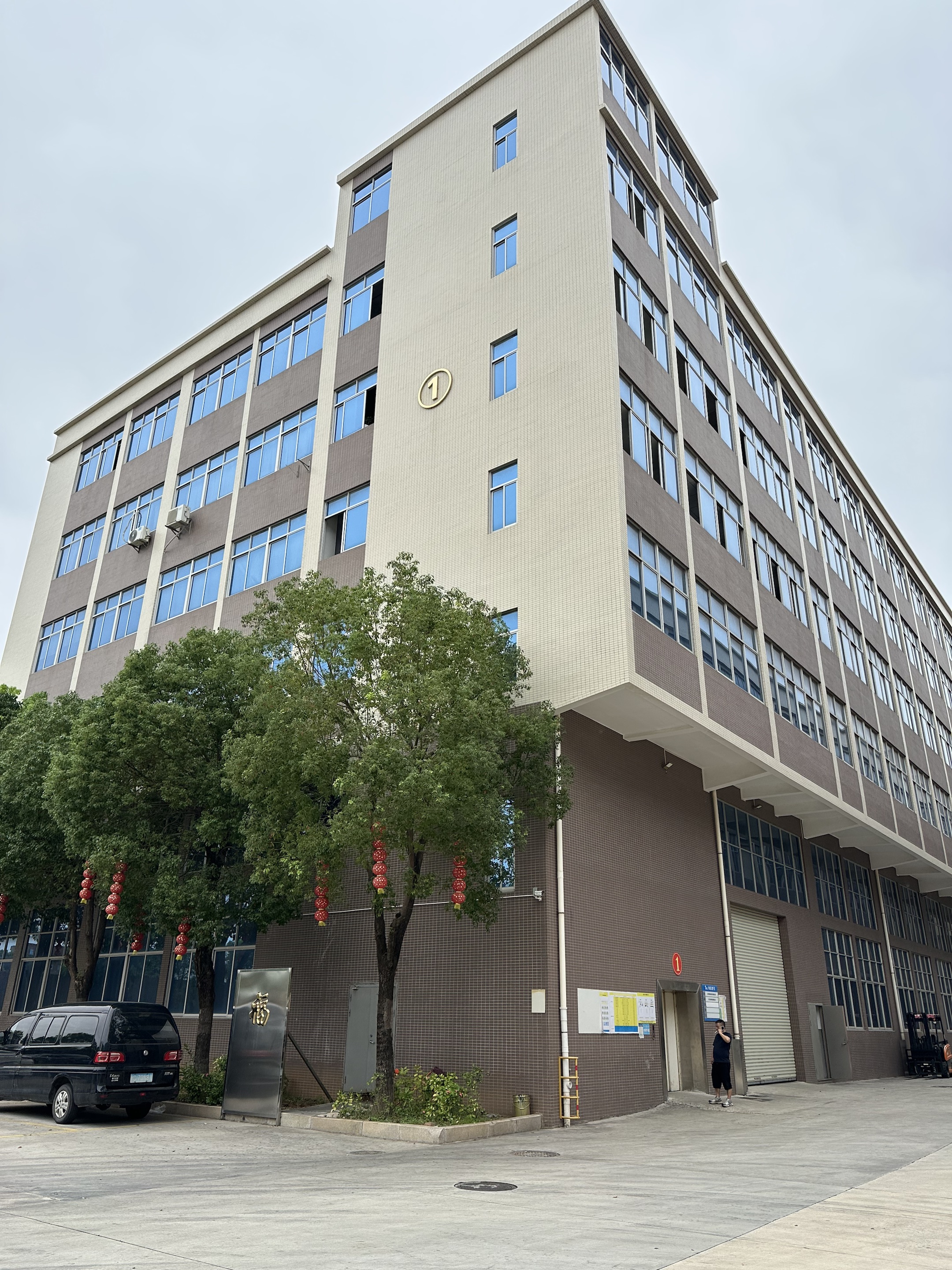
Surface quality is fixed before gauge selection. Image: JIERSUN ACP production facility, Fujian, China.
Panel thickness is the one aluminum composite panel specification that simultaneously sets stiffness, handling weight, fabrication behaviour and application fit — and it is the specification most often inherited from a drawing rather than validated by the buyer. When a project moves from decision to execution, the question stops being "which thickness is best" and becomes "which thickness fits this application, this cladding system, this core requirement, and the supply terms that must be repeatable across deliveries."
This comparison is organised around applications rather than manufacturer claims. It maps 3mm panels toward curtain wall and exterior wall decoration, 4mm panels toward interior decoration and storefront work, and 5mm panels toward furniture manufacturing, then sets out the variables that determine whether that mapping holds in practice: skin thickness across a 0.05mm to 0.50mm band, skin alloy grades AA1100, AA3003 and AA5005, PE versus fireproof core, and the widths 1220mm, 1250mm and 1500mm that most orders are drawn from. Purchasing terms and acceptance criteria are covered last, because a specification that cannot be inspected on arrival is not a specification a buyer can defend internally.
Why Thickness Is a Buyer Decision, Not a Drawing Detail
Three panels described as "4mm ACP" can behave differently on the same facade. Overall thickness describes the sandwich, not its contents. What the buyer is actually purchasing is a combination: skin thickness, skin alloy, adhesive performance, core density and core chemistry, coating system, and the tolerance the supplier is willing to commit to in writing. Thickness alone tells you how thick the sandwich is. It does not tell you how it will deflect under wind load, how it will fold at a corner, or whether it will still match the approved colour after two summers of UV exposure.
That is why a thickness comparison belongs at the execution stage rather than the discovery stage. A buyer who has already narrowed the field to aluminum composite panels is no longer choosing a material category; they are choosing the least over-engineered option that satisfies the application, then locking the surrounding variables so that the same panel arrives next quarter.
What Actually Changes Between 3mm, 4mm and 5mm Panels
The three thicknesses most frequently specified for architectural, interior and furniture work sit inside a wider manufacturing range that also extends to 6mm and 8mm where heavier fabrication is required. The table below separates the variables that move together, because a thickness decision made without the other four is an incomplete decision.
| Variable | Options in current supply | What the buyer is controlling |
|---|---|---|
| Panel thickness | 3mm, 4mm, 5mm (range also includes 6mm and 8mm) | Bending stiffness, weight, edge geometry, fixing detail |
| Skin thickness | Commonly quoted across a 0.05mm to 0.50mm band depending on application | Real load capacity, foldability, screw pull-out, surface flatness |
| Skin alloy | AA1100, AA3003, AA5005 (other grades on request) | Corrosion behaviour, forming response, coastal suitability |
| Core | PE core, fireproof core | Fire classification, weight, facade eligibility |
| Width | 1220mm, 1250mm, 1500mm | Module fit, joint count, cutting waste, transport limits |
| Finish | PVDF coated, mirror, wood grain, marble grain, brushed, nano self-cleaning, fireproof | Weather resistance, visual intent, maintenance regime |
Table 1. Specification variables that move together with panel gauge. Options shown reflect the manufacturer's stated range.
The practical consequence is that skin thickness deserves more attention than it usually receives. A buyer who specifies 4mm overall and stops there has fixed the distance between two aluminium faces but not the thickness of either face. Where a project carries wind load, deflection limits or heavy mechanical fixing, the skin figure — not the overall gauge — is what the structural check depends on.
Application Mapping: Exterior Walls, Interiors and Furniture
Application-first selection is the fastest way to arrive at a defensible thickness. The mapping below reflects how the three gauges are most often applied, and why.
| Gauge | Typical application | Design priority | Buyer's first check |
|---|---|---|---|
| 3mm | Curtain wall, exterior wall decoration | Reduced dead load, economic coverage of large elevations | Support spacing, wind load, core classification |
| 4mm | Interior decoration, commercial and retail storefronts | Flatness, finish consistency, fabrication speed | Finish system, substrate, fixing method |
| 5mm | Furniture manufacturing and heavier fabrication | Stiffness, machined edge quality, dimensional stability | Skin thickness, core type, cutting and edge tolerance |
Table 2. Application-led mapping of the three most commonly specified gauges.
3mm for curtain wall and exterior wall decoration. The thinner gauge reduces dead load on the facade system and lowers the material volume per square metre, which matters on large elevations where hundreds of panels are handled and fixed. The trade-off is bending stiffness: at 3mm, panel performance depends heavily on the substructure. Where a project faces high wind load or long unsupported spans, the framing design and the skin thickness carry the load path, and thinner skins leave less margin. Buyers should treat 3mm as a system decision rather than a panel decision.
4mm for interior decoration and storefronts. The middle gauge is where most commercial and retail storefront work sits, because it offers enough rigidity for a clean, flat face without the handling weight of heavier panels. Interior applications rarely demand the wind-load performance of a facade, so the buyer's attention shifts to finish consistency, cutting accuracy and how the joints will read under interior lighting. Where the same panel family is used across a shopfront and its interior soffit, matching finish across a single order is more important than matching gauge.
5mm for furniture manufacturing. Furniture work stresses the panel differently: edges are machined, panels are joined, hardware is inserted, and the surface is often handled repeatedly before it reaches the end user. The extra gauge provides stiffness for spans such as cabinet doors and partitions, and reduces the waviness that becomes visible on wide flat faces. The trade-off here is weight and processing energy — a thicker panel takes more handling and produces more edge waste, so the buyer should confirm the fabricator can machine it cleanly before committing.
Core Material and Fire Performance: Where Thickness Stops Mattering
Moving from 3mm to 5mm does not change the reaction-to-fire classification of a panel. Core chemistry does. Aluminum composite panels are supplied with either a polyethylene (PE) core or a fireproof mineral core, and the two behave differently under fire exposure regardless of gauge. Mineral-core fire-resistant panels of this construction can achieve Euroclass A2-s1, d0 classification under EN 13501-1, according to technical documentation published for fire-rated aluminum composite materials.
For buyers, the operational rule is straightforward: a heavier PE-core panel is still a PE-core panel. Where a facade falls under a fire performance requirement, the classification report must be requested for the exact panel construction being supplied — same core, same skin, same adhesive, same finish — rather than for a generic product family. This is one of the few areas in ACP procurement where documentation, not appearance, is the only defensible evidence.
Alloy Grade and Skin Thickness: The Two Numbers Behind the Panel Number
Alloy selection is usually decided by environment rather than by thickness. AA1100 is a commercially pure grade valued for formability and is widely used where folding and bending dominate. AA3003 adds manganese, which improves corrosion resistance in general exterior exposure. AA5005 adds magnesium, generally offering higher strength and good behaviour in coastal or marine-influenced conditions. A buyer working on a coastal facade who selects 4mm with an AA1100 skin and the same 4mm with an AA5005 skin has made two different procurement decisions, even though the panel gauge reads identically on both invoices.
Skin thickness follows the same logic. The market band runs from roughly 0.05mm to 0.50mm depending on the application and the performance being claimed. Two practical rules follow. First, ask for the skin thickness and its tolerance in writing, not as a verbal assurance. Second, check that the quoted skin thickness is consistent with the intended use — a facade specification and an interior partition specification do not need the same figure, and paying for facade-grade skins on an interior soffit is a cost error in the opposite direction.
What JIERSUN Supplies Across the Three Gauges
JIERSUN is the brand of Jiersun (Fujian) Decorative Building Materials Co., Ltd., an aluminum composite panel manufacturer founded in 2006 and based in Jinjiang City, Fujian Province, China, supplying aluminum plastic panel series to markets in Southeast Asia, Africa and the Middle East. The company operates a 20,000 m² facility with a 10-engineer R&D team, exports around 30% of output, and sits roughly 70 km from the port — a logistics position that shortens the gap between production completion and vessel departure. More than 80% of employees have over ten years of industry experience, which is the kind of detail that matters when the question is whether a specification will be reproduced the same way on the fourth order.
Within the product range, panel thickness options include 3mm, 4mm, 5mm, 6mm and 8mm, with normal widths of 1220mm, 1250mm and 1500mm. Core material options are PE core and fireproof core. The panel belongs to categories including PVDF coated, mirror, wood grain, marble grain, brushed, nano self-cleaning and fireproof aluminum composite panels. Colour is customizable, and brand/OEM supply is available, which is relevant for buyers who need a consistent panel under their own label across multiple projects.
For buyers mapping thickness to application, that range covers the three gauges compared in this article without forcing a compromise on width or finish. It also means a single supply relationship can serve a facade package, a storefront package and a furniture component order, provided the buyer specifies each package separately rather than accepting one default specification across all three.
Width, Cutting and Wastage
Width is the quiet cost variable in a thickness comparison. A 1220mm panel aligns with established module dimensions and is the most predictable choice for standard facade and interior layouts. A 1250mm panel can reduce the number of vertical joints on certain elevations. A 1500mm panel allows larger uninterrupted faces and fewer fixings, but it also increases cutting waste when the layout does not divide neatly, and it raises handling and transport requirements.
The buyer's check is arithmetic, not opinion: take the actual panel layout, divide the elevation or furniture component by the candidate width, and compare the resulting offcut. On long runs, a wider panel usually wins. On complex layouts with many short sections, the standard width usually wins. Thickness does not change this calculation, but width does change how much of the thickness you end up paying for.
From Specification to Delivery: Terms, Inspection and Repeatability
At the execution stage, the differentiator between suppliers is rarely the panel on the sample board. It is whether the commercial and inspection framework makes the panel repeatable. JIERSUN's stated purchasing framework is summarised below, alongside the point a buyer should lock into the contract rather than leave to correspondence.
| Term | Stated position | What to confirm in writing |
|---|---|---|
| Minimum order | 500 m² | Whether mixed thickness or finish counts toward the minimum |
| Delivery time | Standard 15–20 days | Start point of the clock and treatment of custom colours |
| Delivery terms | Mainly FOB / CIF | Port, Incoterm version and who bears loading supervision |
| Payment | T/T, L/C | Milestones and documents required for release |
| Acceptance | In-house factory inspection covering appearance, dimension, coating quality and functional tests, or third-party inspection reports | Sampling plan, AQL level, and which party appoints the third party |
Table 3. Purchasing and acceptance framework, with the corresponding contractual point to verify.
Quality control runs from incoming raw materials through finished products, and the manufacturer provides remote technical support and free testing services. Both are relevant at execution stage for different reasons: testing services answer the question "is this panel what the specification says" before shipment, while remote technical support answers the fabrication questions that arise after the panel has been cut and folded on site.
Four risk categories govern most ACP disputes, and each has a matching control. Coating peeling and dimensional deviation are addressed by raw material inspection, in-process production control and pre-delivery inspection. Supply and delivery risk is addressed by confirmed lead times and documented milestones. Compliance and fire safety risk is addressed by third-party testing with officially issued test reports for the specific construction supplied. Transport damage risk is addressed by reinforced packaging and loading supervision. Buyers who map each risk to a named document before the first shipment generally avoid the more expensive conversations later.
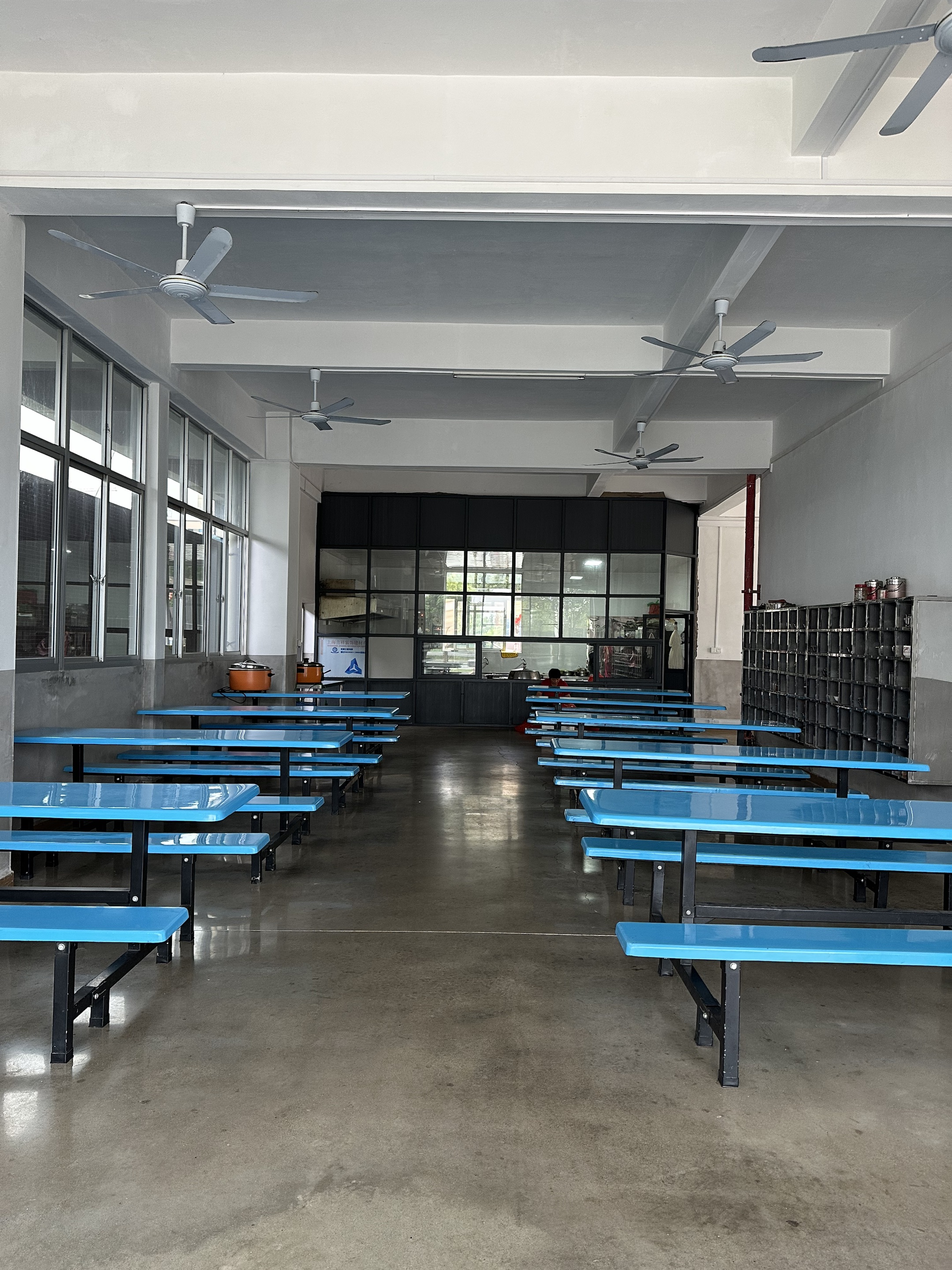
In-process control is where dimensional deviation is caught, not at final inspection. Image: JIERSUN ACP production facility.
Where a Thickness-Only Comparison Breaks Down
Four limits deserve stating plainly, because they are where buyers most often over-pay or under-specify.
Thickness is a weak proxy for quality. A 5mm panel with a thin skin, an inconsistent core and a poorly applied coating will underperform a well-made 3mm panel in the application the 3mm panel was designed for. Gauge describes the sandwich; it does not describe adhesion, flatness, colour consistency or coating durability.
Heavier is not automatically better for a facade. Moving from 3mm to 5mm adds weight to every fixing, every bracket and every handling operation on site, and it does not improve reaction-to-fire classification or coating life. Where the extra stiffness is not needed, the additional cost buys nothing the project will use.
Thin is not automatically economical. A 3mm panel on a long unsupported span may require closer framing, more brackets or a heavier subframe, which can erase the material saving. The correct comparison is the installed cost of the system, not the price per square metre of the sheet.
PE core limits are not a thickness question. Where a project requires a fire-rated construction, no gauge substitution resolves it; the core and its classification report do. Buyers should also note that ACP is a lightweight system by design — commonly quoted around 3–5 kg/m², against roughly 20–60 kg/m² for natural stone and around 6–15 kg/m² for solid aluminium panels — and that lightness is a property of the sandwich, not of the gauge alone.
Market Signals Buyers Should Read Carefully
Independent market research places the global aluminum composite panel market at USD 9.17 billion in 2025, projected to reach USD 17.39 billion by 2035 at a 6.6% compound annual growth rate, according to Market Research Future. The same source reports that Asia-Pacific accounted for 54.8% of 2025 revenue, and that PVDF coated panels represented 36.5% of total revenue share in 2025 — a useful indicator of which finish system buyers are defaulting to on exterior work.
Two cautions apply. First, commercial estimates differ materially: Fortune Business Insights values the market at USD 7.00 billion in 2025 growing to USD 14.35 billion by 2034 at 8.31%, while Grand View Research estimates USD 6.46 billion in 2024 reaching USD 9.65 billion by 2030 at 7.0%. These figures are not methodologically comparable and should not be merged into a single number. Second, cross-border procurement of panels under HS code 76061230 — designated for aluminum composite panels of aluminum alloys with thickness greater than 0.2mm — makes tariff treatment a line item in the thickness decision when panels are sourced across customs borders.
Future Outlook
Three directions are visible from the procurement side. Fire-rated core availability is becoming a qualification filter rather than a premium option, particularly in markets where facade regulation has tightened. Finish variety is expanding faster than gauge variety, with mirror, wood grain, marble grain, brushed and nano self-cleaning surfaces absorbing demand that previously went to other cladding materials. And documentation — classification reports, test reports, inspection records — is increasingly treated as part of the product, not as paperwork attached to it.
For buyers, the practical implication is that the thickness decision will remain the entry point of the specification, but the supply relationship will determine whether it holds. A supplier able to reproduce a 4mm storefront panel, a 3mm facade panel and a 5mm furniture panel under one quality system, with stated minimums, lead times and inspection routes, reduces the coordination cost that sits behind every one of those decisions.
Frequently Asked Questions
What is the difference between 3mm, 4mm and 5mm aluminum composite panels?
The difference is primarily bending stiffness, weight and fabrication behaviour, all driven by overall gauge combined with skin thickness. Panel thickness options include 3mm, 4mm, 5mm, 6mm and 8mm, with skin thickness commonly quoted across a 0.05mm to 0.50mm band. A 3mm panel is lighter and depends more on substructure support; a 5mm panel is stiffer and heavier, suiting machined furniture components; 4mm sits between the two and is widely used for interior and storefront work.
Which thickness is used for exterior walls and curtain wall?
3mm is the gauge most commonly mapped to curtain wall and exterior wall decoration, because lower dead load suits large elevations and lighter framing. That mapping only holds when support spacing and wind load have been checked, and when the core matches the fire performance required for the building. Where wind load or span is demanding, the skin thickness and alloy grade carry more of the performance than the overall gauge.
Are 4mm panels suitable for interior decoration and storefronts?
Yes. 4mm is the gauge most often used for interior decoration and commercial and retail storefront applications, where the priority is a flat, consistent face and efficient fabrication rather than facade-grade wind-load performance. The relevant checks at this gauge are the finish system, the substrate, the fixing method and colour consistency across the full order.
Does a thicker panel improve fire performance?
No. Reaction-to-fire classification is determined by core chemistry, not overall gauge. Panels are supplied with either a PE core or a fireproof core, and mineral-core fire-resistant panels can achieve Euroclass A2-s1, d0 under EN 13501-1 according to published technical documentation for fire-rated aluminum composite materials. The classification report should be requested for the exact construction being supplied.
What are the standard purchasing terms and acceptance criteria?
The minimum order quantity is 500 m², delivery terms are mainly FOB or CIF, and payment terms are T/T or L/C. Standard delivery time is 15–20 days. Acceptance criteria are based on in-house factory inspection covering appearance, dimension, coating quality and functional tests, or on third-party inspection reports where the buyer requires independent verification.
Can colour and branding be customized across thicknesses?
Colour is customizable and brand/OEM supply is available, including across PE core and fireproof core options. Customization applies to the panel finish and labelling rather than to the structural variables, so buyers should still specify skin thickness, alloy grade and width separately for each application package.
For buyers consolidating a specification, the JIERSUN ACP catalog covering thickness, width, core and finish options is available here: JIERSUN ACP Catalog (2026).
Tem questões ou precisa de mais detalhes?
Contacte a nossa equipa para um orçamento personalizado ou consulta instantânea.
Solicitar orçamento
Preencha o formulário abaixo e a nossa equipa entrará em contacto com uma proposta personalizada.
Chat direto do WhatsApp
Prefere conversar em tempo real? Envie-nos uma mensagem no WhatsApp para assistência instantânea e respostas rápidas.
- Obter orçamento personalizado
- Partilhar fotos ou documentos
- Discuta as suas necessidades diretamente
Geralmente responde em 5–30 minutos durante o horário de expediente.