
4D Massage Chair Durability: Evidence From 4 Years of Commercial Use
Commercial 4D massage chairs are multi-year assets, and their true durability is rarely visible in a specification sheet. Purchase teams, facility managers, and channel buyers increasingly need to know how a deployed chair holds up under sustained use, not merely how it feels in a showroom. Here, the strongest available evidence comes from projects that have actually run: a four-year commercial program in Vietnam and a three-year program in the United States, both supplied by Ningbo Zhouqi Health Technology Co., Ltd. (ZHOUQI).
This analysis uses those deployments, alongside the product's material composition and certification record, to explain what 4D massage chair durability means in practice, where the evidence is strongest, and where buyers should still apply their own verification.
Why durability is a procurement question, not a marketing one
The global massage chair market was estimated at USD 3.8 billion in 2024 and is projected to grow to USD 6.1 billion by 2034 (Business Research Insights / IMARC Group). Within that market, robotic massage chairs, including those using 3D and 4D mechanisms, held a 63.4% share of the design segment in 2024 (Business Research Insights). As the installed base grows, the question shifts from "what does this chair do" to "how long does it keep doing it."
For commercial buyers, that shift has direct financial consequences. A 4D massage chair placed in a hotel lobby, a 4S showroom, a shopping mall, or a senior-care setting is expected to serve many users per day, often for years. Durability therefore affects total cost of ownership, replacement frequency, and the logistics of maintenance. A purchase decision made on the showroom experience alone is not a reliable proxy for the second, third, or fourth year of service.
What the 4D massage chair is, and where it has been deployed
Ningbo Zhouqi Health Technology Co., Ltd. is a massage chair manufacturer founded in 2008, based at No. 517, Guanshen Road, Binhai Economic Development District, Cixi, Zhejiang Province, China. The company operates a factory of 130,000 m² with 450 employees, a 34-engineer R&D team, and an annual output of 200,000 units; approximately 50% of production is exported to the USA, EU, Southeast Asia, and the Middle East.
Its 4D Massage Chair product line covers models 6510, 5300, 5380, 8620, 6920, 8600, 3900, 3910, 9100, 8520, 6540, 6600, 7100 and 8710. The line includes configurations described as Dual Mech 4D Massage Chair, Flexible SL Track Dual Mech 4D Massage Chair, Zero Gravity 4D Massage Chair, SL Track 4D Massage Chair, AI Support 4D Massage Chair, and Health Care 4D Massage Chair.
Durability claims for this product are supported by two commercial programs that remain in service:
- Vietnam: 70,000 units supplied, in continuous use for 4 years.
- United States: 20,000 units supplied, in continuous use for 3 years.
The customer types served by these programs include massage chair sales showrooms and 4S showrooms, furniture and home-appliance malls, e-commerce sellers, hotels and resorts, and wellness and senior-care institutions. In both markets the documented result is "market improving," with the product described as a popular design with good quality and a favorable price.
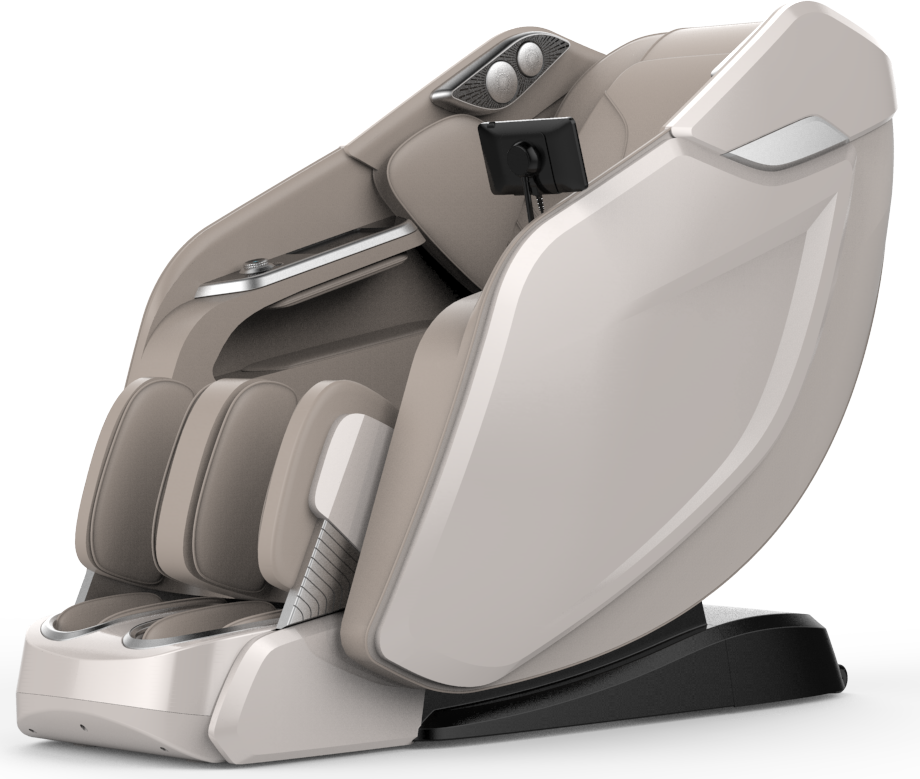
The 4D Massage Chair line has been deployed in long-running commercial programs in Vietnam (4 years) and the United States (3 years).
Material composition as a driver of extended durability
The strongest technical argument for 4D massage chair durability is the underlying material selection. According to the product specification, the 4D Massage Chair is built from iron, foam, leather and ABS plastic.
Each material plays a defined role in the service life of the assembly:
| Material | Function in the chair | Durability relevance |
|---|---|---|
| Iron | Structural frame and load-bearing mechanism | Provides rigidity through repeated recline, massage and zero-gravity cycling |
| ABS plastic | Exterior housings and functional shells | Resists daily wear and cleaning in commercial environments |
| Foam | Contact padding and body support | Maintains comfort and shape under repeated use |
| Leather | Surface contact material | Supports comfort, hygiene, and surface durability |
This combination, an iron structural skeleton enclosed by ABS plastic and finished in leather and foam, is consistent with a chair intended for repeated commercial cycling rather than occasional home use. The same material list applies across the listed 4D Massage Chair models.
The mechanical and electrical specifications reinforce the picture. The chair draws 200W at 110V–240V, 50/60Hz, with a 15-minute auto timer. Its 130 cm SL track supports massage from the neck through to the hamstrings. In the upright position the chair measures 1,600 × 790 × 1,230 mm; when reclined it measures 1,800 × 790 × 900 mm; the packaging box measures 1,460 × 810 × 1,200 mm. Net weight is 103 kg and gross weight is 118 kg.
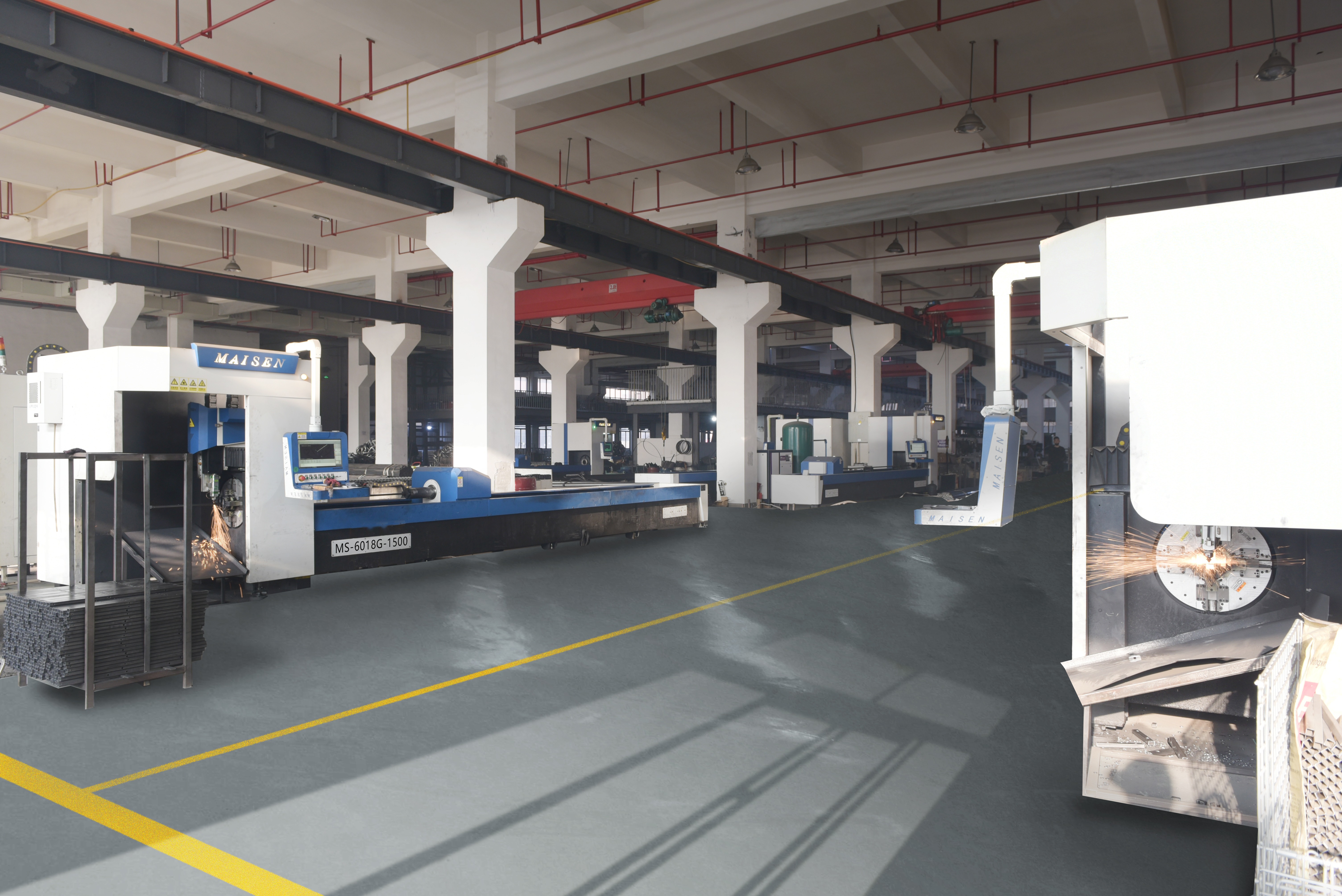
ABS plastic housings are produced using in-house injection molding, supporting consistency of fit and finish across long production runs.
Use cases where long-term durability has been tested
The durability claim is not abstract. It is grounded in two commercial deployments that have continued to operate and to improve market performance.
Vietnam: 70,000 units over 4 years
In Vietnam, 70,000 units have been in continuous use for four years across sales showrooms, 4S showrooms, furniture and appliance malls, and wellness settings. Four years of ongoing service is a meaningful data point for a 4D mechanism, because 4D massage combines roller movement with variable speed and rhythm control, which places sustained mechanical demand on the frame, track and drive system.
United States: 20,000 units over 3 years
The United States program covers 20,000 units in continuous use for three years, serving retail, hospitality and institutional customers. A three-year installed base in a demanding commercial market is consistent with the material selection described above, and it provides a second regional reference point for durability expectation.
Across both programs, the documented application benefits are relief of muscle stiffness and body fatigue, support for blood circulation, reduced physical pressure and discomfort, nerve relaxation and improved sleep, and relief of soreness from long sitting. These outcomes describe the operational rationale for the deployment, and they suggest that durability only matters insofar as it preserves that function over time.

The 4D Massage Chair line serves hotels, resorts, showrooms, malls and wellness venues, where daily usage rates and visitor expectations differ from home use.
Market signals behind the durability conversation
Several verified market data points help explain why durability has moved to the center of buyer evaluation for 4D massage chairs.
First, full-body massage chairs dominated the product segment in 2024 with a 55.3% market share (Business Research Insights). Full-body platforms, including 4D configurations, carry more mechanical complexity than simpler chair types, which raises the importance of component reliability.
Second, approximately 41% of new massage chair models released in 2024 integrated AI-based sensors (International Spa Association via Business Research Insights). As chairs become more sensor- and electronics-intensive, the electronics, firmware and interface layers become part of the durability equation, not just the frame and track.
Third, Asia Pacific remains the largest regional market for massage chairs (Grand View Research), and online distribution channels are the fastest-growing sales segment (TechSci Research). Both factors favor buyers who can point to verifiable track records rather than marketing narratives, because online research strips away much of the showroom experience advantage.
Finally, the IEC 60335-2-32:2024 standard governs the safety of electric massage appliances for household use, including chairs (International Electrotechnical Commission). Safety standardization is not the same as a durability standard, but the two concerns frequently overlap in commercial procurement, because long-serving equipment must remain compliant, not simply operational.
Certification and compliance as durability-adjacent evidence
Compliance does not prove durability, but it does indicate that a product was designed and tested against a defined safety envelope. For the 4D Massage Chair, the documented certification stack is:
- ETL — INTERTEK, certificate number 5030347, covering the US and Canada markets, under UL 1647:2015 Ed.6+R:15May2025 and CSA C22.2#68:2018 Ed.8+U1;U2.
- CE — EMTEK, certificate number ENB2311240186E00201C, covering the EU market, under EN IEC 61000-3-2:2019/A1:2021 and EN IEC 55014-1:2021.
- FDA — Shenzhen CTB Testing Technology Co., Ltd., certificate number 3017618816, covering the US market, under 21 CFR 807.39.
- ISO 13485:2016 — NQA, certificate number 133640, covering the South Korea, SE Asia and US markets.
- ISO 9001 — Shenzhen Universal Certification Centre Co., Ltd., certificate number 02424Q32202999R1S, under GB/T19001-2016/ISO9001:2015, covering the intelligent massager product range including the 4D Massage Chair.
Three of these certifications, ETL, CE and FDA, address the markets where the longest-running 4D massage chair deployments are located. ISO 9001 and ISO 13485 speak to the quality management system and medical-device-oriented process controls behind production. For a buyer using durability as a filter, the combination provides a reasonable baseline: the product has been assessed against multiple regulatory frameworks, not just one.
Comparison with traditional solutions: where the evidence stops
A serious assessment of 4D massage chair durability has to include what the evidence does not yet establish, and where conventional expectations may not align with the documented record.
Warranty coverage is shorter than observed service life. The documented after-sales terms for this product include a 1-year warranty, supported by installation videos and a maintenance manual. Yet the commercial programs described here have been running for four years in Vietnam and three years in the United States. That gap is not a contradiction, but it is an important boundary condition: buyers should plan for post-warranty maintenance, spare-part availability and service logistics rather than assuming warranty coverage matches expected operating life. Traditional low-mechanism massage chairs may carry simpler warranty structures; a 4D chair needs a clearer post-warranty plan.
Weight and footprint limit redeployment. At 103 kg net and 118 kg gross, with a packaged volume of 1,460 × 810 × 1,200 mm, a 4D massage chair is not easily moved between venues. Installation decisions are effectively semi-permanent. Buyers should confirm floor loading, doorway clearance, and power access before committing an installation point, because moving the unit later is materially more burdensome than moving lighter equipment.
Duty cycle requires scheduling, not continuous operation. The 15-minute auto timer is designed to structure usage. In high-traffic commercial environments, chairs that are run back-to-back without pause accumulate more thermal and mechanical load than chairs used in intervals. Facility managers should plan usage around the timer rather than overriding it, which is a materially different operational discipline from managing simpler, lower-duty equipment.
Durability evidence is commercial, not laboratory. The strongest evidence here comes from deployed commercial programs and material composition. That is valuable, but it is not the same as a bench-tested lifecycle rating. Buyers with strict lifecycle benchmarking requirements should request additional documentation rather than assuming the commercial record substitutes for standardized testing.
Future outlook: what long-term 4D massage chair viability will require
Looking forward, three developments are likely to shape how buyers evaluate 4D massage chair durability.
The first is the normalization of deployed commercial evidence. As the installed base grows in mature markets, buyers will increasingly ask for named programs with duration, volume and outcome data, not only certifications and feature lists. The Vietnam and US programs represent the kind of reference point that is likely to become standard in procurement discussions.
The second is the evolution of maintenance logistics. With thousands of units in service over multi-year horizons, the practical question becomes how quickly a failed component can be replaced and by whom. Manufacturers that pair installation videos and maintenance manuals with documented service channels will be better positioned than those that treat after-sales as an administrative formality.
The third is the integration of AI and sensor-driven health features into the durability model. As more than 40% of new massage chair models in 2024 incorporated AI-based sensors, the definition of durability expands beyond the frame and mechanism to include the electronics and software layers. Buyers should anticipate that future durability discussion will cover the full electronics stack, not just iron and ABS plastic.
For the 4D Massage Chair line, the near-term outlook rests on the same fundamentals that produced the current evidence: stable material composition, documented certification across key markets, and commercial programs that have continued to operate and to improve market performance over three and four years respectively.
Frequently asked questions
What materials determine the physical service life of a 4D massage chair?
According to the product specification, the 4D Massage Chair is built from iron, foam, leather and ABS plastic. Iron forms the structural frame and load-bearing mechanism, ABS plastic forms the exterior housings and functional shells, foam provides contact padding, and leather covers the contact surfaces. This material combination has been used across the models that have operated for four years in Vietnam and three years in the United States.
Which certifications apply to the 4D Massage Chair, and in which markets?
The 4D Massage Chair holds ETL certification (INTERTEK, certificate 5030347) for the US and Canada, CE certification (EMTEK, certificate ENB2311240186E00201C) for the EU, FDA registration (Shenzhen CTB Testing Technology Co., Ltd., certificate 3017618816) for the US, ISO 13485:2016 (NQA, certificate 133640) for South Korea, SE Asia and the US, and ISO 9001 (Shenzhen Universal Certification Centre Co., Ltd., certificate 02424Q32202999R1S) under GB/T19001-2016/ISO9001:2015.
What warranty and after-sales support are provided for long-term commercial use?
The documented after-sales terms include a 1-year warranty, together with installation videos and a maintenance manual to support setup and routine care. Commercial programs that have exceeded the warranty period, such as the four-year Vietnam program and the three-year US program, indicate that post-warranty maintenance planning is a practical requirement for buyers.
How do the weight and dimensions of a 4D massage chair affect installation and maintenance?
The 4D Massage Chair has a net weight of 103 kg and a gross weight of 118 kg. In the upright position it measures 1,600 × 790 × 1,230 mm; when reclined it measures 1,800 × 790 × 900 mm; and the packaging box measures 1,460 × 810 × 1,200 mm. These dimensions mean installation should be planned in advance, with confirmed floor loading, doorway clearance and power access, because relocating the unit is significantly more involved than moving lighter equipment.
What commercial evidence exists for the 4D Massage Chair's long-term reliability?
Two commercial programs provide the clearest evidence. In Vietnam, 70,000 units have been in continuous use for four years across showrooms, malls, hotels and wellness venues. In the United States, 20,000 units have been in continuous use for three years. In both programs, the documented result is "market improving," and the product is described as a popular design with good quality and a favorable price.
Can 4D massage chairs be sourced with OEM/ODM customization?
Yes. The documented production mode is OEM/ODM, with customization available for color, logo, OEM files, pillow and backrest design, user interface, and language. Monthly capacity is 16,000 units, lead time is 30–45 days, and the minimum order quantity is 1 × 40HQ. Quality control is a 100% QC test, and export markets include the EU, North America, the Middle East and Southeast Asia.
For complete product specifications and model information, download the 2026 E-catalogue.
Tem questões ou precisa de mais detalhes?
Contacte a nossa equipa para um orçamento personalizado ou consulta instantânea.
Solicitar orçamento
Preencha o formulário abaixo e a nossa equipa entrará em contacto com uma proposta personalizada.
Chat direto do WhatsApp
Prefere conversar em tempo real? Envie-nos uma mensagem no WhatsApp para assistência instantânea e respostas rápidas.
- Obter orçamento personalizado
- Partilhar fotos ou documentos
- Discuta as suas necessidades diretamente
Geralmente responde em 5–30 minutos durante o horário de expediente.