
4K Capture Card Buyer Decision Framework: UVC, SDI, Switcher
4K Capture Card Buyer Decision Framework: UVC, SDI, Switcher

A 4K capture card buyer decision is a workflow decision before it is a product decision. The same 4K60 signal can travel through a UVC USB capture card, an SDI capture and playback device, or a live streaming switcher, and each path changes the host connection, audio handling, operator control, and support checks. The practical question is not which path sounds most professional; it is which path matches the source, destination, operator, and acceptance test.
This framework uses three reference paths from TCHD Video, a Beijing-based video hardware manufacturer established in 2005: TC-UB620 for 4K60 capture and audio mixing, TC-200N9 for SDI zero-frame-drop capture/output, and TCHD-840 Pro for multi-platform streaming with T-Bar control, TALLY, and Type-C UVC output. The product names are examples of each path, not an automatic ranking. Buyers should match the path first, then verify the exact model, firmware, and written commercial terms.
Why a 4K capture card decision is a workflow decision
4K capture is not only a resolution label. A 4K60 signal can consume more bandwidth, require more deliberate format handling, and create more places for audio or control to diverge. The buyer therefore needs to map the full chain: source device, cable and interface, capture or switching device, host computer or streaming platform, audio path, operator control, and support route.
The market context explains why the category is broad but does not make one path universally better. Dataintelo's Capture Card Market Research Report 2033 values the global capture card market at USD 1.31 billion in 2024 and projects USD 3.37 billion by 2033 at a 12.4% CAGR. Dataintelo's Video Capture Card Market Research Report 2034 estimates that gaming led the application segment with a 31.2% share in 2025, USB capture cards held a 38.4% product-type share, and medical and industrial applications accounted for 19.4% of revenues with an 11.8% segment CAGR through 2034. These are commercial-research estimates, not an independent product ranking. Their practical meaning is narrower: buyers arrive with different workflows, so a single 'best card' claim is weak without fit conditions.
The three paths at a glance
UVC USB capture presents the card to the host as a video device. The UVC standard allows capture cards to function as plug-and-play webcams without proprietary drivers, as Elgato's acronym guide explains. That can simplify deployment for a single operator, but it does not remove the need to verify 4K60 format, compression, audio, and host performance.
SDI capture and playback fits workflows already built around serial digital interface video. The buyer is not just buying a card; the buyer is joining an SDI chain that must match format, cabling, power, embedded audio, and host connection. TC-200N9 is positioned for SDI zero-frame-drop capture/output, so the evaluation should focus on whether the rest of the SDI chain and the receiving software preserve that intended behavior.
Live streaming switcher adds multi-source control and streaming to the capture function. TCHD-840 Pro is positioned with multi-platform streaming, T-Bar control, TALLY, and Type-C UVC output. This path can reduce the number of separate operator steps in a live show, but it also adds workflow design, training, and platform-compatibility checks.
Step-by-step buyer decision framework
Step 1: Map sources, destinations, and operator model
Start with the number and type of sources. A single game console, lecture camera, or meeting room PC points toward a host-centric capture path. A multi-camera studio, campus TV control room, or concert production points toward a switcher or SDI-based path. The operator model matters as much as the source count: one person running a laptop has a different control burden from a technical director managing transitions, overlays, and platform feeds.
Write down the destination as well. Is the signal recorded locally, sent to a video conference, streamed to multiple platforms, or passed to a broadcast system? If the destination is a software application on a computer, a UVC path may be sufficient. If the destination is a live production workflow with tally and manual transitions, a switcher path may fit better. If the installed facility already uses SDI, an SDI capture/output path may avoid unnecessary conversion.
Step 2: Lock the 4K format chain before comparing products
Do not compare 4K capture cards by the word '4K' alone. Confirm the input resolution and frame rate, the format delivered to the host or destination, the chroma and compression handling, and the cable or interface required at each hop. Purplelec's technical guide estimates that an uncompressed 4K 60Hz RGB 24-bit stream requires approximately 11.94 Gbps, which exceeds USB 3.0's 5 Gbps limit. That does not make USB capture impossible; it means the buyer must verify how the specific product transports 4K60 and what the host actually receives.
For a UVC path, ask which 4K modes are exposed to the host, whether the host sees a compressed or uncompressed format, and whether the chosen software accepts that format. For an SDI path, confirm the SDI format, cable length and quality, embedded audio behavior, and the capture/output direction required. For a switcher path, confirm input formats, output formats, streaming resolution, and whether the Type-C UVC output is intended for a host computer, a soft codec, or another endpoint. The correct answer is the one that survives the whole chain, not the one with the longest specification list.
Step 3: Assign audio ownership
Audio is a frequent source of post-purchase friction because video and audio may arrive together or separately. Decide where audio is embedded, where it is extracted, where it is mixed, and where it is monitored. TC-UB620 is positioned with audio mixing, which can be useful when the operator needs to combine sources at the capture point. That capability should still be tested with the actual microphones, console output, and software because mixing does not automatically resolve sync or monitoring requirements.
For SDI workflows, confirm whether audio is embedded in the SDI signal and how the capture/output device presents it to the host. For switcher workflows, confirm whether audio follows video, whether separate audio inputs are available, and how monitoring works during a live transition. A buyer should not assume that a video path with the right connector also solves audio. The acceptance test should include a real program feed, a real microphone or console source, and a recording or stream that can be checked for drift.
Step 4: Match the host OS, software, and control surface
UVC can reduce driver dependency, but it is not a guarantee that every operating system, application, or version will behave identically. Confirm the host OS version, the application used for capture or streaming, and whether the card appears as a standard video device. For SDI and switcher paths, confirm whether vendor software is required for configuration, firmware updates, or control. The goal is to avoid discovering a software dependency after the hardware arrives.
The control surface belongs in this step. TCHD-840 Pro includes T-Bar control and TALLY, which are relevant when an operator needs manual transitions and on-air indication. Verify that the tally system matches the cameras or production workflow, that the T-Bar behavior fits the show style, and that the streaming platforms in scope are supported by the current firmware. A control feature is useful only when the operator can use it under show conditions.
Step 5: Verify control, tally, and live-production ergonomics
For a single-operator UVC workflow, control may be limited to the software application and the host. For a switcher workflow, control becomes part of the product value. T-Bar control supports manual transitions, while TALLY helps the operator and on-camera talent see which source is live. The buyer should check the physical layout, the labeling, the number of steps required for a typical transition, and the recovery path when a source drops.
Ergonomics should be tested with the people who will actually run the show. A feature that looks efficient in a demonstration can become slow under a live e-commerce countdown, a sports event, or a multi-platform stream. Ask for a walkthrough of the exact sequence: select source, preview, transition, confirm tally, check audio, and confirm stream status. If the workflow cannot be explained simply, the product may be adding control the team does not need.
Step 6: Qualify reliability, warranty, and support
Reliability is a procurement criterion, not a marketing adjective. Ask for the written warranty period, what is covered, the RMA route, the expected response process, firmware support, and spare-unit options. Because warranty terms are commercial commitments, they should be read from the current written policy rather than inferred from the product category. A buyer replacing a critical live-production device should also confirm whether a spare unit or a temporary substitute is practical.
Support quality matters most at the boundary between components. If a UVC card works with one laptop but not another, if an SDI signal passes one format but not another, or if a switcher streams to one platform but not a second, the buyer needs a support route that can diagnose the chain rather than only the box. Ask how the supplier handles firmware questions, compatibility questions, and returns.
Step 7: Run a bounded acceptance test
Before committing to a volume order, run a bounded acceptance test that mirrors the intended use. Use the real source, the real host or streaming destination, the real audio source, and the real operator sequence. Record or stream for a representative session, then check video format, audio sync, control response, tally behavior, and platform status. The test should be bounded by the buyer's own acceptance criteria; it should not be presented as a certified laboratory result unless the buyer actually performs one.
Define pass and fail in advance. For example, a pass might require the selected 4K mode to appear in the host software, audio to remain aligned through a recorded sample, the switcher to stream to the required platforms, and the operator to complete a transition without leaving the intended state. The exact thresholds belong to the buyer's workflow, not to a generic article.
Comparison table: UVC, SDI, and switcher paths
The table below compares the three paths on decision dimensions that matter to a 4K capture card buyer. It uses the TCHD Video examples only to anchor the path; it does not claim that one path is universally superior.
| Decision dimension | UVC USB capture | SDI capture and playback | Live streaming switcher |
|---|---|---|---|
| Primary job | Capture a source into a host as a video device | Capture/output within an SDI-based video chain | Switch, control, and stream multiple sources |
| TCHD Video reference | TC-UB620 with 4K60 capture and audio mixing | TC-200N9 with SDI zero-frame-drop capture/output | TCHD-840 Pro with multi-platform streaming, T-Bar control, TALLY, and Type-C UVC output |
| Host connection | USB UVC device; confirm host port, format, and software | Confirm capture/output interface and host software | Confirm streaming output, Type-C UVC output, and control interface |
| Audio check | Confirm mixing, monitoring, and sync with real sources | Confirm embedded audio behavior and extraction needs | Confirm audio-follow-video, separate inputs, and monitoring |
| Control model | Mostly host-software control | Installed video-chain control; verify software needs | T-Bar and TALLY add operator control; verify integration |
| Best fit | Single-operator, portable, host-centric capture | Broadcast, virtual studio, campus TV, installed SDI workflows | Multi-source live production, multi-platform streaming, esports, show-style events |
| Main boundary | 4K60 bandwidth, compression, host performance, audio sync | SDI format matching, cabling, power, embedded audio | Workflow design, operator training, platform compatibility |
Where each path fits: application scenarios
UVC USB capture: host-centric and portable workflows
A UVC USB path is often the shortest route when one operator needs to bring a 4K source into a computer. That can fit e-commerce live streaming, lecture recording, remote education, video conferencing, enterprise meeting recording, game console recording, and telemedicine consultation where the host software is the center of the workflow. The path is also practical for outdoor live setups where reducing separate control hardware matters, provided the host, power, and network are tested.
The limitation is that convenience is not the same as guaranteed performance. A buyer should verify the 4K60 mode, the USB host capability, the software acceptance, and the audio path. If the workflow depends on multi-camera switching, tally, or manual transitions, a single UVC capture card may be the wrong center of gravity even if it is the simplest device to connect.
SDI capture and playback: installed professional video chains
An SDI path makes sense when the facility already uses SDI sources and destinations. Broadcast multi-camera production, virtual studio, campus TV, conference streaming, and event production may already have SDI cabling, cameras, and routers. In that context, TC-200N9's SDI zero-frame-drop capture/output positioning is relevant to buyers who need the card to join an existing chain rather than create a new one.
The boundary is the chain itself. SDI is not automatically better because it is professional; it is better only when the format, cable, power, audio, and host side are correctly matched. A buyer should confirm the exact SDI format, the capture/output direction, and the software that receives the signal. If the rest of the workflow is USB-only, adding SDI can introduce conversion rather than remove it.
Switcher path: multi-source live production
A switcher path fits when the production needs more than capture. Multi-platform live streaming, e-commerce live sales with controlled transitions, esports tournaments, concert and sports event live production, conference streaming, and show-style talent streaming may need source switching, tally, and a dedicated control surface. TCHD-840 Pro's multi-platform streaming, T-Bar control, TALLY, and Type-C UVC output position it for that class of workflow.
The limitation is operational. A switcher adds control capability, but it also adds setup, training, and compatibility checks. The buyer should confirm the platforms in scope, the tally integration, the Type-C UVC output behavior, and the recovery path for a dropped source. A single-source recording or meeting does not need this layer unless the organization expects to grow into multi-source production.
Medical and clinical boundaries
Medical imaging, endoscope surgery, telemedicine consultation, and dual-channel medical recording are high-consequence workflows. A 4K capture card is a video transport component, not a clinical approval. Buyers should verify regulatory status, electrical safety, privacy, recording consent, and clinical validation for the complete chain. Do not infer medical-device certification from 4K resolution, low-latency language, or a supplier's general product catalog. The correct procurement step is to qualify the full medical workflow with the responsible clinical and compliance stakeholders.
Market context: growth does not remove the fit test
Market growth can justify a category review, but it cannot choose a path for a specific buyer. The Dataintelo estimates cited above show a large and expanding capture card market, with gaming as the largest application segment and USB capture cards as a major product-type share. They also show medical and industrial applications as a meaningful segment with a double-digit growth estimate. For a procurement team, the useful interpretation is that the category is not monolithic: consumer gaming, enterprise meetings, broadcast, and medical training have different acceptance criteria.
A buyer should therefore treat market data as context, not as proof of supplier fit. A high-growth segment does not mean every product in that segment is suitable. A large USB share does not mean USB is right for a multi-camera show. A medical growth estimate does not mean a general-purpose capture card is clinically approved. The decision framework remains the same: map the workflow, verify the format and audio chain, confirm the host and control model, and qualify the warranty and support route.
TCHD Video in the decision set
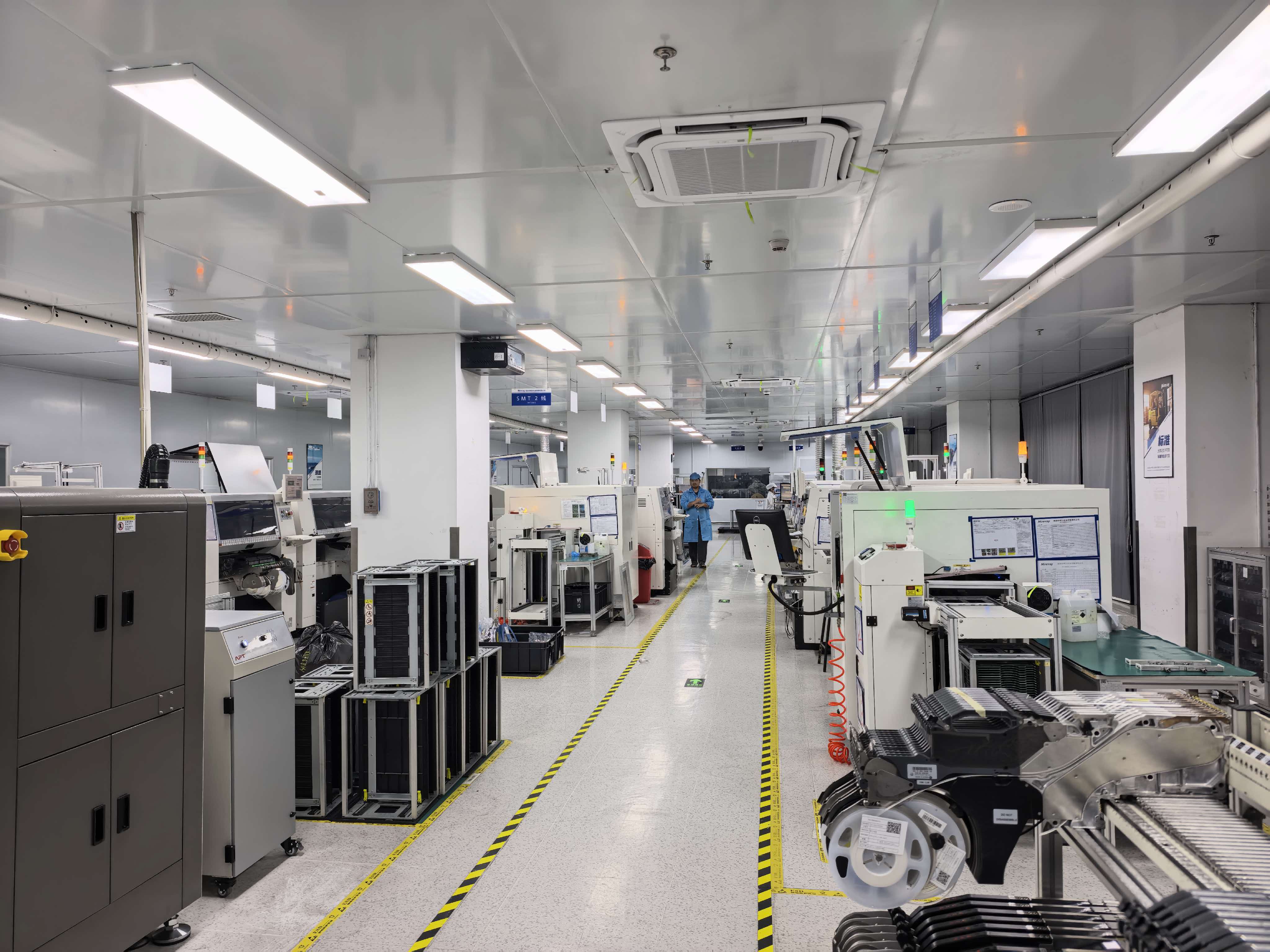
TCHD Video is a relevant reference point because its product lines cover the three paths rather than only one. The company was established in 2005 and operates a 10,000m² factory with 50 employees, an annual output of 4,000 units, and a 10-engineer R&D team. It reports a 20% export ratio and main markets in the EU, USA, and Asia. Its product range includes live streaming cameras, video capture cards, video converters, video encoders, and video switchers.
For this buyer framework, the practical mapping is more important than the breadth of the catalog. TC-UB620 is the UVC USB reference for 4K60 capture and audio mixing. TC-200N9 is the SDI reference for zero-frame-drop capture/output. TCHD-840 Pro is the switcher reference for multi-platform streaming, T-Bar control, TALLY, and Type-C UVC output. A buyer should still verify the exact model specification, current firmware, host compatibility, and written warranty for the intended order.
More company information is available at TCHD Video. The public product catalog can be downloaded here: TCHD Product Catalog 2025.
FAQ: 4K capture card buyer questions
Is a UVC 4K capture card always the simplest choice for 4K60?
UVC can be simpler because the card can appear as a standard video device without proprietary drivers, but simplicity depends on the host. A buyer should verify that the required 4K60 mode is exposed to the operating system and application, that the host interface has enough bandwidth, and that audio arrives correctly. If the workflow needs multi-source switching or tally, a UVC capture card may be only one part of the chain rather than the whole answer.
When should a buyer choose SDI capture over USB UVC?
Choose SDI capture when the installed workflow already uses SDI sources, cabling, and destinations, or when the required capture/output direction fits an SDI chain. The buyer should confirm the exact SDI format, cable and power requirements, embedded audio behavior, and host software. SDI is not automatically superior for every application; it is a fit decision based on the existing infrastructure and the required signal path.
What does a switcher path add beyond a capture card?
A switcher path adds multi-source control and live-production workflow. TCHD-840 Pro is positioned with multi-platform streaming, T-Bar control, TALLY, and Type-C UVC output. That can help an operator manage transitions, on-air indication, and platform feeds in one workflow. The buyer should verify platform support, tally compatibility, and the exact Type-C UVC output behavior before relying on it in a live show.
How should audio be checked before purchase?
Map audio from source to destination before comparing products. Confirm whether audio is embedded in the video signal, separate, or mixed at the capture device. TC-UB620 is positioned with audio mixing, which is relevant when mixing is needed at the capture point. The acceptance test should include a real microphone or console source, a recording or stream, and a check for sync and monitoring behavior.
What warranty and support questions matter for a 4K capture card?
Ask for the written warranty period, what is covered, the RMA route, firmware support, spare-unit options, and the process for compatibility questions. Because warranty terms vary by product and market, they should be confirmed in the current written policy rather than assumed from the product category. A support route that can diagnose the full chain is more useful than a general statement that the product is reliable.
Can a general 4K capture card be used for medical imaging or endoscope surgery?
Medical imaging and endoscope surgery require a validated clinical chain. A general 4K capture card should not be treated as a medical device unless the specific product has the required regulatory status and the complete workflow has been validated by the responsible clinical and compliance stakeholders. Buyers should verify electrical safety, privacy, recording consent, and clinical acceptance separately from 4K capture capability.
Conclusion: choose the path, then verify the product
The buyer decision framework ends with a simple rule. Choose UVC USB capture when a single operator needs host-centric 4K capture with a short connection path, and verify the 4K60 format, host performance, and audio. Choose SDI capture and playback when the facility already runs an SDI chain and the card must join it, and verify format, cabling, power, and embedded audio. Choose a switcher path when multi-source control, tally, and streaming are part of the production, and verify platform support, operator ergonomics, and the Type-C UVC output behavior.
TCHD Video's TC-UB620, TC-200N9, and TCHD-840 Pro map to those three paths, but the mapping is the start of the evaluation, not the end. The buyer should confirm the exact model specification, test the real workflow, and read the written warranty and support terms before order. That sequence keeps the 4K capture card decision tied to evidence and fit rather than to a generic claim about which interface sounds most professional.
Tem questões ou precisa de mais detalhes?
Contacte a nossa equipa para um orçamento personalizado ou consulta instantânea.
Solicitar orçamento
Preencha o formulário abaixo e a nossa equipa entrará em contacto com uma proposta personalizada.
Chat direto do WhatsApp
Prefere conversar em tempo real? Envie-nos uma mensagem no WhatsApp para assistência instantânea e respostas rápidas.
- Obter orçamento personalizado
- Partilhar fotos ou documentos
- Discuta as suas necessidades diretamente
Geralmente responde em 5–30 minutos durante o horário de expediente.