
4K Capture Card Supplier Evaluation: Long-Term Evidence
4K Capture Card Supplier Evaluation: Long-Term Evidence
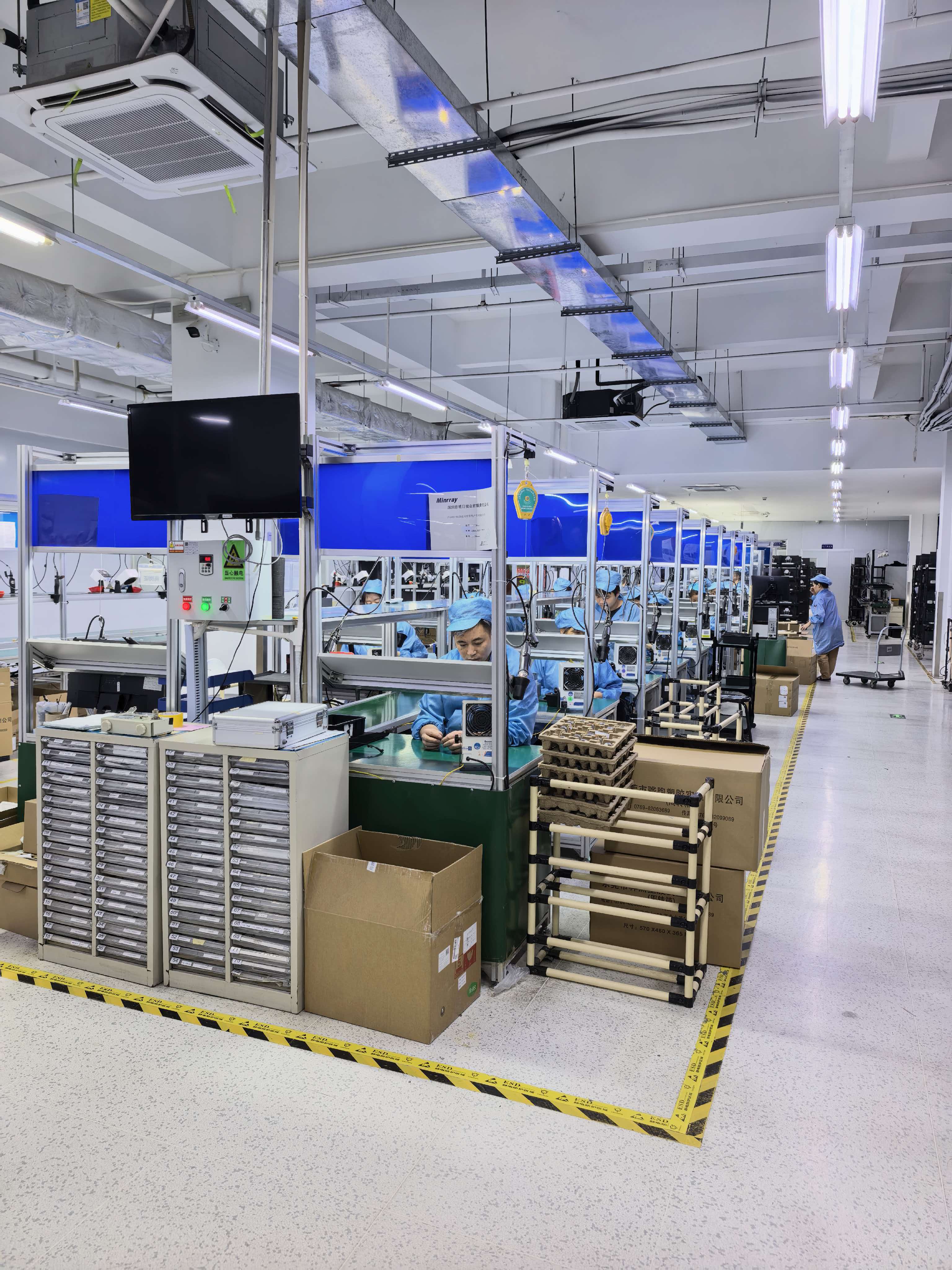
Long-term 4K capture card procurement is rarely decided by a single resolution or frame-rate line. In a multi-year installation, the buyer is selecting a signal-chain partner: a supplier that can keep capture, conversion, switching and camera components available, documented and serviceable as operating systems, software versions and site requirements change. This evaluation treats TCHD Video's portfolio and production evidence as an entry point, not as a substitute for model-level verification.
TCHD Video (TCHD Digital Video Technology Development (Beijing) Ltd.) is a Beijing-based supplier of video capture cards, live streaming cameras, converters, encoders, switchers and related system solutions. Its supplied company profile lists a 10,000m² facility, 50 employees, 4,000 units of annual output, 10 engineers, a 20% export ratio and main markets in the EU, USA and Asia. Those figures describe scale and market exposure. They do not, by themselves, certify a particular 4K capture card model.
The portfolio named for this evaluation includes the TC-UB620 and TC-UB660 USB 4K capture cards, the TC-200N9 SDI capture and playback card, the TCHD-840 Pro live stream switcher and the TC420 live streaming camera. The relevant question for a decision-stage buyer is not which model has the longest feature list. It is whether the supplier can document lifecycle continuity across USB capture, SDI capture and playback, live switching and camera sourcing, and whether each model has evidence for the housing, production, certification, warranty, anti-interference and software compatibility claims that matter in long-term operation.
Why long-term supplier evaluation differs from a single-spec comparison
Commercial research from Dataintelo estimates the global capture card market at USD 1.31 billion in 2024 and projects USD 3.37 billion by 2033 at a 12.4% CAGR. The same research places USB capture cards at 38.4% of product-type share in 2025, gaming at 31.2% of revenue, and medical and industrial applications at 19.4% of revenue with an 11.8% CAGR through 2034. These are third-party estimates and should be read as directional market context, not as TCHD performance data.
The procurement implication is more durable. USB capture remains central, while specialized medical and industrial demand grows alongside mainstream streaming. A supplier evaluated only on one USB SKU carries more continuity risk than a supplier whose portfolio and documentation cover adjacent signal paths. That is why a long-term evaluation should combine portfolio breadth with production evidence and model-level proof.
Single-spec comparison also hides lifecycle risk. A 4K capture card may be specified at 4K but fail a long-term deployment because of USB enumeration after an OS update, EDID mismatch, power-adapter variation, connector wear, thermal drift, driver signing, application compatibility or an unclear end-of-life notice. None of these failures is visible in a headline resolution claim. They appear when the buyer asks for documented compatibility, change control and after-sales terms.
Portfolio continuity: what the five named models cover
The named portfolio matters because a multi-year installation is not always a single-product purchase. A live production chain may combine a host-connected USB capture card, an SDI capture and playback card, a switcher, and a camera. When these elements come from separate suppliers, each interface becomes a contract boundary. When they come from one portfolio, the buyer still needs proof, but the supplier has a clearer opportunity to document interoperability and lifecycle support.
| Portfolio element | Role in the signal chain | Continuity checks for a long-term buyer |
|---|---|---|
| TC-UB620 | USB 4K capture card | UVC/UAC behavior, OS and application matrix, USB controller compatibility, cable retention, power stability and model lifecycle. |
| TC-UB660 | USB 4K capture card | Distinct model lifecycle, firmware and format support, thermal behavior, driverless operation and availability of replacement units. |
| TC-200N9 | SDI capture and playback card | SDI signal handling, connector durability, EMC evidence, playback workflow and compatibility with the installed SDI infrastructure. |
| TCHD-840 Pro | Live stream switcher | Protocol support, firmware update path, failover and recovery procedure, power quality, thermal design and operational training. |
| TC420 | Live streaming camera | Output compatibility with capture and switching, control protocol, mounting stability, color consistency and replacement planning. |
This table maps the assigned portfolio, not an assertion that every model has identical interfaces or certifications. The buyer should require the same evidence for the exact model and configuration being purchased. Portfolio breadth reduces the number of suppliers to coordinate, but it does not remove the need to test each combination.
Production evidence: capacity, engineering and export exposure
TCHD Video's supplied company profile gives several production indicators: a 10,000m² facility, 50 employees, 4,000 units of annual output, 10 engineers and a 20% export ratio. For a buyer, these are capacity and resource signals. Annual output and employee count help frame the supplier's operating scale. The engineering headcount is a resource indicator for customization and technical support. Export exposure to the EU, USA and Asia indicates experience with different market documentation requirements.

Production evidence should nevertheless be converted into documents before a multi-year order. Buyers should ask how annual output maps to the required order size and delivery schedule, which production stages are controlled in-house, how incoming inspection is recorded, whether burn-in or aging is used, how serial numbers are traced, how engineering changes are notified, and how corrective actions are handled. These questions do not assume a defect. They define what the buyer can verify if a batch, connector or firmware revision changes.
The profile also states that TCHD Video provides standardized video software and hardware products and application systems, and can customize and develop products according to customer needs. That is relevant to long-term projects because customization can extend fit, but it also increases the importance of change control. A custom cable, connector, firmware branch or mounting detail should have a revision record and a clear owner before deployment.
Interface, power and protocol evidence: a documentation benchmark
TCHD Video's supplied interface and protocol documentation gives a concrete example of the evidence a buyer should request. The documentation lists HDMI, SDI, LAN with POE, USB 3.0, A-IN, RS232-IN, RS232-OUT, RS422 compatible with RS485, DC12V power, a dial switch and a power switch. Video output is available through HDMI, SDI, LAN and USB 3.0. The LAN interface is a 10M/100M/1000M adaptive Ethernet port that supports POE power supply and audio and video output. The power adapter input is AC110V to AC220V with DC12V/2.5A output; the input voltage is DC12V ±10%, input current is less than 1A and power consumption is less than 12W.
The same documentation lists a double-track 3.5mm linear audio input, LAN video compression in H.264 and H.265, USB video compression in MJPG, H264, YUY2 and NV12, and audio compression in AAC, MP3 and G.711A. Supported network protocols include RTSP, RTMP, ONVIF, GB/T28181, VISCA OVER IP, IP VISCA, RTMPS and SRT, with remote upgrade, remote reboot and remote reset. Control interfaces use RS232-IN, RS232-OUT and RS422 compatible with RS485. Serial protocols include VISCA, Pelco-D and Pelco-P, with baud rates of 115200, 38400, 9600, 4800 and 2400. USB communication protocols are UVC and UAC.
This level of interface and protocol detail is useful because long-term integration is usually lost at the edges: power tolerance, audio routing, remote management, control protocol, cable retention and format negotiation. The buyer should use such documentation as a benchmark. Ask for the same detail for the exact 4K capture card model, switcher or camera under evaluation, including which functions are standard and which depend on configuration.
Housing, EMC, certification and warranty: the model-level checks
The assigned evaluation criteria include aluminum alloy or PCB housing evidence, industrial production standards, mainstream safety certifications, standard after-sales warranty coverage and anti-interference design for long-term continuous operation. These are not portfolio-level claims. They are model-level and contract-level questions.
- Housing and PCB evidence: request the housing material specification, PCB revision control, connector anchoring, thermal path and whether the housing or PCB changed between production batches. A product photo is not a material specification.
- Industrial production evidence: request the process flow, test coverage, aging or burn-in practice, ESD control, calibration records, traceability and change-notification procedure. These documents show how consistency is maintained, not merely that a factory exists.
- Safety and EMC evidence: request certificate scope, model list, validity and the related EMC test report for the target market. For medical imaging, endoscope surgery, telemedicine or dual-channel medical recording, ask separately for the applicable medical-device quality system and registration evidence where required. A general IT safety certificate is not a medical approval.
- Warranty and after-sales evidence: require written warranty duration, RMA turnaround, repair or replacement policy, spare-parts coverage, firmware support, country coverage and last-time-buy terms. A standard warranty statement is less useful than an agreement tied to the models and quantities deployed.
- Anti-interference and continuous-operation evidence: request EMC test data, grounding and shielding guidance, power isolation details, connector locking method and a continuous-operation test procedure. Test USB and SDI at the actual cable length used on site, because a lab cable run is not a deployment proof.
This is where many supplier evaluations become imprecise. A broad product catalog can show that a supplier works across video hardware. It cannot replace a model-specific certificate, a material declaration, a warranty schedule or an EMC report. The buyer should keep those documents beside the purchase order, not in a general marketing folder.
OS and software compatibility: UVC is a baseline, not a certificate
UVC and UAC support are useful baselines. The UVC standard allows capture cards to function as plug-and-play webcams without proprietary drivers, according to Elgato's explainer on capture card terminology. That can reduce driver dependence across Windows, macOS, Linux, Android and iOS. It does not prove that every operating system version, application version and capture format will work in the buyer's actual workflow.
For a long-term 4K capture card deployment, require a compatibility matrix that covers Windows, macOS, Linux, Android and iOS where relevant, plus the applications in use: OBS, vMix, Premiere and After Effects. The matrix should state tested versions, capture formats such as MJPG, H264, YUY2 and NV12, audio path, multi-instance behavior, reconnection after sleep or reboot, and long-duration stability. The supplier's documentation may list UVC/UAC and multiple protocols, but the exact model and software combination still needs written confirmation or a sample test.
This is especially important in mixed estates. A school, hospital, enterprise meeting room or broadcast studio may run several operating systems and software versions at once. A card that works in one editing application may behave differently in a live switcher or a conferencing host. The buyer should test the workflow that will be repeated, not only the first successful preview.
Application fit: where continuity risk appears first
The same 4K capture card can carry very different continuity risks depending on the application. The portfolio should be mapped to the buyer's actual scenario before a multi-year commitment.
| Application | Why continuity matters | Verification focus |
|---|---|---|
| E-commerce and multi-platform live streaming | Long shifts, repeated encoding and multiple destinations | USB power stability, enumeration after reboot, UVC/UAC behavior, OBS and vMix compatibility, thermal endurance. |
| Outdoor, concert, sports event and multi-camera live production | Cable runs, movement, temporary power and interference exposure | SDI and USB connector retention, EMC evidence, power-adapter tolerance, remote management and spare-unit planning. |
| Game console recording and esports tournament production | Console, OS and software version changes | UVC/UAC baseline, capture format support, audio path, software matrix and measured end-to-end latency in the actual tool. |
| Medical imaging, endoscope surgery, telemedicine and dual-channel medical recording | Regulated documentation and recording reliability | Applicable medical-device quality and registration evidence, model-level recording validation, service plan and change control. |
| Lecture recording, remote education, video conference and enterprise meeting recording | Multi-room deployment and long replacement cycles | Driverless OS support, firmware update path, warranty coverage, spare parts and country-level service. |
| Virtual studio, broadcast multi-camera and campus TV production | Mixed capture, switching and camera chains | Switcher-camera-capture interoperability, control protocol, signal compatibility, training and recovery procedure. |
The scenario table also sets a boundary. A supplier may show relevant portfolio categories, but the buyer should not infer medical approval, broadcast-grade synchronization or outdoor durability from category presence alone. Each claim needs evidence at the model and application level.
Market trend signal for long-term portfolios
The Dataintelo estimates point to a market that is broadening rather than simplifying. USB capture remains the largest product-type share in the 2025 estimate, but gaming, medical and industrial applications create different documentation demands. For a supplier evaluation, the useful conclusion is not that one segment is more important than another. It is that a long-term portfolio should be supported by evidence across consumer-style streaming, commercial integration and regulated applications where relevant. A supplier with a narrow evidence base may still serve a simple deployment, but it creates more verification work for a multi-year, multi-site buyer.
Portfolio breadth versus single-SKU purchasing
Compared with a single-SKU purchase, a portfolio-based supplier evaluation changes the decision boundary. A single card can be replaced by a similar card if the interface and software support are documented. A portfolio commitment raises interdependence: the capture card, switcher and camera may share control protocols, power accessories, firmware support and service channels. The benefit is fewer integration unknowns when the chain is sourced together. The limitation is that portfolio breadth is not interoperability. Each combination still needs proof.
Compared with traditional fixed-function AV hardware, UVC-based capture shifts some compatibility work to the host computer. That can reduce proprietary driver dependence, but it makes the operating system, USB controller and application matrix more important. The buyer should therefore compare suppliers on documentation quality and lifecycle terms, not only on hardware categories. The stronger long-term choice is the supplier that can show the exact model, revision, test condition and support path.
Supplier scorecard: map verified evidence to continuity risk
The following scorecard converts the supplied portfolio and production evidence into a decision file. It does not assign a market rank or an invented performance score. It records what is verified in the supplied material and what the buyer must still obtain before execution.
| Evaluation area | Verified input in this review | Continuity risk if undocumented | Evidence to require |
|---|---|---|---|
| Portfolio continuity | Named models span USB capture, SDI capture and playback, switching and camera. | Model end-of-life, firmware drift or incompatible replacement. | Lifecycle statement, EOL notice period, firmware roadmap and compatibility matrix. |
| Production capacity | 10,000m² facility, 50 employees, 4,000 units annual output, 10 engineers. | Capacity mismatch, batch variation or slow engineering response. | Line capacity, test plan, traceability, change notification and corrective-action process. |
| Housing and PCB | Portfolio and production context provided; model-level material data is not established here. | Connector wear, thermal drift or silent PCB revision changes. | Material specification, PCB revision control, connector anchoring and thermal test record. |
| Safety and EMC | Market and application context provided; model-level certificate scope is not established here. | Market-access delay, interference or failed site acceptance. | Certificate scope, model list, validity, EMC report and medical evidence where applicable. |
| Warranty and after-sales | Supplier profile and product categories provided; warranty terms are a contract check. | Slow RMA, spare-parts gap or unclear firmware support. | Warranty duration, RMA turnaround, repair or replace policy and country coverage. |
| Anti-interference and continuous operation | Interface and power documentation lists LAN, USB, SDI, POE and remote management functions. | Dropped signal, enumeration failure or unstable long-duration capture. | EMC data, grounding guidance, cable-length test, continuous-operation test and power quality check. |
| OS and software compatibility | UVC/UAC and protocol support are documented; application-level compatibility remains a test item. | Driver failure, application conflict or version lock. | Tested OS and application matrix for Windows, macOS, Linux, Android and iOS with OBS, vMix, Premiere and After Effects. |
| Supply and customization | Standardized products plus customization capability; 20% export ratio; EU, USA and Asia markets. | Lead-time change, custom-part discontinuity or allocation risk. | Lead time, MOQ, custom revision control, spare-parts plan and last-time-buy terms. |
A decision file for the execution stage
For a Decision to Execution buyer, the output of this evaluation should be a decision file rather than a shortlist based on impressions. The file should contain the exact model and revision for each signal-chain role, the tested OS and software matrix, the certificate and EMC scope, the housing and PCB declaration, the warranty and RMA terms, the continuous-operation test result, and the lifecycle and change-notification commitments.
- Map every site to the exact capture, switching and camera models, including spare units.
- Require model-level documents, not only portfolio statements, for certifications, housing, power and warranty.
- Test the repeated workflow: boot, capture, audio, switching, recording, reconnection and long-duration operation.
- Record firmware versions, software versions and cable lengths used in acceptance testing.
- Set EOL notice, last-time-buy and replacement-path terms before the first multi-year order.
TCHD Video's portfolio gives evaluators a concrete set of models to test and a production profile to question. The next step is evidence collection at the model and contract level. For readers compiling a technical shortlist, TCHD Video's TCHD Product Catalog 2025 is available for review alongside the model-level documents requested above.
FAQ
What should a buyer verify first in a long-term 4K capture card supplier evaluation?
Start with portfolio continuity and model-level documentation, not a single resolution claim. Confirm which models are active, how end-of-life and last-time-buy notices are handled, which firmware versions are supported, and whether capture, switching and camera components can be replaced independently. A 4K capture card is part of a signal chain, so the supplier's ability to document interfaces, power, software support and lifecycle terms across the deployment matters more than one headline specification.
How should buyers verify production evidence from a 4K capture card supplier?
Ask for factory profile, capacity, test process, traceability, change control and corrective-action records. TCHD Video's supplied company profile lists a 10,000m² facility, 50 employees, 4,000 units of annual output and 10 engineers. These are capacity and resource indicators, not a quality certificate. Pair them with model-level test reports, production change notification and a clear acceptance procedure for the purchased batch.
Which certifications matter for medical or regulated 4K capture deployments?
Separate general safety and electromagnetic compatibility evidence from medical-device approval. CE, FCC, RoHS and EMC reports may support market access and interference assessment, but medical imaging, endoscope surgery, telemedicine or dual-channel medical recording can require additional medical-device quality system and registration evidence. The certificate or registration must list the exact model, scope and applicable market. A general portfolio certificate is not enough.
How should OS and software compatibility be tested for a long-term deployment?
Build a matrix covering Windows, macOS, Linux, Android and iOS where relevant, plus the applications in use such as OBS, vMix, Premiere and After Effects. UVC and UAC support are useful baselines because they can enable plug-and-play operation without proprietary drivers, but they do not prove every application and version. Test the actual capture format, audio path, reconnection behavior and long-duration stability for the exact model and software version.
What warranty and after-sales terms should be written into a multi-year contract?
Specify warranty duration, RMA turnaround, repair or replacement policy, spare-parts coverage, firmware support, country-level service and last-time-buy terms. A standard warranty statement is less useful than a service schedule tied to the models and quantities deployed. For long-term operation, also require end-of-life notice and a documented replacement path so that a single model change does not interrupt the wider signal chain.
Tem questões ou precisa de mais detalhes?
Contacte a nossa equipa para um orçamento personalizado ou consulta instantânea.
Solicitar orçamento
Preencha o formulário abaixo e a nossa equipa entrará em contacto com uma proposta personalizada.
Chat direto do WhatsApp
Prefere conversar em tempo real? Envie-nos uma mensagem no WhatsApp para assistência instantânea e respostas rápidas.
- Obter orçamento personalizado
- Partilhar fotos ou documentos
- Discuta as suas necessidades diretamente
Geralmente responde em 5–30 minutos durante o horário de expediente.