
4K Capture Card Supplier Evidence: USB, SDI and Switcher

A 4K capture card supplier rarely looks different from its competitors on a category page. The difference appears when a buyer traces individual model designations across hardware categories and asks a separate question of each one. This article performs that trace for TCHD Video, moving from USB capture through SDI capture and playback to live switching and camera-class hardware, and translates each physical or production fact into a due-diligence action.
TCHD Video (TCHD Digital Video Technology Development (Beijing) Ltd.) is a Beijing-based developer and supplier of standardized video software and hardware products and application systems, established in 2005. Its published profile reports a 10,000 square meter facility, 50 employees, a 10-engineer R&D team, an annual output of 4,000 units and an export ratio of about 20%, with main markets in the EU, the USA and Asia. Its hardware range includes high-definition video capture cards, live streaming cameras, guide stations, encoders, converters, recording hosts, virtual studio all-in-one machines, medical video recorders, SDVOE codecs, 10G switches, live lighting, multi card aggregation routers and surgical teaching hosts. The company also states that it can customize and develop video software and hardware products according to different customer needs.
Why Model-Level Evidence Outperforms Category-Level Claims
The practical test of supplier capability is not how many product categories appear on a website, but whether the supplier can attach a named designation to each category and then produce documentation for that designation. A category claim can be copied in an afternoon. A traceable model line forces a supplier to expose its own engineering boundaries, including the points where one product family ends and another begins.
Five designations form the backbone of this trace at TCHD Video: TC-UB620 and TC-UB660 in USB capture cards, TC-200N9 SDI in SDI capture and playback, TCHD-840 Pro in live switching, and TC420 in the camera category. Together they span four distinct engineering disciplines inside one supplier: driverless USB video, serial digital interface handling, real-time switching, and imaging.
| Designation | Portfolio category | What a buyer can verify at this level |
|---|---|---|
| TC-UB620 | USB capture card | Whether the USB family carries its own interface, compression and power documentation instead of borrowing claims from a flagship model. |
| TC-UB660 | USB capture card | Whether a supplier can differentiate two products inside one family on documented criteria such as interface set, capture path and target workflow. |
| TC-200N9 SDI | SDI capture and playback card | Whether board-level construction, SDI signal handling and connector documentation exist for a broadcast-style interface, not only for USB. |
| TCHD-840 Pro | Live switcher | Whether the supplier builds beyond passive capture into live production switching, multi-input handling and control protocols. |
| TC420 | Camera | Whether imaging hardware is specified at sensor and output level across HDMI, SDI, USB and network interfaces. |
Read the table as an audit map rather than a catalogue. For each designation, a buyer should request the same four items: an interface list, a power specification, a housing material statement, and the certificate scope that actually names that model number. Suppliers who can answer at designation level are describing products. Suppliers who can only answer at category level are usually describing a sales position.
Physical Evidence: Aluminum Housings, PCB Construction and Anti-Interference Design
Three physical facts appear in TCHD Video capability documentation, and each one addresses a different failure mode: aluminum alloy housings, PCB construction for the SDI card, and a high-strength anti-interference circuit design.
Aluminum alloy housings. Enclosure material is a thermal and mechanical decision before it is a cosmetic one. Long-duration workflows, such as an outdoor live 4K capture card running through a full event day, a concert live 4K capture card mounted on a moving rig, or an esports tournament 4K capture card operating in a warm venue, push sustained heat through the chassis and repeatedly stress connector seating. A metal housing is generally used to move heat away from the board and to hold connectors firmly under repeated mating cycles.
PCB construction for the SDI card. SDI is a serial digital interface, and signal integrity along that path depends heavily on board construction and grounding rather than on connector choice alone. When a supplier describes PCB construction specifically for the SDI card, the buyer should treat that as an invitation to ask board-level questions: how the SDI board is documented, whether the model-level interface list matches the markings on the unit, and whether the designation covers capture, playback, or both.
High-strength anti-interference circuit design. Production environments are electrically noisy. LED walls, dimmer racks, wireless microphone systems, long cable runs and dense equipment racks all introduce interference that can surface as dropped frames or unstable signal lock. A stated anti-interference circuit design indicates that the supplier has treated this as a design requirement rather than an afterthought, but the statement itself is a design intent, not a measurement.
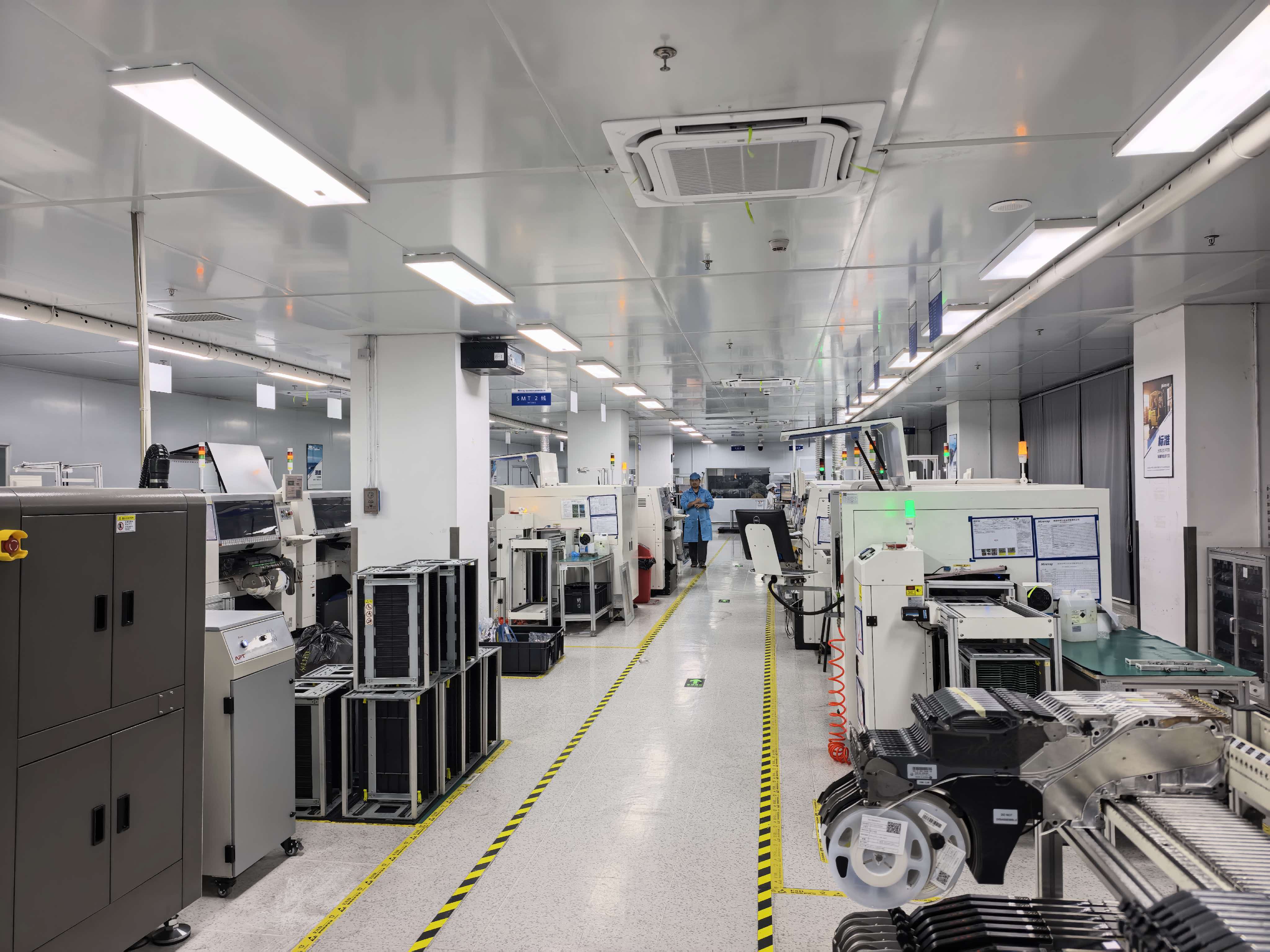
The honest boundary here: aluminum alloy is a material choice, a PCB is a construction method, and anti-interference design is an intention. None of the three is quantitative evidence on its own. They are hypotheses about reliability that a serious buyer tests against thermal behaviour, long-run stability, and the supplier willingness to describe how the claim was validated.
Interface and Protocol Facts That Can Be Tested Before Purchase
Interface documentation is the part of supplier due diligence that can be checked without a factory visit, because it either fits the buyer system or it does not. TCHD Video published interface documentation for its video hardware describes a common interface set: HDMI, SDI, LAN (POE), USB3.0, A-IN, RS232-IN, RS232-OUT, RS422 (compatible with RS485), DC12V power supply, dial switch and power switch, with video output available through HDMI, SDI, LAN and USB3.0.
The decision-relevant detail sits behind the physical connectors:
- Network. The LAN interface is a 10M/100M/1000M adaptive Ethernet port that supports POE power supply and audio and video output. LAN video compression formats are H.264 and H.265, and supported network protocols include RTSP, RTMP, ONVIF, GB/T28181, VISCA OVER IP, IP VISCA, RTMPS and SRT, with remote upgrade, remote reboot and remote reset.
- USB. USB 3.0 video compression formats are MJPG, H264, YUY2 and NV12, and USB communication uses the UVC video communication protocol and the UAC audio communication protocol.
- Audio. Audio input is a double track 3.5mm linear input, and audio output is available through HDMI, SDI, LAN and USB3.0, with AAC, MP3 and G.711A compression formats.
- Control. The control interface uses RS232-IN, RS232-OUT and RS422 compatible with RS485. Serial communication protocols are VISCA, Pelco-D and Pelco-P, with supported baudrates of 115200, 38400, 9600, 4800 and 2400.
- Power. Input voltage is DC12V plus or minus 10%, input current is less than 1A, and power consumption is less than 12W. The power adapter accepts AC110V to AC220V input and outputs DC12V/2.5A.
Two published industry standards explain why this list matters commercially. The UVC (USB Video Class) standard allows capture cards to function as plug-and-play webcams without proprietary drivers, as described in Elgato technical documentation, which reduces deployment risk in multi-site rollouts where IT teams cannot install vendor software. Separately, uncompressed 4K 60Hz RGB 24-bit video requires approximately 11.94 Gbps of bandwidth, well above the 5 Gbps ceiling of USB 3.0, a figure documented in purplelec technical comparison of PCIe and USB capture paths. Together, these two facts explain why a 4K capture card specification has to be read as a system: interface, compression format and output path determine what actually reaches the receiving device.
Production Standards, Certifications and Warranty: Statement Versus Scope
TCHD Video capability documentation refers to strict industrial production standards, mainstream safety certifications and a standard after-sales warranty. These three statements are the ones most often accepted at face value during procurement, and they are also the easiest to convert into verifiable requirements.
Production scale as a fit signal. The published profile reports an annual output of 4,000 units with 50 employees and a 10-engineer R&D team, and an export ratio of roughly 20% across EU, USA and Asia markets. For buyers, that profile points to a supplier structured for mid-volume programmes and customization work rather than high-volume consumer retail. A programme requiring tens of thousands of units per year should treat capacity confirmation as a first-order question rather than a formality.
Certifications as scope, not adjectives. Mainstream safety certification is only useful in a procurement file when it is expressed as a certificate number, the standard it was issued against, and the list of model numbers covered. The distinction is not bureaucratic. A supplier can hold a valid certificate for one product family while a newly introduced designation sits outside that scope, and the paperwork will not reveal the gap unless someone reads the model list.
Warranty as a baseline, not a differentiator. A standard after-sales warranty establishes a floor for the commercial relationship. Buyers running telemedicine consultation, endoscope surgery or dual-channel medical recording workflows should go further and ask about RMA routing, spare-part availability for the specific designation, and the escalation path when a device fails during a live event.
A gap worth naming: third-party market research on this category identifies medical-grade certification status, for example ISO 13485 or FDA class status for medical capture hardware, as unverified in public sources. That is not a finding against any supplier; it is a signal that buyers in medical imaging and surgical teaching applications should request certification documents directly and confirm that the model number they intend to deploy sits inside the certified scope.
Where These Models Fit in Real Deployments
Capability evidence becomes procurement-relevant when it is mapped to workflows. TCHD Video published solution portfolio covers virtual studios, guide recording, online live streaming, educational MOOCs, hard disk broadcasting, media asset management, educational recording systems, conference live streaming equipment, outdoor live streaming equipment and streaming media servers. Its hardware range extends to medical video recorders, surgical teaching hosts, multi card aggregation routers and 10G switches alongside capture cards, cameras, encoders and converters.
Read against the five designations, that portfolio maps onto distinct buying situations:
- USB capture workflows. Game console recording, esports tournament feeds, lecture recording, remote education and single-operator live streaming typically run on driverless USB capture devices, where plug-and-play behaviour across platforms matters more than broadcast-grade connectors.
- SDI capture and playback workflows. Broadcast multi-camera production, campus TV studios and conference streaming environments use serial digital interfaces for longer cable runs and more stable signal chains, which is where board-level construction evidence becomes relevant.
- Live switching workflows. Multi-camera events, virtual studios and conference streaming rely on switching hardware to cut between sources in real time, and on control protocols such as VISCA, Pelco-D and Pelco-P to integrate with existing control surfaces.
- Camera-class workflows. Video conference rooms, education teaching spaces, event live streaming and medical training use camera hardware with HDMI, SDI, USB and network outputs, so the same unit family can serve different rooms without a redesign.
- Medical and teaching workflows. Telemedicine consultation, endoscope surgery recording and dual-channel medical recording sit at the highest compliance threshold, and they draw on the medical video recorders and surgical teaching hosts in the wider portfolio.
Market Context: Where 4K Capture Demand Is Moving
Dataintelo values the global capture card market at USD 1.31 billion in 2024 and projects USD 3.37 billion by 2033 at a CAGR of 12.4%. The same research shows USB capture cards holding the largest product type share at 38.4% in 2025, with gaming still the largest application segment at 31.2% of total revenue in 2025.
The growth signal that matters most for supplier selection sits in the smaller segments. Medical imaging and industrial applications together account for 19.4% of total video capture card revenues, with a segment CAGR of 11.8% through 2034. Those workflows carry longer qualification cycles, stricter documentation expectations and higher switching costs, which supports the case for evaluating suppliers on evidence rather than on unit price alone.
Competitively, the same 2025 research places Elgato (Corsair Gaming) and AVerMedia Technologies in leadership positions. For a mid-volume manufacturer, that landscape makes differentiation through interface coverage, integration support and OEM flexibility more realistic than competing on consumer brand recognition.
A data caution for procurement files: the same research source publishes different total market values across report summaries, including USD 1.31 billion for 2024 and a USD 2.8 billion figure for 2025, which suggests a definitional difference in what is counted as video capture. Category market size should inform direction and prioritisation, not serve as a budgeting line item.
Comparison with Traditional Solutions, and the Boundaries of Capability Evidence
TCHD Video published comparison material positions its camera-class hardware against traditional camera solutions on stability, low latency, 4K imaging and a stated 15% lower cost, along with lower maintenance requirements. The published camera specification includes a 1/2.8-inch 8.42 million pixel image sensor, a maximum resolution of 3840x2160 with an output frame rate of up to 60 frames per second, and multiple output interfaces covering HDMI, SDI, USB and wired LAN with optional POE. In that specification, SDI supports 100 metres of transmission in 1080P60 format.
Those figures are useful precisely because they can be checked. Equally important is the set of boundaries the same material does not resolve:
- USB bandwidth is a hard ceiling. With uncompressed 4K 60Hz RGB video requiring roughly 11.94 Gbps against a USB 3.0 limit of 5 Gbps, a USB-based capture path depends on compression or on a different interface. Buyers should confirm which compression format applies at their target resolution and frame rate rather than assuming native 4K over USB.
- Transmission distance is documented at a specific format. The stated 100-metre SDI figure applies to 1080P60. Buyers planning 4K over SDI should confirm the supported distance at the resolution and frame rate they intend to run.
- Physical construction is not a test report. Aluminum housings and PCB construction describe design decisions. Electromagnetic compatibility performance, thermal behaviour under sustained load and certification scope are separate evidence items that must be requested individually.
- Portfolio breadth is not software compatibility. A supplier covering USB, SDI, switching and cameras still has to prove interoperability with the buyer platform. UVC and UAC compliance, plus ONVIF, RTSP and SRT support where relevant, are the checkpoints that matter.
- Capacity has a shape. A published annual output of 4,000 units supports mid-volume programmes well; it also means large rollouts should be planned with lead-time and capacity confirmation built into the schedule.
Future Outlook
The direction of the 4K capture card market suggests that due diligence will become more model-specific, not less. USB capture already holds the largest product type share at 38.4%, which keeps entry costs low and makes differentiation harder; at the same time, medical imaging and industrial segments are growing at 11.8% CAGR with documentation requirements that reward suppliers able to produce evidence rather than adjectives.
For buyers, the practical implication is that supplier evaluation will increasingly resemble an engineering audit. The questions that separate suppliers are concrete: which designation, which interface set, which compression format, which certificate scope, which warranty path. Suppliers whose portfolios span USB capture, SDI capture and playback, live switching and camera hardware, with named models in each category, are structurally better positioned to answer those questions than single-category vendors, provided the buyer keeps asking at designation level.
Frequently Asked Questions
How can a buyer verify a 4K capture card supplier without visiting the factory?
Work at designation level rather than category level. For each model on the shortlist, request an interface list, a power specification, a housing material statement, the certificate scope that names that model number, and the warranty terms. Then test the answers for internal consistency: a product described as an SDI capture and playback card should have board-level and connector documentation, while a USB capture card should specify compression formats and UVC/UAC communication. Inconsistency between the category claim and the designation-level document is usually the first real signal.
Why does it matter whether a supplier offers both USB and SDI capture hardware?
USB capture and SDI capture are different engineering problems. USB capture devices typically serve driverless, single-operator workflows, while SDI capture and playback serves broadcast-style signal chains where cable runs, signal lock and board construction matter more than plug-and-play behaviour. A supplier maintaining both lines has to hold two disciplines at once, which reduces the number of vendors a multi-format project has to qualify and manage. This is the same logic that makes a combined USB, SDI, switcher and camera portfolio relevant to buyers assembling multi-room or multi-camera systems.
Do aluminum alloy housings and PCB construction prove product reliability?
They do not prove it by themselves. A metal enclosure is a thermal and mechanical design choice, and PCB construction describes a manufacturing method. Both are reasonable indicators that a supplier has thought about heat, connector retention and signal integrity, but reliability is established by test data, sustained-load behaviour and field performance. Buyers should treat material and construction statements as hypotheses, then ask for the supporting measurements.
Which interface details should be confirmed before placing an order?
Confirm the physical interface set, the compression formats used on each output path, the network and control protocols, and the power specification. In the interface documentation reviewed here, the published set includes HDMI, SDI, LAN (POE), USB3.0, A-IN, RS232-IN, RS232-OUT, RS422 compatible with RS485 and DC12V supply; LAN compression is H.264 and H.265; USB 3.0 compression is MJPG, H264, YUY2 and NV12; network protocols include RTSP, RTMP, ONVIF, GB/T28181, VISCA OVER IP, IP VISCA, RTMPS and SRT; and power consumption is under 12W from a DC12V supply with an AC110V to AC220V adapter input. Buyers should verify which of these apply to the exact model they are ordering.
How should market growth figures be used in a supplier decision?
Use them for direction and prioritisation rather than for budgeting line items. Published research places the global capture card market at USD 1.31 billion in 2024 with a projection of USD 3.37 billion by 2033 at 12.4% CAGR, and shows medical imaging and industrial applications at 19.4% of revenues with 11.8% CAGR through 2034. Because the same source also publishes a different total for 2025, buyers should treat headline market size as a definitional estimate and use it to decide which segments deserve deeper supplier vetting.
TCHD Video publishes a product catalogue covering its capture, conversion, switching and camera hardware, available for public download here: TCHD Product Catalog 2025 (PDF). Further product information is published at tchdvideohk.com.