
4V Cordless Tool Suppliers: What Proof Buyers Can Request
4V Cordless Tool Suppliers: What Proof Buyers Can Request
A 4V cordless tool range is easy to advertise and much harder to verify. For a buyer at the decision stage, the useful question is not whether a supplier lists a cordless staple gun, a precision screwdriver or a rotary tool, but which physical evidence — output numbers, samples, model-level specifications and inspection records — the supplier can place in a purchasing file before a purchase order is issued.
Low-voltage cordless tools, the below-12V class that includes 4V and 3.7V platforms, are identified by market research as a primary segment for DIY and light-duty household tasks. That classification shapes the procurement logic of the whole category: 4V tools compete less on raw power than on portability, charging convenience, range coverage and repeatable quality. Each of those four factors is verifiable, and each requires a different kind of evidence.
Why the 4V Category Turns on Capability Evidence
The surrounding market is large enough to attract supply, which is precisely why generic claims are not decisive. The global cordless power tools market was estimated at USD 12.2 billion in 2024 (Global Market Insights). In adjacent categories, the global staple gun market was valued at USD 1.54 billion in 2024 with a forecast CAGR of 3.13% through 2032 (Maximize Market Research); the household electric screwdriver market was valued at approximately USD 1.8 billion in 2024, with North America holding a 35% share (DataHorizzon Research); and the cordless multi-rotary tools market is projected to reach USD 1,024.95 million by 2026 (Global Market Insights).
None of those figures says anything about an individual supplier. They do explain why the 4V segment is crowded. Public data also tends to bury 4V inside broader low-voltage or below-12V groupings, which means a buyer searching for category-level evidence often finds none that is specific to the platform. In that situation the supplier's own documentation becomes the working evidence base — and the buyer's job is to test it.
A second structural point matters here. A 4V program is rarely a single product. It typically bundles a cordless staple or nail gun, a cordless screwdriver or precision screwdriver set, sometimes a rotary tool or a hot glue pen, plus the bits, sockets, hex keys and hand tools that make the kit usable. The evaluation therefore covers a range, not a unit, and consistency across that range is the real risk.
What Counts as Supplier Capability Evidence for a 4V Platform
Capability evidence for a 4V cordless platform falls into four layers. Together they answer the questions a decision-stage buyer actually has.
| Evidence layer | Buyer question it answers | What to request |
|---|---|---|
| Range documentation | Can the supplier cover the whole kit or program, not just one item? | Complete SKU list by family with rated voltage, battery capacity, torque, speed and packaging format |
| Output and process evidence | Is production internal, and is it repeatable at volume? | Facility area, annual unit output, list of in-house process steps, major equipment by production stage |
| Sample evidence | Does the physical product match the quotation and the datasheet? | Pre-production samples drawn from a defined production lot, with recorded test conditions and results |
| Consistency evidence | Will the five-thousandth unit match the fifth? | Incoming, in-process and final inspection records; batch traceability; certificate pack per model |
Ordering these four layers matters. Range documentation without output evidence describes a catalogue, not a factory; output evidence without sample evidence describes a facility, not a product. A shortlist built only from price quotations will not surface the difference.
Factory Output Evidence: What the Numbers Do and Do Not Show
HOTAK PRO TOOLS is a 4V cordless and hand tool brand manufactured by Ningbo (Yinzhou) Yongjia Electrical Tools Co., Ltd., a company founded in 2000 and based in Ningbo, Zhejiang Province, China. Its published capability data provides a concrete example of what a supplier can document: a production base of more than 45,000 m², an annual output of 18,000,000 units, 450 employees, an R&D team of 25 engineers, and an export ratio of 95% with main markets in the EU, the USA, Southeast Asia and South America.
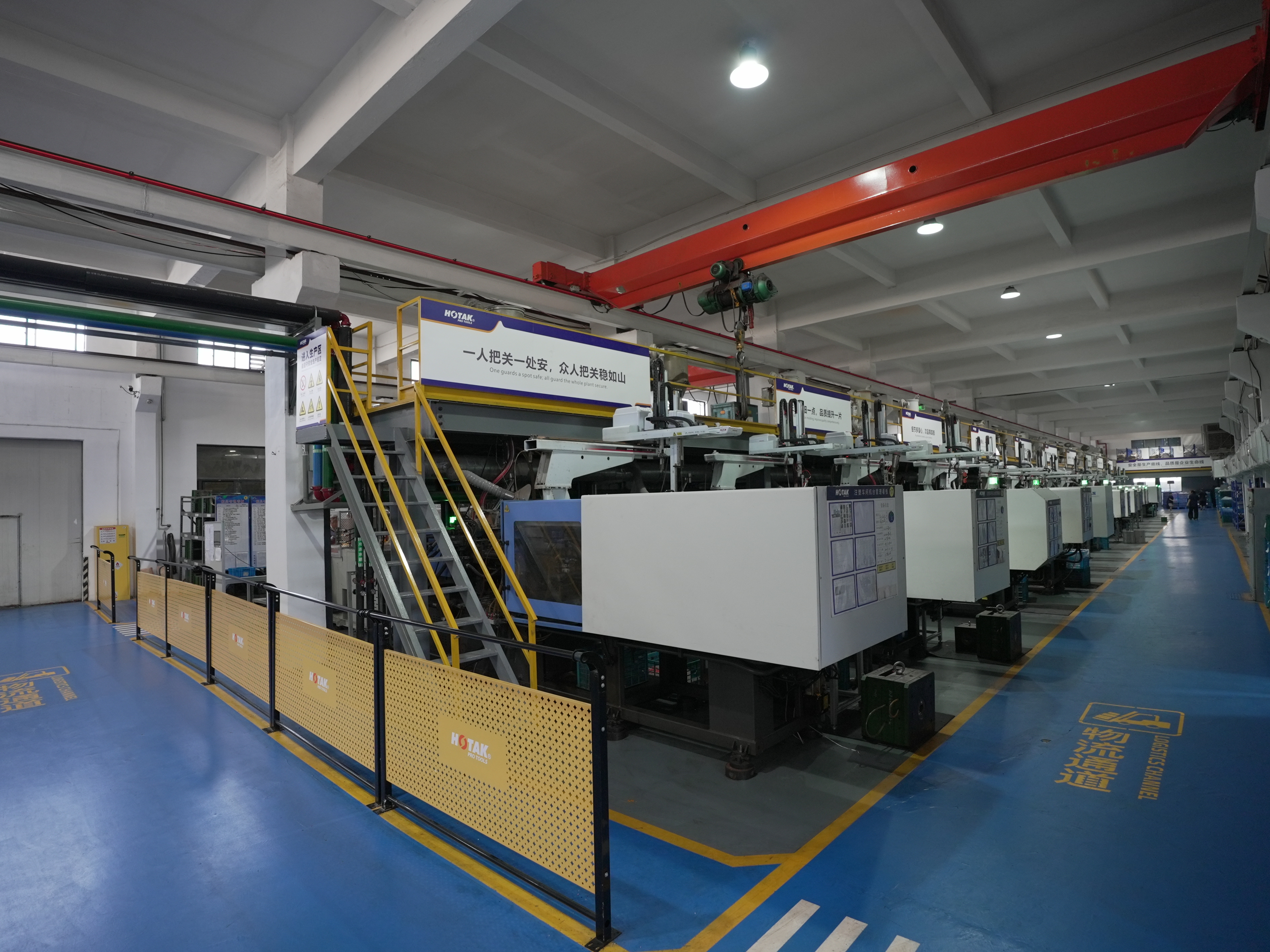
Injection molding workshop. Housing and plastic component production is one of the in-house stages that determines whether a 4V range can be scaled without outsourcing.
More informative than any single figure is the process chain. The manufacturer states a fully integrated in-house production chain covering mold development, forging and stamping, heat treatment, surface finishing, precision machining, assembly and packaging. For a 4V cordless program, the stages that most directly affect delivered quality are the ones that are hardest to subcontract cleanly: tooling and molds for housings, metal forming for internal components, assembly of battery, motor and switch modules, and final packaging that carries market-specific labeling.
Product Range Evidence: Coverage Across the Families Buyers Actually Order
A documented range is the most extractable form of capability evidence, because each model can be checked against a stated voltage, battery capacity, torque and speed. In the HOTAK PRO TOOLS range, the 4V and 3.7V electric tool family sits alongside the manufacturer's established hand tool lines — hex keys, torx keys, staple guns, precision screwdrivers, hobby knives and hand tool sets — which is relevant to buyers assembling a complete retail or DIY program.
| Product family | Representative models | Documented specifications |
|---|---|---|
| Cordless staple and nail guns | YJSG-501 (five-use lithium electric nail gun); YJSG-500 (two-use lithium electric nail gun) | Rated voltage 3.7V; battery capacity 2000 mAh; 25W |
| Cordless power screwdrivers | YJPS-902; YJPS-912 (power screwdriver set) | YJPS-902: 3.7V, 2000 mAh, no-load operating time ≥60 min, electric torque 2N / 3.5N / 5N, manual torque 10 N·m, output speed 0–280 rpm, charge current 1–1.5A, charge output voltage 5V. YJPS-912: 3.7V, 800 mAh, ≥50 min, electric torque 2.5N, manual torque 10 N·m, 0–250 rpm, charge current 500 mA |
| Precision power screwdrivers | YJPS-906 (electric precision repair tools set); YJPS-907 (26pcs cordless precision power screwdriver set) | 3.7V; capacity 320 mAh; electric torque 0.15 N·m; manual torque 3 N·m; output speed 0–220 rpm (YJPS-907: 220 r/min, charging time 1 hour) |
| Cordless hot glue pen | YJGG-001 | 3.7V; 320 mAh; 4.2W; operating time ≥120 min; glue flow speed 60 sec with release in 30 sec; operating temperature 150℃; charge current 1–1.5A; charge output voltage 5V; full charge 120 min ±10 min |
| Household electric tool sets | YJTS-3526 (41pcs household electrical screwdriver tool set) | 3.7V lithium battery; 320 mAh; no-load speed 220 r/min; charging time 1 hour; power torque range 0.15 N·m; hand torque range 3 N·m |
| Bits sets | YJTS-3109 (18pc impact tough drill and drive set); YJTS-3110 (26pc) | Magnetic bit holder; S2 bits with black phosphate finish; PP case |
| Screwdriver sets | YJPS-6851 (25pcs extension screwdriver set); YJPS-6852 (17pcs precision screwdriver set) | 1/4 inch and 5/32 inch bit formats; Phillips, slotted, hexagon, Torx and Pozi configurations; 20.5mm sockets on YJPS-6851 |
| Hex keys | 105221K1 / 105221K2 / 105221K3 (9pcs short, long and extra-long arm ball point hex key sets — metric) | Material CR-V 6150; published torque table from 0.82 N (1.5 mm) to 220.00 N (10.0 mm) |
Read as evidence rather than as a catalogue, the table supports several checks. Voltage consistency across the electric family (3.7V, marketed as the 4V class) simplifies charger and packaging decisions. Battery capacity spans 320 mAh to 2000 mAh, which maps to different runtime promises and therefore to different retail price points and use cases. Torque values vary widely between the precision repair tools (0.15 N·m electric) and the manual torque rating of the larger screwdriver models (10 N·m), so a 4V screwdriver is not a single specification.
Sample Evaluation: Turning a Sample Into Evidence
A sample is only evidence if it is compared against something. The practical standard is the quotation and the published datasheet: the sample should carry the same rated voltage, the same battery capacity, the same torque setting and the same no-load speed as the model being quoted. Where a supplier quotes a range, request samples from more than one point in that range.
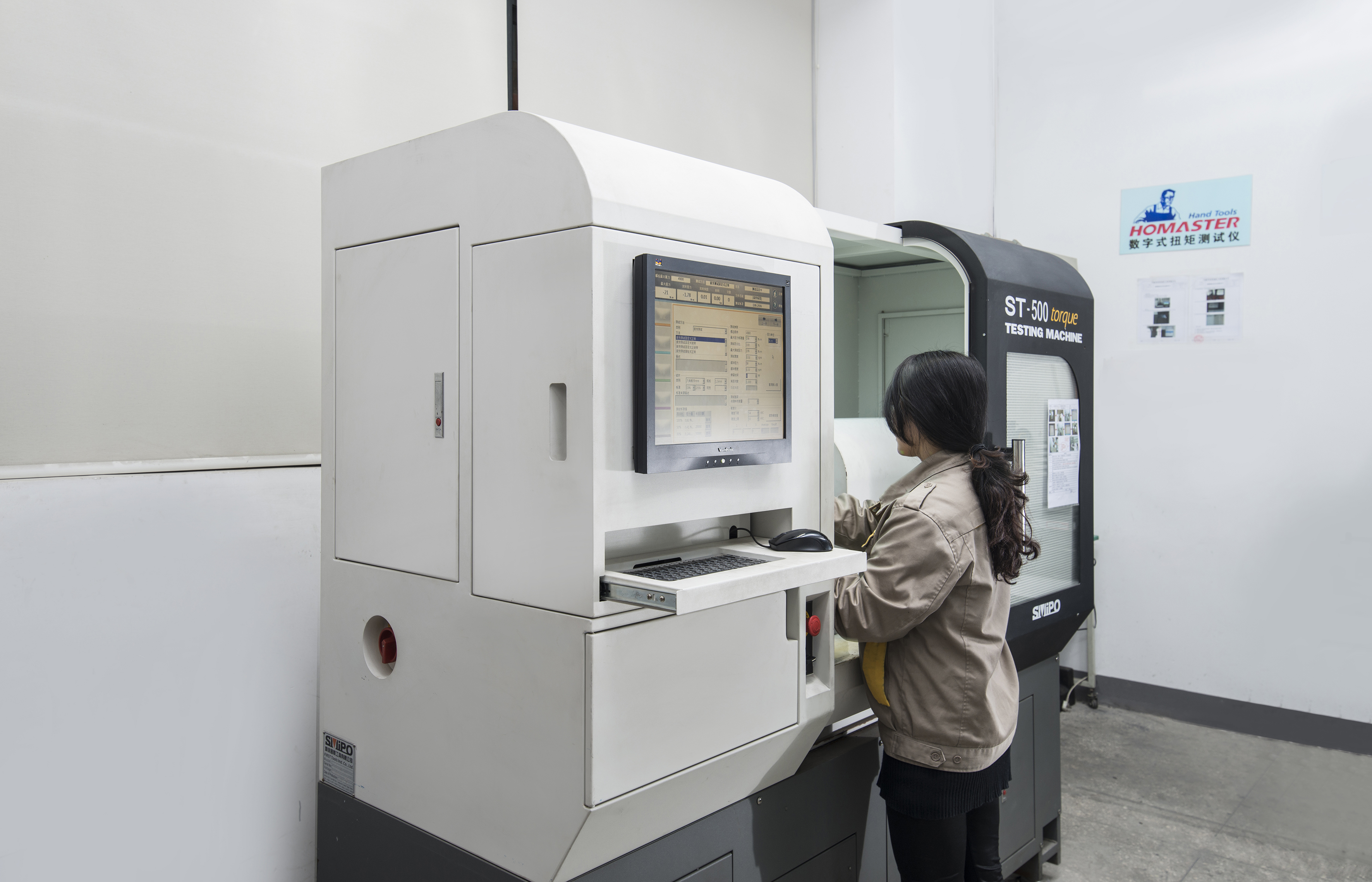
Testing lab. Sample evaluation converts published specifications into measured results — runtime, torque, charging behaviour — before a mass-production commitment.
Several claims in the current range are directly testable on a bench. On YJPS-902, no-load operating time of ≥60 minutes, three electric torque settings of 2N, 3.5N and 5N, manual torque of 10 N·m, output speed of 0–280 rpm, charge current of 1–1.5A and a 5V charge output voltage can all be checked with standard instrumentation. On YJPS-912 and YJPS-906 the equivalent figures are ≥50 minutes at 800 mAh and ≥30 minutes at 320 mAh respectively. The hot glue pen YJGG-001 adds process variables that are easy to observe: operating temperature of 150℃, glue release within 30 seconds, glue flow speed of 60 seconds, operating time of ≥120 minutes and a full charge time of 120 minutes ±10 minutes.
What a single sample cannot show is lot-to-lot consistency. That is the function of the inspection system rather than the sample itself. A credible supplier runs incoming inspection, in-process control and final product testing — commonly summarised as IQC, IPQC and FQC — across the full production cycle. The buyer-side protocol that follows is straightforward: request samples from at least two production lots, record batch or serial identification, test under stated ambient conditions, and retain the approved sample as the reference standard for the order.
Technical Explanation: Why Material and Inspection Choices Matter in a 4V Kit
In comparison with common hand-tool brands and low-voltage portable power-tool manufacturers, the stated differentiator for this product line is the use of higher-grade CR-V and S2 steel combined with a full-process inspection system (IQC-IPQC-FQC), which contributes to improved torsion and wear resistance. Measured against ordinary 45# carbon-steel hand tools, the line is stated to provide 15–25% higher proof torque with a hardness range of HRC48–54.
For a 4V program, this is not a side note. A 4V screwdriver delivers electric torque measured in fractions of a newton metre — 0.15 N·m on the precision models — and manual torque of 3 N·m or 10 N·m depending on the model. The bits, hex keys, sockets and manual handles bundled with those tools determine how much of that torque reaches the fastener without deformation. Material grade and inspection discipline on the accessory side therefore set the practical ceiling of the whole kit.
The documentation style matters too. The 9-piece ball point hex key sets (105221K1, 105221K2, 105221K3) are published with material (CR-V 6150) and a torque table running from 0.82 N at 1.5 mm to 220.00 N at 10.0 mm. A buyer can compare those values with an application requirement before ordering, rather than after.
There is a cost dimension that belongs in the same comparison. The stated cost of this product is 8–12% higher than low-grade carbon-steel alternatives, while remaining competitive against premium imported brands. The decision rule that follows is application-driven: where fastening is repeated, torque-sensitive or warranty-exposed, the material premium is defensible; for occasional light use, the difference is less material to the end user.
Application Fit: Where 4V Cordless Tools Are the Right Choice
Supplier data positions these tools for household indoor environments and open-air construction site environments, applied to repair and fastening work with screws, nuts and nails, with impact resistance listed as a specific requirement. In practice, the 4V class covers furniture assembly, electronics and small-device repair, craft and hobby projects, light upholstery stapling, home improvement touch-ups and adhesive bonding with a cordless glue pen.
The same data defines the boundaries. Electric torque on the 4V screwdriver family ranges from 0.15 N·m to 5 N·m depending on model, and manual torque is capped at 3 N·m on the precision models and 10 N·m on the larger ones. No-load operating time is stated as ≥30, ≥50 or ≥60 minutes depending on battery capacity. Cordless staple and nail guns in the range operate at 3.7V and 25W, which suits light to medium stapling rather than structural fastening. Where a job requires sustained high torque or a high duty cycle, a higher-voltage platform is the correct tool, and a 4V tool should not be specified into that role.
4V Cordless vs Manual Hand Tools vs Higher-Voltage Cordless: A Decision Comparison
| Dimension | 4V / 3.7V cordless | Manual hand tools | Higher-voltage cordless |
|---|---|---|---|
| Power source | Rechargeable lithium battery, 320–2000 mAh depending on model; 5V charge output on some models | None required; zero power consumption and independent of power supply | Larger battery packs with higher energy capacity |
| Torque | Electric torque 0.15 N·m to 5 N·m by model; manual torque 3 N·m to 10 N·m | Depends on the user and lever length | Generally higher sustained torque |
| Runtime / dependency | ≥30 to ≥60 minutes no-load; glue pen ≥120 minutes operating | Not applicable | Longer per charge but heavier |
| Portability | High; compact housings, single-hand use | Highest; no charging logistics | Lower; weight and pack size increase |
| Cost position | Material-intensive parts stated 8–12% above low-grade carbon-steel alternatives; competitive versus premium imported brands | Lowest | Highest |
| Best fit | Light fastening, assembly, craft, upholstery stapling, glue bonding | Power-off field work and torque-critical manual fastening | Continuous or demanding fastening |
| Main limitation | Electric torque ceiling and no-load-rated runtime | No powered assistance; slower on repetitive work | Weight, cost, and over-specification for small jobs |
The comparison is not a ranking. Each column is correct for a different job, and the most common procurement error in this category is specifying a 4V tool for a task that its torque or duty cycle cannot support — or paying a higher-voltage premium for work that a cordless precision screwdriver completes more conveniently.
Compliance Evidence: Company-Level Approvals vs Model-Level Certificates
Compliance documentation is frequently mixed together in supplier presentations, and buyers should separate two levels. At company level, the manufacturer states ISO9001 quality management system certification, TÜV/GS German safety certification, BSCI social compliance certification and VPA (Verify Production Audit) approval, together with factory audits approved by Walmart (USA) and Kingfisher (UK). These support confidence in the management system and in retail-grade audit readiness.
They do not replace model-level evidence. For import purposes, request certificate copies that carry the exact model number and the standard referenced for the destination market, and confirm that the certificate is still valid and that its scope covers the SKU being ordered. Trade classification is a separate matter again: HS Code 846729 covers tools for working in the hand, with self-contained electric motors, other — which includes most cordless screwdrivers and specialty 4V tools — and is used for customs and duty planning rather than as a safety approval.
Market Trends That Change What Buyers Ask For
Three trends are visible in the available data, and each shifts the evidence a buyer should request. First, low-voltage cordless tools below 12V, including 4V and 3.7V platforms, remain a primary segment for DIY and light-duty household tasks (Market.us), so range coverage inside that segment continues to matter more than headline power figures. Second, the battery and charging architecture is becoming the platform decision: the 5V charge output specified on models such as YJPS-902 and the shared 3.7V / 320 mAh architecture across the glue pen and precision screwdriver families point towards charger standardisation. In the wider market, Ryobi has built a 4V interchangeable USB battery system and Dremel markets a 4V home and lifestyle tool line, according to secondary trade sources. Public data on how widely USB-C charging has been adopted inside the 4V category is thin — a real information gap that buyers should close directly by asking each supplier for its charger, battery and connector specification.
Third, adjacent categories keep expanding. The global staple gun market is forecast to grow at a 3.13% CAGR through 2032 (Maximize Market Research), and the household electric screwdriver market was valued at approximately USD 1.8 billion in 2024 with North America at a 35% share (DataHorizzon Research). Expansion of this kind typically produces more supplier entries and more similar-looking catalogues, which raises the value of documented, model-level evidence during shortlisting.
Future Outlook
The direction of travel is towards range-level purchasing and model-level proof. As 4V programs consolidate into kits that combine a power tool, a charging standard and a set of bits, hex keys or sockets, the supplier that can produce a matched documentation set — a SKU list with voltage, capacity, torque and speed; sample test records; inspection documentation; and certificate copies referencing the model number — will move through buyer evaluation faster than one that only offers a price list.
For buyers, the practical implication is to treat undocumented items as open questions rather than assumptions. If a facility detail, a certification or a platform feature is not stated for a specific model, the correct next step is to ask for it in writing, and to hold the shortlist until the answer arrives.
FAQ
What should a buyer request first when evaluating a 4V cordless tool supplier?
Start with the model-level documentation set rather than a price list: the complete SKU list by product family with rated voltage, battery capacity, torque and speed; the facility's annual output and in-house process steps; and the inspection structure covering incoming, in-process and final testing. These three items establish whether the supplier's range, production and quality system can be checked against the specific models being quoted.
How should a sample order be structured so that it produces usable evidence?
Request pre-production samples drawn from a defined production lot and matched to the quotation in rated voltage, battery capacity, torque setting and no-load speed. Test the published claims directly — for example, no-load operating time (≥30, ≥50 or ≥60 minutes depending on model), electric torque (0.15 N·m to 5 N·m), manual torque (3 N·m or 10 N·m) and charging current (500 mA or 1–1.5A). Drawing samples from at least two lots allows lot-to-lot variation to be observed, and the approved sample should be retained as the reference standard for the order.
How do 4V cordless tools compare with manual hand tools on cost and performance?
The comparison depends on which part of the product is measured. On the material side, the line uses higher-grade CR-V and S2 steel with a full-process IQC-IPQC-FQC inspection system, stated to deliver 15–25% higher proof torque than ordinary 45# carbon-steel hand tools with a hardness of HRC48–54, at a cost 8–12% above low-grade carbon-steel alternatives while remaining competitive against premium imported brands. On the power side, manual tools require no battery and no charging, so for power-off field work they remain the practical option, while 4V cordless tools reduce effort on repetitive light fastening and assembly.
What are the practical limits of a 4V or 3.7V platform?
The limits are defined by the published specifications: electric torque between 0.15 N·m and 5 N·m depending on model; manual torque of 3 N·m or 10 N·m; no-load operating time of ≥30 to ≥60 minutes depending on battery capacity (320–2000 mAh); and cordless staple and nail guns rated at 3.7V and 25W, suited to light to medium stapling. For continuous high-torque fastening or heavy-duty cycles, a higher-voltage platform is the appropriate specification.
How can a buyer confirm that a supplier's stated output applies to the 4V models being ordered?
Site-level figures such as an annual output of 18,000,000 units across a 45,000 m² production base describe the whole product mix and do not, on their own, indicate capacity for a specific 4V SKU. Ask for model-level confirmation: monthly capacity for the quoted model, whether the assembly line is dedicated or shared, ownership of the tooling, and the sourcing route for batteries, motors and chargers. Lead times should be confirmed separately against the quoted model.
Which certifications matter when importing 4V cordless tools, and how are they verified?
Company-level approvals held include ISO9001, TÜV/GS, BSCI and VPA, along with factory audits approved by Walmart (USA) and Kingfisher (UK). These indicate the maturity of the management system but do not automatically cover a specific SKU in a specific market. Verification therefore means requesting certificate copies that state the exact model number and the standard relevant to the destination market, checking validity dates and confirming that the scope includes the model. HS Code 846729 is the trade classification for hand tools with self-contained electric motors, other, and supports customs planning, but it is not a safety certificate.