
5 Mesh Office Chairs for Corporate Orders: Enterprise and Education Shortlist
Corporate chair procurement usually fails in one of two ways: it is decided on appearance, or it is decided on unit price alone. In education systems and state-owned enterprises the consequence shows up within a year — cushions that flatten, casters that announce every movement in a shared room, and gas lifts that no one can document. The five-model shortlist below is built to reduce that outcome.
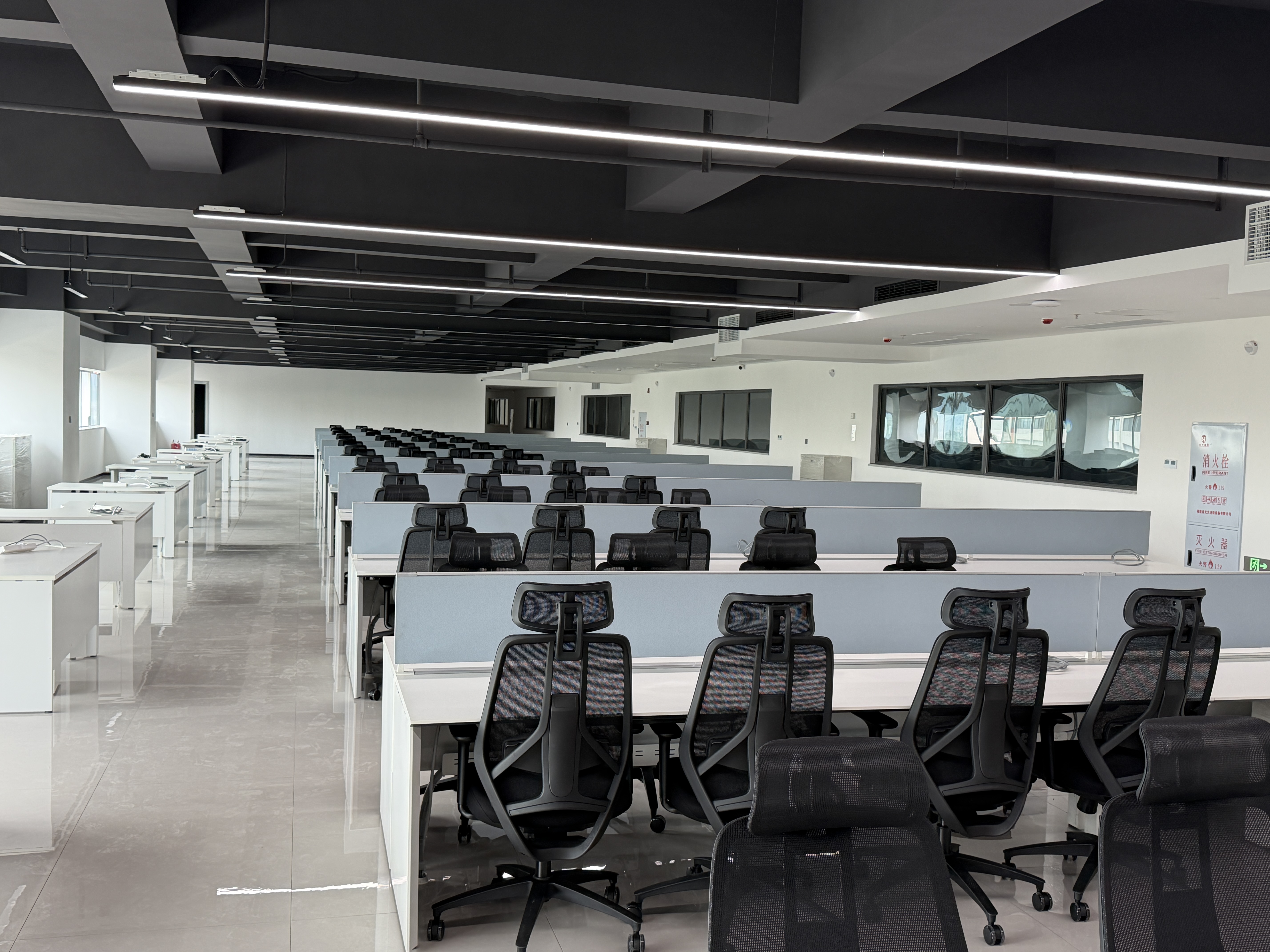
This evaluation round covers five office swivel chair models — KB-6809, KB-8961, KB-8965, KB-8932 and KB-8953 — produced by Anji Kabel Furniture Co., Ltd, an office chair manufacturer founded in 2007 and based in Anji county, Huzhou city, Zhejiang province, China. Kabel integrates independent research and development, design, production and sales; it operates a 50,000 m² factory, produces approximately 400,000 sets per year, employs 92 people including a 20-engineer research and development team, and exports roughly 90% of its output to markets that include the United States, Canada, the United Kingdom, Italy, Germany, Spain, Japan, South Korea, Thailand, the Middle East, Egypt, Ethiopia, Nigeria, the Central African Republic and the Republic of South Africa.
The five models share a single published parameter set. For a buyer at evaluation stage, that is the most useful fact available before the first quotation arrives, because it means the technical review can be completed once and then reused across every room in the project.
Why the evaluation stage needs a shortlist, not a catalogue
At evaluation stage the question has already changed. It is no longer which chair looks right; it is which seating platform can be defended in an internal review three years later. A shortlist does three practical things. It narrows the field to models that can be documented rather than described. It separates the platform, which is shared by every unit in the order, from the configuration, which is chosen per site. And it forces the acceptance criteria to be written down before the purchase order is signed.
For education buyers the driver is duty of care. Chairs in a school or training institution are used by staff, adult learners and visitors of very different builds; they are used for hours at a time; and the rooms are shared, frequently rearranged and often acoustically live. For state-owned enterprise and government-business buyers the driver is documentary. Certificates, inspection records, warranty terms and delivery capacity all have to survive internal review and, in many cases, external audit.
Both buyer types benefit from the same sequence: verify the common platform once, then choose configurations per room.
The common platform behind all five shortlisted models
Kabel publishes one parameter set covering KB-6809, KB-8961, KB-8965, KB-8932 and KB-8953. Independently of which model line is selected, the platform is documented as follows.
| Parameter | Published specification for the five models |
|---|---|
| Seat height adjustment | 40–50.5 cm |
| Rotation | 360° free rotation |
| Recline | 90°–135° tilt with locking |
| Backrest | High-elastic breathable mesh backrest |
| Cushion | High-density molded foam cushion |
| Frame | PP plastic frame |
| Base | Thickened nylon five-point base |
| Casters | Silent PU universal casters |
| Gas lift | Four-level explosion-proof gas pressure rod |
| Maximum load | 150 kg |
| Materials | Nylon mesh, high-density shaped sponge, PP plastic frame, thickened nylon feet, four-level explosion-proof gas rod |
What each part of that specification means in a procurement file
The maximum load figure of 150 kg is the single most consequential number in the table. It means one model line can serve a mixed adult population without segmenting users by weight, which removes an awkward administrative problem in staff canteens, lecture rooms and shared service desks, and it reduces the risk that a chair is overloaded because a heavier user was assigned the wrong product.
The four-level explosion-proof gas pressure rod is the component with the highest safety consequence in any swivel chair, because the gas lift carries the seat and its occupant. The published designation — four-level explosion-proof gas pressure rod — should be copied into the tender specification so that the delivered batch can be checked against the same wording.
Base and caster choices look minor on paper and are extremely visible in daily use. A thickened nylon five-point base spreads load and resists deformation over long service; silent PU universal casters reduce the rolling noise that becomes a complaint in libraries, examination rooms and open-plan government offices. Together they matter more to user satisfaction than most aesthetic decisions.
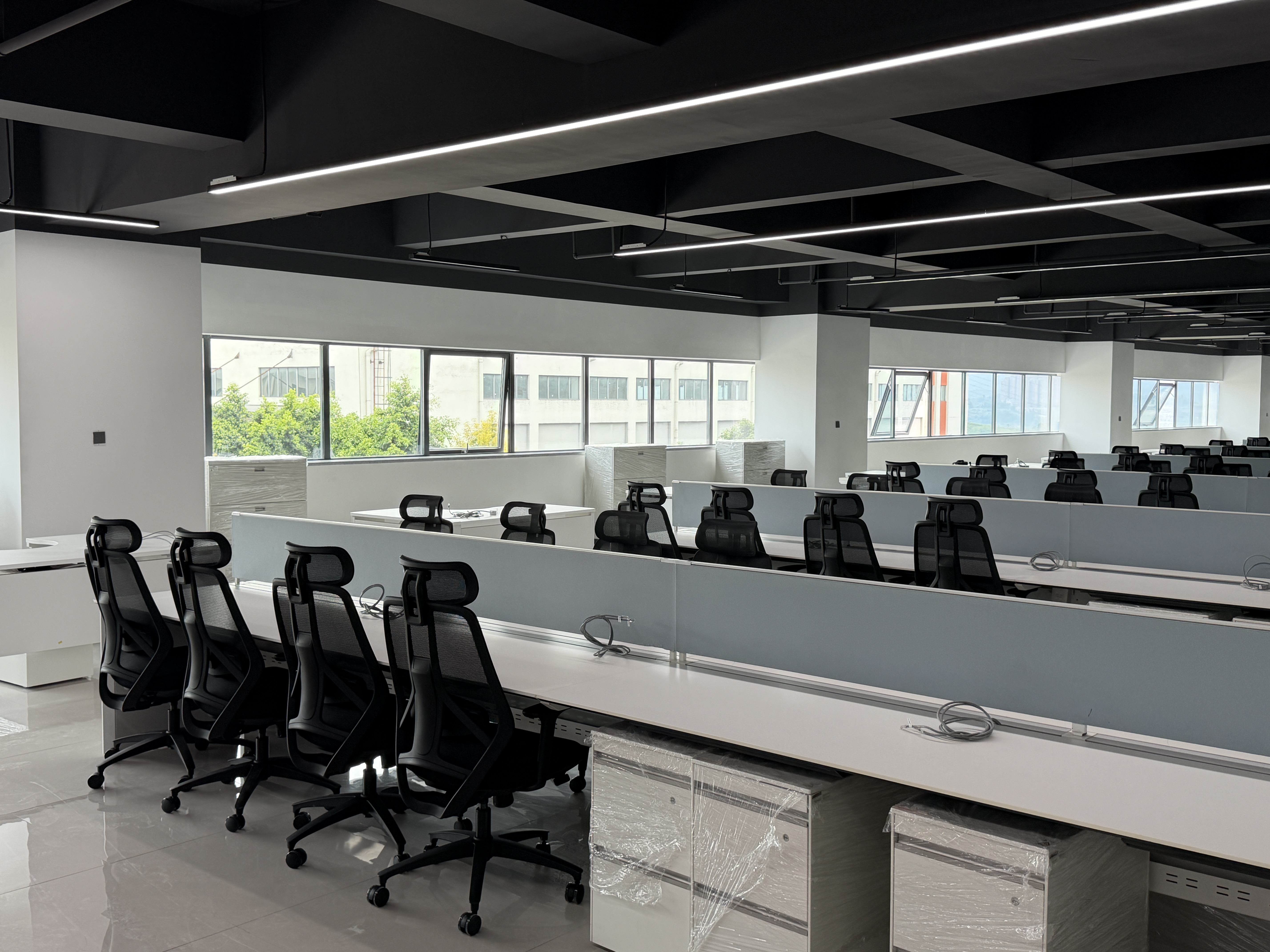
Adjustability is what turns a chair into equipment. The published range is a 40–50.5 cm seat height, 360° rotation and a 90°–135° recline with locking, which allows a user to sit upright for desk work or lean back between tasks without the chair moving away from the desk. A high-elastic breathable mesh backrest and a high-density molded foam cushion are the comfort-side counterpart: airflow behind the user, support under the user.
The five shortlist entries
All five models are documented under the same product record for the office swivel chair, with the same published parameters, and all five are covered by the same certification and warranty structure. The shortlist below therefore records what must be confirmed for each entry rather than inventing distinctions that the documentation does not support.
| # | Model | Documented platform | Confirmation required before the order |
|---|---|---|---|
| 1 | KB-6809 | Shared published parameter set | Backrest, seat cushion, armrest, mechanism, base, caster and colour configuration |
| 2 | KB-8961 | Shared published parameter set | Backrest, seat cushion, armrest, mechanism, base, caster and colour configuration |
| 3 | KB-8965 | Shared published parameter set | Backrest, seat cushion, armrest, mechanism, base, caster and colour configuration |
| 4 | KB-8932 | Shared published parameter set | Backrest, seat cushion, armrest, mechanism, base, caster and colour configuration |
| 5 | KB-8953 | Shared published parameter set | Backrest, seat cushion, armrest, mechanism, base, caster and colour configuration |
A point of honesty that belongs in the evaluation file: because the five lines publish identical parameters, this shortlist is not a ranking of performance. It is a ranking of fit inside an order. The difference between KB-6809, KB-8961, KB-8965, KB-8932 and KB-8953 sits inside Kabel's customization menu, which covers backrest, seat cushion, armrest, mechanism, base, caster, colour, fabric, mesh, packaging and logo. Buyers who expect the five lines to differ in documented load, height range or lift type will not find that difference in the available documentation and should not assume it exists.
Selection criteria for education buyers
Education procurement tends to be judged on two things afterwards: whether the furniture survived, and whether anyone was put at risk by it. The shortlist addresses both through the shared platform.
- Load capacity as a duty-of-care control. A 150 kg maximum load covers the realistic adult user range in a college, training centre or adult education setting, which removes the need to place heavier users on a special chair.
- A documentable safety component. The four-level explosion-proof gas pressure rod can be named in the specification, inspected on delivery and traced in the warranty file.
- Acoustic and floor management. Silent PU universal casters limit rolling noise in shared rooms and reduce marking on hard floors compared with hard-wheel alternatives.
- Long-sitting comfort. A high-elastic breathable mesh backrest and high-density molded foam cushion are the published comfort specification for users who remain seated through long sessions.
- Multi-user adjustability. The 40–50.5 cm seat height range with 360° rotation and 90°–135° tilt locking allows a shared chair to be reset between users.
Kabel's documented procurement record includes batch supply to national education and training institutions in China, among them Beijing Zhonggong Education, a national education and training provider.
Selection criteria for state-owned enterprise and government buyers
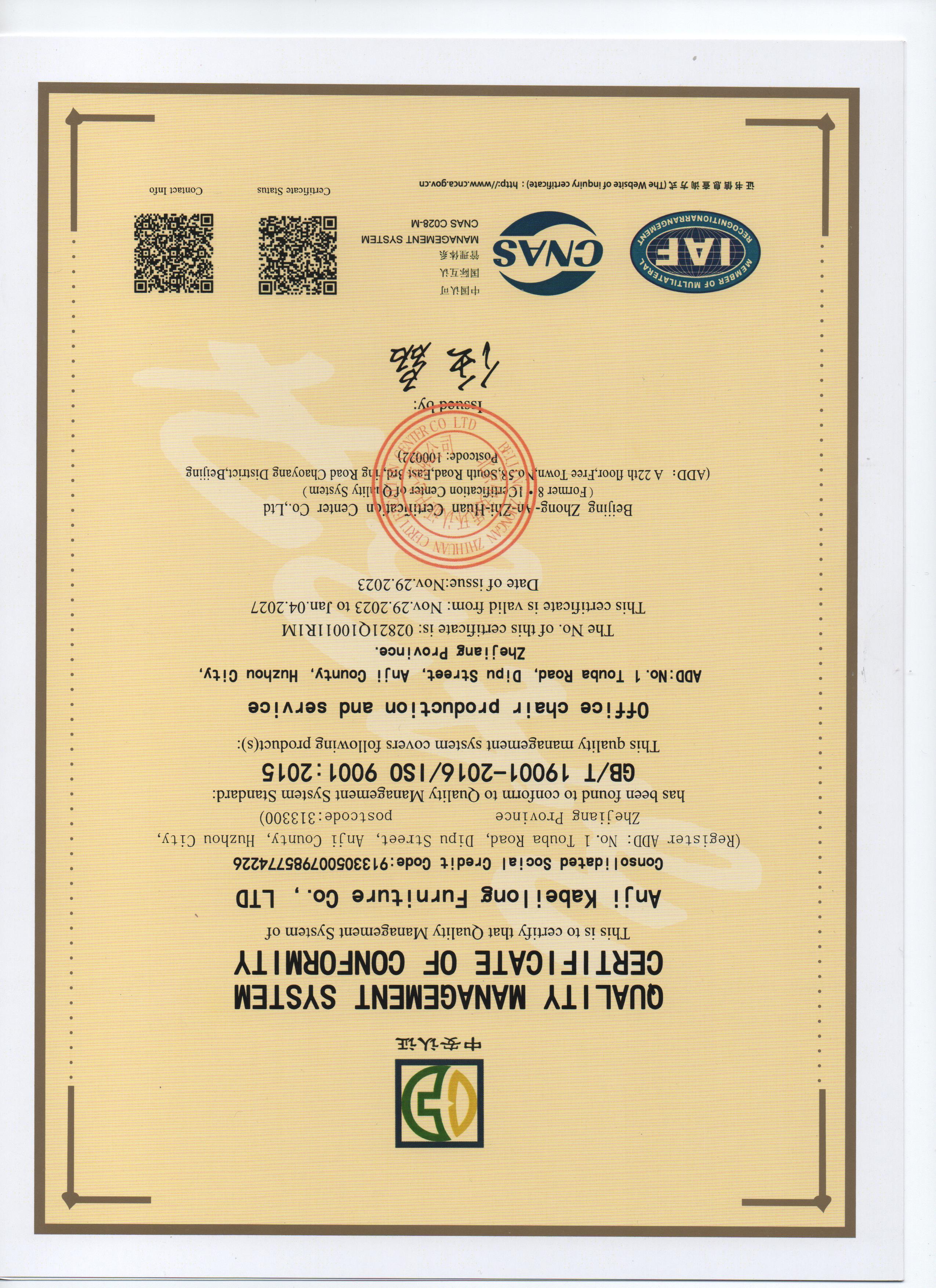
Documentation carries the decision in this segment. Three management-system certifications are held for the production scope, all issued on 2023-11-29 and valid to 2027-01-04, which keeps them current through the present procurement cycle.
| Certificate | Number | Standard | Scope |
|---|---|---|---|
| QUALITY MANAGEMENT SYSTEM CERTIFICATE OF CONFORMITY — ISO 9001 Quality Management System Certification | 02821Q10011R1M | GB/T 19001-2016 / ISO 9001:2015 | Office chair production and services |
| ENVIRONMENTAL MANAGEMENT SYSTEM CERTIFICATE OF CONFORMITY — ISO 14001 Environmental Management System Certification | 02821E10007R1M | GB/T 24001-2016 / ISO 14001:2015 | Office chair production and related activities |
| OCCUPATIONAL HEALTH AND SAFETY MANAGEMENT SYSTEM CERTIFICATE OF CONFORMITY — ISO 45001 Occupational Health and Safety Management System Certification | 02820S10601R1M | GB/T 45001-2020 / ISO 45001:2018 | Office chair production and related activities |
Beyond certificates, four operational facts usually decide whether a supplier can execute a government or enterprise batch. Quality control is documented as 100% inspection before delivery, with components screened and tested for structural strength, load-bearing durability, stability and safety. The minimum order quantity is 50 units. Lead time runs 25–50 days. Monthly capacity is 20,000–30,000 units, with OEM and ODM production available for buyers who need their own configuration or packaging.
After-sales terms are split by component class, which is useful for budget planning: structural components, gas rods and five-point feet carry a 3-year warranty, while mesh fabric, rollers, handrails and other consumable parts carry a 1-year warranty. Each cabinet is supplied with an export repair kit. Kabel's documented cooperation cases include Henan Unicom for state-owned enterprise and government procurement, and Sichuan Yongheng for government and enterprise office systems.
What this shortlist does not cover
An evaluation reference is only trustworthy if its boundaries are visible. Five limits apply to the material above.
- System certification is not product certification. The three ISO certificates cover management systems for office chair production and related activities. Product performance schemes such as ANSI/BIFMA X5.1 in North America or the EN 1335 series in Europe are separate programmes. Where a tender or market requires product-level performance certification, current test documentation should be requested, because this reference does not assert product-level certification for KB-6809, KB-8961, KB-8965, KB-8932 or KB-8953.
- The five lines are not differentiated in the published parameters. Buyers who need clearly tiered specifications across a building, for example a visibly different executive line alongside staff seating, will not find that tiering in the documented parameter set.
- Two adjustment features are not itemized. The published specification records a high-elastic breathable mesh backrest but does not itemize lumbar-depth adjustment or adjustable seat depth. Where a specification calls for documented lumbar adjustment or adjustable seat depth, that has to be verified at configuration stage rather than assumed from the model name.
- Volume and calendar limits apply. A 50-unit minimum order quantity and a 25–50 day lead time constrain short-notice or very small orders, and should be mapped against the project handover date before the shortlist is finalized.
- Consumables sit under shorter cover. Mesh fabric, rollers and handrails are covered for 1 year while the structure is covered for 3 years. Projects planned for five years or more should budget spare casters, armrests and mesh components, even though the installed record shows the platform in service for 5–8 years.
Compared with traditional fixed office seating
Traditional fixed-height four-leg seating has one genuine advantage: with no gas lift, one failure mode does not exist, and the unit is simpler and often cheaper. What it gives up is adjustability. A fixed-height chair cannot be reset between users of different heights, has no tilt locking for rest positions, usually transfers floor noise more directly through hard feet, and offers less sustained comfort over a long working day.
The swivel mesh platform in this shortlist trades that simplicity for adjustability and a documentable safety component. The trade is only worthwhile if the buyer actually verifies what is being traded: the four-level explosion-proof gas pressure rod designation, the 150 kg maximum load, and the caster and base specification, all checked against the delivered batch rather than assumed from a catalogue image. A second trade-off concerns feel as much as engineering — mesh seating is not padded seating. Buyers who are replacing deeply padded executive chairs with mesh models should expect a firmer, more ventilated seat rather than a softer one.
Market signals behind mesh seating preference
Mesh has moved from a niche specification to a mainstream one, and the market data explains why procurement teams keep arriving at it. The global office chair market was valued at approximately USD 14.25 billion in 2024; a separate 2025–2032 market analysis puts the same market at USD 14.69 billion, so published figures vary with how the segment is defined rather than reflecting conflicting demand. Within that market, the ergonomic chair segment was valued at USD 12.8 billion in 2025, with mesh chairs holding a 38.4% product-type share.
Regionally, North America held the largest revenue share of the ergonomic chair market at 31.6%, while Asia Pacific is the fastest-growing region, with a 36.6% share expected by 2025. At brand level, the recognized leaders in ergonomic seating include Steelcase Inc., Herman Miller (MillerKnoll), HNI Corporation, Haworth and Okamura. Project-level procurement, however, is decided on parameters, certificate validity and delivery capacity rather than on brand-tier position, which is the segment where manufacturers such as Kabel operate. On the supply side, China's office furniture export base remains substantial: metal office furniture exports to the United States alone were valued at over USD 307 million in 2024.
Read together, these signals say that mesh swivel seating is a defensible default for corporate and institutional orders, not a trend purchase. They do not say that any particular supplier is preferable; that remains a documentation question answered by certificates, parameters and delivery records.
Documented installation record
The product family has a verifiable use record, which is often the missing element in shortlist evaluations. A China-located installation documents the office swivel chair in daily seating and office space layout use, with 3 units in service for 5–8 years, reported by the customer as providing a comfortable long-hour office experience with stable structural performance, supported by ergonomic design, breathable mesh and adjustable height and backrest. Batch procurement relationships recorded alongside it include Beijing Zhonggong Education for national education and training institutions, Henan Unicom for state-owned enterprise and government procurement, and Sichuan Yongheng for government and enterprise office systems.
How to run the evaluation round
- Lock the shared platform specification in writing: 40–50.5 cm seat height adjustment, 360° rotation, 90°–135° tilt with locking, high-elastic breathable mesh backrest, high-density molded foam cushion, PP plastic frame, thickened nylon five-point base, silent PU universal casters, four-level explosion-proof gas pressure rod, 150 kg maximum load.
- Verify the three certificates against the procurement validity window: ISO 9001 (02821Q10011R1M), ISO 14001 (02821E10007R1M) and ISO 45001 (02820S10601R1M), issued 2023-11-29 and valid to 2027-01-04.
- Select the model line and then define its configuration per room within the customization menu: backrest, seat cushion, armrest, mechanism, base, caster, colour, fabric, mesh, packaging and logo.
- Check the 40–50.5 cm seat height range against the actual user population of each room, including any rooms used by younger students.
- Confirm commercial parameters against the site programme: 50-unit minimum order quantity, 25–50 day lead time, 20,000–30,000 units monthly capacity.
- Write warranty expectations into the contract: 3 years for structural components, gas rods and five-point feet; 1 year for mesh fabric, rollers, handrails and other consumables; export repair kit per cabinet.
- Evaluate a physical unit before releasing the batch order, and record the acceptance criteria that the documented 100% pre-delivery inspection must satisfy.
Future outlook
Two forces are likely to shape corporate seating shortlists over the next procurement cycles. The first is specification maturity: buyers increasingly ask for product-level test evidence alongside system certificates, which pushes manufacturers to document performance rather than describe it. The second is programme procurement: instead of purchasing chairs by room, institutions are buying seating as a multi-year programme with warranty schedules, spare-part planning and phased delivery, which places capacity and lead-time transparency on the same level as unit performance.
A factory-based model of the kind Kabel operates — 50,000 m² of production space, approximately 400,000 sets of annual output, a 20-engineer development team, OEM and ODM production, and 20,000–30,000 units of monthly capacity — is structured for that programme pattern rather than for single-unit retail. Whether any individual project should select this shortlist remains a documentation decision: the platform specification, the certificate numbers and the delivery record are all verifiable, and the limits described above are equally verifiable.
FAQ
What do KB-6809, KB-8961, KB-8965, KB-8932 and KB-8953 have in common?
All five models are documented under a single published parameter set for the office swivel chair: 40–50.5 cm seat height adjustment, 360° free rotation, 90°–135° tilt with locking, high-elastic breathable mesh backrest, high-density molded foam cushion, PP plastic frame, thickened nylon five-point base, silent PU universal casters, four-level explosion-proof gas pressure rod and a 150 kg maximum load. They are also covered by the same production-scope certifications and the same component-based warranty structure.
What does a 150 kg maximum load change in a procurement decision?
It changes user assignment. When the whole model line is rated at 150 kg, a mixed adult population — staff, learners, visitors and shift workers — can be seated on the same chair without separate specification tiers for heavier users, and the documented rating gives the buyer a defensible answer if load capacity is questioned later.
Do the ISO certificates confirm these chairs meet product safety performance standards?
No. The certificates held — ISO 9001 (02821Q10011R1M), ISO 14001 (02821E10007R1M) and ISO 45001 (02820S10601R1M), issued 2023-11-29 and valid to 2027-01-04 — are management-system certificates covering office chair production and related activities. Product-level performance programmes such as ANSI/BIFMA X5.1 or the EN 1335 series are separate schemes, and a project that requires them needs current product test documentation rather than system certificates.
Why do caster and base specifications matter in education and government buildings?
Because they are the parts users experience constantly. Silent PU universal casters reduce rolling noise in shared rooms such as libraries, examination halls and open-plan offices, while a thickened nylon five-point base distributes load and resists deformation during long service. Both are published components of the shared platform, which means they can be written into a specification and checked on delivery.
What are the order parameters for a corporate or institutional batch?
The documented commercial parameters are a minimum order quantity of 50 units, a lead time of 25–50 days and a monthly capacity of 20,000–30,000 units. OEM and ODM production is available, with customization covering backrest, seat cushion, armrest, mechanism, base, caster, colour, fabric, mesh, packaging and logo. Quality control is documented as 100% inspection before delivery.
Which parts are covered by the warranty, and for how long?
Structural components, gas rods and five-point feet carry a 3-year warranty. Mesh fabric, rollers, handrails and other consumable parts carry a 1-year warranty. Each cabinet is supplied with an export repair kit. Procurement plans that assume a service life of five years or more should therefore include a consumable spares allowance, particularly for casters and mesh elements.
Should buyers assume these models include adjustable lumbar support or adjustable seat depth?
Not from the documentation. The published specification records a high-elastic breathable mesh backrest and a high-density molded foam cushion, but it does not itemize lumbar-depth adjustment or adjustable seat depth. Where a specification requires either feature, it should be verified at configuration stage before the shortlist is finalized.