
6063-T5 vs 6061 vs 6005 vs 6082: Alloy Selection Framework for Sliding Doors and Windows
Four aluminium alloys dominate sliding door and window specifications: 6063-T5, 6061, 6005 and 6082. In procurement documents they are frequently listed as interchangeable line items. They are not. The alloy specified for a profile determines how finely that profile can be extruded, how much wall thickness is realistic, how a coating or anodised layer behaves over the life of the system, and how much structural margin remains once glass, hardware and wind load are added to the assembly.
That decision sits upstream of nearly every other choice a buyer makes. It determines which surface finishes are practical, which standards a system can realistically be tested against, and how the finished sliding door or window holds up in a coastal, plateau or heavy-rain climate. This reference sets out a selection framework for the four alloys, maps the four standard architectural finishes onto them, and shows what documented performance evidence looks like in practice, using the window and door profile range of Haomen Aluminum, a Chinese aluminium profile manufacturer, as a worked example.
The framework is written for buyers at the awareness and research stage: importers, distributors, façade contractors and project engineers who need to work out what to ask for before they decide who to buy from.
Why the alloy decision comes before the finish decision
Architectural aluminium profile is not a single material. It describes an extrusion geometry produced from a specific alloy in a specific temper. Change the alloy and the same drawing produces a different component with different behaviour.
Three consequences follow for anyone writing or reviewing a specification.
Extrudability. Some alloys flow through a die more easily than others and hold tight dimensional tolerance in hollow, thin-wall sections. A profile geometry that extrudes cleanly in 6063 may need thicker walls, a slower press cycle or a design revision in a higher-strength alloy.
Finish behaviour. Anodising and organic coatings are applied to the extruded surface. Alloy composition and as-extruded surface quality both influence how evenly an anodic layer forms, how consistently a powder coating cures, and how closely one production batch matches another in colour and gloss.
The evidence trail. Published air tightness, water tightness, wind resistance and thermal values belong to a tested system: a named profile series with defined geometry, alloy, glass and hardware. Substituting an alloy produces a different specimen, and the previous test result no longer automatically applies to it.
The four alloys and where each one belongs
Haomen Aluminum supplies architectural aluminium profiles for window and door applications in four alloys: 6063-T5, 6061, 6005 and 6082, with standard lengths of 4 to 6 metres. Those four alloys cover most of what a sliding system needs, but they sit in different positions within it.
| Alloy | Position in a sliding system | Extrusion and finishing behaviour | Buyer note |
|---|---|---|---|
| 6063-T5 | The default architectural frame and sash alloy. It is the alloy used across the sliding door and window products in this reference range. | Generally the easiest of the four to extrude into hollow, complex and thin-wall geometry. Takes anodising, powder coating and wood grain transfer well, with good surface consistency. | The natural starting point where large, complex frames and finish consistency matter more than maximum strength. |
| 6061 (frequently supplied in T6) |
Higher-strength members and heavier architectural sections, including structural frames and reinforced elements. | Offers greater mechanical strength than 6063, but is generally less forgiving to extrude into very fine or highly complex cross-sections. | Specify where load, span or section depth exceeds what a 6063-T5 frame comfortably handles, and re-check hardware fits afterwards. |
| 6005 | Mid-strength structural framing elements and reinforced posts inside a system otherwise built on 6063-T5. | Sits between 6063 and the higher-strength alloys in both strength and extrudability; widely used for structural and transport-related extrusions. | A middle path when a small strength increase is needed without abandoning the extrudability of the architectural family. |
| 6082 | Heavier structural and engineering components rather than slim visible frames: brackets, reinforcement, structural inserts. | A high-strength alloy commonly specified for structural work; it is typically used for heavier sections rather than fine decorative profiles. | Rarely the right choice for the visible frame lines of a sliding door. Frequently the right choice behind them. |
Reading the comparison correctly
Strength is not the only axis. A higher-strength alloy used in a slim, visible frame can create as many problems as it solves: thinner walls may not extrude reliably, surface quality may vary, and hardware designed around a 6063-T5 groove may no longer seat correctly. For most sliding door and window projects, the useful question is not which alloy is strongest, but which alloy lets the specified geometry, finish and tested performance be delivered together and repeatably.
Surface treatments and how they interact with alloy choice
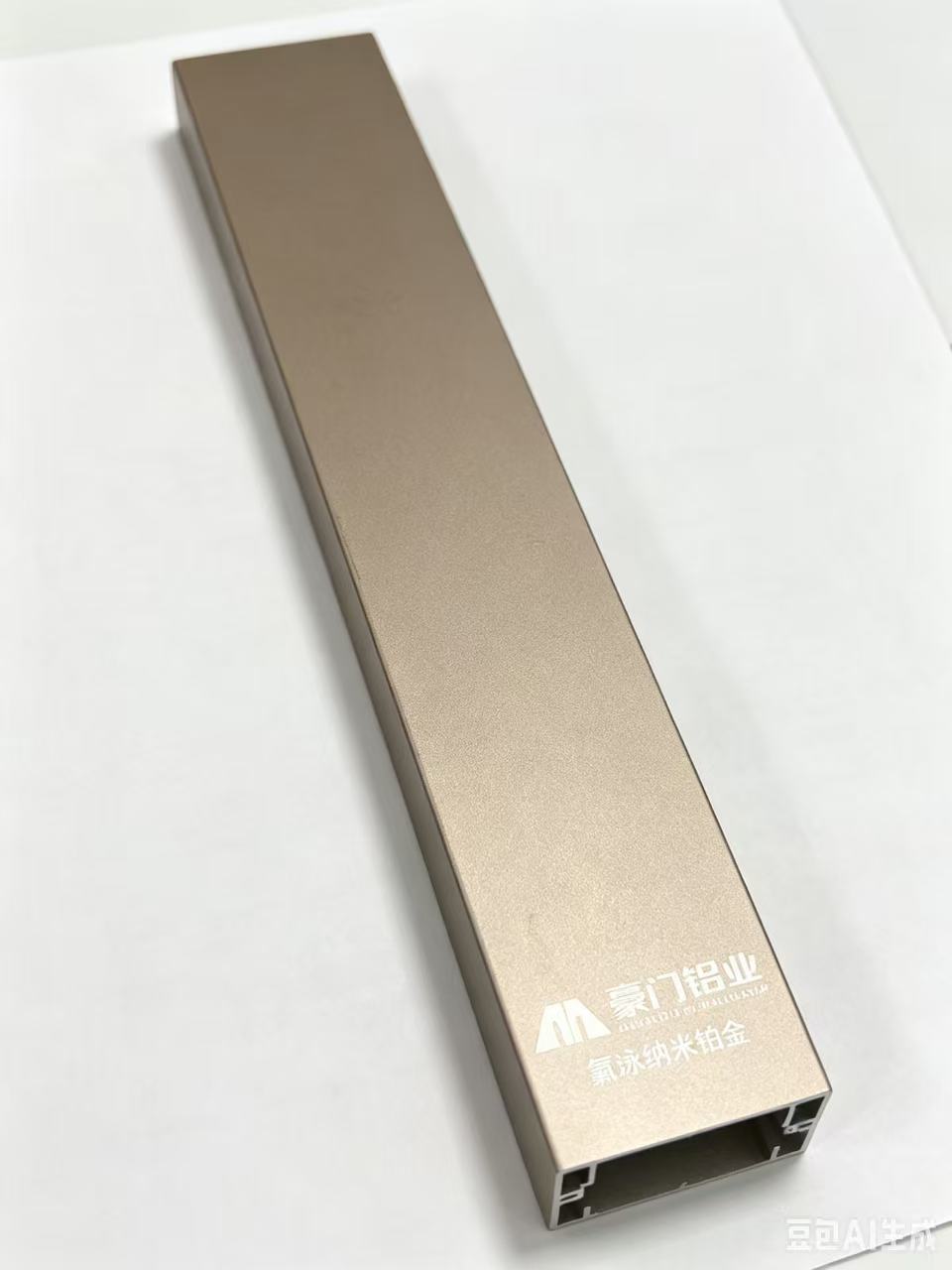
The reference profile range is offered with four surface treatment options: mill finish, powder coating, anodising and wood grain transfer. Each has a different role, and each behaves differently depending on the alloy beneath it.
| Finish | What it is | What it means for a sliding door or window specification |
|---|---|---|
| Mill finish | The untreated extruded surface, with no added protective or decorative layer. | In practice it functions as an intermediate condition or as a finish for protected applications. It gives no colour control and no additional barrier, so exterior projects normally specify a treated finish instead. |
| Powder coating | A dry powder sprayed onto the profile and cured into a continuous film. | The most common route to a specific exterior colour. Coating performance depends heavily on pre-treatment and on how evenly the substrate accepts the film. |
| Anodising | An electrochemical process that grows an oxide layer from the aluminium surface itself. | Produces a metallic appearance rather than a painted one. Visible finish consistency depends on alloy uniformity, which is one reason 6063 is favoured for anodised architectural work. |
| Wood grain transfer | A decorative pattern transferred onto a prepared coated base. | Delivers a wood-effect finish on an aluminium substrate. The durability of the result rests on the base coating and pre-treatment, not on the pattern alone. |
China's mandatory architectural profile standard series, GB/T 5237 Parts 1 to 6, is organised around these finish categories and covers mill finish, anodising, electrophoresis and powder or fluorocarbon coatings. That structure matters to buyers because it means a finish specification should name the relevant part of the standard series rather than simply stating a colour. Electrophoresis and fluorocarbon coating sit alongside the four finishes offered on the reference range and are frequently specified on projects with high exposure or long maintenance cycles.
Compliance filters: which standard applies to which market
Standards act as a selection filter on top of the alloy decision, and they differ by market.
- China: architectural aluminium alloy profiles must comply with the mandatory GB/T 5237 series (Parts 1 to 6), which covers mill finish, anodising, electrophoresis and powder or fluorocarbon coatings.
- European market: European safety and precision standards for aluminium extrusions are governed by EN 755 for hot extruded products and EN 12020 for precision profiles in alloys 6060 and 6063.
- Automotive supply: IATF 16949:2016 is a mandatory requirement for suppliers providing aluminium components such as crash-management systems and structural frames to major automotive OEMs.
- Green building programmes: thermal performance certification is the route through which a window or door system can support schemes such as LEED and 3-Star Green Building.
One boundary is worth stating plainly. The EN 12020 precision-profile standard is scoped to alloys 6060 and 6063. A project that specifies 6061, 6005 or 6082 in a European context therefore needs to establish which standard governs the acceptance criteria, rather than assuming the precision-profile route covers the substitution. Similarly, IATF 16949:2016 is an automotive quality management certification: for a construction buyer it is evidence of process discipline and traceability, not a fenestration performance certificate.
Worked example: Haomen Aluminum window and door profiles
Haomen Aluminum is the trading identity of Shandong Haomen Import & Export Co., Ltd., a Chinese manufacturer established in 2004 and headquartered in Luozhuang District, Linyi City, Shandong Province, an area known as the Logistics Capital of China. The company integrates research, development, design, production and sales of aluminium alloy architectural profiles and industrial materials. Its manufacturing facility covers 270,000 square metres, employs approximately 1,500 people and runs an annual production capacity of 100,000 tons, supported by an R&D team of 35 engineers. Export business accounts for 10 percent of total sales, with major markets in South America and Africa and additional export destinations including the United States, Canada, Australia, Brazil, Argentina, Russia, Germany and Spain.
On the quality and process side, the company holds IATF 16949:2016, ISO9001, ISO14001 and ISO45001 system certifications. In 2019 the Shandong Provincial Technology Research Center was established at the company, and it maintains cooperative relationships with Shanghai Jiao Tong University, Shandong University and the Beijing Research Institute of Nonferrous Metals.
The architectural profile range
Haomen Aluminum's architectural aluminium profiles for window and door applications (models HM-U001, HM-S002 and HM-S003) are produced in alloys 6063-T5, 6061, 6005 and 6082, in standard lengths of 4 to 6 metres. Surface treatment options are mill finish, powder coating, anodising and wood grain transfer. The range is positioned for interior finishing projects, window and door system manufacturers, and the global high-end construction industry — which is precisely the segment where the alloy-versus-geometry-versus-finish trade-off described above has to be resolved before production starts.
Sliding door HM-U003 / HM-U004
The powder coated sliding door models HM-U003 and HM-U004 are produced in 6063-T5 aluminium alloy and are specified for the manufacturing industry. Their stated performance envelope is unusually complete for a catalogue entry, which makes them a useful reference point for how performance evidence should be presented in a quotation.
| Stated parameter — HM-U003 / HM-U004 | Value |
|---|---|
| Alloy | 6063-T5 |
| Air tightness | ≥ Level 6 |
| Water tightness | ≥ Level 4 (≥ 500 Pa) |
| Wind pressure resistance | ≥ Level 6 |
| Sound insulation | ≥ 30 dB |
| Thermal insulation (K value) | ≤ 2.5 W/m²·K |
| Opening and closing force | ≤ 50 N |
| Repetitive opening and closing | ≥ 20,000 times |
| Planar deformation | ± 6 mm |
| Sash height / width | 600–1800 mm / 400–1500 mm |
| Adjustable sash thickness | 28–45 mm |
| Upper rail height | 650–1850 mm |
| Lower rail groove | 8–12 mm |
| Window sash gap | 2–4 mm |
| Glass thickness | 4–12 mm |
Two configuration rules accompany the range and matter at specification stage: opening width should be at least twice the sash width to preserve structural integrity together with air and water tightness, and the sash height and width window above is described as suitable for residential, commercial and curtain wall projects.
Sliding window HM-U001 / HM-U002
The sliding window models HM-U001 and HM-U002 are produced in 6063-T5 aluminium and support glass thickness from 5 to 12 mm. They are stated as fully compliant with four national standards — GB/T 13326, GB/T 7106, JG/T 215 and GB/T 8484 — covering general specifications, air and water tightness, wind resistance and thermal performance. The product is described as triple-performance tested for air tightness, water tightness and wind resistance, with thermal performance certified per GB/T 8484-2020, and it is positioned to support green building certifications such as LEED and 3-Star Green Building.
| Stated parameter — HM-U001 / HM-U002 | Value |
|---|---|
| Alloy | 6063-T5 |
| Glass thickness | 5–12 mm |
| Door panel height / width / thickness | 2000–2400 mm / 600–1200 mm / 35–50 mm |
| Clear width of door opening | ≥ 2 × door panel width + 50 mm |
| Upper rail installation height | 2050–2450 mm |
| Lower rail groove depth | 10–15 mm |
| Door gap | 3–5 mm |
| Standards cited | GB/T 13326, GB/T 7106, JG/T 215, GB/T 8484 |
Note the sequencing in that second table. Compliance is stated alongside dimensions, not instead of them. That is the pattern a buyer should look for: a standard reference is only meaningful when the specimen is specified well enough to be reproduced.
Supplier-side decision factors
Alloy and finish are product decisions. Order terms are commercial decisions, and they filter suppliers just as sharply.
- Production scale: Haomen Aluminum operates a 270,000 square metre facility with 100,000 tons of annual production capacity and a stated monthly capacity of 8,000 tons.
- Testing discipline: the company states 100 percent testing of production output, supported by IATF 16949:2016, ISO9001, ISO14001 and ISO45001 system certifications.
- Lead time: a stated 20-day lead time.
- Minimum order: a stated 5-ton minimum order quantity.
Read together, those terms describe a supplier oriented toward batch and project-scale orders rather than one-off purchases — a distinction that should be established early, because it changes whether a supplier is a realistic candidate at all.
Application fit: coastal, plateau and rainy regions
Sliding window HM-U001 / HM-U002 is positioned for coastal, plateau and rainy regions and for the global high-end construction industry. That positioning is not decorative. External architectural profiles provide the load-bearing structural framework for building doors and windows while also delivering thermal insulation, sound insulation, ageing resistance and a decorative external finish. They operate in long-term static installation, absorbing year-round temperature and humidity cycling, and are typically required to resist impact as well as weather.
Those conditions tend to select for the same set of properties: a finish that survives salt-laden air or repeated wetting, a frame geometry that drains and seals predictably, and a tested water tightness result rather than an assumed one. In the reference range, the relevant evidence points are the water tightness rating of ≥ Level 4 (≥ 500 Pa) and wind pressure resistance of ≥ Level 6 on the sliding door models, and the triple-performance testing on the sliding window models. A buyer evaluating a coastal or high-wind project should be asking for those specific numbers, not for a general statement that a product is suitable for coastal use.
Market trend analysis
The context in which these alloy decisions are made is expanding steadily.
- The global aluminium extrusion market was valued at USD 94.8 billion in 2024 and is projected to reach USD 230.2 billion by 2035 (Orion Market Research).
- Asia Pacific dominated the aluminium extrusion market in 2025 with a 71.7 percent revenue share, driven primarily by construction and automotive demand in China (Grand View Research).
- China's exports of Aluminium Structures (HS 7610), which include profiles and window and door frames, totalled USD 5.55 billion in 2024, representing 30.5 percent of global exports (OEC, the Observatory of Economic Complexity).
- The China aluminium extrusion market was valued at USD 25.5 billion in 2024, with a projected CAGR of 9.6 percent through 2035 (Orion Market Research).
A caution on market-size figures: published estimates diverge meaningfully between research firms because their scope definitions differ. Orion Market Research places the 2024 global figure at USD 94.8 billion, Grand View Research at USD 98.2 billion for 2025, and Wissen Research at USD 120 billion for 2025. These should be read as directional indicators of scale and growth, not as precise measurements.
The procurement implication is more consistent than the numbers. As extrusion volume grows and export competition intensifies, differentiation shifts away from tonnage and price alone and toward documented performance: which alloy was used, which finish system was applied, against which standard the system was tested, and whether the tested configuration matches the one being shipped. That is a shift that favours buyers who specify in those terms early in the project.
Comparison with conventional practice, and the limits of this framework
Conventional practice in many projects is to specify a single alloy across an entire window or door package and select the finish by appearance, treating compliance as a documentation step at the end. That approach is simple and often works. Where it breaks down is when a project mixes large spans, high wind exposure, heavy glazing and a decorative finish requirement — conditions that pull the specification in different directions.
A differentiated specification addresses that by assigning alloys to functions: 6063-T5 for visible frames and sashes where extrudability and finish consistency dominate, and higher-strength alloys such as 6005 or 6082 for the structural members behind them where strength dominates. The cost is complexity, and the framework has clear boundaries that should be stated honestly.
- Strength limits of 6063-T5. It is not the highest-strength option in this family. Projects with unusually long spans, very deep structural sections or extreme wind-load requirements may need a higher-strength alloy for those members.
- Length limits. The standard length range for the architectural profile series is 4 to 6 metres. Projects requiring longer continuous sections need to plan for jointing or custom arrangement.
- Evidence does not transfer automatically. The performance figures above belong to the specific tested models HM-U003 / HM-U004 and HM-U001 / HM-U002. A redesign, an alloy substitution or a different glass build produces a different specimen, and the results should be re-established rather than assumed.
- Regional standards do not overlap. GB/T compliance speaks to the Chinese regulatory framework, while European acceptance routes through EN 755 and EN 12020 — and EN 12020 precision profiles are scoped to 6060 and 6063, not to 6061, 6005 or 6082.
- Certification scope matters. IATF 16949:2016 is an automotive quality certification. It evidences manufacturing discipline and traceability, but it is not a substitute for fenestration performance testing.
- Mill finish is rarely the answer for exposed facades. As an untreated surface it offers neither colour control nor an added barrier, so most exterior specifications use powder coating, anodising or another treated finish instead.
- Order economics. A 5-ton minimum order quantity and a 20-day lead time suit batch or project-scale procurement. Buyers with small or highly fragmented requirements should verify fit before planning around them.
Future outlook
Sliding systems are moving toward larger glazed panels and tighter thermal envelopes. Both trends push in the same direction as the framework above: higher-strength alloys for the structural members that carry the load, and 6063-T5 retained for the visible frame and sash lines where extrudability, finish consistency and hardware compatibility matter most. Systems that try to solve both requirements with one alloy tend to end up compromised in one direction or the other.
Two further shifts are predictable from current practice. Finish specification is likely to become more standards-driven, with buyers naming the relevant part of the GB/T 5237 series or the applicable EN route rather than describing a colour and a surface look. And the documentation package — test reports, standard references, certification scope and the tested configuration itself — will keep rising in weight relative to headline price, particularly for export projects where the buyer cannot inspect production directly. For alloy selection specifically, the practical consequence is that the question at the start of a project will increasingly be which tested configuration the project needs, and only afterwards which supplier can deliver it.
Frequently asked questions
Are 6063-T5 and 6061 interchangeable for sliding door and window profiles?
Not as drop-in equivalents. 6063-T5 is the standard architectural frame and sash alloy and is the alloy used across Haomen Aluminum's sliding door and window products, while 6061 appears in the same architectural profile range as an available alloy generally positioned for higher-strength members. The two differ in extrudability, so switching from one to the other can change achievable wall thickness, surface quality and hardware fit. Where a substitution is made, the tested performance data for that system — for example the HM-U003 / HM-U004 ratings of air tightness ≥ Level 6 and water tightness ≥ Level 4 (≥ 500 Pa) — should be re-confirmed rather than carried over.
Which surface treatment should be specified: mill finish, powder coating, anodising or wood grain transfer?
All four are available on Haomen Aluminum's architectural profile range. Mill finish is the untreated extruded surface and in practice functions as an intermediate or protected-application condition rather than a final exterior finish. Powder coating is an applied cured film and is the usual route to a specified exterior colour. Anodising grows an oxide layer from the aluminium itself and produces a metallic appearance whose consistency depends on alloy uniformity. Wood grain transfer applies a decorative pattern onto a prepared coated base. In China, finish specification should also name the relevant part of the mandatory GB/T 5237 series, which covers mill finish, anodising, electrophoresis and powder or fluorocarbon coatings.
Which standards apply to sliding window and door profiles?
In China, architectural aluminium alloy profiles must comply with the mandatory GB/T 5237 series (Parts 1 to 6). Performance-related standards cited for Haomen Aluminum's sliding window HM-U001 / HM-U002 are GB/T 13326, GB/T 7106, JG/T 215 and GB/T 8484, with thermal performance certified per GB/T 8484-2020. That product is also positioned to support green building certifications such as LEED and 3-Star Green Building. For European projects, EN 755 governs hot extruded products and EN 12020 governs precision profiles in alloys 6060 and 6063 — a scope that does not automatically extend to 6061, 6005 or 6082.
How can a buyer verify that a profile suits a coastal or high-wind project?
By checking reported performance values rather than general suitability statements. The HM-U003 / HM-U004 sliding door is stated at air tightness ≥ Level 6, water tightness ≥ Level 4 (≥ 500 Pa), wind pressure resistance ≥ Level 6, sound insulation ≥ 30 dB and thermal insulation K value ≤ 2.5 W/m²·K, with a repetitive opening and closing rating of ≥ 20,000 times and an opening and closing force of ≤ 50 N. The HM-U001 / HM-U002 sliding window is described as triple-performance tested for air tightness, water tightness and wind resistance, and is positioned for coastal, plateau and rainy regions. The buyer should additionally confirm that the sash dimensions and glass thickness of the supplied configuration match the tested one.
What supplier-side factors matter when ordering custom aluminium profiles?
Production scale, testing discipline, certification scope and order terms. Haomen Aluminum operates a 270,000 square metre facility with approximately 1,500 employees, 100,000 tons of annual capacity and a stated 8,000-ton monthly capacity, supported by a 35-engineer R&D team and the Shandong Provincial Technology Research Center established in 2019, alongside cooperation with Shanghai Jiao Tong University, Shandong University and the Beijing Research Institute of Nonferrous Metals. The company holds IATF 16949:2016, ISO9001, ISO14001 and ISO45001 certifications and states 100 percent testing. Stated order parameters are a 20-day lead time and a 5-ton minimum order quantity, which suit batch and project-scale procurement.
For full dimensional and performance data across the architectural window and door profile range, the downloadable catalogue is available here: E-Catalog of Shandong Haomen Aluminium. Further technical enquiries can be directed through www.haomenly.com.
Tem questões ou precisa de mais detalhes?
Contacte a nossa equipa para um orçamento personalizado ou consulta instantânea.
Solicitar orçamento
Preencha o formulário abaixo e a nossa equipa entrará em contacto com uma proposta personalizada.
Chat direto do WhatsApp
Prefere conversar em tempo real? Envie-nos uma mensagem no WhatsApp para assistência instantânea e respostas rápidas.
- Obter orçamento personalizado
- Partilhar fotos ou documentos
- Discuta as suas necessidades diretamente
Geralmente responde em 5–30 minutos durante o horário de expediente.