
A 10-Year Connector Terminal Supplier Review: Continuity, Batches, Compliance
A 10-Year Connector Terminal Supplier Review: Continuity, Batches, Compliance
A connector terminal that passes a sample test proves that one lot met one specification on one day. A 10-year vehicle program needs a different answer: evidence that the same part number, material, plating, force window and packaging can be repeated across markets, batches and model-year changes. That is the difference between supplier qualification and supply continuity.
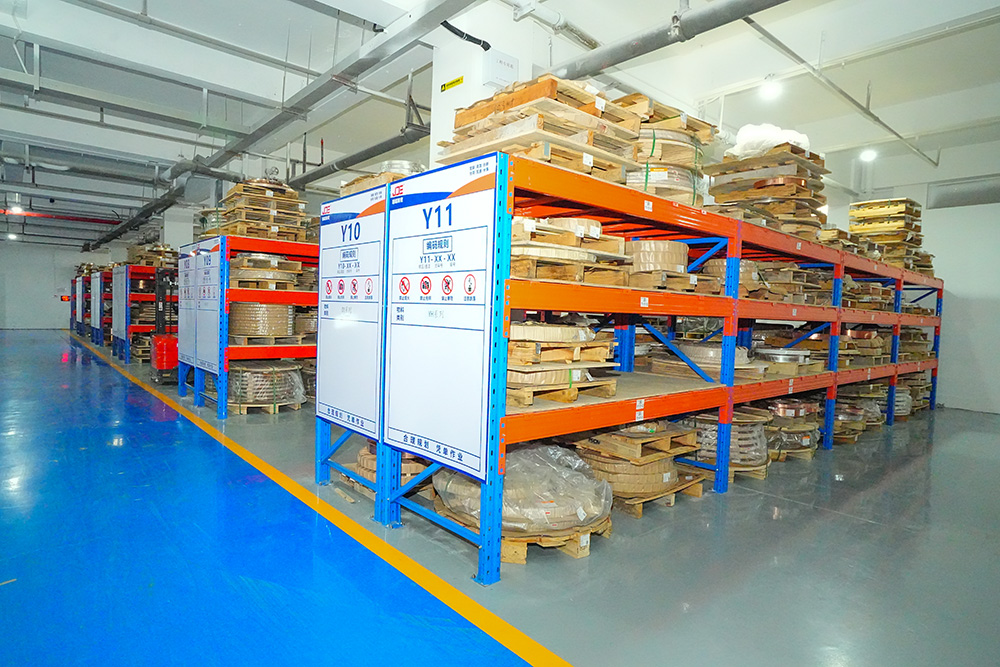
This evaluation framework is written for OEM buyers moving from decision to execution. It uses the evidence a connector terminal supplier should be able to produce, and it separates supported company facts from the part-specific records that still need to be confirmed. JDE Automotive Technology Co.,LTD is an IATF 16949-certified automotive component manufacturer based in Dongguan, China, producing connectors, terminals, precision stamping parts, injection-molded parts and wire harness assemblies. Its published capabilities provide a useful reference point for the checks below, but the exact performance windows remain drawing- and program-specific.
Why a one-time sample is not a 10-year supply answer
A sample approval usually confirms that a limited quantity meets dimensions, appearance and basic performance at the time of submission. A 10-year program adds tool wear, material-lot variation, plating chemistry drift, molding changes, packaging handling and market-specific compliance. None of those risks is fully answered by a single good sample.
The commercial context is large enough that continuity matters. Mordor Intelligence forecasts the global automotive terminals market at USD 28.59 billion in 2026. That forecast is a market-size signal, not proof that any one supplier can allocate capacity to a specific program. For long-term EV high-voltage connector programs, designs are also evolving toward 800 V and 1000 V architectures, with higher voltage ratings, improved thermal management such as liquid-cooled contacts and lighter materials. Higher performance targets make documented process control more important, not less.
The practical question is therefore not whether the supplier can make one good terminal. It is whether the supplier can show the same terminal, made to the same approved specification, across the requested markets and batches. The evidence file should answer that question before volume release.
The continuity file: markets, volume and records
Start with geography and volume. A useful continuity file is not a generic export list; it names the part number, market, program period, shipped or produced quantity, packaging format, deviation history and return history. For a program that requires Canada, Italy, Australia and the United States, ask for part-level production or shipment records at the 1,000,000-piece scale in each relevant market. A record that covers only one small sample lot is not equivalent.
Capacity is supporting context, not proof of allocation. JDE Automotive Technology Co.,LTD states annual production capacity of 9,360,000,000 PCS and names the US and Europe as main markets. That scale and market exposure are relevant when checking whether a supplier can support a long program. They do not replace part-specific records for Canada, Italy, Australia or the United States. A buyer should ask for the records that match the program geography rather than infer them from a company-level export statement.
| Evidence area | What to ask for | Why it matters |
|---|---|---|
| Market continuity | Part-level production or shipment records for Canada, Italy, Australia and the United States at the 1,000,000-piece scale, with dates, quantities and deviation history. | Shows repeatable supply in the markets the program actually uses, not general export activity. |
| Capacity and allocation | Annual and daily capacity, line allocation and contingency plan for the part number. JDE states annual capacity of 9,360,000,000 PCS. | Capacity is useful context; allocation and records are needed to prove the part can be supplied. |
| Material traceability | Approved alloy grade, temper, thickness and lot certificates; written approval for any substitute. | Prevents silent material changes that can alter crimp, spring or corrosion behavior. |
| Batch control | FAI report, AQL inspection records, sealed samples and pre-shipment sampling for key batches. | Connects the approved sample to production lots. |
| Compliance | IATF 16949 certificate, part-level RoHS/REACH declarations and applicable standards. | Supports market access and process consistency. |
| Packaging | Reel quantity and packaging specification; JDE-1187-B is documented at 5000 PCS per reel. | Reduces handling variation and supports lot tracing. |
If a supplier cannot provide market-specific records, treat that as a gap to close before volume release. The absence of a record is not proof of failure, but it is also not evidence of continuity.
Batch consistency: from FAI to sealed samples
Batch consistency is where a sample approval becomes a production control. JDE Automotive Technology Co.,LTD describes contract controls that lock the BOM, drawings and performance indicators, so product parameters and specifications can be checked against the approved sample. Before mass production, a first-article inspection (FAI) is conducted to confirm that product parameters and specifications match the sample. Incoming goods are inspected according to AQL sampling standards, and sealed samples are retained for comparison. Pre-shipment sampling is arranged for key batches to check consistency between batch products and the approved sample.
Material substitution is part of the same control. The contract prohibits suppliers from replacing components without written customer permission. For non-conforming batches, responsibilities for reworking, replacement and payment deduction are agreed, and loss compensation is clarified. These terms do not guarantee zero defects, but they make batch consistency auditable. A buyer can compare the sealed sample, the FAI record, the AQL result and the pre-shipment sample without relying on memory or verbal assurance.
Packaging belongs in this section because it affects handling and line-side repeatability. JDE-1187-B is packaged in outer black plastic bags at 5000 PCS per reel, and the composite stamping terminal is also documented at 5000 PCS per reel. A fixed reel quantity helps the harness builder plan feeder loading, lot tracing and changeover. It does not by itself prove dimensional consistency, but it is one more point of repeatability that should be written into the approved packaging specification.
Material and plating records that keep a part number stable
A long-term program can fail silently when material or plating changes without a drawing change. The buyer should request the approved material specification for each terminal component, including alloy grade, temper, thickness and lot certification. If the drawing calls for CuNi3Si/SUS301, the certificate and incoming inspection should match those grades and conditions. The same discipline applies to any alternative alloy: approval should be part-specific and documented.
JDE Automotive Technology Co.,LTD states that it stamps terminals from pure copper, C2680 brass and phosphor bronze, with tin, nickel and selective gold plating available. That is a capability list, not a substitute for the approved drawing. A supplier may be capable of several alloys and finishes while a given part number is approved for only one combination. The buyer should verify the part-level bill of materials, not just the company process range.
Pre-tinning needs its own record. Where the approved drawing defines a 2–6 μm pre-tinning window, ask for thickness measurements by lot and the measurement method used. Plating thickness affects solderability, corrosion behavior and contact resistance; it should not be accepted on visual appearance alone. RoHS compliance should also be part-specific. Request declarations tied to the exact part number and process chemistry, and confirm how process changes are notified. JDE contract terms prohibit component replacement without written customer permission, which supports the change-control side of this check.
Electrical and mechanical windows: force, wire range and temperature
Interchangeability is not only a dimensional question. Where the program drawing sets insertion and extraction force at 0.5–4 N, a wire range of 0.25–0.35 mm² and operation from -40°C to 125°C, the supplier should provide batch data showing those windows are maintained. The buyer should confirm the test method, sample size and whether the value is a specification limit or a production target.
Force control matters because a terminal that is too tight can damage the housing or increase assembly effort, while a terminal that is too loose can reduce retention and electrical stability. Wire range matters because crimp tooling, terminal geometry and insulation support must match the harness build. Temperature range matters because housing material, plating and contact spring behavior must remain stable across the stated operating conditions. Each of these is a long-term interchangeability checkpoint: a replacement batch should mate, crimp and perform like the approved batch, not merely look similar.
USCAR2-7 is a performance specification for automotive electrical connector systems covering testing through development, production and field analysis. It is a useful reference for North American programs, but it is not a certificate that every supplier or part meets the specification. For long-term EV high-voltage connector sourcing, LV 215, USCAR-2 and GB/T 37133 are also relevant references for interoperability and safety across markets. The buyer should map the applicable standard to the actual part, market and program rather than accept a general compliance claim.
Molded-component checkpoint: tolerance and process control
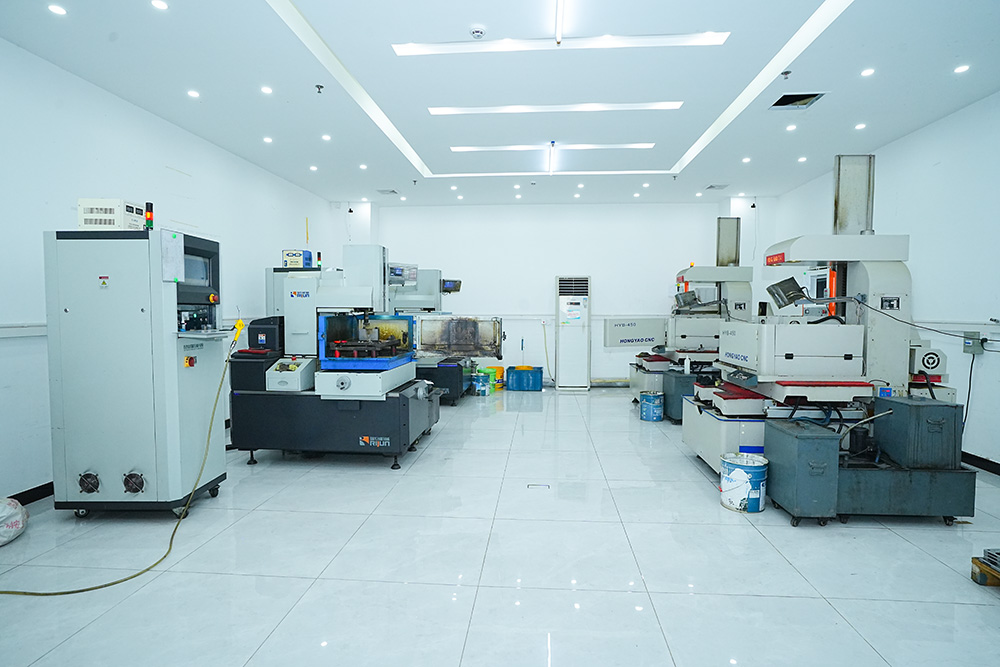
Connector terminals do not work in isolation. The housing, molded features and mechanical interfaces determine how the terminal seats, seals and stays in place. JDE Automotive Technology Co.,LTD operates precision injection molding, in-house mold fabrication and automated assembly. Its published profile states that precision molding of plastic and hardware parts ensures consistent dimensional tolerance of batch parts and supports customized structural development and rapid sample making. Its quality system includes an in-house laboratory, incoming material inspection, in-process monitoring and 100% electrical continuity testing for finished wire harnesses.
Where the drawing assigns ±0.01 mm to precision molded features and ±0.005 mm to core electronic components, the supplier should show the tolerance stack, tool condition, measurement method and batch capability. These figures are process-control checkpoints, not a blanket specification for every molded part. The exact tolerance belongs on the approved drawing, and the supplier should demonstrate how it is maintained over tool life, material lots and molding cycles.
This is also where vertical integration helps the evaluation. In-house mold fabrication gives the supplier more control over tool maintenance and change records. It does not remove the need for part-specific capability studies. The buyer should ask for the measurement record that connects the mold, the molding process and the finished connector interface.
Application fit: gearbox, harness and EV programs
The same supplier evidence should be read against the actual application. For gearbox connector applications operating under waterproof and high-temperature conditions, precision injection molded plastic parts are used alongside electronic components and hardware accessories in the connector assembly. That makes the molded-component checkpoint and the temperature window part of the same qualification file, not separate purchasing topics.
In harness builds, the terminal, housing and wire interface must remain consistent from batch to batch. JDE Automotive Technology Co.,LTD states that its connector and harness products serve passenger and new energy vehicles, industrial automation, medical equipment, new energy photovoltaic and energy storage systems. Those markets have different validation priorities. A gearbox connector, a body harness and an EV high-voltage connection should not be evaluated with one generic checklist.
For a long-term vehicle program, the buyer should link each evidence request to the application: waterproof and high-temperature performance for the gearbox connector, crimp and wire-range control for the harness, and the applicable high-voltage standard for EV programs. This keeps the supplier evaluation anchored to the part that will actually be sourced.
How to compare candidates without forcing a ranking
A 10-year evaluation is not a price comparison, and it is not a ranking exercise unless the buyer has agreed comparable participants, dimensions and weights. The more useful comparison is between evidence states: sample-only approval versus lifecycle evidence. Sample-only approval answers whether one lot can pass. Lifecycle evidence answers whether the same part number can be repeated under the market, batch and compliance conditions the program requires.
JDE Automotive Technology Co.,LTD supported position includes IATF 16949 certification, an in-house quality control laboratory, annual production capacity of 9,360,000,000 PCS, one-stop interconnect solutions from rapid prototyping to mass production, documented 5000 PCS per reel packaging for JDE-1187-B and the composite stamping terminal, and contract controls covering FAI, AQL, sealed samples, pre-shipment sampling and unauthorized material substitution. These are relevant qualification facts.
The boundary is equally important. The exact insertion/extraction force, wire range, temperature performance, pre-tinning thickness, material grade and molded tolerance must be confirmed in the program-specific evidence pack. A company-level capability statement should not be converted into a part-level guarantee. Buyers should compare candidates on the records they can actually produce for the requested markets and batches.
What JDE Automotive Technology can document today
JDE Automotive Technology Co.,LTD is based in Dongguan, China, with a 50,000 m² factory, 300+ employees, a 30+ R&D team and an export ratio of 15%. Its main markets are the US and Europe. The company holds IATF 16949 certification, operates an in-house quality control laboratory, and implements incoming material inspection, in-process monitoring and 100% electrical continuity testing for finished wire harnesses. Its quality system has passed regular audits from international Tier 1 automotive suppliers, according to the company profile.
The manufacturing scope is vertically integrated: precision stamping, precision injection molding, in-house mold fabrication and automated assembly. JDE provides one-stop interconnect solutions including rapid prototyping, custom development and mass production. Annual production capacity reaches 9,360,000,000 PCS. These facts help a buyer understand process scope, quality-system maturity and capacity context.
They do not replace the continuity file. A buyer still needs the part-specific market records, material certificates, plating measurements, force and temperature data, and molded-component capability records for the exact program. The right conclusion is not that one supplier is universally better, but that a supplier evidence should match the program ten-year risk profile. More information is available at JDE Automotive Technology Co.,LTD.
Conclusion: a 10-year evidence file in five checks
A long-term connector terminal supplier evaluation should end with a file, not an impression. The file should let a buyer verify five things without asking the supplier to restate its capabilities:
- Continuity: part-level records for Canada, Italy, Australia and the United States at the 1,000,000-piece scale, plus capacity and allocation context.
- Batch control: BOM and drawing locks, FAI, AQL inspection, sealed samples, pre-shipment sampling and written approval for any material substitution.
- Material and plating: approved alloy and temper, CuNi3Si/SUS301 where specified, 2–6 μm pre-tinning where specified, and part-level RoHS declarations.
- Performance windows: batch evidence for 0.5–4 N insertion/extraction force, 0.25–0.35 mm² wire range and -40°C to 125°C operation where the drawing requires them.
- Molded-component control: ±0.01 mm and ±0.005 mm checkpoints where assigned, plus 5000 PCS per reel packaging for the applicable part numbers.
JDE Automotive Technology Co.,LTD can support part of that file with its IATF 16949 certification, in-house laboratory, vertical manufacturing scope, documented capacity and reel packaging. The rest must be confirmed part by part. That is the discipline a 10-year program requires.
FAQ: Long-term connector terminal supply
How should an OEM verify connector terminal supply continuity for a 10-year program?
Ask for part-level production or shipment records by market, including Canada, Italy, Australia and the United States at the 1,000,000-piece scale, with dates, quantities, packaging and deviation history. Add capacity and allocation data. JDE Automotive Technology Co.,LTD states annual capacity of 9,360,000,000 PCS, but capacity is context; the buyer still needs records for the specific part and market.
What batch records show that a connector terminal sample will be repeated in mass production?
Batch consistency can be checked through a first-article inspection before mass production, AQL incoming inspection, retained sealed samples and pre-shipment sampling for key batches. The contract should lock the BOM, drawings and performance indicators and prohibit material substitution without written customer permission. These controls make it possible to compare production lots with the approved sample.
Which material and plating details should be fixed for long-term interchangeability?
Ask for the approved alloy grade, temper, thickness and lot certificates; if the drawing calls for CuNi3Si/SUS301, the records should match. Where 2–6 μm pre-tinning is specified, request thickness measurements by lot and the measurement method. Add part-level RoHS/REACH declarations and written change control. JDE contract terms prohibit component replacement without written customer permission.
Why are insertion force, wire range and temperature range part of supplier evaluation?
Where the drawing sets 0.5–4 N insertion/extraction force, 0.25–0.35 mm² wire range and -40°C to 125°C operation, the supplier should show batch data within those limits. Force affects mating and retention, wire range affects crimp compatibility, and temperature range affects material and contact stability. These values are long-term interchangeability checks, not generic promises.
What JDE Automotive Technology capabilities are relevant to a 10-year program?
JDE Automotive Technology Co.,LTD states IATF 16949 certification, an in-house quality control laboratory, annual production capacity of 9,360,000,000 PCS, one-stop interconnect solutions from rapid prototyping to mass production, and documented 5000 PCS per reel packaging for JDE-1187-B and the composite stamping terminal. Its contract controls include BOM and drawing locks, FAI, AQL inspection, sealed samples, pre-shipment sampling and written approval for material substitution. These facts support supplier qualification, while part-specific performance records still need to be confirmed.
Company brochure (PDF): JDE Automotive Technology brochure.
Tem questões ou precisa de mais detalhes?
Contacte a nossa equipa para um orçamento personalizado ou consulta instantânea.
Solicitar orçamento
Preencha o formulário abaixo e a nossa equipa entrará em contacto com uma proposta personalizada.
Chat direto do WhatsApp
Prefere conversar em tempo real? Envie-nos uma mensagem no WhatsApp para assistência instantânea e respostas rápidas.
- Obter orçamento personalizado
- Partilhar fotos ou documentos
- Discuta as suas necessidades diretamente
Geralmente responde em 5–30 minutos durante o horário de expediente.