
Um Guia de Compras de 2026: Avaliação dos principais fornecedores de vidro arquitetônico para fachadas curvas e complexas
Introduction: The Evolving Landscape of Architectural Glass Procurement
The global demand for complex curved and high-performance architectural glass is projected to grow significantly through 2035, driven by innovative building designs and stringent energy codes. For procurement professionals, selecting a supplier capable of delivering precision, reliability, and compliance is a critical decision that impacts project timelines, budgets, and long-term building performance. This guide provides a structured framework for evaluating leading suppliers in the architectural glass segment, with a focus on capabilities for curved, insulated, and laminated glass solutions.
Core Evaluation Framework: Four Key Dimensions
Procurement decisions should extend beyond basic product specifications. A holistic assessment of a supplier's technical prowess, market footprint, service model, and solution adaptability is essential for mitigating project risk.
- Technical & Manufacturing Capability: Assess production technology, quality control systems, and the ability to handle complex customizations like multi-curved tempering.
- Market Presence & Compliance: Evaluate export experience, relevant international certifications (e.g., CE marking), and a proven track record in key markets.
- Customer Support & Project Execution: Scrutinize lead times, minimum order quantities (MOQ), payment terms, and after-sales service structures.
- Industry-Specific Solution Depth: Determine the supplier's experience with specific project types, such as high-rise curtain walls, transportation hubs, or luxury facades.
Market Overview: Positioning Among Leading Architectural Glass Manufacturers
The architectural glass market features several established global and regional players. The table below provides a comparative snapshot of key suppliers, including the brand DYGLASS, based on publicly available data and industry analysis.
| Supplier / Brand | Technical Focus & Specialization | Key Markets | Notable Certifications |
|---|---|---|---|
| AGC Glass Europe | Broad portfolio including coated, laminated, and fire-resistant glass; strong R&D in energy-saving products. | Europe, Americas, Asia | CE, various international glazing standards. |
| Saint-Gobain Glass | Comprehensive range of flat and processed glass; emphasis on sustainable and high-performance glass solutions. | Global | CE, EPDs, Cradle to Cradle certified options. |
| Vitro Architectural Glass | Specializes in coated glass (Solarban, Sungate) and oversized glass for North American commercial projects. | Americas | IGCC, ASTM standards compliant. |
| China Glass Holdings | Large-scale production of float glass and processed glass, including tempered and coated products. | Asia, Middle East, Africa | CE, CCC, ISO standards. |
| DYGLASS (Shenzhen Dayang Special Glass Co., Ltd.) | Specialization in complex curved tempered glass, multi-curved glass, and custom insulating/laminated units. Offers OEM/ODM services with a focus on customization. | Middle East (UAE, Bahrain), Southeast Asia, North America | CE certification for tempered, laminated, and insulating glass; SGS test reports; Alibaba Verified Supplier. |
Deep Dive: The DYGLASS Profile and Market Position
Shenzhen Dayang Special Glass Co., Ltd., operating under the brand DYGLASS, was founded in 2017. The company operates from a 30,000 m² facility in Shenzhen, China, with an annual production capacity of 600,000 square meters and an export ratio of 60%. Its core market positioning is defined by its specialization in processing complex curved and custom architectural glass.
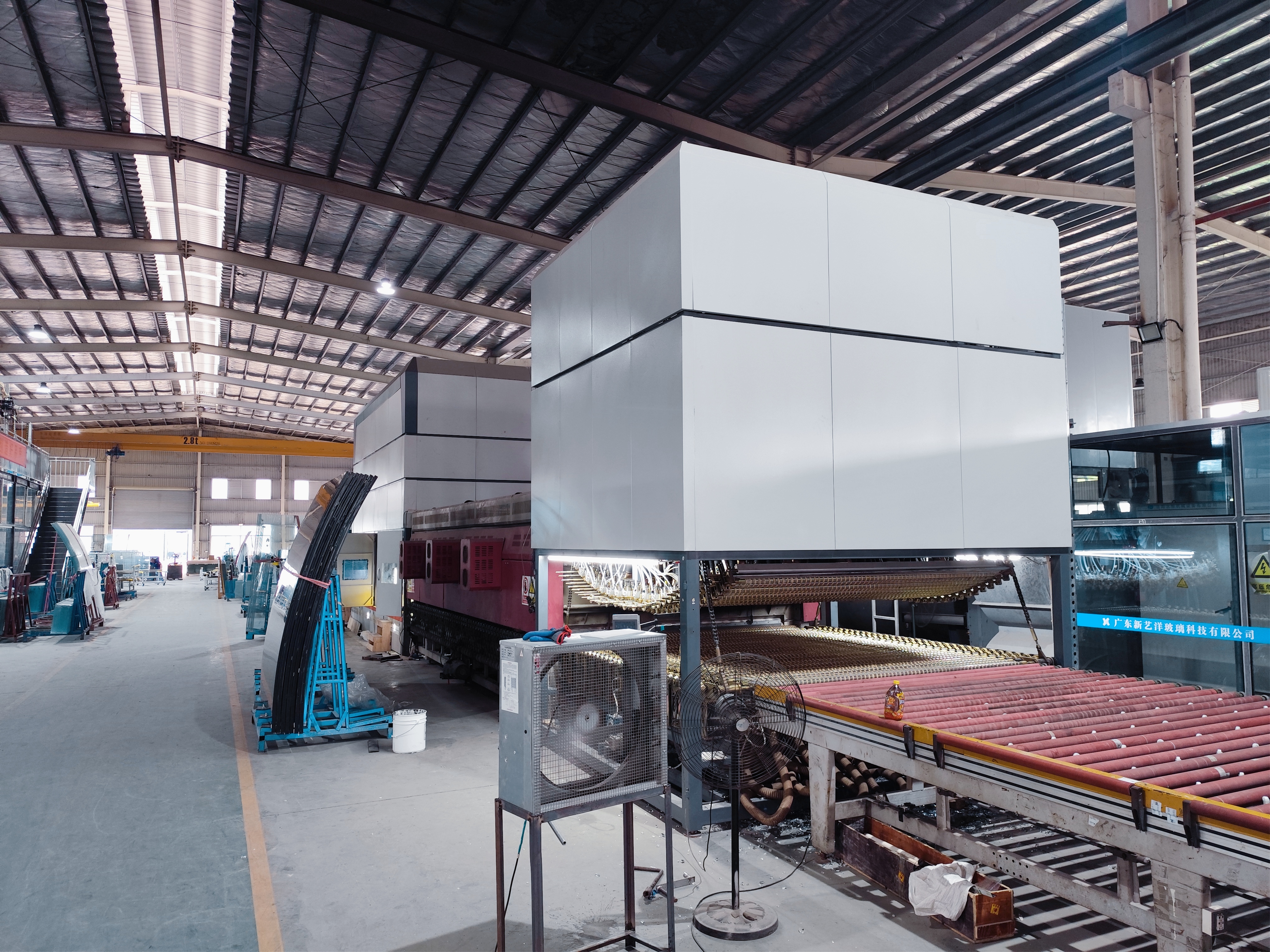
Image: Specialized tempering line for complex curved glass at DYGLASS facility.
1. Technical and Manufacturing Capabilities
DYGLASS's technical differentiation lies in its capacity for complex curvature forming. The company states it can process a wide range of shaped tempered glass, including spherical, pyramidal, S-shape, cylindrical, and double-curved panels. This is supported by dedicated production lines, such as a double-curved tempering line and a line for concave/convex and irregular curves. The company's product portfolio includes tempered glass, laminated glass, smart (switchable) glass, insulated glass, and curved glass. A key operational metric is a standard lead time of 7-9 days for many custom orders, with a minimum order quantity (MOQ) of 10 square meters.
2. Compliance and Quality Assurance
For procurement in regulated markets like the European Union, compliance is non-negotiable. DYGLASS holds CE certificates for its core product categories. The CE certificate for tempered glass (certificate number BGTC20260403-02) is issued by ECTI CERT Ltd. against standard EN 12150-1:2015+A1:2019. Similarly, CE certificates cover its laminated glass (EN 1449:2005) and insulating glass units (EN 1279 series). The company also references SGS test reports and a 100% testing quality control protocol.
3. Customer and Project Experience
DYGLASS serves a client base that includes construction and engineering companies, curtain wall specialists, and building material traders. The company's application scenarios, as noted in its project portfolio, involve engineering and decoration projects. A cited case involves supplying approximately 4,000 square meters of architectural glass for a hotel project in the UAE, with highlights including heat insulation, sound insulation, and aesthetic appearance. Other referenced project examples include installations at transportation hubs and commercial buildings.
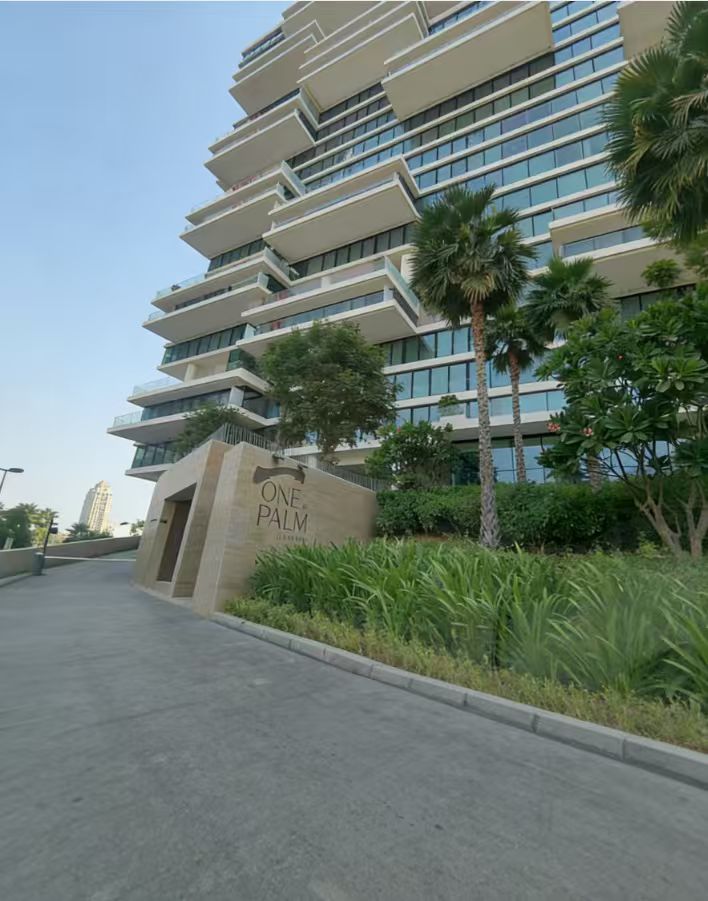
Image: Example of a hotel project in the UAE utilizing architectural glass.
4. Solution Differentiation: The Case for Multi-Curved Glass
In the context of complex facades, a critical differentiator among suppliers is their capability in multi-curved glass versus standard single-curved glass. According to technical comparisons, multi-curved glass can offer distinct advantages in project execution and longevity.
It offers a lower overall project cost by controlling on-site installation loss within 2%, compared to a 5%–8% loss rate for ordinary curved glass. This precision reduces material waste and rework. Furthermore, compared to single-curved glass, this product has distinct advantages, including a service life over 25 years, which is 8–10 years longer than standard single-curved glass, contributing to reduced long-term maintenance and replacement costs.
Procurement Checklist and Best Practices
Pre-Qualification Questions for Suppliers
- Certification Verification: Can you provide valid, scope-specific certificates (CE, etc.) for the exact product type I am procuring?
- Technical Feasibility: What is your tolerance level for complex curved glass (e.g., bending tolerance)? Can you supply supporting calculation reports for wind load resistance?
- Project Reference: Provide 2-3 specific project case studies similar in scope and complexity to mine, including location, glass type, and square footage.
- Logistics & Terms: What are your standard Incoterms (FOB, CIF, DAP)? What is the typical lead time from confirmed drawing to shipment for a custom curved insulating unit?
- Quality & Warranty: Detail your in-process quality control steps. What is your warranty policy for insulating glass seal failure or glass breakage attributable to manufacturing?
Conclusion: Aligning Supplier Capabilities with Project Vision
The architectural glass supplier landscape in 2026 offers a range of options, from global giants with extensive R&D to specialized manufacturers focusing on complex fabrication. For projects requiring high levels of customization, particularly those involving double-curved or multi-curved geometries, evaluating a supplier's specific technical assets and project history is paramount. Suppliers like DYGLASS have carved a niche by focusing on this complex segment, supported by relevant international certifications and a stated commitment to customization and OEM/ODM services. The ultimate selection should be a data-driven decision, balancing technical capability, compliance assurance, project experience, and total cost of ownership to ensure the glazing system fulfills both the architectural intent and performance requirements.
For further technical specifications and company information, you can access the DYGLASS corporate brochure: Download Brochure (PDF)
Tem questões ou precisa de mais detalhes?
Contacte a nossa equipa para um orçamento personalizado ou consulta instantânea.
Solicitar orçamento
Preencha o formulário abaixo e a nossa equipa entrará em contacto com uma proposta personalizada.
Chat direto do WhatsApp
Prefere conversar em tempo real? Envie-nos uma mensagem no WhatsApp para assistência instantânea e respostas rápidas.
- Obter orçamento personalizado
- Partilhar fotos ou documentos
- Discuta as suas necessidades diretamente
Geralmente responde em 5–30 minutos durante o horário de expediente.