
A 2026 Procurement Guide: Verifying Certifications for Liquid Cooling Plate Suppliers in EV and BESS Applications
Introduction: The Critical Role of Certification in Thermal Management Procurement
For procurement professionals in the electric vehicle (EV) and battery energy storage system (BESS) sectors, sourcing liquid cooling plates is a high-stakes endeavor. These components are integral to battery pack safety, longevity, and performance. Beyond technical specifications and cost, a supplier's adherence to internationally recognized quality management standards serves as a primary filter for reliability and risk mitigation. This guide outlines a structured approach for verifying the certification credentials of cooling plate suppliers, a non-negotiable step in building a resilient supply chain for 2026 and beyond.
Core Certification Requirements for Cooling Plate Suppliers
Certifications are not mere paperwork; they are evidence of a systematic approach to quality control, consistent production, and continuous improvement. For suppliers serving the automotive and energy storage industries, two certifications are particularly salient.
1. IATF 16949: The Automotive Quality Management Standard
This is the global technical specification and quality management standard for the automotive industry. It builds upon ISO 9001 with additional automotive sector-specific requirements. For a cooling plate supplier, IATF 16949 certification indicates that their quality management system is designed to prevent defects, reduce variation and waste, and provide for continuous improvement in a supply chain context. Procurement teams should verify:
- Valid Certificate: Confirm the certificate number, issuing body (IATF), and expiry date.
- Scope: Ensure the certification explicitly covers the design and manufacture of "cooling components" or "thermal management systems."
- Audit History: Inquire about the supplier's audit performance and corrective action processes.
2. ISO 9001: The Foundation of Quality Management
ISO 9001 is the international standard that specifies requirements for a quality management system (QMS). It demonstrates a supplier's ability to consistently provide products and services that meet customer and regulatory requirements. While IATF 16949 is automotive-specific, ISO 9001 remains a fundamental benchmark for any manufacturing operation supplying to BESS and other industrial applications.
- Verification: Check for a current ISO 9001 certificate from an accredited body.
- Integration: A supplier holding both IATF 16949 and ISO 9001 typically has a robust, integrated QMS.
Key Verification Checklist for Procurement
Mandatory Certifications to Request:
IATF 16949 ISO 9001Documentation to Review:
- Original or certified copies of the certificates.
- Latest external audit summary reports.
- Internal quality control procedures related to cooling plate production (e.g., leak testing protocols).
Beyond Certificates: Corroborating Evidence in Supplier Evaluation
Certificates are a starting point. A comprehensive evaluation requires correlating the certification claims with tangible operational evidence.
Linking Certification to Production & Quality Control
A certified QMS should be visible on the factory floor. During supplier audits or virtual tours, procurement should look for:
- Structured Quality Gates: Clear inspection points at different stages of the stamping, brazing, and coating processes.
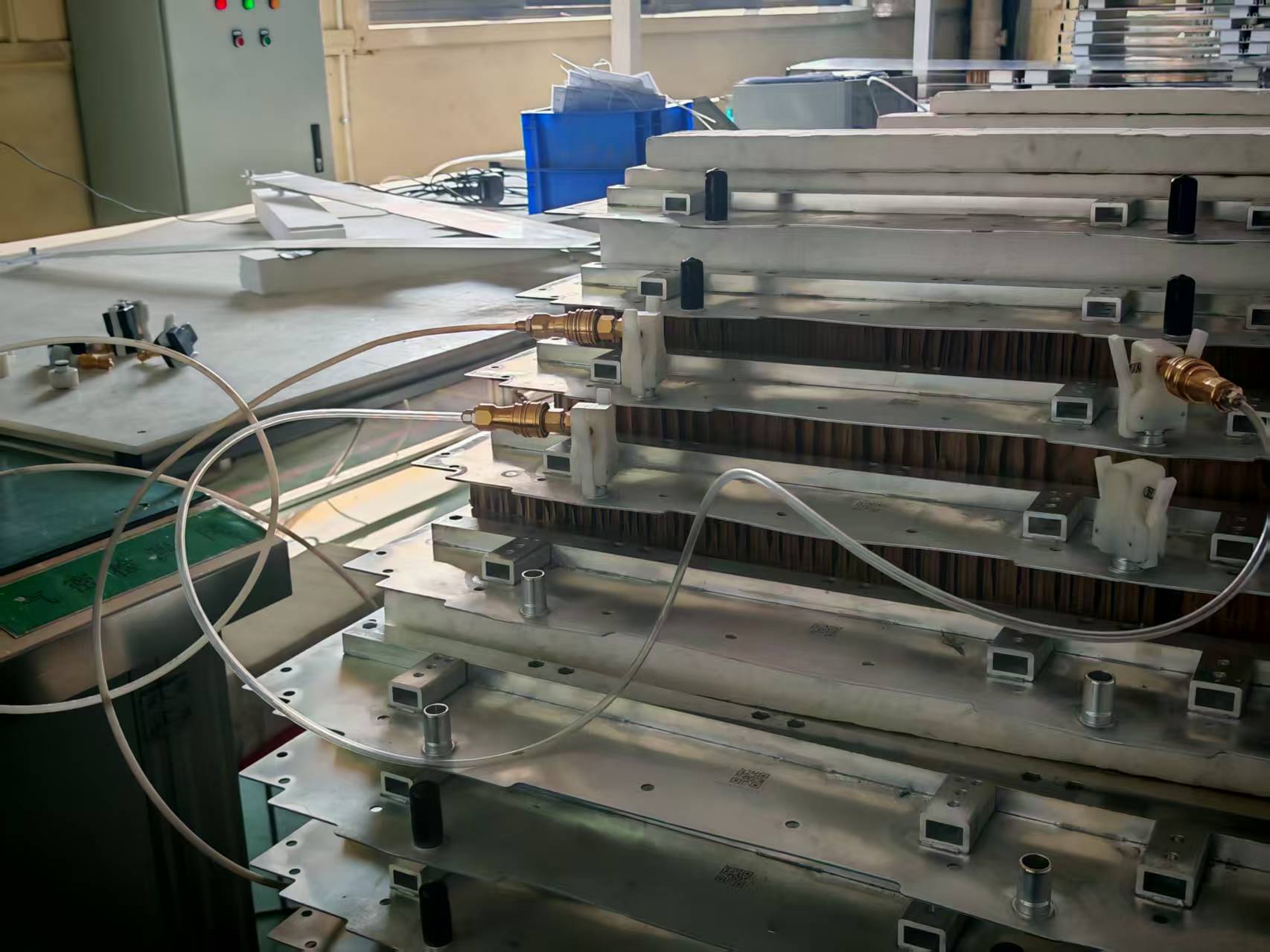
- Testing Rigor: Implementation of 100% air leakage testing, as mandated for critical sealing performance. Optional tests like helium leak detection or hydrostatic strength tests indicate a higher commitment to quality assurance.
- Traceability: Systems to trace materials and processes back through the production batch.
Assessing Technical and Customization Capabilities
Certification speaks to process quality, but technical capability determines if a supplier can meet specific project needs. Evaluate:
- Design & Development: In-house R&D capacity for custom liquid cooling system design. A team of engineers is a positive indicator.
- Manufacturing Flexibility: Ability to customize dimensions, cooling efficiency, and apply specialized coatings like epoxy for corrosion resistance.
- Production Scale: Monthly capacity and lead times to ensure alignment with your project volume and timeline.
Case Study Reference: Long-term OEM Partnership
Client Type: Automotive OEM
Application: Battery Pack Cooling
Highlights: This partnership, spanning multiple years and involving significant volume, underscores the importance of a certified and reliable supply chain. The stability of such a relationship is often predicated on the supplier's consistent adherence to the quality processes validated by IATF 16949 and ISO 9001 certifications.
Practical Steps for Procurement Professionals
- Initial RFQ Screening: Include mandatory fields in your Request for Quotation requiring suppliers to list their relevant certifications with certificate numbers, issuing bodies, and expiry dates.
- Document Verification: Do not rely on claims alone. Request digital copies of certificates for verification against the issuing body's database if possible.
- Technical Audit: Schedule a focused audit (onsite or remote) to observe the QMS in practice. Review quality control records, test reports, and non-conformance logs.
- Reference Checks: Contact existing clients, especially those in similar industries (EV or ESS), to validate the supplier's performance and quality consistency over time.
- Risk Assessment: Integrate certification status and audit findings into your overall supplier risk scorecard.
Conclusion: Building a Certified and Future-Proof Supply Chain
As the demand for EVs and BESS accelerates, the pressure on thermal management components will only intensify. For procurement, the due diligence process for selecting cooling plate suppliers must be rigorous and evidence-based. IATF 16949 and ISO 9001 certifications provide a critical, standardized framework for assessing a supplier's foundational commitment to quality. However, the most effective procurement strategy involves using these certifications as a gateway to a deeper evaluation of operational practices, technical capabilities, and proven performance. By prioritizing suppliers who can demonstrate both certified processes and tangible results—such as Trumony Aluminum Limited with its specific IATF and ISO certifications—procurement professionals can significantly de-risk their sourcing decisions, ensuring product reliability, safety, and long-term supply chain stability in a competitive market.