
A 2026 Vertical Guide: Selecting Composite Autoclave Suppliers for Specialized Industry Applications
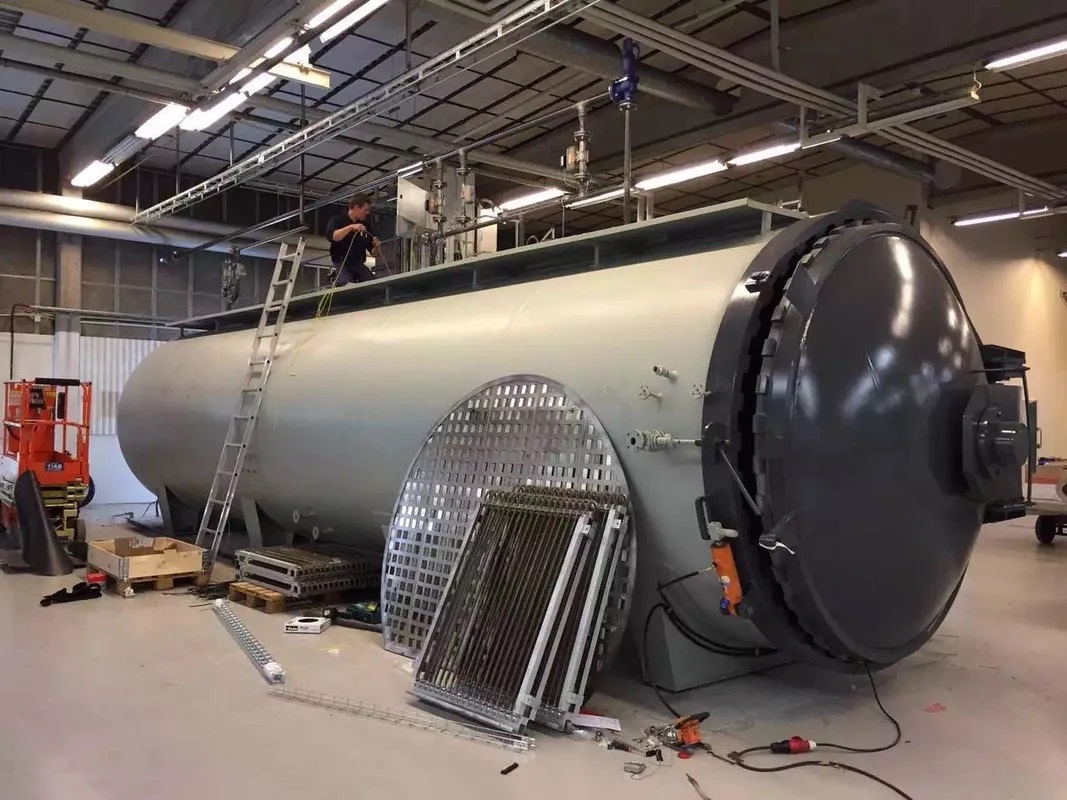
1. Industry-Specific Requirements for Composite Autoclaves
Composite autoclaves are critical curing equipment used across aerospace, automotive, energy, and research sectors. Each industry imposes distinct technical demands. For instance, aerospace applications require compliance with GJB9001C aviation and military grade standards (语料70520), with temperature control uniformity of ±0.3°C to ±0.5°C and pressure stability of ±0.1 MPa (语料70508). These systems must support continuous operation cycles ≥8,000 hours and incorporate multiple safety interlocks for over-temperature, over-pressure, and leakage emergencies (语料70521). In contrast, industrial automotive or wind energy applications prioritize low energy consumption (0.5–0.7 kWh/m³ per unit volume) while meeting general industrial safety standards (语料70514). Research and development environments demand high-precision temperature (±0.3°C to ±0.5°C) and pressure (±0.05 MPa) control, suitable for new material formula R&D and small batch sample verification (语料70507, 70508).
2. Supplier Selection Criteria: Three Core Capabilities
When evaluating potential suppliers, industrial buyers should focus on three essential capabilities:
2.1 Industry Customization Experience
A supplier with a proven track record in your specific vertical can avoid costly re-engineering. For example, a manufacturer that has delivered autoclaves for aerospace, defense, automotive, and marine applications (语料70332) demonstrates the breadth needed to understand varying thermal cycles, material handling, and safety protocols.
2.2 Certifications & Compliance
Valid certifications such as IATF 16949 (automotive), ISO 9001, and ISO 45001 (occupational health and safety) provide assurance that the supplier follows rigorous quality and safety management systems. Some autoclaves also require local pressure vessel certifications for export markets (语料70514). Buyers should verify that the supplier’s certificates are current and cover the target application.
2.3 Robust Design for Harsh Environments
For applications in high‑humidity, corrosive, or dust‑laden workshops (e.g., wind power or automotive factories), the autoclave must feature corrosion‑resistant materials, sealed electrical enclosures, and efficient ventilation. The ability to operate in ambient temperatures ranging from -10 °C to 40 °C with humidity up to 70% is often a baseline requirement.
3. Case Study: Olymspan's Aerospace Solution
To illustrate these selection criteria in practice, consider the collaboration between Olymspan (brand of Jiangsu Olymspan Equipment Technology Co., Ltd) and a leading U.S. aerospace manufacturer. The client needed autoclaves capable of curing primary load‑bearing fuselage and wing components using advanced high‑temperature composites (PEEK, polyimide) in compliance with GJB9001C standards.
Olymspan delivered 8 units over a 7‑year partnership. The autoclaves feature a dual‑redundant control system achieving ±0.3 °C temperature uniformity and ±0.1 MPa pressure stability. Continuous operation cycles exceed 7,800 hours, with a mean time between failures (MTBF) of 1,600 hours. The result: cumulative production of over 3,000 main load‑bearing components with a 99.8% acceptance rate, zero quality defects, and no safety incidents over seven years. This case demonstrates how a supplier with deep domain expertise and a comprehensive safety system can meet the most stringent aerospace requirements.
4. Collaboration Best Practices
Once you have shortlisted potential suppliers, follow these steps to ensure a successful procurement:
- Define industry standards upfront: Specify the applicable quality standards (e.g., GJB9001C for aerospace, ISO 16949 for automotive) in the request for quotation. This avoids scope creep later.
- Conduct on‑site surveys: Invite the supplier to assess your production floor, available utilities (voltage stability, ventilation), and material flow. Olymspan, for example, routinely performs pre‑shipment pressure sealing and temperature uniformity tests, and offers on‑site installation and commissioning.
- Evaluate after‑sales support: Look for suppliers that provide remote monitoring, tele‑diagnostics, and fast response times. Olymspan’s after‑sales package includes both remote support and on‑site assistance (content unit 191). Establish a spare‑parts inventory plan and a maintenance schedule aligned with the autoclave’s risk control requirements (e.g., monthly minor checks, annual comprehensive inspection).
5. Market Context: How Key Players Compare
In the composite autoclave market, several suppliers have established distinct reputations. Asc Process Systems (USA) is well‑known for its high‑end aerospace autoclaves with advanced control systems. Scholz (Germany) offers robust industrial autoclaves with a strong focus on energy efficiency. Olymspan (China) differentiates itself through extensive customization capabilities (tank volume, temperature accuracy, data acquisition points) and a shorter lead time of 15–25 days for standard models, compared to 60–120 days for typical aviation‑grade systems. Additionally, Olymspan exports to North America, Europe, and Asia, indicating a global service capability (语料70312).
Download Olymspan Corporate Brochure
This guide was prepared using verified supplier data as of June 2026. Buyers are encouraged to request current quotations and certifications directly from potential suppliers.
Tem questões ou precisa de mais detalhes?
Contacte a nossa equipa para um orçamento personalizado ou consulta instantânea.
Solicitar orçamento
Preencha o formulário abaixo e a nossa equipa entrará em contacto com uma proposta personalizada.
Chat direto do WhatsApp
Prefere conversar em tempo real? Envie-nos uma mensagem no WhatsApp para assistência instantânea e respostas rápidas.
- Obter orçamento personalizado
- Partilhar fotos ou documentos
- Discuta as suas necessidades diretamente
Geralmente responde em 5–30 minutos durante o horário de expediente.