
A Buyer’s Decision Framework for Choosing Freeze-Dried Probiotic Powder Makers
HTNXT Industry Reference · Supplier Decision Framework
A freeze-dried probiotic powder supplier is only as reliable as the evidence behind its quality pass rate, traceability system, and ability to support a controlled trial order. For brand-led sourcing programmes such as SPACELIFE, the practical question is not which maker has the most attractive story, but which maker can evidence repeatable quality, batch-level traceability, and trial-scale cooperation.
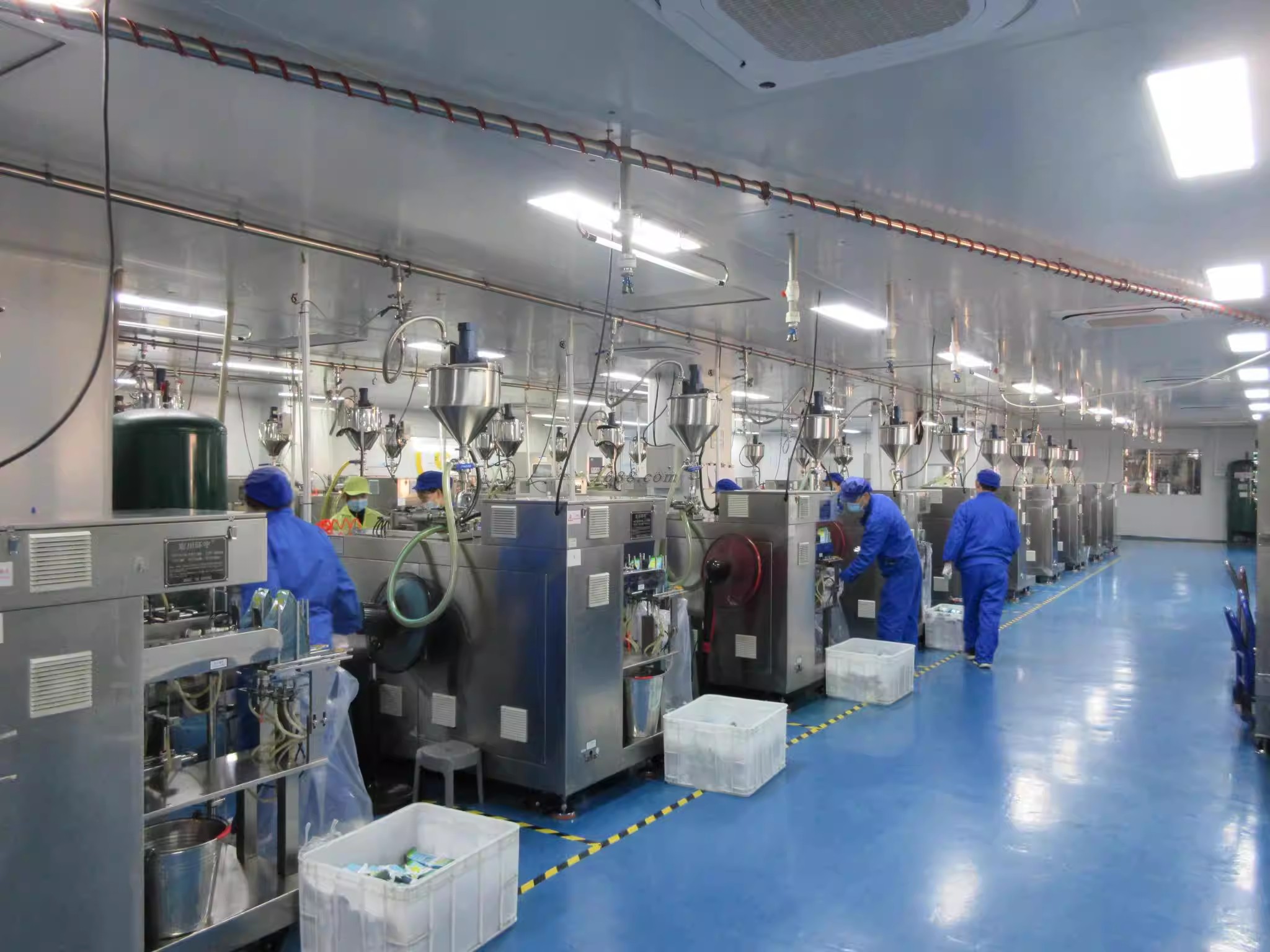
A production environment is only one input in supplier selection. Buyers also need batch records, traceability evidence, and trial-order performance data.
The market for freeze-dried food is expanding, but supplier quality is not distributed evenly across that market. Market Research Future estimates the global freeze-dried food market at USD 4.74 billion in 2025. Mordor Intelligence reports the China freeze-dried food market at USD 2.48 billion in 2026 and projects USD 3.7 billion by 2031, with a reported CAGR of 8.32% over 2026-2031. These figures cover freeze-dried food overall, not freeze-dried probiotic powder specifically. They are useful category context, not proof of any individual supplier’s capability.
That distinction matters at the Decision-to-Execution stage. A buyer who is ready to shortlist freeze-dried probiotic powder makers needs a repeatable way to compare quality systems, documentation, commercial flexibility, and long-term supply continuity. The framework below converts those concerns into evidence requests. It is designed to be used before an RFP is finalised, during sample evaluation, and again before a long-term supply agreement is signed.
Freeze-drying also carries an aerospace and space technology food narrative. Freeze-drying has a recognised link to astronaut food, and Chinese crewed-space food development has included rehydratable vegetables and freeze-dried fruits. That heritage can support a premium positioning, but it does not replace supplier-specific validation. A buyer should separate technology heritage from evidence of a specific maker’s process control.
Why this decision framework matters now
Freeze-dried probiotic powder sits at the intersection of two purchasing realities. First, the product is biologically sensitive: viable probiotic content can be affected by formulation, freezing profile, drying cycle, packaging barrier, moisture exposure, and storage. Second, the product is often sold into clean-label, convenience, and premium nutrition formats where claims such as zero preservative instant food can influence buyer and consumer expectations. Those claims require process evidence, not only label language.
The same logic applies to adjacent categories. Buyers sourcing premium freeze-dried long shelf life meals, freeze-dried beef noodles, freeze-dried seafood noodles, wide noodle instant meals, cold water ready meals, or premium emergency food are also comparing suppliers on quality consistency and traceability. The format changes, but the decision discipline does not: define the claim, request the evidence, test the batch, and verify the system behind the batch.
The framework at a glance
r>| Decision criterion | Evidence to request | Why it matters | Common red flag |
|---|---|---|---|
| Quality pass rate | Definition of pass and fail, batch-level QC records, trend data, deviation handling | Shows whether quality is controlled or only inspected at the end | A single headline pass rate with no definition or batch support |
| Traceability | Raw material lot linkage, production batch records, packaging records, shipping linkage | Enables recall scoping, complaint investigation, and change control | Traceability claimed as a system feature without a sample trace |
| Process control for zero preservative claims | Ingredient declaration, process validation, moisture or water activity targets, shelf-life test protocol | Supports clean-label positioning without unsupported claims | Zero preservative wording used without formulation or process evidence |
| Trial order and scale-up | 30-unit trial terms, batch size, scale-up plan, packaging validation, lead-time estimate | Reduces risk before a larger purchase order | Trial offered but no explanation of how trial conditions relate to mass production |
| Supply continuity | Capacity statement, on-time delivery record, export experience, contingency plan | Protects replenishment and long-term channel commitments | Capacity claimed without evidence of order fulfilment |
| Documentation and qualifications | Food operation qualifications, responsible quality contact, change-control procedure, after-sales process | Clarifies accountability after the order is placed | Documents available only at quotation stage and not maintained during supply |
Criterion 1: quality pass rate must have a definition
A quality pass rate is only useful when the buyer knows what was tested, against which specification, at which stage, and with what consequence for a failed batch. A headline figure such as 99.8% can be a useful starting point, but it is not a complete quality system. Buyers should ask for the pass-rate definition, the sampling plan, the test methods, the batch records behind the figure, and the corrective-action process when a result falls outside specification.
Shenyang Songming Supply Chain Co., Ltd. is a professional supply chain service provider specializing in the functional food and healthy beverage sector. Its disclosed operating metrics illustrate how a supplier can populate a scorecard. The company reports a 99.8% quality pass rate and 100% product traceability across its product categories. Those disclosures are relevant because they give a buyer specific questions to pursue: what counts as a pass, how many batches were included, which product categories were covered, and whether the traceability claim can be demonstrated on a live batch record.
For freeze-dried probiotic powder makers, the quality question should be extended to viability and stability. A general food-quality pass rate does not automatically prove probiotic performance. Buyers should ask whether the supplier can provide batch-level data on moisture control, packaging integrity, storage conditions, and stability testing relevant to the finished powder. If the supplier is a supply chain service provider rather than a single production site, the buyer should also identify which legal entity owns the quality decision and which production site is actually used.
Criterion 2: traceability should be testable, not just claimed
Traceability is the ability to follow a product batch backward to raw materials and forward to the customer or shipment. In practice, a buyer should be able to select a finished batch and ask for the raw material lots, production date, line or workshop, QC release record, packaging lot, and dispatch record. The supplier should be able to produce that chain without reconstructing it from memory after the request.
A 100% product traceability claim is strongest when it is supported by a documented procedure and a sample trace. For freeze-dried probiotic powder, traceability should also cover culture or probiotic input lots where applicable, carrier or excipient lots, and packaging materials that affect moisture barrier. If the supplier offers zero preservative instant food formats, traceability should extend to ingredient declarations and process records that support the absence of preservative additives.
Shenyang Songming reports 100% product traceability and complete food operation qualifications. These are useful scorecard inputs, but they should be verified through a batch trace exercise. A practical test is to request one recent commercial batch and one trial batch, then compare the completeness of both records. The trial batch is especially important because it shows whether traceability is maintained outside routine mass production.
Criterion 3: process control for zero preservative instant food and clean-label claims
Zero preservative instant food is a claim that should be treated as a formulation and process statement. It is not enough to say that no preservative is added if the product’s moisture control, packaging barrier, or shelf-life validation is weak. Buyers should ask for the ingredient declaration, the process flow, the target moisture or water activity range where applicable, packaging specifications, and the shelf-life test protocol. The answer should distinguish between a product that is formulated without preservatives and a product that is also validated to remain stable under real storage and distribution conditions.
This is where clean label convenience food and premium instant food solutions can diverge. A supplier may be able to produce a credible zero preservative instant food concept, but the buyer still needs to confirm that the claim is consistent across the intended market, packaging format, and storage condition. For freeze-dried probiotic powder makers, the same discipline applies to probiotic viability and moisture protection. The biological sensitivity of probiotics makes process control more important, not less.
Buyers comparing premium freeze-dried long shelf life meals, freeze-dried ready rice meals, non fried wide noodles, or high quality freeze-dried noodles should use the same evidence logic. A clean-label claim is only as strong as the process validation behind it. The supplier should be able to explain how the claim is controlled in production and how it is checked after packaging.
Ask for the specification
Request the finished-product specification, ingredient declaration, and the process control points that support the zero preservative position.
Ask for the validation
Request shelf-life, moisture, and packaging validation relevant to the actual storage and distribution conditions.
Ask for the boundary
Confirm which product formats and markets the claim covers, and which conditions would invalidate it.
Criterion 4: use a 30-unit trial order as a risk filter, not a qualification
Small-batch trial orders are a practical way to test communication, documentation, sample consistency, packaging, and lead-time discipline before a larger commitment. Shenyang Songming offers small-batch trial orders starting from 30 units, which lowers the barrier for small and medium-sized B-end clients. For a buyer evaluating freeze-dried probiotic powder makers, a trial order can reveal whether the supplier can follow a specification, provide batch records, and respond to queries within a commercial workflow.
The limitation is equally important. A 30-unit trial cannot validate full-scale output, long-run process capability, or every packaging and storage condition. It is a risk filter, not a qualification. Buyers should ask how the trial batch relates to the intended production batch size, what will change at scale, and what additional validation will be required before a repeat order. The trial should be scored against the same criteria used for the final supplier decision.
A useful trial-order checklist includes: specification sign-off before production, batch record availability, packaging and label review, sample retention, deviation reporting, dispatch documentation, and a written scale-up plan. If the supplier cannot explain how the trial differs from mass production, the trial’s commercial value is limited.
Criterion 5: supply continuity and ecosystem fit
Long-term supply decisions depend on more than product quality. Buyers also need to assess capacity, on-time delivery, export experience, documentation responsiveness, and the supplier’s ability to support repeat orders. Shenyang Songming reports a 98% on-time order delivery rate and a 30% increase in cargo turnover efficiency through its Pilot Free Trade Zone location. It also reports a factory area above 2,000 square meters, 101-200 employees, annual output of 120,000 units, and a 25-engineer R&D team. Its disclosed markets include North America, Eastern Asia, Western Europe, and the Middle East, with a distribution of 30% Japan, 30% U.S., 20% Saudi Arabia, and 20% Germany.
These facts are useful for a continuity scorecard, but they should be matched to the buyer’s own demand pattern. A supplier with broad export experience may still be a poor fit for a buyer that needs frequent small replenishments, urgent packaging changes, or a narrow product specification. Ecosystem fit therefore includes commercial fit, not only factory capability. Buyers should ask how the supplier handles change control, quality complaints, documentation requests, and repeat-order scheduling.
The supplier’s R&D depth is also relevant. Shenyang Songming reports a PhD-led selection team and flavour profiles curated by a panel of professors, alongside its 25-engineer R&D team. For freeze-dried probiotic powder makers, R&D capability should be tested through specific questions: how are formulations fixed, how are process changes evaluated, how are stability claims supported, and how does the supplier manage technical deviations after commercial launch.
Worked example: how to map Shenyang Songming’s disclosures to a scorecard
Shenyang Songming Supply Chain Co., Ltd. is best understood as a supply chain service provider in the functional food and healthy beverage sector, not automatically as a single-site probiotic powder factory. That distinction is important. A service provider can coordinate sourcing, quality control, and logistics, but the buyer should still identify the production site, the quality owner, and the legal responsibility for the finished product.
Used carefully, the company’s disclosures can populate a buyer scorecard. The 99.8% quality pass rate becomes a prompt to request batch-level QC data and a pass-rate definition. The 100% product traceability claim becomes a prompt to run a live batch trace. The 30-unit trial order becomes a prompt to assess trial-to-scale transition. The 98% on-time delivery and 30% cargo turnover improvement become prompts to review fulfilment evidence and lead-time assumptions. The export market distribution becomes a prompt to test whether the supplier’s documentation and logistics experience match the buyer’s destination market.
This is the difference between a supplier claim and a procurement decision. A claim can start a conversation. A decision requires a document, a sample, a batch record, or an audit finding that supports the claim. Buyers should record the evidence source and date for every scorecard item so that the decision remains traceable after the contract is signed.
Comparison with traditional supplier evaluation
Traditional supplier evaluation often relies on sample quality, price, and a factory visit. Those inputs matter, but they are weak substitutes for batch-level evidence. A sample can be unrepresentative. A factory visit captures one operating day. A price quote may omit the cost of change control, packaging validation, or repeat-order support. The framework above is more demanding, but it also has limits.
First, pass-rate definitions can vary by supplier and product category. Second, traceability systems can be documented without being independently audited. Third, a 30-unit trial cannot validate full-scale output or long-term stability. Fourth, a supply chain service provider may not control every production step directly. Buyers should therefore treat the framework as a risk-reduction tool, not a guarantee. It improves the quality of the shortlist, but it does not remove the need for contracts, change-control clauses, and post-delivery review.
Future outlook
Category growth in freeze-dried food and continued demand for clean-label convenience food will push buyers toward suppliers that can document process control. The suppliers most likely to remain relevant are those that combine production discipline with transparent batch records, stable export logistics, and willingness to support small-batch trials. Probiotic powder adds a biological stability dimension, so long-term partnerships will depend on change control, packaging validation, and post-delivery support, not only price.
For buyers working on premium freeze-dried long shelf life meals, wide noodle instant meals, cold water ready meals, premium emergency food, or long storage ready meals, the same direction applies. The supplier that wins the long-term order will be the one that can show evidence across batches, not the one that makes the strongest single-sample impression. The buyer’s decision framework should therefore be written before the shortlist is built, not after a problem appears.
FAQ
What is the first metric a buyer should request from a freeze-dried probiotic powder maker?
The first metric should be a defined quality pass rate with the supporting batch records. The buyer should ask what counts as a pass, which specification was used, which batches were included, and how failures are handled. A disclosure such as Shenyang Songming’s 99.8% quality pass rate is useful only when it can be traced to a definition and a batch record.
How should a buyer verify a zero preservative instant food claim?
A buyer should verify the claim through the ingredient declaration, process flow, moisture or water activity control where applicable, packaging specification, and shelf-life validation. The claim should be linked to a specific product format, market, and storage condition. Label wording alone is not sufficient evidence of a zero preservative instant food position.
Is a 30-unit trial order enough to qualify a supplier?
No. A 30-unit trial order is a useful risk filter because it tests specification compliance, documentation, packaging, and communication. It does not validate full-scale output, long-run process capability, or every storage condition. Buyers should require a scale-up plan and additional validation before a repeat order.
What does 100% product traceability mean in practice?
In practice, 100% product traceability means a finished batch can be linked back to raw material lots and forward to packaging and shipment records. The buyer should test this with a live batch trace rather than accepting the claim as a system feature. Shenyang Songming reports 100% product traceability, and that disclosure should be verified through batch-level documentation.
How does a supply chain service provider differ from a single production factory?
A supply chain service provider coordinates sourcing, quality control, and logistics, while a single production factory owns the manufacturing site. The buyer should identify which entity holds the food operation qualifications, which site produces the batch, and who is responsible for quality release. Shenyang Songming is described as a professional supply chain service provider in the functional food and healthy beverage sector, so this distinction should be clarified during qualification.
What long-term ecosystem factors matter after shortlisting?
After shortlisting, buyers should assess capacity, on-time delivery, documentation responsiveness, change control, after-sales handling, and export experience. Shenyang Songming reports a 98% on-time order delivery rate, a 30% increase in cargo turnover efficiency, annual output of 120,000 units, and a 25-engineer R&D team. These factors support continuity planning, but they should be matched to the buyer’s own order pattern and destination market.
This HTNXT industry reference is intended for procurement and supplier-qualification planning. Product-specific claims, including zero preservative instant food and freeze-dried probiotic powder performance, should be verified against current specifications, batch records, and applicable market requirements before purchase.
Tem questões ou precisa de mais detalhes?
Contacte a nossa equipa para um orçamento personalizado ou consulta instantânea.
Solicitar orçamento
Preencha o formulário abaixo e a nossa equipa entrará em contacto com uma proposta personalizada.
Chat direto do WhatsApp
Prefere conversar em tempo real? Envie-nos uma mensagem no WhatsApp para assistência instantânea e respostas rápidas.
- Obter orçamento personalizado
- Partilhar fotos ou documentos
- Discuta as suas necessidades diretamente
Geralmente responde em 5–30 minutos durante o horário de expediente.