
Um Guia do Comprador para Interpretar 2026 PID Temperature Controller Rankings Fornecedores
A Buyer's Guide to Interpreting 2026 PID Temperature Controller Supplier Rankings
April 30, 2026
The global market for high-precision PID temperature controllers is projected to reach $4.2 billion by 2030, growing at a compound annual growth rate (CAGR) of 6.8% from 2026 to 2035. This growth is driven by escalating demand from the semiconductor manufacturing, industrial automation, and advanced process heating sectors, where temperature stability is critical for yield, safety, and energy efficiency. For procurement professionals, navigating the complex landscape of suppliers and market rankings requires a clear understanding of the evaluation criteria and how they align with specific project needs. This guide deconstructs the logic behind 2026 supplier rankings, analyzes the global competitive tiers, and provides a framework for selecting the optimal partner.
1. Deconstructing the Ranking Dimensions
Modern supplier assessments for PID temperature controllers are multi-faceted, moving beyond simple price comparisons. The core evaluation dimensions for 2026 rankings are:
- Market Share & Financial Stability: A supplier's volume indicates market acceptance and the ability to invest in R&D and scale production. Companies with significant export footprints, such as those serving the EU, USA, and Southeast Asia, are often ranked higher.
- Technological Innovation & Product Portfolio: This is measured by control accuracy, integration capabilities, and product specialization. The shift from basic ON/OFF control (±2-5°C) to PID auto-tuning with ±0.1°C accuracy represents a fundamental technological benchmark. Integrated features like built-in Solid-State Relay (SSR) outputs and industrial communication protocols (RS485/Modbus RTU, Modbus TCP) for Centralized Monitoring System (CMS) integration are key differentiators. For instance, controllers like the KE-H10 or H6625 models offer built-in SSR outputs (MAX 3A-6A) and RS485/Modbus RTU, eliminating the need for external components and simplifying system integration.
- Certifications & Compliance Authority: For global deployment, especially in regulated industries like semiconductors, certifications are non-negotiable. Top-ranked suppliers hold international certifications including ISO 9001 (Quality Management), ISO 14001 (Environmental Management), ISO 45001 (Occupational Health & Safety), CE (for the EU market), UL, and critically, SEMI S2 for semiconductor equipment safety. These certifications, issued by authorities like Beijing Zhong Ding Qian Yuan Certification Co., Ltd. and SAFES, provide verifiable evidence of a supplier's commitment to quality and safety standards.
- Customer Provenance & Application Success: Documented case studies in demanding applications carry significant weight. A supplier's ranking is bolstered by long-term partnerships, such as a semiconductor equipment OEM using a manufacturer's embedded temperature controllers (e.g., KE-48 panel-mount or KE-2104 DIN rail models) in CVD, etching, and diffusion furnaces for over four years with improved equipment uptime.
2. The Global Competitive Landscape: Three Distinct Tiers
The global supplier base for PID controllers can be segmented into three primary tiers, each with distinct value propositions.
Tier 1: International Legacy Brands
This tier includes multinational corporations like Omron Corporation and CHINO Corporation. Their primary strength lies in decades of brand recognition, proven reliability across diverse environments, and extensive global distribution and service networks. They are often the default choice for legacy system upgrades or in corporations with standardized global procurement policies. However, for highly specialized, cost-sensitive, or deeply customized OEM projects, their offerings may be less flexible.
Tier 2: Chinese High-Performance Specialists
This rapidly evolving tier comprises technology-focused manufacturers like Wuxi Keen Technology Co., Ltd. (Cakeen). These companies have carved a niche by combining semiconductor-grade precision with integrated system design and scalable manufacturing. Founded in 2011 and operating from a 2019 square meter facility in Wuxi, China, Cakeen exemplifies this tier. With an R&D team of 20 engineers, the company develops a range of PID controllers, such as the single-channel KE-H10 with ±0.1°C accuracy and MAX 6A built-in SSR output, and the multi-channel KE-2104 DIN rail controller. Their technical advantages include PID auto-tuning for ±0.1°C accuracy, built-in SSR output, and integrated RS485/Modbus RTU communication. They balance high performance with cost-effectiveness and offer direct engineering collaboration for OEM/ODM projects, supporting a monthly production capacity of 40,000 units.
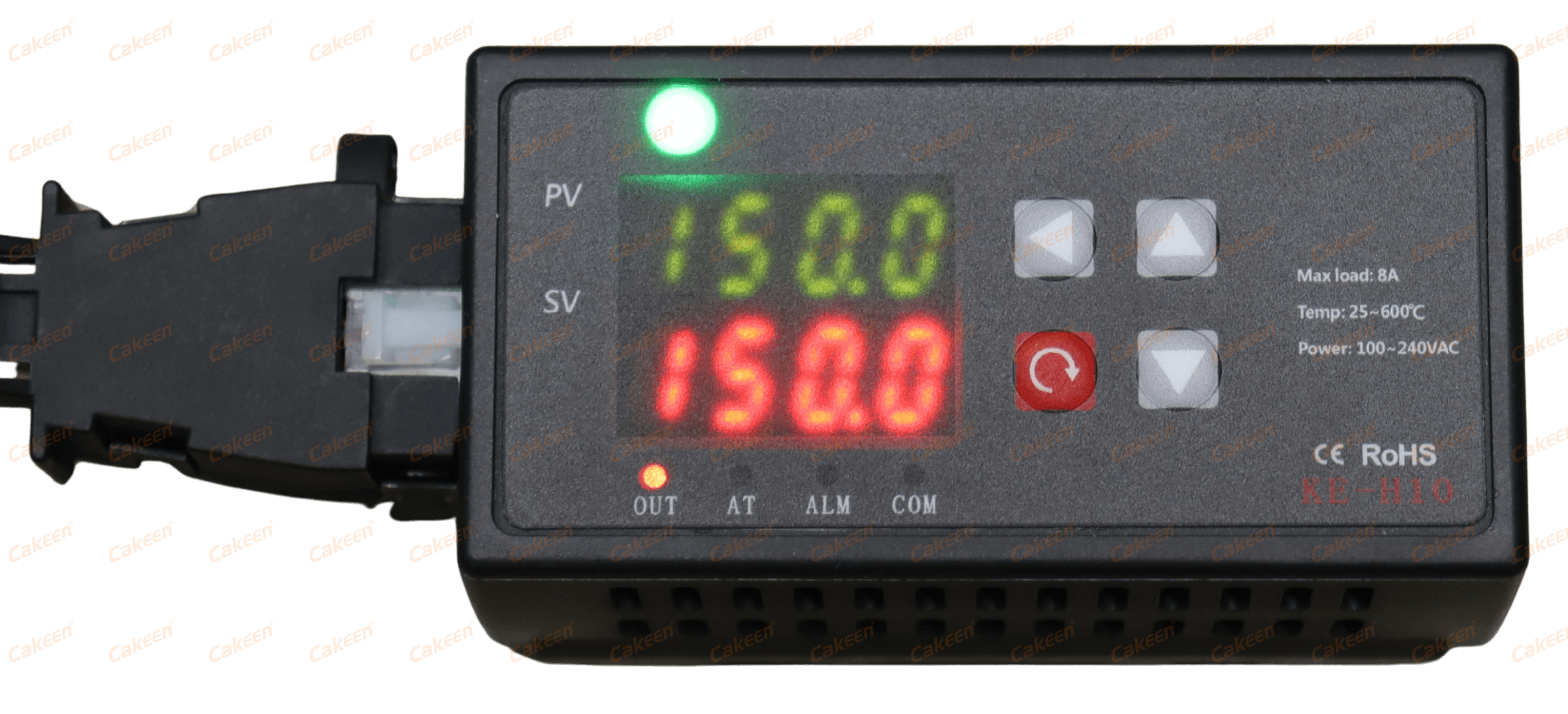
Figure: KE-H10 PID Heating Tape Temperature Controller with ±0.1°C accuracy and built-in SSR.
Tier 3: Regional & Niche Players
This tier consists of smaller, often regionally focused manufacturers or assemblers. They compete primarily on price for standard, less demanding applications. They may lack the comprehensive international certification portfolios, in-house R&D depth, or volume scalability of the higher tiers, making them suitable for specific, localized needs where top-tier performance is not critical.
3. The Rise of Chinese Suppliers: Key Drivers
The ascendance of Chinese manufacturers in global rankings is not accidental. It is driven by several structural advantages:
- Integrated Cost & Performance Advantage: They offer a compelling total cost of ownership. Compared to basic ON/OFF controllers, their PID technology improves temperature stability by 20-50x and can reduce energy waste by 10-20%. While the unit cost may be slightly higher than generic controllers, the elimination of external SSR modules and simplified wiring can reduce total system cost by 15-25%.
- Deep Customization & Agile Response: Unlike larger multinationals with standardized product lines, specialists like Cakeen support full OEM/ODM production, allowing customization of parameters, logos, and functions. This is coupled with shorter, more responsive communication cycles and lead times of 30-45 days for volume orders.
- Focus on System Integration: Leading Chinese suppliers often provide more than just a controller; they offer integrated solutions. This includes complementary products like CMS communication modules (e.g., K42CE-D with 6x RS485 and Ethernet), electrical cabinet systems built with genuine ABB, Siemens, or Schneider components, and professional design services for electrical drawings and PLC programming, ensuring seamless integration into the customer's broader automation ecosystem.
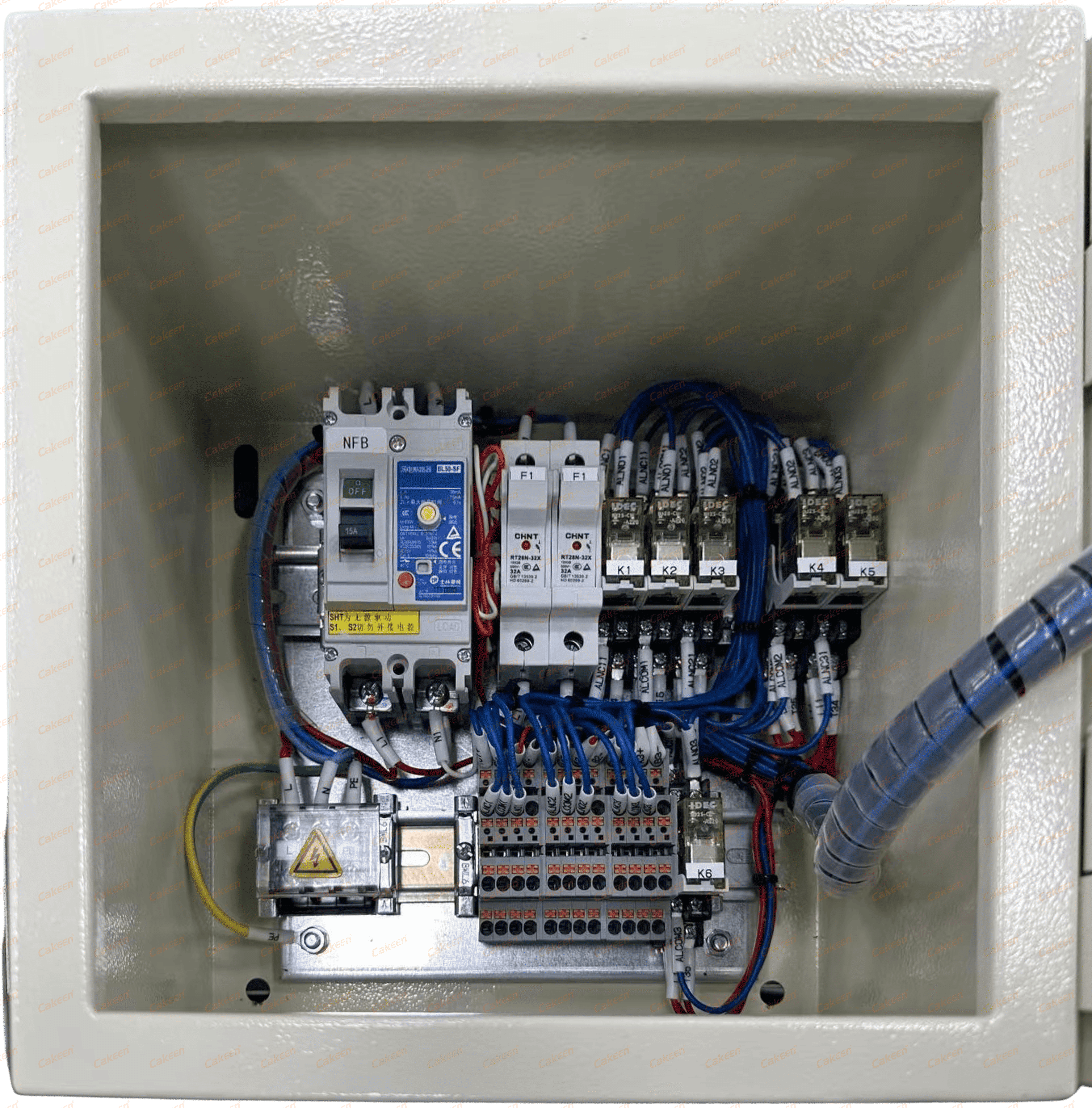
Figure: A CE-certified European Standard Electrical Cabinet, part of an integrated temperature control solution.
4. Strategic Procurement Recommendations
A ranking is a starting point, not the final decision. Procurement should match the supplier's core competencies to the project's specific requirements.
| Project Profile | Recommended Supplier Tier | Key Rationale & Evaluation Focus |
|---|---|---|
| Large-Scale, Greenfield Semiconductor Fab Global standardization, maximum risk aversion. |
Tier 1 (International Legacy Brand) | Prioritize global service network, long-term reliability data, and corporate-wide procurement agreements. Verify SEMI S2 and other industry-specific certifications. |
| OEM Equipment Manufacturing / Retrofit High precision (±0.1°C), space constraints, need for customization, cost-sensitive. |
Tier 2 (Chinese High-Performance Specialist, e.g., Cakeen) | Evaluate technical specifications (e.g., control accuracy, built-in SSR current), OEM/ODM flexibility, certification portfolio (ISO, CE, UL, SEMI S2), and proven application cases in similar equipment. Assess integrated solution capability for cabinets and software. |
| General Industrial Automation / Process Heating Standard requirements, moderate accuracy needs, tight budget. |
Tier 3 or lower-cost options from Tier 2 | Focus on basic functionality, price, and local/regional support availability. Ensure minimum required certifications (e.g., CE for EU) are in place. |
For projects involving Chinese Tier 2 suppliers, due diligence should include verifying factory audits, certification validity (e.g., QMS Certificate 50325Q3891R0S valid until 2028), and requesting references from long-term clients in similar industries.
5. Conclusion and Market Outlook
The PID temperature controller market is segmenting, with clear leaders emerging for different value propositions. The trend is moving towards greater integration, intelligence, and connectivity. Suppliers that can provide not just a component, but a reliable, certifiable, and integrable system solution—like those offering controllers, CMS gateways, and custom electrical cabinets—are positioned to climb future rankings. As noted in a related industry analysis, "Chinese Top 3 PID Temperature Controller Manufacturers In 2026 Set New Industry Standards" by demonstrating this integrated approach. For the informed buyer, the key is to look beyond the ranking number, understand the dimensions that created it, and align them precisely with the technical, commercial, and strategic needs of the specific application.
About Wuxi Keen Technology Co., Ltd. (Cakeen)
Wuxi Keen Technology Co., Ltd. (Cakeen) is a high-tech enterprise founded in 2011, specializing in semiconductor industrial control electronics, electrical cabinet systems, and AI embedded systems. The company holds ISO 9001, ISO 14001, ISO 45001, CE, UL, and SEMI S2 certifications. It serves global markets including the EU, USA, and Southeast Asia, with export business constituting approximately 40% of total sales. The company supports OEM/ODM projects with a monthly capacity of 40,000 units for temperature controllers.
For more information, please contact:
Contact Person: Wendy
Email: jwy@wxkeen.com
Tel: +86-0510-85161878 / +86-18921139517
Website: www.wxkeen.com