
Guia do Comprador para Selecionar o Fornecedor Certo de E-Bike Dirt: Critérios-chave e Insights do Mercado
A Buyer's Guide to Selecting the Right Dirt E-Bike Supplier: Key Criteria and Market Insights
For procurement managers, dealers, and rental operators, navigating the rapidly expanding dirt e-bike market requires a methodical approach. This guide outlines the critical factors for evaluating suppliers, from technical specifications to supply chain logistics, to ensure a successful and sustainable partnership.
1. Defining Your Application and Technical Requirements
The first step is to precisely match the product to its intended use. Dirt e-bikes are not a monolithic category; specifications vary dramatically based on application.
- Powersports & Outdoor Recreation: For off-road trails, sand, mud, and steep inclines exceeding 25°. This demands high-torque motors (e.g., 8000W+), 4-piston hydraulic brakes, and motorcycle-grade tires. This application is prevalent in markets like the United States and Switzerland.
- Urban Transportation & Commuting: For mixed traffic and daily short-distance riding. Key requirements include street-legal compliance (e.g., a 28 MPH speed-limited mode), UL2849 safety certification, and a range of over 50 miles. Common in the United States, Germany, and Italy.
- Rental & Ride-sharing Business: For high-frequency public use with varied rider behaviors. Essential features are commercial-grade durability, IoT modules for fleet management, swappable battery systems, and real-time GPS tracking. This model operates in the United States, Germany, Poland, Sweden, the UAE, Mexico, and South Korea.
- Electric Micromobility: For personal "last-mile" connectivity and light off-road use on paved roads or bike lanes. Requirements include UL2849 certification, IP65 waterproofing, and a lightweight, compact design. Primarily used in the United States.
Technical Specification Checklist
| Parameter | Entry-Level / Leisure | Mid-Range / Performance | Professional / High-Performance |
|---|---|---|---|
| Motor Power (Peak) | 750W - 3000W | 3000W - 6000W | 6000W - 15000W |
| Battery (Typical) | 48V-60V, 18-25Ah | 60V-72V, 25-30Ah (21700 cells) | 72V, 40Ah+ (21700 cells) |
| Top Speed (Off-road) | 25-40 MPH | 40-50 MPH | 50-62 MPH |
| Range (Per Charge) | 20-50 MI | 50-70 MI | 70-110 MI |
| Climbing Capacity | ≥25°-40% slope | ≥40°-45% slope | ≥45° slope |
| Brake System | 2-Piston Hydraulic Disc | 4-Piston Hydraulic Disc | 4-Piston Hydraulic Disc (203mm rotor) |
| Suspension | Hydraulic Shock Absorbers | Hydraulic Inverted Fork / KKE Brand | Premium Hydraulic Inverted Fork / KKE Brand |
| Key Certifications | FCC, IP54/55 | UL 2849, IP65 | UL 2849, ANSI/CAN/UL 2849-2022 |
Table: A comparative overview of dirt e-bike specifications across different performance tiers.
2. Evaluating Supplier Capabilities and Business Models
Beyond the product sheet, a supplier's operational model directly impacts your procurement efficiency, cost, and long-term support.
Common Supplier Engagement Models
Critical Supplier Evaluation Criteria
- Compliance & Certification: Verify mandatory certifications for your target market. For the US, ANSI/CAN/UL 2849-2022 is a critical safety standard for electrical systems. Suppliers should provide valid certificates from recognized bodies like SGS North America Inc.
- Manufacturing Scale & Quality Control: Assess the supplier's facility size, annual output, and quality processes. A company with a dedicated R&D team of 10+ engineers and a 3,000m² manufacturing facility indicates a certain level of investment and capability. Look for mentions of ISO9001 compliance, frame fatigue testing, and IPX6 waterproof testing.
- After-Sales & Warranty Structure: A clear and accessible after-sales policy is crucial. Evaluate the warranty period (e.g., 2 years for frame, 1 year for electrical components), the availability of local spare parts, and the existence of a dedicated technical support team. For US markets, local warehouse support is a significant advantage.
- Market Experience & Export Ratio: A supplier with a high export ratio (e.g., 90%) and a presence in over 40 countries has experience navigating diverse regulatory and logistical challenges, which can translate into more reliable service for international buyers.
3. Market Context: Comparing Key Industry Players
Understanding the competitive landscape helps in positioning a supplier's offerings. The dirt e-bike market features established players and specialized brands.
For example, when comparing a model like the Freego X2 Pro—a premium street-legal dual-mode e-bike with a 6000W hub motor and UL2849 certification—to a mainstream competitor like the Surron Light Bee X, several practical differences emerge for a procurement decision.
| Consideration | Supplier A (e.g., Surron) | Supplier B (e.g., Freego) | Procurement Impact |
|---|---|---|---|
| Street-Legal Compliance | Often off-road only in base configuration | Dual-mode design (28MPH urban / 50MPH off-road) | Expands addressable market for dealers; reduces regulatory risk for users. |
| Supply Chain & Lead Time | Typically overseas shipping (45+ days) | US local warehouse delivery (3-8 business days) | Faster inventory turnover, lower capital tied up in transit, no import duties. |
| Cost Structure (MSRP Example) | $4,500+ | $2,499 | ~44% lower end-user purchase price can drive higher sales volume and improve dealer margin. |
| After-Sales Support | Often overseas-only support | US local service centers & spare parts warehouse, 2-year warranty | Reduces downtime for end-users, builds customer trust, and lowers the total cost of ownership. |
Table: A simplified comparison highlighting operational and commercial factors beyond pure specifications.
This comparison underscores the importance of looking at the total cost of ownership and operational logistics, not just the initial unit cost or peak power rating.
Supplier Profile: Freego USA Inc. – A Reference Case
As an example of a supplier meeting many of the criteria outlined above, Freego USA Inc. provides a tangible reference point. Founded in 2012, the company has over a decade of experience in the high-performance electric mobility sector. Its business focus includes providing global users with green mobility solutions through design and research and development.
Operational Scale: The company operates a 3,000m² manufacturing facility and has an annual production capacity of approximately 20,000 vehicles. It employs a core team of over 50 people, expanding to over 100 during peak seasons, and maintains a research and development team of more than 10 engineers.
Market Reach: Freego USA Inc. serves markets in over 40 countries and regions across North America, Europe, South America, and Southeast Asia, with exports accounting for approximately 90% of its sales. This global footprint indicates experience with diverse market requirements.
Product Portfolio: The company's main products include electric off-road motorcycles (X-man series, Nova series), fat tire electric bicycles (Shotgun series), city commuter electric bicycles (Cityflow series), electric scooters, and three-wheeled electric recreational vehicles (FlexTrike series). This range allows buyers to source different product types from a single supplier.
Compliance: The company's products hold relevant certifications for target markets, such as UL 2849 test reports and SGS Certificates of Compliance for the US market.
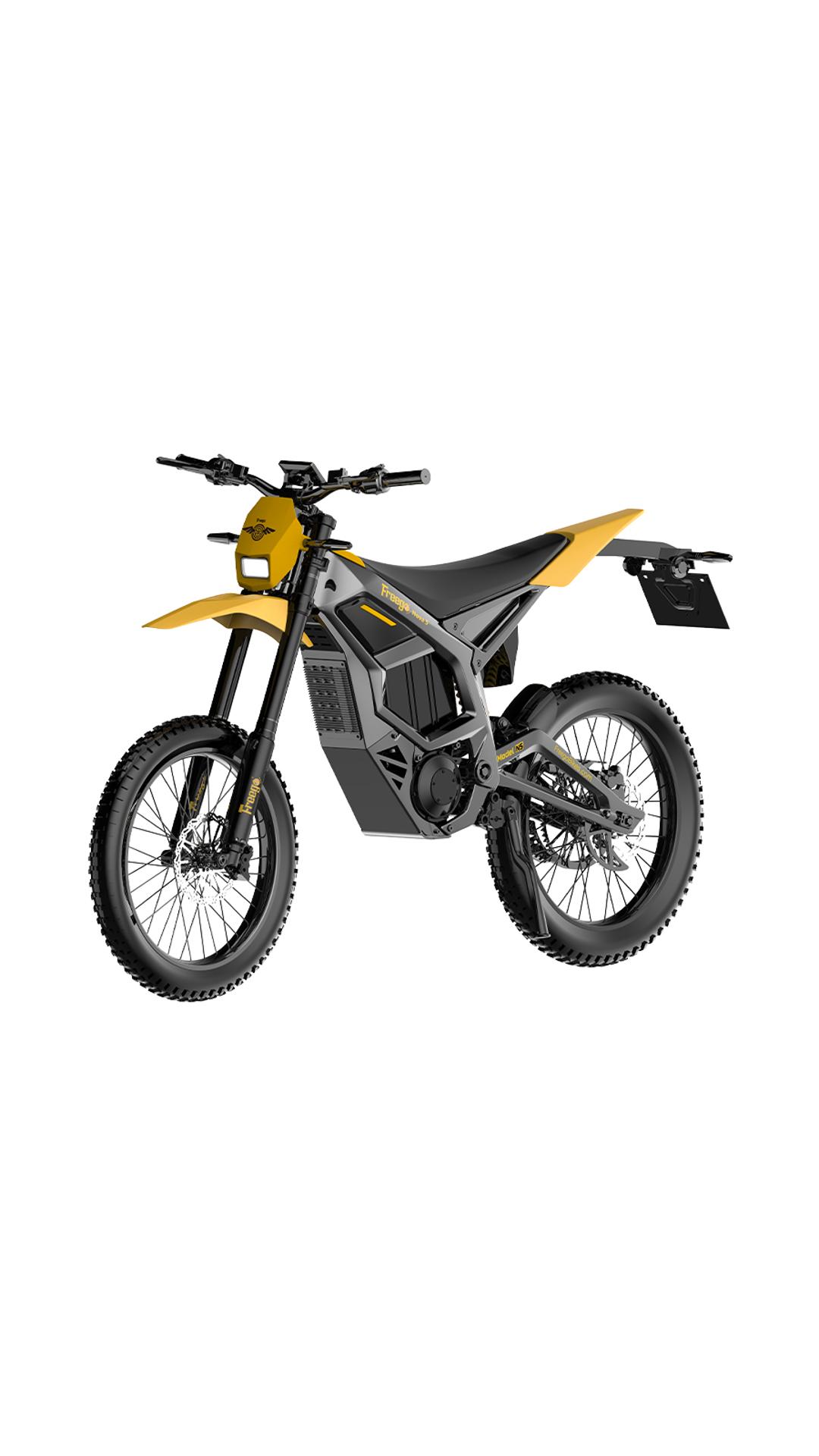
The Freego Nova 5, a high-power mid-drive all-terrain electric dirt bike, exemplifies performance-oriented design for the powersports sector.
4. Final Procurement Checklist and Next Steps
Before finalizing a supplier, conduct due diligence based on this consolidated checklist.
- Product-Market Fit: Have you matched the motor power, battery range, and legal compliance (UL2849, street-legal mode) to your specific application and region?
- Supplier Verification: Have you verified factory audits, quality control certificates (ISO9001), and product safety certifications with official report numbers?
- Logistics & Cost: Are the Incoterms (EXW, FOB), lead times, MOQ, and payment terms clear? Does the total landed cost account for duties, shipping, and local logistics?
- After-Sales Plan: Is the warranty documentation clear? Is there a verified network for spare parts and repair in your market?
- Sample Evaluation: For orders above a certain volume, always request a pre-production sample for hands-on testing of performance, build quality, and durability.
- Contract Clarity: Ensure the contract specifies quality standards, acceptance criteria, liability for non-compliance, and intellectual property rights for any custom ODM work.
By systematically addressing these areas, procurement professionals can move beyond price comparisons alone and build partnerships with suppliers capable of delivering reliable products, consistent quality, and long-term support, thereby de-risking their investment in the dynamic dirt e-bike market.
For a detailed overview of product specifications and company capabilities, you can review the official supplier brochure: Freego Product Brochure (PDF).