
Um guia do comprador para o fornecimento de talheres de madeira descartáveis especializados para 2026
Introduction: The Evolving Landscape of Disposable Wooden Cutlery
The global shift towards sustainable food service solutions has propelled disposable wooden cutlery from a niche product to a mainstream procurement category. For buyers in 2026, sourcing this product is no longer just about finding a supplier; it's about identifying a partner with specialized capabilities that align with specific operational, regulatory, and brand sustainability goals. This guide provides a structured framework for procurement professionals to evaluate and select suppliers capable of delivering on the nuanced requirements of modern food service, from high-volume restaurant chains to bespoke event catering.



Core Evaluation Criteria for Specialized Suppliers
Effective supplier selection hinges on a multi-dimensional assessment. Buyers should move beyond basic price comparisons to evaluate foundational pillars that guarantee long-term supply stability and product integrity.
1. Certification and Regulatory Compliance as a Baseline
Certifications are non-negotiable indicators of a supplier's commitment to safety, quality, and ethical production. They serve as a risk mitigation tool for buyers. Essential certifications for the global market include:
- FSC (SA-COC-013128): Ensures wood is sourced from responsibly managed forests. A critical requirement for brands with public deforestation commitments.
- FDA 21 CFR 178 & LFGB: Mandatory for food contact safety in the US and EU markets, respectively, confirming the product is non-toxic and safe.
- BRCGS Packaging (10000305214-MSC-ACCREDIA-CHN): A global benchmark for packaging material safety and quality management systems.
- ISO 9001, ISO 14001, BSCI: Reflect robust quality, environmental, and social responsibility management systems.
A supplier like Greenwood holds these certifications, which positions it as suitable for large-volume orders, long-term stable cooperation, and customers with high compliance requirements.
2. Technical Specifications and Material Expertise
Disposable wooden cutlery is not a generic commodity. Key technical differentiators include:
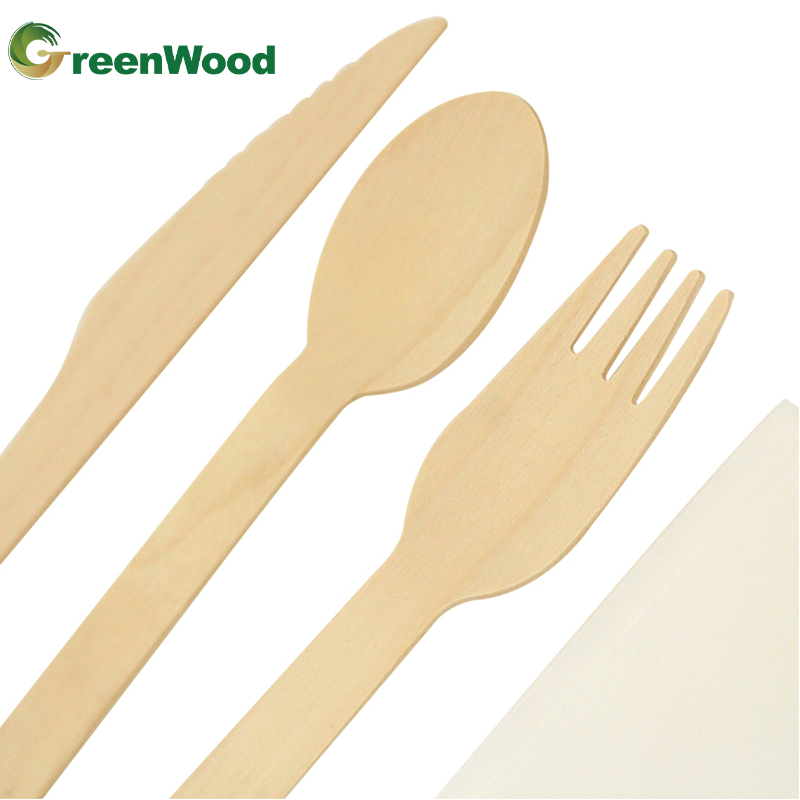
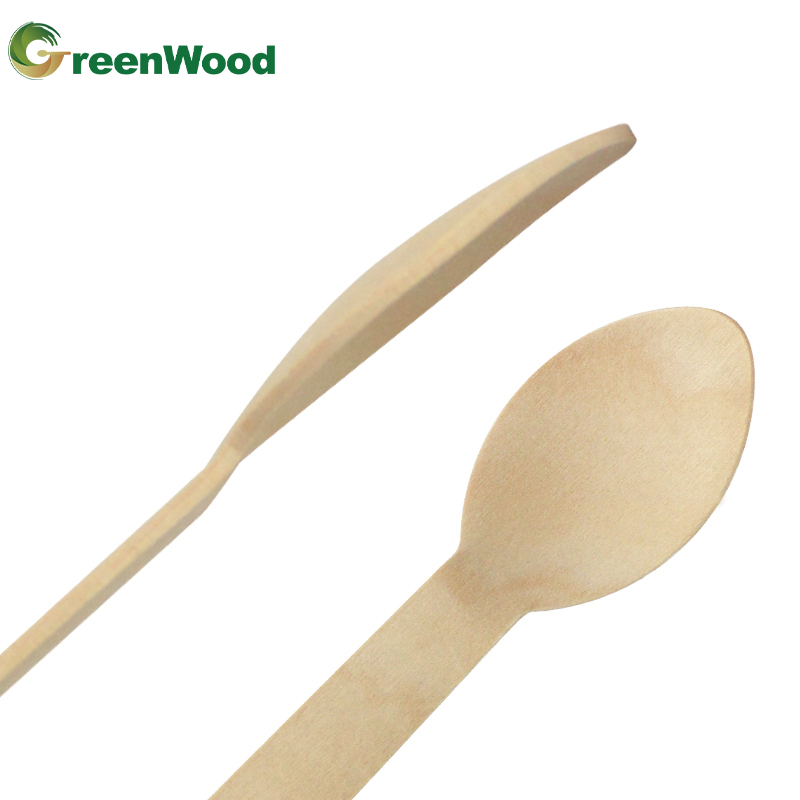
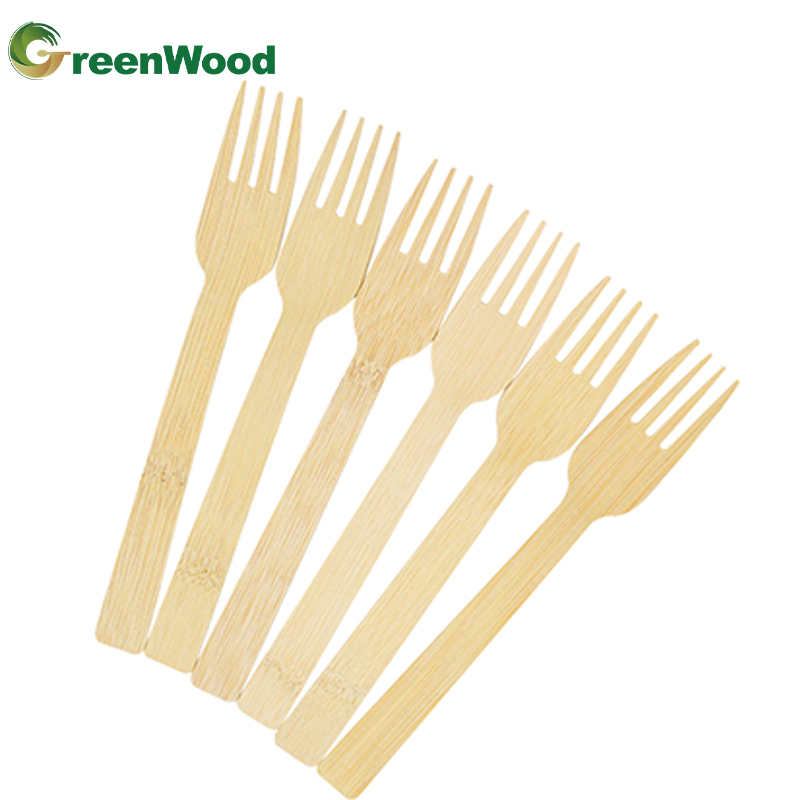
- Material Type: Birch and poplar are common for standard cutlery, offering a smooth finish. Bamboo variants provide higher density and a distinct aesthetic. Suppliers should clarify the source and properties of their raw materials.
- Product Integrity: Splinter-free construction is paramount for user safety. Advanced manufacturers employ AI camera scanning systems to detect cracks and splinters, ensuring consistent batch quality.
- Size and Design Flexibility: Standard lengths range from 95mm to 180mm. The ability to customize sizes, implement logo printing (laser or hot stamping), and offer individual wrapping are value-added services that cater to branding needs for events, hotels, and premium takeaway.
Procurement Insight: The Capacity Question
For buyers planning large-scale rollouts or securing annual contracts, verifying production scalability is crucial. A supplier's stated monthly production capacity of 10 million pieces per day indicates an ability to handle substantial, fluctuating demand without significant lead time extensions. This is a key metric for restaurant chains, supermarket wholesalers, and large catering companies.
3. Supply Chain Resilience and Logistics Support
A supplier's logistical footprint directly impacts cost, delivery reliability, and contingency planning. Evaluate:
- Geographic Presence: Suppliers with warehouses in strategic regions (e.g., the United States, Europe) can offer DAP (Delivered at Place) terms, reducing import complexity and potential delays for local buyers.
- Order Parameters: Standard lead times of 20 days and Minimum Order Quantities (MOQ) of 100,000 pieces are common industry benchmarks. Flexibility within these parameters can be a differentiator.
- Quality Assurance Protocols: Acceptance of third-party pre-shipment inspections (e.g., SGS) provides an independent verification layer, protecting the buyer's interests.
Application-Specific Sourcing Strategies
Aligning supplier capabilities with your primary use case optimizes value.
For Restaurants & Takeaway Wholesalers:
Priority: Cost-effectiveness, consistent quality, and reliable bulk supply. Focus on suppliers with streamlined processes for high-volume, standard-item orders. The ability to supply individually wrapped cutlery is a plus for hygiene-conscious delivery services.
For Hotels, Caterers & Event Planners:
Priority: Branding and aesthetics. Seek suppliers with strong ODM/OEM and customization capabilities, including elegant logo printing and the option for bespoke sets. A case in point is a project where a supplier provided custom-branded wooden cutlery for supermarket chains in Germany and the United States, which was used in B2B and B2C contexts over a three-year period, successfully replacing traditional products and contributing to sales growth.
For Camping & Outdoor Brands:
Priority: Durability and eco-narrative. Bamboo or thicker birch cutlery that mimics reusable sturdiness is desirable. Verify home compostability claims and ensure packaging aligns with an outdoor, sustainable brand image.
Strategic Partner Selection and Long-Term Value
The final step involves synthesizing the evaluation into a partner selection. A manufacturer like Greenwood, with over two decades of experience, 5 major factories, and an annual output of 121 million pieces, exemplifies a supplier built for scale and stability. Its 95% export ratio to markets including Europe, ANZ, and North America demonstrates proven international compliance expertise.
Procurement should view this relationship as strategic. The right partner not only supplies a product but also offers insights on market trends, regulatory changes, and innovative solutions—such as new biodegradable coatings or efficient packaging designs—that can provide a competitive edge.
Conclusion: Building a Sustainable Supply Chain
In 2026, sourcing disposable wooden cutlery is a strategic decision that touches on supply chain risk, brand reputation, and environmental stewardship. By rigorously assessing suppliers against certification depth, technical capability, logistical agility, and application-specific expertise, procurement professionals can secure a partnership that delivers consistent quality, mitigates risk, and supports broader corporate sustainability goals. The transition to sustainable disposables is ongoing, and the supplier you choose today will be a pivotal partner in that journey tomorrow.
For a detailed overview of technical specifications, factory audits, and full certification portfolios, buyers are encouraged to review comprehensive supplier documentation.
Download Complete Supplier Brochure & SpecificationsTem questões ou precisa de mais detalhes?
Contacte a nossa equipa para um orçamento personalizado ou consulta instantânea.
Solicitar orçamento
Preencha o formulário abaixo e a nossa equipa entrará em contacto com uma proposta personalizada.
Chat direto do WhatsApp
Prefere conversar em tempo real? Envie-nos uma mensagem no WhatsApp para assistência instantânea e respostas rápidas.
- Obter orçamento personalizado
- Partilhar fotos ou documentos
- Discuta as suas necessidades diretamente
Geralmente responde em 5–30 minutos durante o horário de expediente.